Connect with us

Business

Petrol nears N1,400/litre as Dangote hikes price

Published

on

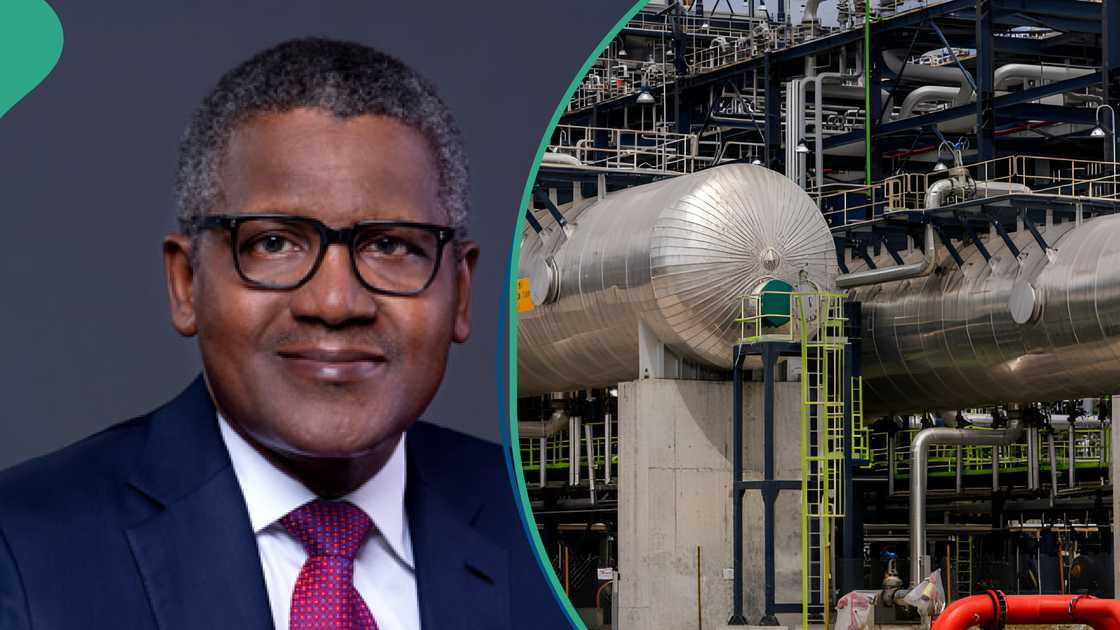
The pump prices of Premium Motor Spirit (petrol) are nearing N1,400 per litre in many parts of the country as the United States and Iran fail to agree on a ceasefire that should lead to the reopening of the Strait of Hormuz.

As the crisis in the Middle East lingers, coupled with the exit of the United Arab Emirates from the Organisation of the Petroleum Exporting Countries on Tuesday, the prices of petrol have continued to rise.

From $105 per barrel on Monday, Brent crude jumped to $118 on Wednesday. As a result, the Dangote Petroleum Refinery jerked up its petrol gantry price from N1,200 to N1,275 per barrel.

Price data obtained from Petroleumprice.ng and confirmation from a Dangote refinery official on Wednesday revealed that the refinery raised its petrol loading price from N1,200 per litre to N1,275 per litre, while coastal supply prices climbed to N1,215 per litre.

Another source familiar with the situation disclosed that the refinery halted its pro forma invoice entry process at about 4 pm on Tuesday, effectively disrupting normal supply scheduling across its loading system. The suspension, according to the sources, led to an immediate stoppage of both petrol and diesel sales to marketers.

This is coming as the Nigerian National Petroleum Company Limited raised the official selling prices of all 37 Nigerian crude grades for May-loading cargoes, according to a report by Oilprice.com.

The report stated that Nigeria was reaping the benefits of the US-Iran war, as the NNPC increased the price of its flagship grade, Bonny Light, by $6.13 per barrel for May compared to April. Similarly, Forcados was also raised by $7.01 per barrel.

“Nigeria reaps the benefits of the Iran war. Nigeria’s national oil company NNPC has raised the official selling prices of all 37 Nigerian crude grades for May-loading cargoes, hiking its flagship grade Bonny Light by a whopping $6.13 per barrel compared to April, while Forcados is up by $7.01 per barrel,” the report stated.

The PUNCH had on Wednesday projected that the development might indicate that the Dangote Petroleum Refinery could pay more for crude, thereby pushing up fuel prices.

It was observed that filling stations wasted no time in moving up their pump prices from an average of N1,250 to over N1,300 per litre on Wednesday in Lagos and other states in the South-West. Checks by The PUNCH showed that filling stations in Lagos and Ogun states sold petrol at prices ranging from N1,315 to N1,350 as of Wednesday.

The NNPC filling stations at the Mowe/Ibafo axis of the Lagos-Ibadan Expressway sold petrol at N1,315 a litre, while Mobil offered N1,320.

The prices depend on the location. In the north and other locations far from the Dangote refinery, petrol prices were raised to around N1,400 per litre. People living in Ogun border communities said a litre of petrol is close to N1,700 because the Federal Government has not allowed the supply of petroleum products in their areas.

See also  Tinubu approved lifetime salary for retiring senior officers – Interior minister

Speaking, the National President of the Petroleum Products Retail Outlet Owners Association of Nigeria, Billy Gillis-Harry, said prices may continue to soar unless US President Donald Trump allows peace to reign in the Middle East.

Gillis-Harry said fuel sellers have been subjected to sudden price volatility that makes business decisions somewhat difficult. He regretted that the Federal Government is not taking steps to support the masses despite making more gains from the high oil prices.

“This is what we have been introduced to, price volatility. And then the government is not making any statements about it, so it’s worrisome. At least, the government could come up with some measures. We are making some gains now on the price of crude oil. The government can give some back to reduce the cost of transportation, so food is not going to be expensive, along with a few other things. That’s what we have advised,” he said.

The PETROAN boss said the price of petrol could go above N1,500 per litre if the Middle East crisis is not de-escalated.

“If you go back to our predictions, I stated it there because Mr Trump is not very clear as to what he wants, in my opinion; if it is to decimate the Iranian nuclear facility or if it is to take over the crude oil as they are taking over Venezuela’s. I don’t think we know what he wants exactly. So we are not sure we are seeing the end of that crisis.

“You can see that the UAE has opted out of OPEC, and the speed at which they are opting out is very fast, which is why we have also advised that Nigeria should think out of the box and look at how production can be improved. It doesn’t need any rocket science; we have the reserves. It is to encourage investors and make sure that host communities are at peace and that violence is no longer the focus. The assets that were discovered in Bauchi and elsewhere, in which billions of dollars were invested, have not achieved anything.

“So we should pay attention to all those areas and increase our production value and production speed so we can at least clearly put 2 million barrels into domestic refining. That will be much better because we will then become a refining hub to guarantee jobs, improve businesses, and make our economy more active. People will work for reasonable money and pay better taxes without grumbling. That’s where we are,” he advised.

Gillis-Harry said the Dangote refinery showed its influence by changing prices at will, saying retailers will keep adjusting. “Dangote has increased the price again because he is the lord of the manor. So we will keep adjusting,” he added.

See also  Dangote refinery raises $2.5bn, may go public August

The PETROAN boss maintained that the NNPC oil price hike contributed to the petrol price increase, saying, however, that every single increase was a result of the closure of the Strait of Hormuz.

“Every single increase from any quarter is because we are not trading locally. All products in Nigeria are still internationally benchmarked. Regardless of whether we’re paying naira for crude for local refining, it’s still measured in the dollar equivalent. The only thing it has done is that you’re not going to scramble for forex to buy the crude that you’re going to refine here.

“We advise that that privilege should be extended to all refineries, be they modular or not, at least the refineries that are producing PMS or are about to produce,” he said.

A senior management official of the Dangote Group had revealed on Monday that the Dangote refinery had been subsidising the petrol and diesel it was selling to the Nigerian market.

According to the official, who spoke to our correspondent in confidence due to the lack of authorisation to speak, the company’s N1,200/litre ex-depot price for petrol was below the competitive market price, considering the jump in crude prices following the US-Iran war.

The PUNCH reports that the war in the Middle East triggered an oil price surge when the Strait of Hormuz was blocked by Iran. From $66 per barrel on February 28, Brent, the global benchmark for crude, jumped above $100 a barrel.

As a result, Dangote raised its petrol gantry price from N774 to N1,275 as of the time of filing this report. The oil price hike also affected diesel and aviation fuel.

In their reactions to the rising oil prices due to the US-Iran war, local refiners urged the Federal Government to drop the use of international pricing benchmarks for crude supplied to domestic plants, saying the current structure inflates costs and undermines local refining.

The spokesperson for the Crude Oil Refiners Association of Nigeria, Eche Idoko, said in an interview that the association had consistently pushed for a domestic pricing arrangement that reflects Nigeria’s peculiarities.

According to Idoko, crude supplied to local refineries should be priced based on locally designed pricing instead of using Brent as a benchmark.

“If you are using Brent to benchmark our pricing, the factors that are affecting the Brent pricing will still affect the price at which you are landing crude here. What we have always insisted on is that those elements in Brent that do not apply to the trade between the local refinery and the oil producers should be discounted. And like that, you get the actual cost of crude for local refineries,” he said.

See also  Rep urges Atiku, Obi to step down for Tinubu ahead of 2027

An economist, Bismarck Rewane, said, “One of the options that can be explored is that the Federal Government of Nigeria agrees to sell crude at a particular price to the Dangote refinery with the assurance that the price of refined products does not increase.”

Energy economists have also called on the Federal Government to take steps towards assuaging the effects of rising fuel prices on the masses. However, the government has yet to respond to the calls even as inflation figures rise again.

US doubles down on Iran

Meanwhile, the US continues to seek to pile pressure on Iran with the naval blockade outside the Strait of Hormuz as the Trump administration signals the blockade is yielding results and will not be lifted anytime soon, Oilprice.com reports.

“While the surviving IRGC leaders are trapped like drowning rats in a sewage pipe, Iran’s creaking oil industry is starting to shut in production, thanks to the US blockade,” US Treasury Secretary Scott Bessent said in a post on X on Tuesday.

“Pumping will soon collapse. Gasoline shortages in Iran next!” Bessent added.

In another post, the secretary wrote that “Kharg Island, Iran’s primary oil export terminal, is soon nearing storage capacity, which will force the regime to reduce oil production, resulting in an additional approximately $170m per day in lost revenue and causing permanent damage to Iran’s oil infrastructure.”

“Treasury will continue to exert maximum pressure, and any person, vessel, or entity facilitating illicit flows to Tehran risks exposure to US sanctions,” Bessent added.

US President Donald Trump has instructed aides to prepare for an extended blockade of Iran, US officials told the Wall Street Journal earlier this week.

The President preferred to keep the blockade and try to choke off Iran’s oil exports and revenues to the other options, such as renewing bombing of Iran or walking away from the war, the officials told the Journal.

Meanwhile, at least six Iranian tankers laden with oil are loitering in a cluster near the port of Chabahar in Iran, outside the Strait of Hormuz but just inside the US naval blockade line, satellite images and maritime intelligence analyses have shown.

The cluster of about half a dozen Iranian vessels signals that Iran continues to load oil on Iranian tankers that are trying to leave the Middle East region. On the other hand, the piling up of ships outside the Strait of Hormuz but inside the US blockade line suggests that the American interception of vessels is working to at least delay Iranian oil exports.

punch.ng

FOLLOW US ON:

FACEBOOK

TWITTER

PINTEREST

TIKTOK

YOUTUBE

LINKEDIN

INSTAGRAM

Continue Reading
Click to comment

Leave a Reply

Your email address will not be published. Required fields are marked *

Business

FG to end regulated gas pricing in 2028

Published

on

Nigeria is set to end regulated pricing in the domestic gas market by September 24, 2028, as the Nigerian Midstream and Downstream Petroleum Regulatory Authority targets a transition to a fully established willing-buyer, willing-seller framework.

The Chief Executive of NMDPRA, Rabiu Umar, disclosed this on Thursday at the Gas Market Maturity Workshop organised under the Decade of Gas initiative at the Petroleum Technology Development Fund, Abuja.

Umar said the transition would be based on measurable conditions that demonstrate the maturity of different segments of the gas market, in line with the provisions of the Petroleum Industry Act.

“Gas must be affordable for Nigerians while supporting President Ahmed Tinubu’s investment reforms. This transition is in line with the Nigeria decade of gas goal to become a gas-powered economy by 2030,” he stated.

He said the PIA envisaged a shift from a market largely coordinated through regulation to one driven increasingly by commercial contracts between willing buyers and willing sellers.

“Invariably, this is the first time that we have been bold enough to set a clear target for our gas market transition,” he noted.

According to Umar, the authority was targeting a 24-month period to establish the conditions required to declare the market a fully functioning willing-buyer, willing-seller market.

“The journey we are starting should lead us to a place where we should target a 24-month at best period within which we will be able to declare the market to be truly a willing-buyer, willing-seller market.”

He stressed that the transition must not be based on broad statements of intent but on clearly defined indicators, thresholds and safeguards.

Umar identified supply availability and diversity, the number and quality of buyers and sellers, access to transportation infrastructure, strength of contracts, payment reliability, delivery obligations, market information and credible price signals as key indicators of market maturity.

See also  2027: Obi’s one-term Presidency gambit sparks political firestorm

The NMDPRA boss, however, said Nigeria’s domestic gas supply remained tight despite the country’s vast gas resources, stressing that infrastructure development must be matched by sufficient gas molecules to utilise the infrastructure.

“If you look at supply, for example, on the domestic side, it is still tight, no matter how you look at it. We have a lot of work to do in our infrastructure space,” he said. “The focus right now is not just delivering the infrastructure, but ensuring that we have enough molecules to fill the pipeline,” he added.

Umar specifically stressed the need to ensure that major gas infrastructure projects, including the Ajaokuta-Kaduna-Kano pipeline, had sufficient gas supply to make them commercially useful.

He said the role of the regulator would also evolve as the market developed, with greater emphasis on establishing market rules, ensuring fair access, protecting competition and monitoring market conduct.

The NMDPRA chief executive disclosed that the authority had commenced consultations on draft regulations on anti-competitive practices, aimed at translating the competition provisions of the PIA into enforceable regulatory rules.

He also called for a realistic assessment of the different segments of the Nigerian gas market, noting that they were at different stages of development.

According to him, the sequencing of the transition would require determining which market segments were ready to move first, the thresholds they must meet and the safeguards required before liberalisation.

Umar further disclosed that the authority was nearing the conclusion of the process for the issuance of gas distribution licences, with the exercise expected to be completed in the coming weeks.

He said qualified companies would be issued gas distribution licences in the fourth quarter of 2026.

See also  Rep urges Atiku, Obi to step down for Tinubu ahead of 2027

The NMDPRA boss also said the authority was working to deepen domestic utilisation of liquefied petroleum gas and liquefied natural gas, stressing that increased domestic utilisation of the country’s gas resources would be an important indicator of economic growth.

He said the government was also seeking to expand the use of compressed natural gas, while several LNG and gas-to-power projects were being developed across the country.

According to him, greater domestic gas utilisation could support power generation, reduce dependence on imports and minimise transmission losses associated with moving electricity over long distances.

He added that the authority was committed to creating a predictable, coherent and transparent regulatory environment capable of attracting long-term investment into the gas sector.

Umar said gas projects required substantial upfront investment and long-term contracts before investors and financiers could commit capital.

“For you to take an FID in a gas investment, you need to have a long-term contract,” he said, adding that the authority was willing to engage with individual projects to identify regulatory measures that could support their development.

Also speaking, the Coordinating Director of the Decade of Gas Secretariat, Ed Ubong, said Nigeria could achieve a willing-buyer, willing-seller gas market before the end of the first horizon of the Decade of Gas programme in 2030.

Ubong said the programme had identified clear markers for achieving the target, including increasing gas supply to 12.6 billion cubic feet per day by 2030.

He said 16 key infrastructure projects were expected to support the growth of the gas market, while more than 60 projects capable of creating about 15 billion cubic feet per day of gas demand had been identified on the demand side.

See also  Dangote signs deal to distribute 65m litres petrol

He noted that a mature gas market would also require the development of a successful gas-to-power market and greater access to cooking gas.

In her speech, the President of the Nigerian Gas Association, Engr. Mrs Yetunde Taiwo, said the transition to a willing-buyer, willing-seller market must be driven by clearly defined milestones.

Taiwo said the NGA had consistently advocated for a commercially driven gas market but stressed that the transition must be properly sequenced to avoid moving either prematurely or too slowly.

“As NGA, what we would like to see really is to see those goalposts, those milestones that have been set, that makes it a realistic journey for us to say we have achieved a willing buyer, willing seller status.”

According to her, Nigeria had made significant progress in the gas industry over the past decade, but substantial work remained to be done.

She called for stronger collaboration between government, regulators and industry, with government providing clear policy direction, regulators establishing predictable rules, and industry continuing to invest, innovate and execute projects.

Taiwo said the ultimate objective should be a gas market capable of attracting investment, encouraging greater participation and delivering reliable gas to industries, businesses and consumers.

Source: punchng.com

FOLLOW US ON:

FACEBOOK

TWITTER

PINTEREST

TIKTOK

YOUTUBE

LINKEDIN

INSTAGRAM

Continue Reading

Business

State police will tackle food inflation – Lagos Food Bank founder reveals

Published

on

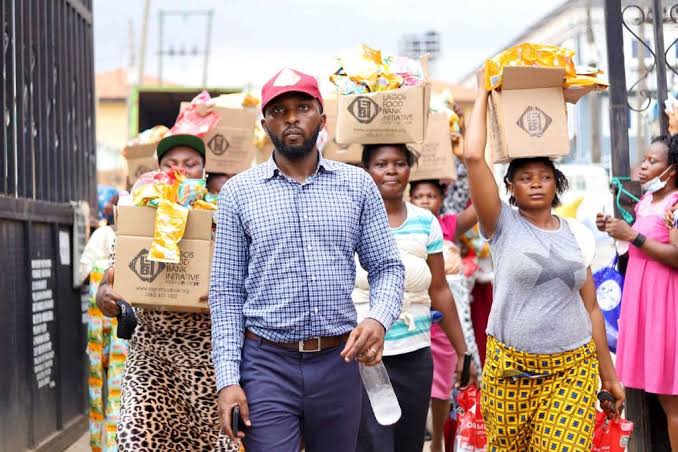
Founder/Executive Director of Lagos Food Bank Initiative, Dr Michael Sunbola, tells FELIX OLOYEDE how the not-for-profit organisation is helping Lagos residents overcome hunger

What inspired the Green Harvest Agri-food Initiative?

Green Harvest, of course, is an additional layer of the solution to hunger and malnutrition in Nigeria. On the broad spectrum, I’ve had a journey of being a humanitarian and a food system activist. That journey spans over 10 years already. What brought me to the development and humanitarian space still boils down to my childhood experience. And, of course, experiencing food insecurity, going to school, and not having lunch in school. And, of course, that kind of had an impact. In the sense that I was not interested in school; I felt I should be somewhere else rather than school. And I look at what impact that might actually be having on several families right now, several children. And, of course, that gave birth to the Lagos Food Bank, which then translated into serving families. And thereafter, the Green Harvest Agri-Food Initiative started to create a more sustainable pathway for beneficiaries to fend for themselves. Because we realise that the truth is we cannot distribute our way out of hunger. There has to be a more sustainable pathway for beneficiaries to fend for themselves, earn a decent income, become more economically viable, and grow healthy food by themselves while improving their income. So, that is what Green Harvest is about. I must also mention that Green Harvest focuses on curbing food waste.

Through the Agricultural Recovery Programme under Green Harvest, we partner with local farmers to recover surplus post-harvest produce. And then we, of course, have that redistributed to beneficiaries who are mostly in need of their daily meals. So instead of having a whole lot of food go to waste on the farms, what we do is partner with these local farmers and recover surpluses from them.

Do the farmers from whom you collect waste give it to you for free, or do you pay them?

We collect these items from them for a stipend. For instance, they might have sold a bunch of farm produce for maybe N500,000, and we pay them N50,000. Because instead of it going to waste, they could use that money to buy seedlings. So, it’s a stipend. It can’t be compared to the value. But if they don’t even get that, the entire produce goes to waste.

We see it as a way of supporting the farmers. So at least, it won’t be a total loss for them.

So, they can still buy seedlings; they can still do some basic things while we capture the rest and redistribute them.

How does this initiative plug into the initial objectives you had when you started the Lagos Food Bank 10 years ago?

The Green Harvest Agri-food initiative is the future of what we are doing at the Lagos Food Bank. Because we are now looking at food production, we are looking at empowerment for beneficiaries and getting them out of the hunger line. We are looking at also using the initiative to empower more families on a large scale. Also going to large-scale food production. So, most of what we are doing currently, while we understand it, still kind of focuses on interventions that are more into consumption. This focuses more on production, covering food waste and empowerment. We are also looking at smart agriculture. And some other innovations that are still coming in agriculture, like the Black Soldier Fly and all of that. All of it comes under Green Harvest Africa, Green Harvest Agri-Food Initiative.

In the short term, like five years, how much are you thinking of investing in this initiative?

In the next five years, I might not be able to give a specific figure for what would go into an investment. Because it is not a limited liability company, it is still a non-profit. But in terms of investment, we are still looking at how we are going to work with other development partners and how they can plug into investing. We might not be able to project value accurately, but we know we’ll be working with a lot of development partners.

See also  Tinubu approved lifetime salary for retiring senior officers – Interior minister

What size of farm are you targeting?

We, of course, are looking at having farms. Right now, we are starting in the South-West.

Oyo State, Ogun State and the like. And the idea is for us to kind of control the supply chain for Lagos Food Bank. And we call that backward integration, where instead of getting some of this food, buying it, we could actually be producing it and then also serving it. It’s more like an initiative that helps us control our supply chain and helps improve income for beneficiaries. Because we are controlling our own supply chain through backward integration, we are also going to work with beneficiaries to empower them to grow their own food through backyard farming. There’s one for Lagos Food Bank, and there’s one for beneficiaries, like decentralised kind of farming where beneficiaries have their own farm in their backyards. It’s all part of the Green Harvest Aagri-food Initiative.

The United Nations, one of its agencies, said about 35 million Nigerians are facing hunger. What do you think is responsible for this large number of hungry people in the country? And how do you think we can tackle it holistically?

Hunger in Nigeria is widespread. It boils down to economic policies, the high cost of living, and the cost of fuel and other essential commodities. And when people can barely earn enough to make a living and sustain themselves, it, of course, leads to hunger and poverty. The NBS report, I think in 2023 or 2024, corroborates the fact that more than 60 per cent of our population are multidimensionally poor. Poverty breeds hunger and hunger breeds malnutrition.

I know there are short-term plans and there are long-term plans. We still have to look, in the short term, at how we can create more economic opportunities for people to earn a decent living. And how can the government look at some of its policies that would, of course, have a long-term impact on reducing the economic burden on the average person? And then we need to invest more in agriculture. We need to look at opening the borders, reducing the cost of food, and empowering more farmers to produce more food. It’s a matter of demand and supply. Food inflation is around 25 per cent or so. And we have the overall food inflation and headline inflation basically. So, if we are looking at all of this put together, they are major drivers of the high cost of food basically. Food prices should be reduced so the average person can afford food and, of course, eat decently and nutritiously.

The Family Farming Programme, under the Green Harvest Agri-food Initiative, focuses on training households in farming techniques. What successes have you recorded so far?

So far, we’ve empowered close to 6,000 families, women and youth. Families or households? Women, basically women and youth.  Because women, of course, empower the family. They produce and help the families in the long run. We’ve done direct beneficiaries over 6,000. And as we speak, they have their farms in their backyards; they have livestock; they are growing vegetables. But mainly, much of the income they make comes from livestock. Chickens, snails and the impact of our backyard farming is widespread as we speak.

And we are able to partner with a number of corporate organisations and institutional developments and institutions as well to kind of scale the Backyard Farming Programme. This is one of the most impactful programmes we currently run under the Green Harvest Agri-Food Initiative. And of course, you can look it up where you see the impacts are there.

See also  Nigerians Will Soon Be Able To Buy Dangote Refinery Shares Soon – Dangote Announces

The country still faces high post-harvest loss. How is the Agricultural Recovery Company of the Green Harvest working to rescue these losses?

So, essentially, we work with local farmers, smallholder farmers. And we also work with large-scale commercial farms to recover their surpluses, to cut food waste and to reduce the impact of the amount of food that goes into landfills. This, of course, drives climate change. But the most important thing is: how do we reduce food waste across the entire agricultural value chain? From the farmers, from the food processing companies, or from the entire value chain, basically. Food loss and waste happen across the value chain. And what we do is we partner with these farms. They call us, “We have excess; come and pick it up.” We do the cleaning, we do the harvesting, we do everything. Because we have the manpower to work with over 45,000 volunteers to achieve some of these recoveries from the farms.

We also work with corporates in large-scale food processing. They also call on us, and we can recover a lot of kilos.

Like last year, can you give me a figure of tonnes of food you were able to recover through this initiative?

Last year, working across the entire value chain with farmers and food processing companies, we were able to recover at least 45,000 kg. Yeah. No, kg. Could you convert this to tonnes and let’s see what we have? 45, to be small.

What is the black soldier fly all about?

Black soldier fly farming helps convert organic waste into livestock feed, using one of the most innovative agricultural practices. And working with smallholder farmers to support them with livestock feed. For us, it is still in the early stages. In the next two to three years, we ought to have scaled this black soldier fly farming so we can produce more livestock feed and convert more organic waste, helping farmers with livestock feed.

You once said there is a need for government to give tax incentives to corporates who support food, who make food available for people. Why do you think government should give incentive to them?

What the government can do basically is to provide as much incentive for corporates who have taken it upon themselves to provide through their corporate social responsibilities, some form of support for vulnerable people. And the way it is done in other climes, when the corporate organisations put their resources together, they get incentive, they get tax returns, and such support is not treated as an income or expense, and you don’t tax expenses. But here, a whole lot of corporates that still do corporate social responsibility, they struggle to get such incentive from the government and tax bodies do not exempt that expense. So, if it’s not exempted, it’s part of profit which will be taxed. But if it’s an exempted expense, then it will not be, that way, they can get their returns. They won’t bear the burden.

So, that is even the least we’re expecting that the government could do or work with an organisation like ours to give such relief or exemptions to corporates that are supporting. But just to kind of give a bit of context to what I said earlier, the government creates the enabling environment; it creates support for farmers; it creates economic opportunities for people to fend for themselves. And then gives enough incentive to those who support.

How is insecurity threatening some of your agricultural initiatives?

It means that our current production cannot meet the demands of our population. So, what that implies is that it becomes a major driver of high food costs or food inflation. Because I think our issue here in Nigeria is kind of complex, in the sense that we are not just looking at how to increase yields or farmers’ production; we are dealing with a calculated effort as a result of insecurity towards farmers. When they attack farmers, they are not just afraid to go to the farm; production drops, and demand rises. So, it’s a major driver, and I believe one of the things I feel I think is high time the government implement is the state police. They’ve been on it for more than, for over a decade; in fact, more than two decades. The conversation around state police, I think, is that it’s high time it should be implemented.

See also  Fake agency probe: ICPC team grills embattled PFIPC DG inside police detention

It was part of the current government’s campaign promises, and I think we are overripe for it. Honestly, state police should be implemented and fully actioned so that people’s lives, property and farmers can be protected across borders. And the state should take responsibility for its security.

So, you are saying that state police will help curb insecurity among farmers?

Yes. There’s nothing the Federal Government has done unilaterally that it does as efficiently as it does when it is decentralised. Look at NITEL, look at electricity, etc. If it’s centralised, they don’t have the bandwidth to carry it because of our population. The same point applies to the police. Decentralise it; let the state take responsibility, and that will reduce and depopulate what we have on the exclusive legislative list and move it more to the concurrent list. Let the state take responsibility; let the Federal Government take responsibility. And then decentralise it; the effort is better felt that way.

What are the biggest opportunities and challenges for scaling up Green Harvest Agri-food Initiative nationwide?

The biggest opportunity for us still remains the partnerships we could leverage to scale our intervention across the country. The number of partnerships and how many, of course, people come on board, because we are not a business. We are a non-profit, so the only way we can scale is through partnerships, and because many people still need this empowerment and intervention, and the amount of food that still goes to waste across the entire value chain is massive. So, the opportunities are there.

What are the challenges?

The challenges are mainly limited funding, which still holds back how far we can go. As a non-profit, we can only work with partnerships. If there are no partnerships, there is limited funding. There is no funding, there is no impact. And another challenge could possibly be the fact that if we tend to kind of scale, if the issue of security is not addressed, we are still challenged in that; we are still in that particular pool of challenges that other farmers are facing.

How much support do you get from the government?

Currently, what we are doing is 100 per cent private-sector-driven. The government provides us much more support, but not in any financial terms. And to an extent, maybe personnel support. But finances, I can say categorically, not for now, but we are not foreclosing the possibility of working with the government in the future.

We believe we complement the government’s efforts to bring relief to people. And at the right time, we feel that if the government deems it fits, I think we should come on board. Of course, we have built enough capacity to help the government address the immediate and long-term needs of those in the line of work.

What is your vision for the Green Harvest Agri-food Initiative over the next decade?

Food production, empowerment on a large scale. So, we are looking at having at least a presence in all 36 states in Nigeria. And not just serving people directly, but empowering them and creating economic opportunities for families, for farmers. We also want to become a major player in Nigeria’s entire food system and ecosystem. We also want to be a major player in food production and humanitarian relief.

Source: punchng.com

FOLLOW US ON:

FACEBOOK

TWITTER

PINTEREST

TIKTOK

YOUTUBE

LINKEDIN

INSTAGRAM

Continue Reading

Business

FG targets $1.2bn private funding for fibre project

Published

on

The Federal Government is seeking about $1.2bn in private capital for its planned 90,000-kilometre nationwide fibre network, as the project moves towards physical deployment in October with a newly incorporated company set up to drive its implementation.

Official records from the government and global financial institutions reviewed by The PUNCH show that $800m of the estimated $2bn cost of the Federal Government’s planned fibre network has so far been covered by sovereign financing commitments, leaving about $1.2bn of the project cost outstanding.

The $800m comprises a $500m World Bank facility approved in October 2025, a $100m loan from the European Bank for Reconstruction and Development approved in February 2026, and a $200m African Development Bank loan approved in April, the records show.

The private capital is not a funding requirement that must be met before implementation can start. Rather, it forms the larger remaining portion of the project’s estimated $2bn capital envelope, which the Minister of Communications, Innovation and Digital Economy, Bosun Tijani, pitched in 2024.

Strategic Communications Adviser to the Minister, Osibo Imhoitsike, told The PUNCH that Project BRIDGE had attracted substantial support from international development finance institutions and private-sector mobilisation through the transaction structure.

He confirmed that the sovereign financing secured to date included $500m from the World Bank, $200m from the African Development Bank and $100m from the European Bank for Reconstruction and Development. The European Union also provided a €22m grant for Project BRIDGE.

“The government has received a significant private sector investment offer as part of the PPP structure, and that process is currently being concluded,” Imhoitsike said.

See also  Yuletide: Local flights break N300,000 mark

The minister, Tijani, confirmed in August that physical rollout was expected to begin in October. The October date follows the incorporation of Bridge Open Access, or Bridge OA, in August as the special-purpose vehicle for the project.

“The establishment of the company signalled that the project was moving into its implementation phase, with the industry now expecting the October rollout,” Telecom consultant Ejike Onyeaso told The PUNCH.

“The industry is really looking forward to that because it will help reduce costs for not just mobile network operators but also internet service providers that rely on fibre, particularly in the hinterlands and underserved areas.”

In March 2025, his ministry formally opened an investor consultation process, inviting private-sector players to express interest in the Special Purpose Vehicle for the rollout under a public-private partnership model.

In April 2026, Tijani stated, “We’re now mobilising the private sector to plug the remaining gap,” after noting that over $800m had been raised from the government and World Bank for the project. The project is designed to take the national network from the current 35,000km to roughly 125,000km.

The World Bank said the programme would help close the country’s digital divide by expanding affordable, high-speed broadband to communities that remain unserved or underserved.

“The BRIDGE project puts into action the bold and ambitious vision to unlock the potential of the digital economy in Nigeria, working alongside the private sector,” World Bank Country Director for Nigeria, Mathew Verghis, said.

“Access to fast and reliable internet will help to create more quality jobs for millions of Nigerians across all 774 LGAs in addition to improving the quality of essential services like education and healthcare.”

See also  World’s largest tech expo opens in Dubai

Documents from the ministry show that investors are expected to hold a majority stake in Bridge OA, with equity ownership ranging from 51 per cent to 75 per cent and operational control of the company. The Federal Government, through the Ministry of Finance Incorporated, or MoFI, is expected to retain between 25 per cent and 49 per cent.

The structure is intended to bring private capital and operating expertise into a project in which the government is providing part of the financing while retaining a minority position.

Bridge OA will handle the financing and construction of the network and operate it as a wholesale open-access infrastructure company rather than a retail internet provider. It is expected to sell fibre capacity on equal and non-discriminatory terms to qualified operators, including telecommunications companies, internet service providers, banks and cloud providers, rather than directly serving end users.

The rollout had previously been targeted for the fourth quarter of 2025 or the first quarter of 2026, but large-scale construction was deferred as the government worked to establish the special-purpose vehicle, onboard private investors and complete the necessary procurement and implementation arrangements.

The project was initially expected to be implemented over about five years, with an initial target of roughly 30,000km in the first year before the pace increased as private capital and construction capacity were brought into the programme. Tijani has since revised the overall delivery period to three years, bringing forward the expected completion of the 90,000km network.

Source: punchng.com

FOLLOW US ON:

FACEBOOK

TWITTER

PINTEREST

TIKTOK

YOUTUBE

LINKEDIN

INSTAGRAM

Continue Reading

Trending