Connect with us

Business

Job losses loom as more Inland Container Terminals shut down

Published

on

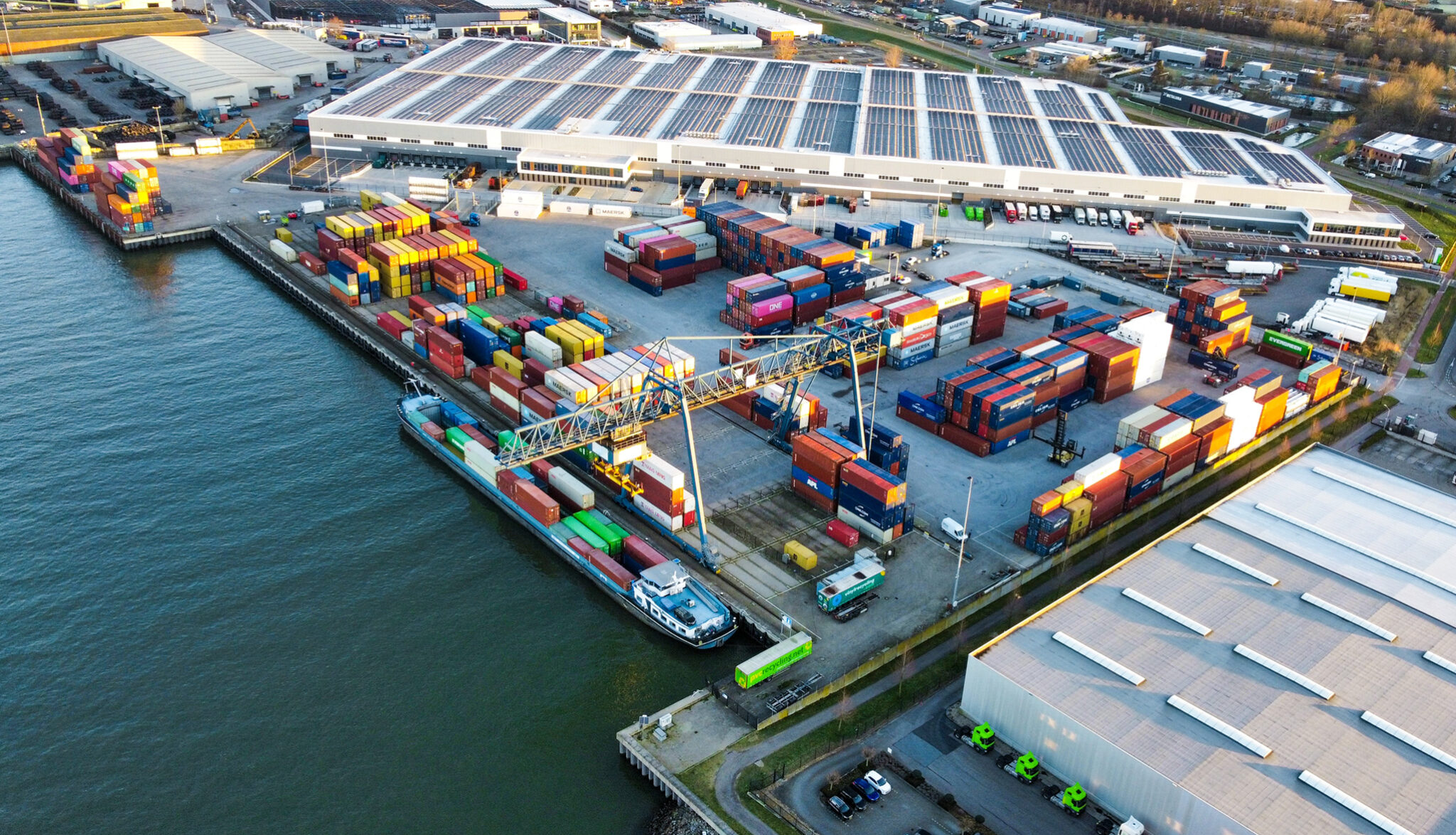
Massive job losses loom following the shutdown of ITC Container Terminals, Alliance Container Terminal, and Creseada Container Terminals, all in Lagos, due to lack of business and patronage from seaport terminals at Apapa and Tin-Can Ports.

Disclosing this to Tribune Online exclusively in Lagos, the general secretary of the Association of Bonded Terminals Operators of Nigeria, Mr Haruna Omolajomo, explained that out of over 40 Inland Container Terminals in Lagos, only a few are still operating, albeit below an optimal level.

According to Mr. Haruna Omolajomo, “In Lagos alone, we have over 40 indigenous bonded terminals operating and they have spent more than N5trillion to equip their terminals in terms of infrastructure and machinery.

“I can tell you authoritatively that none of the over 40 indigenous bonded terminals are operating beyond 10 percent due to non-patronage.

“Many have borrowed money from commercial banks to equip their container terminals and due to a lack of patronage from shipping companies and seaport terminal operators, they are struggling to repay bank loans.

“For some that are lucky, they are battling high blood pressure. For some, who are not lucky, they are already six feet below the ground.”

On the numbers of inland container terminal operators that have shut down in Lagos, the General Secretary of the Association of Bonded Terminals Operators of Nigeria, Mr. Haruna Omolajomo, revealed that, “Some inland container terminal operators have shut down.

“We have ITC Container Terminals, Alliance Container Terminal and Creseada Bonded Terminals. This operators are no longer in operation. Between these three bonded terminals, they employed 400 staff in all, and all the workers have been laid off.

See also  FG to borrow N800bn via February bonds

“Currently, we have some that are operating below five percent and may close shop any time soon. I am talking about Mid Maritime Container Terminal, Port Express Container Terminal, Duncan Container Terminal and Sapid Container Terminal.

“They are all operating below 5 percent and have between them close to 800 workers. They can fold up anytime from now if the situation persists like this, and that means more workers off jobs.”

On likely way forward, Mr. Omolajomo explained that the federal government needs to make a law that allows indigenous container terminal operators to have a certain percentage pf cargoes stemmed to them from the ports.

“We have tried all we could to get government attention in the past. We have gone to the Presidency. We have gone to the National Assembly.

“Sometime ago, the National Assembly set up a panel of enquiry headed by Senator Olugbenga Obadara. At the end of the day, it all amounted to nothing.

“Up till now, we are not relaxing. We are still making efforts to get government attention, and our demand is that we are not saying government should not have anything to do with these foreign companies, but should respect local content and allow us to also do business.

“When cargoes arrive at the ports, the government should ensure that indigenous bonded terminals get 30 percent of such cargoes.

“The government needs to make a policy that it’s a MUST that port operators patronize indigenous container terminals.

“When indigenous bonded terminals get cargoes from the port operators, it will increase the revenue that is accruable to the federal government. This is aside from creating jobs for more Nigerians.”

Continue Reading
Click to comment

Leave a Reply

Your email address will not be published. Required fields are marked *

Business

Dangote unveils plan for multi-billion-dollar Olokola seaport

Published

on

Dangote Industries Limited has commenced preliminary processes for the construction of a deep-sea port spanning over 10,000 hectares at the Olokola Free Trade Zone in Ogun State, as part of plans to expand into logistics, maritime infrastructure, and export-led industrialisation.

In a statement, the company said the multi-billion-dollar project is aimed at transforming the group into a globally recognised industrial and manufacturing leader, as a core component of its Vision 2030 agenda.

The proposed deep seaport, located in Ogun Waterside Local Government Area of Ogun State and extending toward Ilaje Local Government Area of Ondo State along the Atlantic coastline, is expected to serve as a logistics and industrial hub for exports, imports, and regional trade.

A delegation from the company, led by the Managing Director, Infrastructure and Logistics, Dangote Industries Limited, Capt Jamil Abubakar, visited host communities in Ogun and Ondo states to commence stakeholder engagements ahead of project execution.

Speaking during the visit, Abubakar said the project would transform host communities and strengthen Africa’s maritime trade capacity.

He said, “The Olokola Port project is a major step in opening up Nigeria’s economic potential, strengthening trade, reducing pressure on existing ports, and supporting industrial growth. It will create real opportunities for host communities through jobs, business activities, and long-term development across both Ogun and Ondo states.

“With its strategic location, Olokola would serve as a key gateway for exports and imports, boosting Nigeria’s competitiveness in regional and global trade. This project reflects our commitment to building infrastructure that benefits both the people and the economy at large.”

See also  Over 4,600 tricycles, 100,000 vehicles run on CNG in Nigeria – Official

He added that the deep seaport had been designed as a logistics gateway for an integrated industrial ecosystem that would enhance Africa’s regional commerce and logistics network.

He noted that the facility would support the export of fertilisers, petrochemicals, and refined petroleum products, while also facilitating future liquefied natural gas exports and the importation of heavy industrial equipment. Abubakar added that the company would maintain continuous engagement with host communities throughout the implementation process.

During the visit, the Dangote team, accompanied by land surveyors and environmental consultants, visited the Ode-Omi community in Ogun State, as well as the Araromi Seaside Kingdom and Igbokoda in Ondo State.

The Lenuwa of Ode-Omi, Oba Folailu Adekunle Hassan (Oshotekun II), welcomed the project and pledged the community’s support. “We have been expecting you for a long time. It is good that you are here today. Do your best, and we will all benefit from this process,” the monarch said.

The traditional ruler also approved the commencement of surveys and other preliminary activities, including the enumeration of households, economic trees, and compensation arrangements for affected communities.

Similarly, the Alara of Araromi Seaside Kingdom, Oba Adeoloye Olawole, expressed support for the project during an engagement with the Dangote delegation.

“We can’t wait for this project to commence. We are going to give you physical and spiritual support. If this project can begin tomorrow, you are welcome,” the monarch said.

The delegation also visited the Nigerian Navy Forward Operating Base in Igbokoda, Ondo State, where the Acting Commanding Officer, Lt. Commander A.A. Makinwa, pledged the Navy’s cooperation with the company in support of national economic development.

See also  FG to borrow N800bn via February bonds

Dangote Industries stated that the proposed seaport would drive job creation, attract foreign direct investment, and stimulate sectors such as manufacturing, logistics, and services.

The company added that the project would strengthen Nigeria’s export diversification drive and improve participation in intra-African trade under the African Continental Free Trade Area.

punch.ng

FOLLOW US ON:

FACEBOOK

TWITTER

PINTEREST

TIKTOK

YOUTUBE

LINKEDIN

INSTAGRAM

Continue Reading

Business

US stocks retreat amid renewed inflation concerns

Published

on

Wall Street stocks retreated early Tuesday as analysts pointed to angst over inflation pressures as the prolonged Middle East war kept oil prices high.

Equities had until recently “shrugged off the effects of higher yields”, Interactive Brokers’ Steve Sosnick said of increases in bond yields.

“After pretending this was not a problem, I think (the market) has now decided that higher yields are in fact a problem,” Sosnick said. “But we aren’t seeing panic or anything like that.”

About 10 minutes into trading, the Dow Jones Industrial Average was down 0.8 per cent at 49,289.53.

The broad-based S&P 500 dropped 0.4 per cent to 7,372.49, while the tech-rich Nasdaq Composite Index shed 0.3 per cent to 26,024.82.

Iran’s army warned on Tuesday it would “open new fronts” against the United States if it resumed attacks after President Donald Trump said he had held off launching a new offensive in hopes of striking a deal.

Major US indices were also under pressure on Monday as semiconductor equities sold off a fraction of their recent gains. Sosnick described the dynamic as profit-taking ahead of Wednesday’s release of Nvidia’s earnings.

Rising government bond yields also weighed on sentiment, with the yield on 30-year US Treasuries hitting its highest level in nearly 19 years. The move indicated growing market unease over inflation, energy prices and fiscal worries.

President Trump said he held off a major new assault against Tehran as he saw hopes for securing an agreement to end the conflict, which was sparked by US and Israeli strikes on Iran at the end of February.

See also  Dangote pumps 43 million litres, denies petrol shutdown

Stocks did not get much of a boost from Trump’s announcement, with Wall Street’s major indices lower in late morning trading.

European indices ended the day mixed.

“Investors are showing relief that tensions haven’t escalated,” said Russ Mould, investment director at AJ Bell.

He added, however, that “oil prices remain at high enough levels to weigh on the global economy.”

Continue Reading

Business

Operators split as petrol tank farms back local refining

Published

on

A fresh crack has emerged in the downstream oil sector as members of the Jetties and Petroleum Tank Farm Owners of Nigeria distanced themselves from the position of the Depot and Petroleum Products Marketers Association of Nigeria on fuel importation, throwing their weight behind the Dangote Petroleum Refinery’s push to halt fresh petrol imports.

The tank farm owners also called on the Federal Government and the Nigerian Midstream and Downstream Petroleum Regulatory Authority to cancel existing import licences for Premium Motor Spirit (petrol), insisting that local refining capacity can now meet domestic demand.

The position was contained in a communiqué issued by the association and made available to journalists through its Executive Secretary, Mr Olayiwola Temitope, on Tuesday.

The development comes amid rising tension in the downstream sector following a fresh lawsuit filed by the Dangote Petroleum Refinery challenging the issuance of petrol import licences to marketers and the Nigerian National Petroleum Company Limited.

The PUNCH reports that the NMDPRA recently approved licences for the importation of over 700,000 metric tonnes of petrol despite claims that the Dangote refinery now supplies more than 90 per cent of the nation’s daily PMS consumption.

The import approvals have triggered criticism from some marketers and depot operators, who warned that restricting imports could create a monopoly in the downstream sector.

DAPPMAN had faulted the refinery’s legal action and argued that import licences were necessary to guarantee energy security and sustain competition in the deregulated market. It also vowed to join the suit in defence of its members who are fuel importers, saying the billions spent on depot infrastructure should not be allowed to go to waste because of Dangote.

See also  Shell abandons huge biofuel project in Netherlands

However, JETFON said it does not share the same position as DAPPMAN on the issue of fresh import licences. According to the association, continued fuel importation is no longer economically justifiable given the growing refining capacity within the country.

The tank farm owners argued that the Dangote refinery and other local refineries have significantly reduced Nigeria’s dependence on imported fuel and should be protected rather than undermined. They warned that granting fresh import permits would weaken local investments and frustrate efforts aimed at achieving energy independence.

“Relying on foreign refined products leaves the local economy vulnerable to external supply chain shocks, international logistics disruptions, and continuous foreign exchange pressures that weaken the naira,” the statement said. “By prioritising local refineries, Nigeria can build a self-sustaining and secure domestic fuel supply ecosystem.”

The association maintained that Nigeria’s long-term economic stability depends on strengthening domestic refining rather than encouraging import dependence. JETFON also cited recent data released by the NMDPRA, which showed a sharp decline in fuel imports and an increased contribution from local refining.

According to the regulator’s April 2026 factsheet referenced by the association, Nigeria’s daily petrol consumption rose to 51.1 million litres in April from 47.3 million litres recorded in March.

At the same time, daily fuel imports reportedly dropped by 37.3 per cent, from 5.9 million litres in March to 3.7 million litres in April. The association noted that local refineries, led mainly by the Dangote refinery, supplied about 40.7 million litres daily during the period, significantly replacing imported products.

See also  FG to borrow N800bn via February bonds

JETFON argued that the figures demonstrate that domestic refining is already taking over the market and reducing pressure on foreign exchange demand. It added that supporting local refining would help stabilise the naira, conserve external reserves, and create jobs across the petroleum value chain.

“With the Federal Government backing local refineries, Nigeria stands to drastically reduce its heavy reliance on foreign exchange for fuel imports, thereby easing the persistent pressure on the naira and conserving vital external reserves.

“Beyond forex stability, a thriving local refining sector serves as a massive catalyst for economic growth, generating direct and indirect employment for thousands of skilled Nigerian youths,” the statement added.

The association urged the Federal Government and the NMDPRA to stop issuing fresh import licences and review existing approvals to protect local investments and industrial growth.

The latest position by the tank farm owners is expected to deepen divisions within the downstream sector, as stakeholders remain sharply divided over the future of fuel importation in Nigeria.

Officials of DAPPMAN declined to comment, saying the association would meet before making further comments.

punch.ng

FOLLOW US ON:

FACEBOOK

TWITTER

PINTEREST

TIKTOK

YOUTUBE

LINKEDIN

INSTAGRAM

Continue Reading

Trending