Connect with us

Lifestyle

53,000 dead, 50m sick yearly from unsafe food — FG

Published

on

The Federal Government on Monday raised fresh concerns over the growing burden of foodborne diseases in Nigeria, revealing that unsafe food causes more than 53,000 deaths and nearly 50 million illnesses annually across the country.

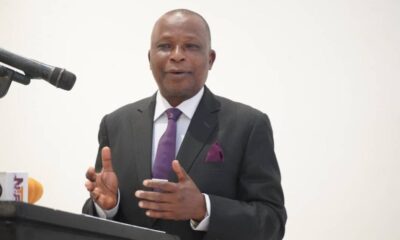
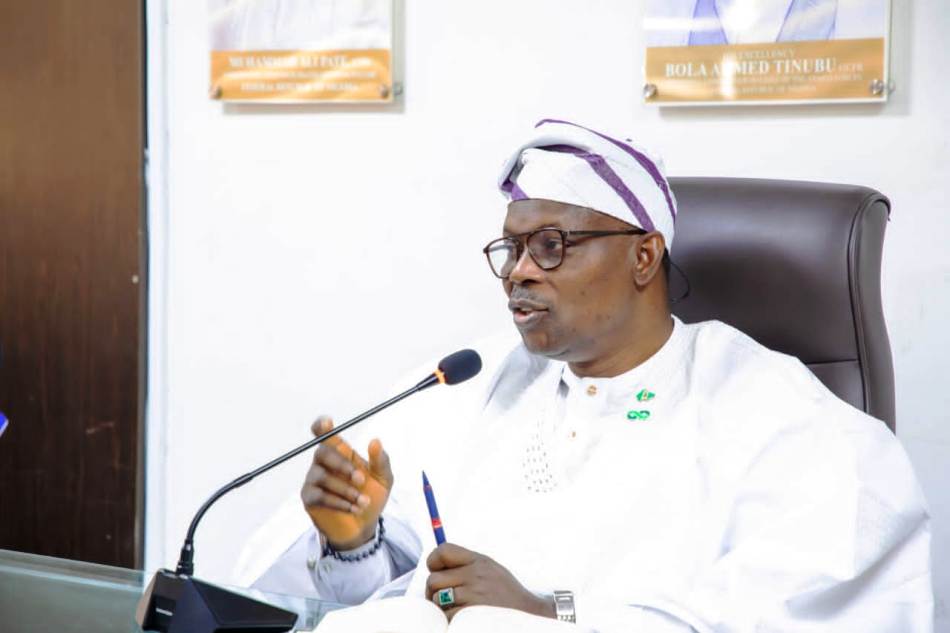
Minister of State for Health and Social Welfare, Dr Iziaq Salako, disclosed this in Abuja during a ministerial press briefing to commemorate the 2026 World Food Safety Day, themed “From Burden to Solutions – Safe Food Everywhere.”

Salako described food safety as a critical national development and health security issue, warning that the true cost of unsafe food extended beyond sickness and death to the loss of human capital, particularly among children.

According to him, Nigeria loses an estimated 4.26 million years of healthy life annually to foodborne diseases through illness, disability and premature death.

“Nigeria records nearly 50 million foodborne illnesses every year, and unsafe food causes more than 53,000 deaths annually in our country.

“Together, these illnesses and deaths result in a staggering 4.26 million years of healthy life lost to illness, disability or early death,” the minister said.

He noted that children under five account for more than 80 per cent of the country’s foodborne disease burden.

“Most of this burden falls heavily on children under five, who account for more than 80 per cent of all foodborne disease burden in Nigeria.

“The true cost of unsafe food in Nigeria is not only measured in sickness and death, but also in the lost cognitive, physical and developmental potential of our children,” Salako added.

The minister’s remarks came on the heels of newly released estimates by the World Health Organisation showing that unsafe food causes about 866 million illnesses and 1.5 million deaths globally each year, with Africa bearing the highest per-capita burden.

According to Salako, diarrhoeal diseases remained the leading cause of foodborne illnesses in Nigeria, with more than 40 million cases linked to pathogens such as Salmonella, Escherichia coli, Campylobacter, Shigella and rotavirus.

“Over 40 million diarrhoeal illnesses in Nigeria are linked to foodborne pathogens. These infections continue to be a major cause of hospitalisation, malnutrition and mortality among our youngest citizens,” he said.

He also warned of increasing exposure to chemical contaminants.

“Chemical hazards are also emerging as a serious concern, with lead exposure responsible for tens of thousands of healthy lives lost through contaminated grains, spices and water sources. These numbers underscore the urgency of strengthening food safety systems across the entire value chain,” he stated.

See also  #BringBackOurGirls: The Protest That Echoed Nigeria’s Cry for Justice

Despite the challenges, Salako said Nigeria had made notable progress in building a stronger food safety system.

He said the country’s 2023 Joint External Evaluation recorded measurable improvements across all food safety indicators, while Nigeria’s 2025 State Party Annual Report score surpassed the World Health Organisation target for low- and middle-income countries.

“Nigeria is now one of the leading countries in the region in establishing functional systems for detecting, reporting and responding to foodborne disease events,” he said.

The minister, however, stressed that the latest figures should serve as a wake-up call.

“The new WHO estimates are a call to action. We must intensify surveillance for heavy metals and chemical contaminants. We must improve food safety practices in traditional and informal markets where most Nigerians buy their food.

“We must strengthen hygiene, water and sanitation infrastructure and ensure food business operators comply with national standards,” he said.

Salako also linked food safety to the country’s growing burden of non-communicable diseases, including hypertension, stroke, diabetes and obesity.

“Food safety is not only about preventing infections; it is also about ensuring that the food we eat does not contribute to the growing burden of non-communicable diseases,” he said.

He disclosed that Nigeria had developed National Guidelines for Sodium Reduction, while the National Agency for Food and Drug Administration and Control had finalised draft sodium reduction regulations aimed at reducing salt levels in processed foods.

According to him, the country was also implementing industrial trans-fat elimination regulations and strengthening efforts to improve the sugar-sweetened beverage tax and front-of-pack food labelling systems to encourage healthier food choices.

Salako urged food manufacturers, regulators, researchers and consumers to support efforts aimed at ensuring safer and healthier food for Nigerians.

“Food safety is everyone’s business. It saves lives, strengthens our economy and protects our children. These numbers show that food safety is not optional; it is a national health security priority,” he said.

The Director-General of NAFDAC, Prof Mojisola Adeyeye, said strengthening food safety systems remained critical to reducing the country’s burden of foodborne diseases.

Represented at the event by the Director of Food Safety and Applied Nutrition Directorate, Eva Edwards, Adeyeye described food safety as a public health, socioeconomic and development imperative.

See also  FOUNDATION AND HISTORY OF AKURE

“The theme for the 2026 World Food Safety Day, ‘From Burden to Solutions – Safe Food Everywhere,’ reminds us that food safety is not merely a technical issue; it is a public health, socioeconomic and development imperative. Behind every statistic on foodborne disease is a child, a family, a community or a business affected by preventable illness and loss,” she said.

The NAFDAC boss said the agency remained committed to reducing foodborne diseases through stronger regulation, surveillance and stakeholder engagement.

“At NAFDAC, we remain firmly committed to contributing to reducing the burden of foodborne disease through science-based regulation, effective surveillance, strengthened food control systems and robust stakeholder engagement,” she said.

She added, “Our efforts continue to focus on ensuring that foods manufactured, imported, exported, distributed, advertised, sold and consumed in Nigeria meet acceptable standards of safety and quality.”

Adeyeye stressed that safe food was central to achieving the country’s nutrition and health goals.

“We recognise World Food Safety Day as an added opportunity to situate food safety as a significant issue of public health concern, especially in the light of safe, wholesome food being important for boosting immunity and improving the body’s natural defence in fighting diseases.

“Where food is unsafe, our nutritional goals cannot be achieved,” she said.

The NAFDAC Director-General further noted that addressing food safety challenges would require stronger collaboration among government agencies, industry players, researchers, development partners and consumers.

“The challenge before us is significant, but so too is our collective capacity to address it through evidence-based policies, effective regulation, responsible industry practices and sustained public awareness,” she said.

Adeyeye reaffirmed the agency’s commitment to strengthening food safety systems nationwide.

“At NAFDAC, we remain resolute in our unwavering commitment to playing our role in strengthening the national food safety system, upholding standards and regulations, and promoting best practices within industry and across society to assure a safe food supply,” Adeyeye said.

Meanwhile, the Corporate Accountability and Public Participation Africa called for stronger regulatory measures to address the growing burden of diet-related diseases in Nigeria.

In a statement issued on Monday to commemorate the 2026 World Food Safety Day, CAPPA warned that millions of Nigerians were increasingly exposed to health risks associated with excessive consumption of sugar, salt, unhealthy fats and ultra-processed foods.

The organisation argued that food safety should extend beyond concerns about contamination and foodborne diseases to include protection against products that contribute to non-communicable diseases.

See also  Alao Aka-Bashorun: The Fearless Advocate Who Challenged Nigeria’s Military Regimes

CAPPA Executive Director, Oluwafemi Akinbode, said, “Food safety is not only about preventing food poisoning. It is also about ensuring that the foods and drinks available to Nigerians do not slowly undermine their health and well-being.”

He warned that weak regulatory safeguards and aggressive marketing of unhealthy products were contributing to rising cases of hypertension, diabetes, obesity, stroke, kidney disease and certain cancers.

According to him, diet-related diseases were placing a growing burden on families, the healthcare system and the economy.

“Public health policies must be guided by science and the public interest, not by industries whose profitability depends on unhealthy consumption patterns,” Akinbode stated.

CAPPA welcomed the recent passage by the Senate of a bill seeking to strengthen Nigeria’s Sugar-Sweetened Beverage Tax regime, describing it as a critical intervention in efforts to reduce excessive sugar consumption and curb non-communicable diseases.

The organisation also urged the Federal Government to adopt national sodium reduction targets, implement Front-of-Pack Warning Labelling on packaged foods and beverages, and strengthen restrictions on the marketing of unhealthy foods to children.

“Truly, safe food should not only be free from contamination but should also protect consumers from preventable diseases and support long-term wellbeing,” he added.

World Food Safety Day is observed annually to raise awareness and inspire action to prevent, detect and manage food-related risks. The 2026 edition marks the eighth global observance of the event.

While food safety discussions have traditionally focused on microbial contamination and foodborne disease outbreaks, public health experts are increasingly drawing attention to the role of unhealthy diets in driving non-communicable diseases such as hypertension, diabetes, obesity, cardiovascular diseases and certain cancers.

In Nigeria, authorities have intensified efforts to strengthen food safety governance through the National Food Safety Management Committee, the National Integrated Guidelines for Foodborne Disease Surveillance and Response, sodium reduction initiatives, industrial trans-fat elimination regulations and improved food surveillance systems.

However, health advocates continue to push for stronger nutrition-focused policies, including enhanced sugar-sweetened beverage taxes, front-of-pack warning labels and tighter restrictions on the marketing of unhealthy foods to children.

punch.ng

FOLLOW US ON:

FACEBOOK

TWITTER

PINTEREST

TIKTOK

YOUTUBE

LINKEDIN

INSTAGRAM

Continue Reading
Click to comment

Leave a Reply

Your email address will not be published. Required fields are marked *

Lifestyle

WHEN A WIFE BECOMES THE BOSS: HOW SOME WOMEN TURN THEIR HUSBANDS INTO ERRAND BOYS IN THEIR OWN HOMES

Published

on

Marriage or dictatorship? When love becomes a weapon of control, some husbands gradually lose their voices, independence and authority in their own homes.**

Marriage is supposed to be a partnership between two adults who love, respect and support each other. But what happens when one partner begins to treat the other like a subordinate rather than an equal?

In some marriages, the husband is expected to provide everything, accept every instruction, obey every demand and never question his wife’s decisions. His responsibilities continue to increase, but his freedom to make decisions gradually disappears.

What was supposed to be a partnership begins to look like a one-person government, where one partner makes the rules and the other is expected to follow them without complaint.

And surprisingly, some people have normalised this behaviour in the name of love, modern marriage and female empowerment.

## 1. When Every Decision Requires Her Permission

One of the warning signs of an unhealthy relationship is when a husband can no longer make ordinary decisions without seeking his wife’s approval.

Whether he wants to visit a friend, support a family member, purchase something with his own money or make a personal decision, everything must first pass through her approval.

There is nothing wrong with discussing important decisions with your spouse. That is what responsible marriage requires.

However, consultation is different from control. A husband should not have to live like a child seeking permission from a parent.

## 2. When His Salary Becomes Her Personal Property

Financial control is another serious problem in some marriages.

Some husbands are expected to surrender their entire salaries while having little or no say in how the money is spent.

See also  I can never get over it, Niniola recalls witnessing father’s assassination

The wife determines what gets purchased, who receives financial assistance and how much the husband is allowed to keep for himself.

Yet, if the husband questions certain expenses, he may immediately be labelled selfish, irresponsible or financially untrustworthy.

Managing family finances together is healthy. Treating one partner’s income as personal property while denying that partner a voice is something entirely different.

## 3. When His Family Becomes His Enemy

Another troubling situation occurs when a wife constantly creates conflict between her husband and his family.

Every visit to his parents becomes an argument. Helping his siblings becomes a problem. Maintaining relationships with relatives becomes an offence.

Eventually, some men begin distancing themselves from people they have known all their lives simply to maintain peace at home.

Of course, marriage requires boundaries, and nobody should allow relatives to interfere unnecessarily in their relationship.

But a healthy marriage should not require someone to abandon every meaningful relationship outside the marriage.

## 4. When Respect Becomes One-Sided

Some wives demand respect but struggle to give the same respect in return.

They expect their husbands to speak gently, apologise quickly, provide financially and accommodate their emotions.

However, when disagreements arise, insults, public humiliation, threats and constant criticism become acceptable.

A husband who complains is accused of being weak. A husband who disagrees is described as difficult. A husband who stands up for himself is suddenly accused of being controlling.

Respect cannot be a one-way arrangement.

If a woman deserves dignity in her marriage, so does her husband.

## 5. When Her Husband Becomes Her Personal Errand Boy

See also  Religious leaders benefiting from Nigeria’s insecurity, hardship – Singer Spyro claims

There is nothing embarrassing about a man cooking, washing dishes, cleaning the house, shopping or taking care of his children.

These are responsibilities that both partners can share.

The problem begins when household responsibilities become instruments of domination.

Some men are expected to do everything on command, regardless of their own responsibilities, physical condition or personal needs.

They are treated less like partners and more like employees who must always be available.

A marriage should involve teamwork, not an arrangement where one person gives orders and the other exists only to execute them.

## 6. When He Is Afraid to Express His Opinion

Perhaps the most dangerous stage is when a husband becomes afraid of speaking his mind.

He keeps quiet to avoid arguments. He agrees even when he disagrees. He hides his frustrations because he knows that expressing them will create another problem.

Over time, silence becomes his survival strategy.

But a marriage where one person is afraid to speak honestly is not a healthy marriage.

Love should create emotional security, not fear.

## 7. Men Also Need to Examine Their Own Behaviour

However, this discussion should not become an opportunity to blame women for every marital problem.

Some husbands are equally controlling, manipulative, financially abusive and emotionally oppressive.

Some men refuse to share responsibilities but expect unquestionable authority simply because they are husbands.

Others confuse leadership with domination and respect with blind obedience.

The truth is that neither a husband nor a wife should use marriage as an opportunity to control another adult.

Both partners must be willing to listen, compromise, accept responsibility and respect each other’s independence.

See also  UK-based lawyer begins process of renouncing Nigerian citizenship

## THE BIG QUESTION: IS MARRIAGE BECOMING A BATTLE FOR POWER?

The real problem is not whether a husband or wife has the final say in the household.

The real problem is when either partner believes that marriage gives them the right to control another person’s life.

A husband is not a wife’s servant. Equally, a wife is not her husband’s property.

Marriage is not about creating a boss and an employee. It is about building a life together.

If one partner must constantly surrender their identity, opinions, freedom and dignity just to keep the relationship alive, something is seriously wrong.

**A successful marriage should produce two respected partners, not one powerful individual and one frightened follower.**

### LET’S DEBATE!

– Have some women misunderstood female empowerment and turned it into control over their husbands?
– Should a husband surrender his financial independence simply to maintain peace in his marriage?
– Is a man who obeys every instruction from his wife showing love, or has he lost his independence?
– Can a marriage survive when one partner always wants to dominate the other?

And here is the most controversial question:

**If a man controls his wife, society calls it oppression. But when a wife controls her husband, why do some people describe it as a normal marriage arrangement?**

Let’s hear your honest opinions. The debate is open!

*Newsbreak365 — Challenging Perspectives, Encouraging Conversations.*

FOLLOW US ON:
FACEBOOK

WHATSAPP CHANNEL

TWITTER

PINTEREST

TIKTOK

YOUTUBE

LINKEDIN

INSTAGRAM

Continue Reading

Lifestyle

THE DANGEROUS CULTURE OF WORSHIPPING THE RICH WHILE LOOKING DOWN ON THE POOR

Published

on

When money becomes the measure of human worth, society loses its moral compass.**

There is something deeply disturbing about a society that celebrates people simply because they are wealthy while treating those struggling financially as though they are worth less as human beings.

Today, money appears to have become more than a means of survival. It has become a passport to respect, influence, admiration and social acceptance. The richer you are, the more important society considers you. The poorer you become, the more invisible you seem.

But when did wealth become the standard for measuring human dignity?

## WHEN WEALTH BECOMES A RELIGION

Look around, and you will discover a disturbing pattern.

A wealthy individual walks into a gathering, and people rush to welcome them. Their opinions are treated like unquestionable wisdom. Their presence commands attention, and their mistakes are often overlooked.

But let a struggling individual enter that same gathering, and the atmosphere can change completely.

Suddenly, nobody is interested in their opinions. Their struggles become an inconvenience. Their voices are ignored, and some people treat them as though poverty is a crime.

The same society that celebrates expensive cars, luxurious mansions, designer clothes and extravagant lifestyles often has little patience for those who cannot afford basic necessities.

We have created a culture where people are admired for what they possess rather than respected for who they are.

## MONEY DOES NOT AUTOMATICALLY MAKE YOU IMPORTANT

Let us be honest: wealth can create opportunities, provide comfort and improve living conditions. There is absolutely nothing wrong with becoming successful or enjoying the rewards of hard work.

See also  Religious leaders benefiting from Nigeria’s insecurity, hardship – Singer Spyro claims

The problem begins when society confuses financial success with human superiority.

Having billions in your bank account does not automatically make you intelligent, compassionate, honest or morally upright.

Likewise, living in poverty does not mean someone is lazy, unintelligent, irresponsible or incapable of achieving greatness.

Some wealthy individuals have questionable characters, while some poor people possess extraordinary wisdom, kindness, integrity and dignity.

Yet society often reverses these values, placing wealth on a pedestal and pushing character into the background.

## THE HYPOCRISY OF CELEBRATING THE RICH AND HUMILIATING THE POOR

Perhaps the most painful part of this culture is the hypocrisy surrounding it.

People who claim to value humanity sometimes judge others entirely by their financial circumstances.

They can tolerate arrogance from a wealthy person but cannot tolerate an ordinary person expressing confidence.

They overlook the bad behaviour of the rich but quickly condemn the mistakes of the poor.

They celebrate someone spending millions on luxury but rarely show the same enthusiasm for someone quietly helping struggling families.

In some communities, a person’s social status is determined not by their integrity, contribution or character but by the size of their bank account.

What kind of values are we teaching the next generation?

Are we raising children to become responsible, compassionate human beings, or are we teaching them that the ultimate goal in life is to become wealthy enough to command attention and intimidate others?

## THE POOR DESERVE RESPECT, NOT PITY OR HUMILIATION

Poverty is a financial condition, not a human identity.

Someone may be struggling today and become successful tomorrow. Someone may be wealthy today and lose everything tomorrow.

See also  PHOTOS: LIST OF YORÙBÁ TOWNS AND VILLAGES IN KWARA STATE.

Life is unpredictable. Circumstances change. Businesses collapse, opportunities disappear, and fortunes rise and fall.

That is why human dignity should never depend on financial status.

A cleaner deserves respect. A security guard deserves respect. A market trader deserves respect. An unemployed graduate deserves respect. A wealthy businessman deserves respect too.

Respect should not be a privilege reserved for people who can afford expensive lifestyles.

**The true measure of a person’s worth should be their character, not the contents of their bank account.**

## WHAT KIND OF SOCIETY ARE WE BUILDING?

A society that worships wealth while humiliating poverty is creating a dangerous foundation for future generations.

It encourages materialism, arrogance, unhealthy competition and the desperate pursuit of money at any cost.

When people begin to believe that money is the only path to respect, some may become willing to sacrifice their principles, relationships and integrity just to appear successful.

We must challenge this mentality before it becomes the defining value of our communities.

There is nothing wrong with celebrating success. But there is something terribly wrong with treating unsuccessful people as inferior.

Admire hard work. Celebrate genuine achievements. Respect people who have built something meaningful.

But never worship a human being simply because they are wealthy.

## FINAL THOUGHT: IF YOU LOSE YOUR MONEY, WILL YOU ALSO LOSE YOUR HUMAN VALUE?

This is perhaps the most uncomfortable question our society needs to confront.

If a wealthy person suddenly loses their fortune, will the people surrounding them continue to show the same admiration?

If someone who is currently poor becomes wealthy tomorrow, will those who previously looked down on them suddenly start treating them like royalty?

See also  #BringBackOurGirls: The Protest That Echoed Nigeria’s Cry for Justice

If the answer is yes, then perhaps what we call respect is nothing more than an attraction to money.

**A society that bows before wealth but turns its back on poverty has confused material success with human greatness.**

Money can buy comfort, influence and luxury. But it cannot purchase genuine character, integrity or humanity.

It is time we stopped measuring people by what they own and started judging society by how it treats those who have nothing.

—

### THE BIG QUESTION FOR OUR READERS

**Has money become the new god of modern society, where the rich are worshipped and the poor are treated as nobodies?**

Is this a sign of changing social values, or have we completely lost our sense of humanity?

Share your thoughts. The conversation needs to happen.

*Newsbreak365 – Challenging Perspectives, Exposing Realities.*

FOLLOW US ON:

FACEBOOK

WHATSAPP CHANNEL

TWITTER

PINTEREST

TIKTOK

YOUTUBE

LINKEDIN

INSTAGRAM

Continue Reading

Lifestyle

Pattinson stood out among five finalists for iconic James Bond role — Bezos reveals

Published

on

Jeff Bezos has revealed that he was “heavily involved” in selecting British actor Robert Pattinson as the next James Bond, admitting that he was initially opposed to the choice because of the actor’s fame.

The Amazon founder and chief executive said he was originally “biased against” Pattinson, who is known for his roles in Batman and the Twilight film series, because the franchise had traditionally favoured relatively less-established actors for the iconic 007 role.

However, Bezos said the actor’s performance during screen tests convinced him that he was the right choice.

Speaking at the Semafor Silicon Valley & The World event in California on Tuesday, Bezos said, “There was something special about Rob.”

BBC on Wednesday reported that he added that although Pattinson was already a household name, his performance during the casting process made the decision clear.

“In screen tests, it was so obvious he is James Bond,” Bezos said.

According to the Amazon boss, five actors made the final shortlist and participated in what he described as “real, old-fashioned screen tests”, performing three different scenes in full costume, with actual sets and other actors.

“We ran a really tight process and made the final decision on Friday,” he said.

British actor Pattinson replaces Daniel Craig as new James Bond | MGM

Bezos added, “By the time we got to this list of five, they were all amazing. But there was something special about Rob and his performance. It was immediately un-debated. Denis [Villeneuve], the director … we all gravitated toward Rob.”

Pattinson was unveiled as the franchise’s seventh James Bond on Monday, replacing Daniel Craig, who played the British secret agent in five films. https://punchng.com/british-actor-pattinson-replaces-daniel-craig-as-new-james-bond/

See also  #BringBackOurGirls: The Protest That Echoed Nigeria’s Cry for Justice

The 40-year-old London-born actor will lead the 26th Bond film, which is scheduled for release in 2028.

Here are seven things to know about it. https://punchng.com/seven-things-to-know-about-the-next-james-bond-film/

In a statement following the announcement, Pattinson said, “James Bond is one of the most legendary characters in cinema, and to be entrusted with 007 is the honour of a lifetime.”

The forthcoming film will be directed by Denis Villeneuve, although its title and exact release date have yet to be announced.

The casting marks a significant change in the franchise’s history, as it will be the first Bond film without the Broccoli family’s creative control since the first instalment was released in 1962.

Amazon acquired MGM, which co-owns the James Bond franchise, in 2022.

Other actors reportedly considered for the role included Josh O’Connor, Callum Turner and Jack Lowden.

The casting decision comes amid challenges in Hollywood, including studio consolidation and efforts to attract audiences back to cinemas.

Hollywood journalist Matthew Belloni, who predicted Pattinson’s selection, described the actor as an obvious choice given the commercial stakes involved in the franchise.

Writing in his newsletter, Belloni said, “Maybe he’s boring. Maybe Hollywood would be passing up a chance to anoint a badly needed new star. But with so much at stake for everyone involved, that all makes him the obvious pick.”

Source: punchng.com

FOLLOW US ON:
FACEBOOK

WHATSAPP CHANNEL

TWITTER

PINTEREST

TIKTOK

YOUTUBE

LINKEDIN

INSTAGRAM

Continue Reading

Trending