Lifestyle
FOUNDATION AND HISTORY OF AKURE

The contemporary Akure is a city in south-western Nigeria and is the largest city and capital of Ondo State while the people are of the Yoruba ethnic group.Akure is geographically located on latitude 70°20’N and longitude 50°E and is easily accessible to other major urban centres in the state,such as Owo in the East,Ado-Ekiti in the North and Ondo in the South,all within 50km radius.Within 100 km radius are the towns of Ikare,Ikole,Ekiti,ljero Ekiti to the North and Okitipupa in the South.
The topography of the town is relatively flat while Akure is connected to other parts of the country by road network system.
The date of founding of Akure cannot be asserted,however,history has it that the town had been firmly established by AD 1440.Like other Yoruba Kingdoms,a history of Akure is linked with Ife.To the people of Akure,Ife is the sacred spot where ruling classes evolved from,to inhabit the present location.
Ife was regarded as the fountain and sources of culture and civilization between the ethnic and sub ethnic groups in Yorubaland.
There are different sources of origin of Akure history.One of the oral traditions state that Akure was founded by a prince named Omoremilekun son of Ekun and grandson of Oduduwa Omoluwabi,the royal progenitor of the Yoruba tribe.
The Prince left Ile-Ife,his grandfather’s kingdom,in search of place to settle.At the point where the prince and his party arrived at the exact location of the modern Akure city,the stringholding the heavy royal beads on his neck is said to have snapped,thus causing the people to exclaim “Àkún re” (meaning: the beads have snapped).
This later becomes the name of the settlement they established on the site.Over time,the phrase was whittled down through its constant use to become Akure.
Another Akure legend asserted that Asodeboyede,the first Deji of Akure was the post-humour’s son of Ekun,who was the son of Oduduwa,the progenitor of the Yoruba group.Asodeboyede,after the death of his father,(Ekun)continued to live with his grandfather Oduduwa at Ife where he was thought the intricacies of kingship.Being a hunter,Asodeboyede,on his adventure in search of a kingdom,was informed by Ifa oracle that he would permanently settle down wherever he would kill an elephant.Subsequently,he killed an elephant at a distance of six kilometres from the present location in Akure and he promptly remembered the words of the Ifa oracle and settled there.However,the name Akure came into being when Asodeboyede butchered the elephant and the thread that knitted the beads on his wrist (which was the symbol of princehood) snapped.Therefore,he called the place Akure (Akun-re) meaning,the place where my bead was snapped.Akun-re was later shortened and translated to Akure.However,there was no convincing evidence to support this genealogy.
This claim has been controversial and it had led to much argument in some quarters. The reason given was that the name Ekun has not featured prominently in Yoruba history.
AKURE INDEPENDENCE AND MODERN AKURE
PRE 1914
Rock engravings dating back to the Mesolithic period,have been discovered on the outskirts of Akure.Also the oldest Homo sapiens fossil ever found in West Africa thus far was discovered there,dating back to around 11,000 years ago.
Akure had regained its independence by the early 19th century,but around 1818 it was recaptured by Benin forces and the Deji was executed.This set in motion a chain of events that culminated in the reign of Osupa I.After 1854,Akure and other Ekiti towns came under the rule of Ibadan,which lasted until a rebellion in 1876 followed by a prolonged war between the Yoruba states.
Towards the end of the 19th century the British based on their Lagos Colony had established a protectorate over the area,although they ruled through “native” administrations.The British sought to combine the Ekiti kingdoms of the region into a single administrative unit against resistance by the Ekiti people who preferred local autonomy.
In 1899 Ekiti and Ilesha formed the northeastern division of the protectorate.In 1915,Ekiti,Owo and Ondo were combined to form the Ondo Province with headquarters at Akure.Ondo Province later became part of Western State.
In 1976 the old Ondo State was formed,and in 1996 Ekiti State was split off from the modern Ondo State,which has Akure as its capital.
OMO AKURE OLOYEMEKUN
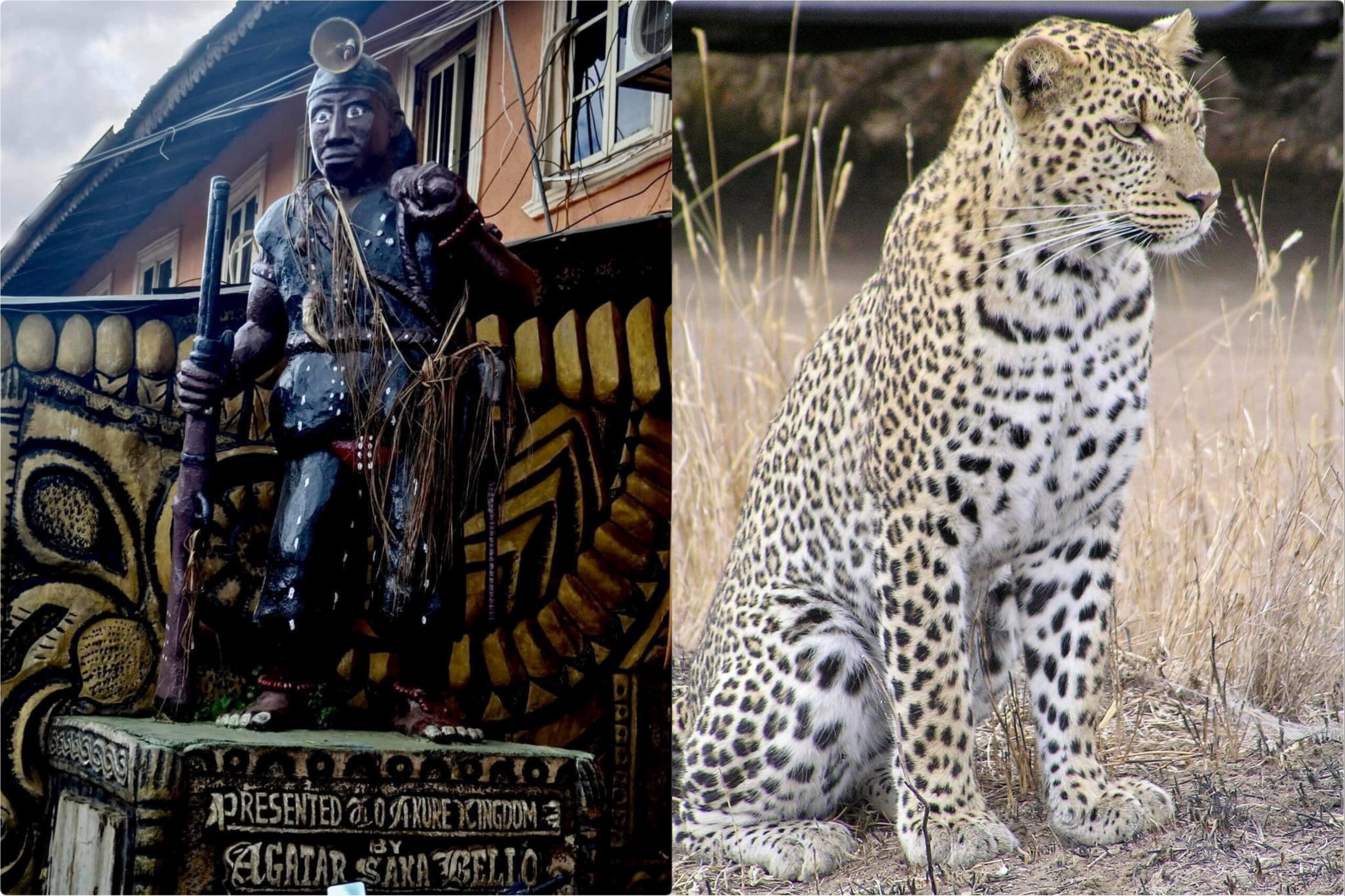
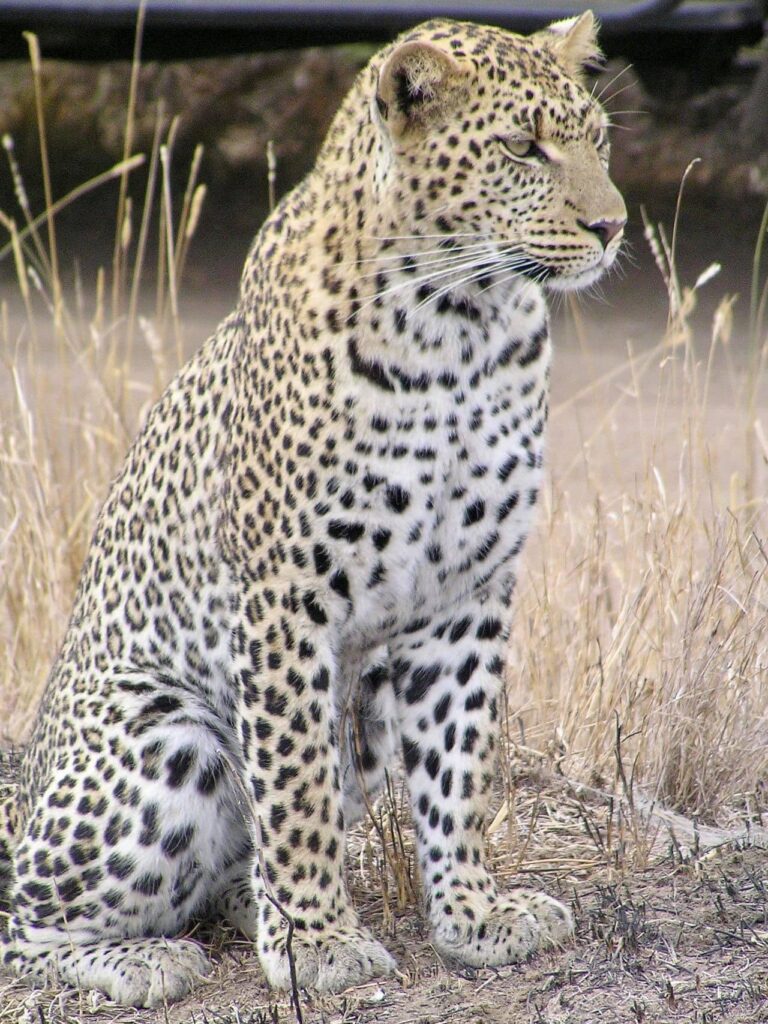
Akure’s King is known as the Deji of Akure and is supported by six high chiefs or iwarefa in his or her domain.The totem of Akure is the Leopard and the father of Omoremilekun Omoluabi was himself called Ekun (this was his regnal name).It is for this reason that every descendant of the Akure clan has been addressed by outsiders as Omo Ekun during the recitation of his or her praise poetry or,alternatively,as ‘Omo Akure Oloyemekun’,since Omoremi was said to have stayed for a while at Igbo Ooye before coming to the Akure region.After the death or removal of an Oba,a princess regent is appointed under the title of Adele,who is expected to oversee the day-to-day administration of the kingdom while the kingmakers select the next Oba from one of the royal houses.
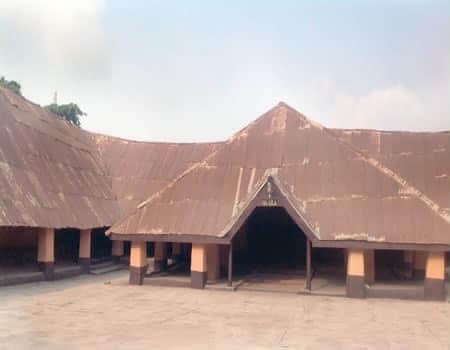
Although the Oba has relocated to a more modern palace,the old building from 1150 AD is still used for all ceremonies.The place has over 15 courtyards,with each having its unique purpose.Ua nla,Ua Ibura, Ua jemifohun,Ua Ikomo are some of the names of the courtyards.For example,in the Ua ubura courtyard,oaths are taken, and the ua Ikomo is used for naming ceremonies.
RULING HOUSES
It is pertinent to know how the ruling houses has been designed in the beginning before going to the emergence of Ojijigogun and Osupa ruling houses as part of the ruling houses of Akure Kingdom.
On the arrival of Omoremilekun Asodeboyede Ajapada to Akure,he met Omoloju Alakunre,who was later called ALAKURE as the Head of Akure people.
Due to some reasons which will be told in the future,Asodeboyede became the first King in Akure.His emergence caused a serious fight between him and Alakure but the elders were able to settle it for them.It was agreed that the the stool Will be rotated between Asodeboyede and Alakure.This was done in order to appease Alakure because it was obvious he had been cheated.
Alakure was fortunate to succeed Asodeboyede as the second Deji.After the death of Alakure,Asodeboyede son,Ogbolu became the third Deji.Then Alakure son,Odoro became fourth.That’s how it has been until it got to eleventh Deji,who was a descendant of Asodeboyede,Oba Obagbeyi Adegite.Since the Asodeboyede descendants have been becoming the Deji of Akure while Alakure lineage went into extinction.
ROYAL HOUSES
As said earlier,Originally there was only one ruling house of Akure,Omoremilekun Asodeboyede,founded by the first king in the kingdom,Omoremilekun.The kingship passed down through an essentially ambilineality descent line(due to the fact that the kingdom had a few female monarchs)until the 29th king,Oba Arakale(r.1768-1818),who had two sons,Oba Osupa and Oba Ojijigogun.
These two kings are the progenitors of the cadet branches of the Asodeboyede ruling house,Osupa and Ojijigogun.It was the Ado Ibini war that took one of the son of Oba Arakale,Omoba Adesoro(later Osupa 1)who was the Asafinrin and others to Benin.
It was Adesoro that was ordained from Benin to go and be the king in Akure and he was name OSUPA because a king is coming from Ado-Ibini OSUPA-T’ADO-LA A.This is the beginning of Osupa but still Asodeboyede lineage.The main royal family of the Osupa house is Odundun,whose progenitor is Oba Odundun,one of Osupa’s sons and an ancestor of the current Deji of Akure,Oba Odundun II.
The three royal families of the Ojijigogun ruling house are Arosoye,Adesida,and Ifaturoti,two of which were founded by ruling kings of Akure.Omoba Alebiosu Obadua(later Arosoye I) and Omoba Olofinlade Afunbiowo(later Adesida 1)Omoba Ifaturoti Adegoroye never became king,but his progeny is nevertheless recognized.
STORY BEHIND WHY AKURE KING IS CALLED DEJI
Originally,the kings of Akure were referred to as Ajapada.The title Deji of Akure started with Oba Ogunja(r.1533-1554),whose father,Oba Olofinleyo(r.1434-1474)took the daughter of Oba Atakunmosa,the Owa of Ijeshaland, as one of his wives while the latter was on his way to Benin.By the time Oba Atakumosa was returning to Ilesha from the pilgrimage,his daughter Omoba Owawejokun had given birth to a son.
While other dignitaries gave the little baby common gifts,Oba Atakunmosa was said to have presented his grandson with a small diadem.Owafadeji (i.e.Owa gave him a diadem) became the praise name of the young boy,and by the time he reached his adulthood it had become his de facto name.When Owafa’Deji became Oba,the appellation assumed a titular importance and because of his prominence as an Oba,subsequent Obas or kings assumed the title while the advent of the modern era has formally made Deji the official title of the Obas of Akure.However,the original title of Ajapada has remained a significant part of the Deji’s ceremonial style till the present day.
THE CITY
Within the modern Akure kingdom are two other constituent communities with their separate chiefs and traditions.The more prominent of the pair is Isinkan,while the second of them is Isolo.The Baale of Isinkan is known as the Iralepo while the Baale of Isolo is known as the Osolo of Isolo.In the olden days these were separate towns,but they were brought together under the nominal control of Akure as a result of a number of wars.
Nearby towns include Isarun,Ilara,Igbaraoke,Iju, Itaogbolu,Idanre,Owo,Ikere and Ondo.The most influential Deji in recent history was Oba Adesida I who was known as Oba Afunbiowo.Several Dejis after him were his direct descendants.
STATE CAPITAL
Akure became the state capital of Ondo-State when it was created in February 1976 from the former Western State,and is the largest city in Ondo State.The city had a population of 484,798 as at the 2006 population census.Akure lies about 7°25’ north of the equator and 5°19’ east of the Meridian.It is about 700 km (430 mi) southwest of Abuja and 311 km (193 mi) north of Lagos State.Residential districts are of varying density,some area such as Arakale,Ayedun Quarters,Ijoka,and Oja-Oba consist of over 200 inhabitants per hectare (81/acre),while areas such as Ijapo Estate,Alagbaka Estate,Avenue and Idofin have between 60 and 100 inhabitants per hectare (24 and 40/acre) The town is situated in the tropic rainforest zone in Nigeria.
AGRICULTURE
Akure is the trade center for a farming region where cocoa,yams,cassava,corn and tobacco are grown.Cotton is also grown and used to weave cloth.Grains like rice,beans,and millet are very common as they are the major sources of carbohydrate.
Akure people cultivated crops,rear animals as well as other birds both for consumption and commercial purpose.The people employed different farming methods in their economic activities among which was shifting cultivation whereby lands were deliberately left alone for a longer period of time for them to regain their nutrients. More so, there were nearby farms called Oko-Etile or Oko-Aba and distance farms called Oko-Egan (Interview with Arifalo, 2009).
Hence, at the distance farm, people cultivated crops like kola nuts,bitter kola, and plantains while at the nearby farms,they planted early yams,cassava,vegetables.
There were also edible fruits for the people.The women and their children were not left out in the farming system.
The women assisted their husbands in harvesting crops and carried them home while some were either exchanged for the commodities they could not produce by themselves or sold at an amount of money. In addition, there were many local industries in the pre-colonial Akure kingdom.
These included blacksmithing,weaving,dyeing,calving,leather works and oil palm industries.Based on the fact that Akure was surrounded by large traces of tropical forest reserves,it constituted an extensive timber industry.
RELIGION
Religion also played a crucial role in the political administration of pre-colonial Akure. Akure indigenous traditional religion was and still is based on the belief in the supreme deity.
The people also believed in divinities,ancestral spirits,moral,orders and life hereafter.The divinities that were common among Akure and her neighbours were Ogun(god of iron) and
Egungun(masquerades).However,it is important to know that the number of adherents of traditional religion in Akure has reduced drastically due to the advent of foreign religions like Christianity and Islam coupled with Western civilization and modernization.
By Oluwafemi Omodara
FOLLOW US ON:


Lifestyle
AFRICAN FAMILIES: WHY DO WE KEEP REPEATING THE SAME MISTAKES FROM ONE GENERATION TO THE NEXT?




Belgian parliament to legislate to allow police to enter homes to facilitate undocumented migrant removals

STOP CONFUSING WEALTH WITH SUCCESS! NOT EVERYTHING THAT GLITTERS IS GOLD!

Nigerian states’ revenues rise 93%, but education spending drops — World Bank

‘Sleeping Prince’ of Saudi Arabia dies after 20 years in coma

2027: Atiku delays ADC membership card collection amid rumoured Jonathan comeback

How A Class Of 24 Students Produced 2 Presidents, 4 Governors, 2 Ministers, 4 Emirs, 3 Justices, 4 Ambassadors and Other Influential Leaders


-

 News16 hours ago
Air chief pleads for patience as investigation begins on Ondo crash
-
News24 hours ago
PHOTOS: Troops rescue six kidnapped victims during operations in Plateau
-
News16 hours ago
Dapo Abiodun reveals that Nigeria needs 554,353 personnel for state police, read details
-
News16 hours ago
INEC displays voter register, begins PVC distribution ahead of 2027 elections
-
Business17 hours ago
FG’s 30-day petrol discount sparks opposition backlash
-
Sports16 hours ago
Adeniyi lauds Nigeria’s Veterans World Wrestling Champs medal
-
News15 hours ago
Trump rules out new Iran attack before US midterm elections
-
Business16 hours ago
Report reveals Nigeria leaves N40tn manufacturing opportunities untapped