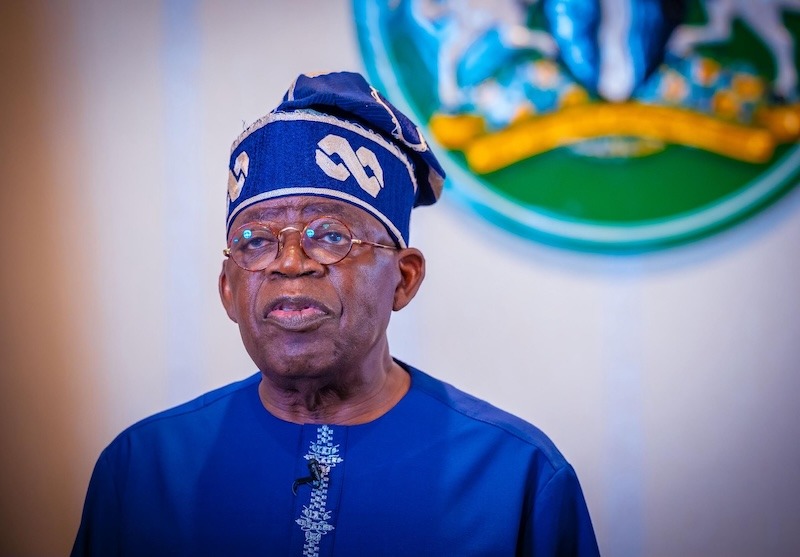
President Bola Ahmed Tinubu has declared that the Nigerian economy has witnessed a transformation from total dependence on sale of hydrocarbon resources to potential growth in agriculture, manufacturing, and the digital and creative industries.
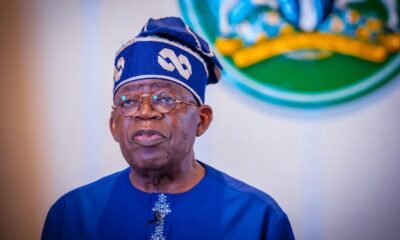
President Tinubu gave his scorecard on diversification of the economy on Tuesday while speaking during the fifth anniversary of the Nigerian Upstream Petroleum Regulatory Commission (NUPRC).
Represented by Vice President Kashim Shettima at the event, President Tinubu maintained that in the last three years of his administration, there has been a massive drop in oil revenue, as a result of growth in other sectors, a feat he attributed to his Renewed Hope Agenda.
He said: “These gains matter well beyond the oil and gas industry. Under the Renewed Hope Agenda, we are building a diversified economy in which agriculture, manufacturing, the digital and creative industries all play their part.
“We have already reduced our dependence on oil revenue, and we intend to go further. But a diversified economy still needs energy, foreign exchange and investment, and that is where this sector serves the nation. Our gas can power homes and factories. Petroleum earnings support a stable naira and help fund the Federation.”
Vice-President Shettima also told the gathering of players in the oil and gas industry that there has been an increase in investment in upstream sector and stability in hydrocarbon production, positive developments he attributed to the joint effort of security agencies, operators, host communities, and the regulatory agency, the NUPRC.
He stated that a well-run upstream industry is capable of creating jobs for Nigerian engineers, fabricators, and service companies, as his administration plans to use petroleum resources to build the wider economy, rather than depend on them.
He said: “With the largest gas reserves in Africa, we will expand gas supply for power, industry and clean cooking, reduce flaring and methane emissions, and grow renewable energy alongside it. Nigeria will meet its climate responsibilities without sacrificing the development and energy access our people deserve.”
President Tinubu also charged the International Oil Companies to reciprocate his favorable fiscal policy in the oil industry.
“Operators who enjoy incentives must deliver on their commitments to work programmes, local content, the environment and host communities, and the Commission must also account publicly for its own performance. We will uphold the rule of law and the sanctity of contracts, so that disputes are fewer and, where they arise, are resolved quickly and fairly.”
Identifying the Petroleum Industry Act (PIA) as a strong foundation for the achievements recorded in the sector, President Tinubu observed, however, that a foundation is only the beginning, as laws only set the rules, while investors decide on commercial terms.
He charged the Commission “to keep its processes clear and its timelines reliable, to work closely with sister agencies so that investors are not caught between overlapping requirements, and to remain firm, fair and independent in its decisions.”
“Acknowledging that five years was a short time in the life of any institution, President Tinubu applauded the NUPRC for using the period well, urging the Commission to “approach the next five years with the same commitment, integrity, and sense of purpose.”
In his presentation, Minister of State for Petroleum Resources, Oil, Senator Heineken Lokpobiri, said NUPRC has recorded significant achievements in the last five years, attributing the progress to the leadership and reform agenda of the Tinubu administration.
According to him, Nigeria, with crude oil production of about 1.7 million barrels per day and over 37 billion barrels of oil reserves, still requires increased investment, additional licensing rounds, and intensified exploration to unlock the full potential of the nation’s petroleum resources.
Also speaking, the Chairman of the NUPRC Governing Board, Senator Magnus Abe, said the creation of the Commission under the PIA was evidence that Nigeria was making progress in reforming the oil and gas sector.
He credited the Commission’s success to President Tinubu’s dogged leadership and his decision to shield the regulator from political interference.
Abe commended the management and staff of NUPRC for what he called their exceptional commitment to transparency, professionalism and operational efficiency over the last five years.
The anniversary event also featured the presentation of awards to former Directors of the Department of Petroleum Resources (DPR), which was transformed into the NUPRC, in recognition of their contributions to reforms in the upstream petroleum sector.