Connect with us

Business

Oil exports drive Nigeria’s current account surplus to $4.98bn

Published

on

Nigeria’s current account surplus rose sharply by 255.7 per cent quarter-on-quarter to $4.98bn in the first quarter of 2026, driven by higher crude oil, gas and refined petroleum exports, as well as a steep decline in petroleum product imports, according to the latest Balance of Payments report released by the Central Bank of Nigeria on Wednesday.

The apex bank, in its Q1 2026 Balance of Payments Highlights, stated that “provisional balance of payments statistics for Q1 2026 show a current account surplus of $4.98bn, which was higher than the $1.40bn and $3.41bn recorded in the preceding quarter (Q4 2025) and corresponding period (Q1 2025), respectively.”

The report showed that the current account surplus expanded by 255.71 per cent from the $1.40bn recorded in the fourth quarter of 2025 and was 46.04 per cent higher than the $3.41bn surplus posted in the corresponding period of 2025.

According to the CBN, the improvement was supported by increased earnings from crude oil exports, gas exports and refined petroleum product exports, alongside a significant reduction in refined petroleum product imports and lower net out-payments on the primary income account.

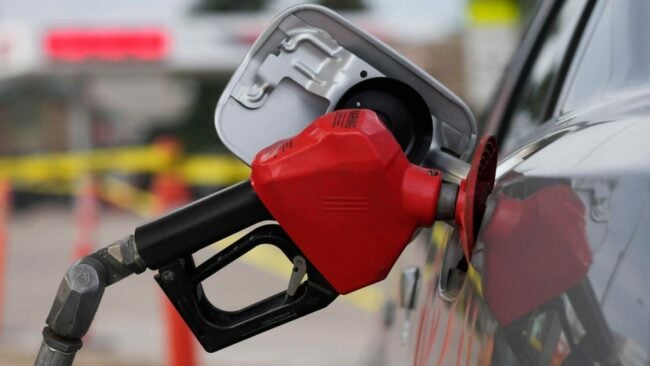
The report noted that crude oil export earnings rose to $8.11bn in Q1 2026 from $6.77bn in Q4 2025, while gas exports increased to $2.53bn from $2.24bn. Refined petroleum product exports also climbed to $2.37bn from $1.97bn during the period. At the same time, refined petroleum product imports plunged by 87.5 per cent to $0.31bn from $2.48bn in the preceding quarter.

A breakdown of the external sector data showed that the goods account, which is the largest component of the current account, recorded a surplus of $5.95bn in Q1 2026, compared with $1.77bn in Q4 2025 and $3.35bn in Q1 2025.

See also  Tinubu directs immediate employment for 200 corps members, N250,000 cash awards

The CBN said, “The goods account (a major sub-account in the current account) recorded a significantly higher surplus of $5.95bn in Q1 2026, as against $1.77bn and $3.35bn recorded in the preceding quarter and corresponding period of 2025.”

The stronger goods account position was underpinned by a rise in total exports to $15.49bn from $13.36bn in the previous quarter, largely due to higher crude oil and gas exports. Meanwhile, total imports fell to $9.54bn from $11.59bn, reflecting lower imports of refined petroleum products and non-oil goods.

Crude oil exports increased by 19.79 per cent quarter-on-quarter to $8.11bn, while gas exports rose by 12.95 per cent to $2.53bn. Refined petroleum product exports jumped by 20.3 per cent to $2.37bn. Non-oil exports also improved marginally by 4.62 per cent to $2.49bn.

On the import side, non-oil imports declined by 10.49 per cent to $7.85bn, while refined petroleum product imports dropped sharply to $0.31bn from $2.48bn. However, crude oil imports rose to $1.39bn from $0.34bn recorded in Q4 2025.

The report also showed mixed performances across other current account components. Net out-payments on services increased to $3.71bn from $3.32bn, driven largely by higher net debits in travel and other business services.

“The increase in net out-payments for services was largely due to increases in net debits in travel and other business services,” the bank stated.

The primary income deficit narrowed to $2.83bn from $3.27bn in the preceding quarter, reflecting lower dividend and interest payments to foreign investors. According to the report, “This was largely attributable to a decrease in out-payments (dividend and interest) to non-residents’ investments, mostly to direct investors.”

See also  Aviation professionals outline paths to sector recovery

The secondary income account surplus, which largely captures remittance inflows, declined to $5.57bn from $6.21bn. Personal transfers from Nigerians in the diaspora fell to $5.30bn from $5.72bn in Q4 2025.

Despite the stronger current account position, the financial account remained in a net borrowing position. The report showed that net borrowing increased to $2.51bn in Q1 2026 from $1.96bn in the previous quarter.

Portfolio investment inflows strengthened during the period, rising to $6.03bn from $5.27bn in Q4 2025, while direct investment inflows moderated slightly to $1.03bn from $1.11bn. Nigerian investments abroad recorded outflows of $0.20bn under direct investment assets and $0.26bn under portfolio assets.

The CBN attributed developments in the financial account to increased portfolio investment inflows, a marginal decline in direct investment inflows, accretion to external reserves, and increased acquisition of portfolio investment assets abroad by residents.

Further analysis of the balance of payments data showed that Nigeria recorded an overall balance of payments surplus of $2.38bn in Q1 2026, lower than the $2.67bn surplus achieved in Q4 2025. The stock of external reserves, however, rose significantly to $48.35bn at the end of March 2026 from $45.75bn at the end of December 2025.

The report also highlighted a deterioration in net errors and omissions, which widened to negative $7.49bn in Q1 2026 from negative $3.36bn in the preceding quarter.

The latest figures indicate that improvements in oil production, rising petroleum exports and reduced dependence on imported fuel continued to strengthen Nigeria’s external position during the first quarter, helping to offset weaker remittance inflows and higher service-related outflows.


Continue Reading
Click to comment

Leave a Reply

Your email address will not be published. Required fields are marked *

Business

SAN advocates accountable supply chains in Africa

Published

on

The Chairperson of the United Nations Working Group on Business and Human Rights, Prof. Damilola Olawuyi (SAN), has urged leaders across government, business and development sectors in Africa to speed up measurable progress toward accountable and sustainable supply chains in line with the United Nations Guiding Principles on Business and Human Rights.

Olawuyi, who also serves as the global vice chair of the International Law Association, gave the charge last week, Thursday, in Nairobi, Kenya, during his keynote address at the 2nd Edition of the East and Horn of Africa Business and Human Rights Dialogue.

The forum, convened by DanChurchAid in partnership with the United Nations, the Ministry of Foreign Affairs of Denmark and other regional partners, brought together leaders from East Africa, development experts, business executives, civil society actors and academics to examine ways of promoting responsible investment across key economic sectors.

The dialogue, themed “Beyond Compliance: Strengthening Accountable and Rights-Centred Supply Chains in East and Horn of Africa”, also featured speakers from the Office of the High Commissioner for Human Rights, the United Nations Development Programme, UN Global Compact, UNICEF, the African Union and the African Commission on Human and Peoples’ Rights Network of National African Human Rights Institutions, among others.

Olawuyi, who issued a statement on Monday, on his keynote address, delivered in Kenya, said African businesses must go beyond policy awareness and begin to show real implementation by embedding human rights due diligence into their supply chains, investment decisions and procurement practices.

See also  ‘Price Of 5kg Cooking Gas Increased To ₦8,324’

He warned that companies that fail to adapt to the global shift toward rights-based business standards risk being left behind.

“With increased adoption of rights-based legislation across the world, including the European Union’s Directive on Corporate Sustainability Due Diligence, it is crystal clear that African businesses that fail to respond risk being left behind in a rapidly changing rights-based global economy,” he said.

He noted that Africa was attracting growing investment in critical minerals, infrastructure, agribusiness and green technologies, adding that such growth must not come at the expense of communities or workers.

“Africa is rising as the hub for new investments in critical minerals, infrastructure, agribusiness and green technologies,” Olawuyi said.

At the same time, he said local communities, Indigenous groups and marginalised stakeholders want development that places environmental, social and governance standards at the centre of supply chains.

He said, “No one wants tea, coffee or even critical minerals sourced from exploitative value chains. So, this is not only about compliance, but also about responding to growing consumer demand for green and responsibly sourced products.

“We therefore call on all States and businesses across the continent to step up their commitment to green and sustainable growth, a development approach that delivers measurable economic growth that is both environmentally sustainable and socially inclusive.”

Olawuyi commended Nigeria, Uganda, Kenya, Liberia and Ghana for adopting National Action Plans on Business and Human Rights, but noted that governments must accelerate implementation and turn commitments into tangible progress.

He also stressed the need for stronger knowledge sharing and innovation, saying technology and digital platforms could help track, monitor, report and address human rights risks across supply chains.

See also  Onyema warns new taxes could cripple airlines

The UN expert called on states and businesses to increase financial and technical support for youth innovators, digital entrepreneurs, higher education institutions, national human rights institutions and civil society organisations working to promote ethical and rights-based investment.

According to him, such support is vital to dismantling workplace inequality and advancing sustainable development across the continent.

punch.ng

FOLLOW US ON:

FACEBOOK

TWITTER

PINTEREST

TIKTOK

YOUTUBE

LINKEDIN

INSTAGRAM

Continue Reading

Business

No new taxes for fuel, telecom – FG

Published

on

The Federal Government on Wednesday dismissed reports suggesting it had adopted or was considering the introduction of new taxes on telecommunications services and petroleum products following recommendations contained in the latest IMF Article IV Consultation Report on Nigeria.

The government said the reports misrepresented the contents of the IMF report and did not reflect its policy direction, insisting that no new taxes were being planned for either the telecoms or petroleum sectors.

In a statement signed by the Head of Information and Public Relations Unit of the Federal Ministry of Finance, Efe Ovuakporie, the government stressed that recommendations contained in the IMF report were not binding on Nigeria and should not be interpreted as official government policy.

“The government has dismissed reports suggesting that it has adopted or is considering new taxes on telecommunications services and petroleum products following the publication of the International Monetary Fund Article IV Consultation Report on Nigeria,” the statement said.

The clarification comes days after the IMF, in its Article IV report on Nigeria, recommended a range of revenue-enhancing measures as part of efforts to strengthen government revenue and improve fiscal sustainability.

The PUNCH earlier exclusively reported that the IMF recommended introducing taxes on fuel products and telecommunications services in Nigeria as part of broader measures to increase government revenue and create fiscal space for development spending and social interventions.

However, the Federal Government maintained that decisions on taxation could only be made through constitutional and legislative processes and would be guided by national priorities and prevailing economic realities.

See also  World Bank projects Brent crude to average $60

According to the ministry, “The IMF Article IV Consultation Report contains the Fund’s assessment of Nigeria’s economy as well as recommendations for consideration by the authorities. Those recommendations do not amount to government policy and are not binding on Nigeria.”

It added, “Decisions on tax matters are taken through established constitutional and legislative processes and are guided by national priorities and prevailing economic realities.”

The government also clarified that the Value Added Tax waiver on petroleum products remained in force and had not been withdrawn.

According to the statement, although existing legislation provides for a fuel surcharge, such a measure can only become effective through a ministerial order and publication in the Official Gazette.

“It also noted that although existing legislation provides for a fuel surcharge, such a measure can only take effect through a ministerial order and publication in the Official Gazette. No such process is under consideration,” the ministry stated.

The government argued that retaining the waiver and suspending related charges had helped shield households and businesses from the impact of global energy market volatility while supporting relative stability in domestic fuel prices.

“The continued suspension of these charges has helped cushion the effect of global energy price fluctuations on households and businesses while keeping domestic fuel prices relatively stable,” it added.

On the telecommunications sector, the government said the excise duty that was introduced before 2023 had already been abolished under the country’s newly enacted tax laws and was therefore no longer applicable.

“The Government further clarified that the telecommunications excise duty introduced before 2023 has been repealed under the new tax laws and is therefore no longer applicable,” the statement said.

See also  ‘Price Of 5kg Cooking Gas Increased To ₦8,324’

The ministry consequently urged the public to disregard reports claiming that fresh taxes were being proposed for telecommunications services or petroleum products.

“Against this backdrop, reports claiming that new taxes are being planned for telecommunications services or petroleum products are not factual and should be disregarded,” it stated.

The government reiterated its commitment to implementing reforms aimed at stimulating economic growth, improving revenue administration and attracting investment rather than imposing additional tax burdens on citizens.

“The Federal Government remains focused on reforms that promote economic growth, improve revenue administration and create a more competitive environment for investment and job creation. The emphasis remains on expanding economic activity, plugging leakages and improving efficiency rather than placing additional tax burdens on citizens,” the statement added.

It further assured Nigerians that any future tax measures would be announced through official channels and implemented in accordance with the law.

punch.ng

FOLLOW US ON:

FACEBOOK

TWITTER

PINTEREST

TIKTOK

YOUTUBE

LINKEDIN

INSTAGRAM

Continue Reading

Business

Abia begins relocation of transport operators to new terminal

Published

on

The Abia State Government has commenced the enforcement of its new centralised transport system in Umuahia, with the phased relocation of transport operators to the Nnenna Otti Bus Terminal, Umuahia.

The Commissioner for Information, Okey Kanu, made this known at Government House, Umuahia, on Tuesday while briefing newsmen on the outcome of this week’s State Executive Council (EXCO) meeting presided over by Governor Alex Otti.

The commissioner disclosed that, in order to ensure compliance by transport operators, the state government took time to hold a series of meetings with transport stakeholders, during which their concerns were addressed.

Kanu added that, following the steps taken by the government, full operations had commenced at the terminal, with informal transport operators and unions already moved to the facility, despite the normal resistance that accompanies change.

“There appears to be some push backs among some of the operators and this is as a result of the fact that people are not easily giving in to change.

“What is happening is that all the parks in the state have been moved to the bus terminal.

“The Honourable Commissioner for Transport and his team have been holding a series of meetings with all the operators. They had one yesterday. And a few of their anxieties will be addressed very soon. Enforcement also will commence today to bring all the operators into the terminal.

“The first phase of operations involves the operations of the Abia Green Shuttle buses. The second phase involves informal transport operators, while the third phase will involve the formal transport operators,” Kanu stated.

See also  Customs hand over seized N40.7m petrol to NMDPRA

Answering questions from newsmen, the Commissioner for Transport, Dr Chimezie Ukaegbu, said the state government had not taken away anybody’s means of livelihood but had instead introduced a more organised system to sanitise the transport sector and improve it.

He revealed that transport unions and operators were told to bring four of their workers each to the terminal, where they would be properly identified with reflective tags and carried along.

He further noted that the terminal operates a transparent system that allocates loading opportunities on a first-come, first-served basis irrespective of union affiliations, insisting that about 80 to 90 per cent of operators had embraced the initiative. He added that continuous engagements were being held with those yet to fully comply with the government’s transport policy.

He equally noted that the government provided a drivers’ lodge, fully air-conditioned and furnished with seats, while passengers sit in a conducive air-conditioned environment, adding, “what else will you need as a transporter or even as a passenger? I think everything good about transportation is embedded in that Nnenna Otti Bus Terminal,” Ukaegbu stated.

Contributing, the Special Adviser to the Governor on Media and Publicity, Mr Ferdinand Ekeoma, said that the centralisation of transport operations would reduce urban congestion, indiscriminate loading bays, expenses incurred by transport operators on their loading bays, and security challenges associated with the influx of unregulated transport operators, thereby enabling transport operators to make more gains.

He added that, over the years, “we have seen transport operators extort people, by coming up with this organised system, we are solving our problems,” Ekeoma stated.

See also  World Bank projects Brent crude to average $60

punch.ng

FOLLOW US ON:

FACEBOOK

TWITTER

PINTEREST

TIKTOK

YOUTUBE

LINKEDIN

INSTAGRAM

Continue Reading

Trending