Connect with us

News

Reps seek tough sanctions against S’Africa as 282 Nigerians return

Published

on

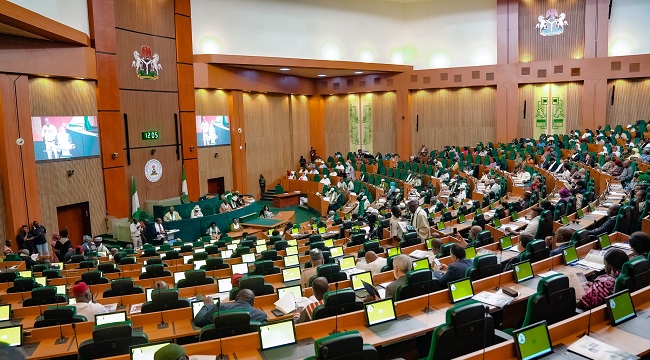
The House of Representatives on Thursday called on the Federal Government to impose strong diplomatic measures against South Africa over renewed xenophobic attacks, extrajudicial killings and the alleged systematic persecution of Nigerians and other African nationals residing in the country.

This comes as 282 Nigerians arrived at the Murtala Mohammed International Airport, Lagos, from South Africa, in the fourth evacuation flight operated by Air Peace.

According to a statement by the spokesperson of the Ministry of Foreign Affairs, Abuja, Kimiebi Ebienfa, 282 Nigerians, including 12 infants, arrived aboard an Air Peace flight at about 7:30 p.m. on Thursday.

The House resolution for strong diplomatic measures followed the adoption of a motion of urgent public importance sponsored by the member representing Kanke/Kanam/Pankshin Federal Constituency of Plateau State, Yusuf Gagdi.

The motion received unanimous support during plenary presided over by Deputy Speaker Benjamin Kalu.

Moving the motion, Gagdi said Nigeria could no longer remain silent in the face of repeated attacks on its citizens despite years of diplomatic engagements with South Africa.

He said, “The House is aware that the Republic of South Africa has, over the years, witnessed repeated waves of xenophobic violence directed against Nigerians and other African nationals, resulting in the loss of innocent lives, destruction of businesses, unlawful arrests, forced displacement and widespread fear.”

He added, “Recent reports indicate a fresh escalation of attacks targeting Nigerians, Ghanaians, Zimbabweans, Zambians, Mozambicans, Malawians and other African nationals lawfully residing in South Africa.”

The lawmaker further stated that, “The Federal Government of Nigeria has confirmed the recent killing of two Nigerian citizens, including one who reportedly died while in police custody and another who was brutally murdered in front of his business premises.”

According to him, “These tragic incidents have once again exposed Nigerians and other Africans to grave danger despite repeated diplomatic engagements between Nigeria and South Africa.”

See also  President Tinubu Writes Reps, Seeks N1.15tr Borrowing Approval To Fund 2025 Budget Deficit

Recalling Nigeria’s leading role in the struggle against apartheid, Gagdi said the treatment being meted out to Nigerians in South Africa was both unfortunate and unacceptable.

According to him, “Nigeria was one of the foremost nations that stood firmly against apartheid through diplomatic leadership, huge financial support, humanitarian assistance and sustained political pressure that contributed immensely to the liberation of South Africa.

“Thousands of Nigerians made sacrifices, while successive Nigerian governments committed enormous national resources in support of the anti-apartheid struggle, believing in the ideals of African solidarity, justice and freedom.

“It is, therefore, profoundly disturbing that Nigerians and other Africans now face persecution, humiliation and violent attacks in a country whose freedom they helped secure.”

He expressed concern that “Xenophobic violence has become recurrent, systematic and increasingly deadly.”

He noted that, “The repeated attacks have continued despite previous assurances by the Government of South Africa that adequate measures would be taken to guarantee the safety of foreign nationals.”

He further lamented that, “Innocent Africans continue to lose their lives while criminal perpetrators often escape justice, thereby encouraging impunity.”

Gagdi also criticised comments allegedly made by a South African junior minister, saying, “Any inflammatory or hateful public statement capable of inciting hostility against Nigerians or other African nationals as presented by the South African Junior Minister is irresponsible, unacceptable and capable of aggravating an already volatile security situation.”

He warned that, “The continued attacks undermine the ideals of African unity, pan-Africanism, regional integration and peaceful coexistence upon which the African Union was founded.”

The lawmaker further cautioned that failure to decisively address the recurring attacks could further endanger the lives and property of Nigerians in South Africa, adding that the continued inaction of the South African government “may embolden perpetrators and weaken confidence in regional institutions established to protect African citizens.”

See also  Fintiri re-unites 14 abducted children with parents

Contributing to the debate, Billy Osawaru (APC, Edo) urged the Federal Government to intensify diplomatic engagement with South Africa to halt the attacks.

“Some measures must be taken to address this problem. We are worried that despite the engagement between our government and that of South Africa, the xenophobic attacks have continued, with the South African security architecture looking away.

“The blood of our innocent citizens is in the hands of these security personnel,” he said.

Lagos lawmaker, Moshood Akiolu, recalled Nigeria’s sacrifices during the anti-apartheid struggle.

“The money we spent to put an end to apartheid could have been used for something else,” he said, while calling on the National Assembly to invite officials of the South African High Commission in Nigeria to explain measures being taken to protect Nigerians.

Also speaking, Ghali Tijjani from Kano advocated tougher measures against Pretoria.

“The attacks against Nigerians did not start today. We cannot keep maintaining diplomatic and economic ties with a country that is doing nothing to stop the killing of Nigerians in its territory,” he said.

Adebayo Adepoju, representing Ibarapa Central/Ibarapa North Federal Constituency of Oyo State, called for legal redress and support for affected Nigerians.

“There must be a way to address the injustice being done to our people. We must seek the help of international law to seek redress.

“We must also find a way to assist them to start life again because to begin afresh will not be easy for most of them,” he said.

Following the adoption of the motion, the House urged the Federal Government to summon the South African High Commissioner to Nigeria to “provide a comprehensive explanation regarding the recent killings and to clearly communicate the official position of the Government of South Africa on the protection of Nigerians and other African nationals.”

See also  Retired police officer offers viral navy officer, Yerima part of his pension

The lawmakers also called for “an independent, transparent, impartial and internationally monitored investigation into the deaths of the affected Nigerians and all other African victims, with a view to ensuring that all perpetrators are identified, prosecuted and punished.”

The House further urged the Federal Government to engage the African Union, the Southern African Development Community, the United Nations and the African Commission on Human and Peoples’ Rights to ensure accountability and the protection of African migrants in South Africa.

It also asked the Federal Government to invoke all available diplomatic and legal mechanisms to seek redress for proven violations of international obligations owed to Nigerians, including pursuing appropriate international judicial processes where necessary.

In addition, the House urged the government to review bilateral relations with South Africa and, where necessary, suspend or recalibrate aspects of cooperation until “credible, measurable and verifiable guarantees” are provided for the protection of Nigerians and other African nationals.

It also called for strengthened consular services, legal assistance, emergency evacuation arrangements and reintegration support for Nigerians who choose to return home.

The House resolved to constitute an ad hoc committee to engage the South African Parliament, the South African Government, the African Union and other relevant institutions, investigate the recurring attacks and report back within 21 days.

Xenophobic attacks in South Africa have remained a recurring source of diplomatic tension between Abuja and Pretoria for more than a decade.

Major outbreaks in 2008, 2015 and 2019 claimed several lives and led to the destruction of businesses owned by foreign nationals, including Nigerians.

While South African authorities have repeatedly condemned the violence and promised greater protection for migrants, concerns have persisted over the safety of foreign nationals and the prosecution of those responsible for the attacks.

FOLLOW US ON:

FACEBOOK

TWITTER

PINTEREST

TIKTOK

YOUTUBE

LINKEDIN

INSTAGRAM

Continue Reading
Click to comment

Leave a Reply

Your email address will not be published. Required fields are marked *

News

Anthropic flags five Claude AI uses linked to biological weapons research

Published

on

Anthropic, the company behind Claude AI, says it identified five cases in which users employed its artificial intelligence models in ways that could support biological weapons development.

The company disclosed this in its latest threat intelligence report published on Thursday, saying the cases were among a range of malicious or potentially harmful activities detected and disrupted on its platform between December 2025 and August 2026.

Anthropic particularly flagged five Claude AI use cases that involved research into areas including chikungunya virus, highly pathogenic avian influenza, orthopoxviruses, venom peptides and toxins.

The company said it had banned the accounts involved and incorporated information from its investigations into its safeguards, enforcement and threat intelligence systems.

However, Anthropic stressed that it was not asserting that the scientists involved intended to cause harm.

“We do not assert that they intended harm, and identifying them or their labs could expose them to harm,” the company said, adding that it would withhold the names of the research institutions, countries and specific biological agents or techniques involved.

Anthropic said the cases demonstrated the difficulty of distinguishing between legitimate scientific research and activities that could be used for harmful purposes.

“Biological misuse is one of the most serious risks of frontier AI models,” the company said, warning that AI could potentially be used to make existing pathogens more dangerous or create new ones.

“The same information that can be used to develop a biological weapon could also be used to develop, for example, a vaccine or a cure for a disease,” the AI giant added.

See also  President Tinubu Writes Reps, Seeks N1.15tr Borrowing Approval To Fund 2025 Budget Deficit

In the first case, Anthropic said its biological safety classifier blocked a request to help prepare a grant application involving gain-of-function research on chikungunya virus.

The company said its subsequent investigation found that a reseller platform was being used to provide access to Claude to researchers in regions where Anthropic does not offer its services.

The platform also allegedly routed requests rejected by Claude to other AI models with more permissive safeguards.

Anthropic said it banned the associated accounts, worked with partners to take down the relay networks and shared its findings with AI companies and government authorities.

In a second case, the company said a researcher outside the US used Claude over several weeks while planning research involving highly pathogenic avian influenza and its adaptation to mammals.

According to Anthropic, the researcher used Claude for study planning, data analysis, interpretation and prioritisation of experiments, as well as editorial assistance.

The company said its safeguards restricted the researcher to weaker Claude models and that the AI’s contribution was primarily limited to clerical assistance, study ideation and design.

Anthropic said the case nevertheless provided evidence of active research programmes involving pathogens with enhanced pandemic potential.

A third case involved a grant application for orthopoxvirus research at a state-associated infectious disease laboratory. Anthropic said a reseller relay serving more than a dozen customers used Claude to draft the application.

The company said the application involved research into how orthopoxviruses interact with the immune system and was produced using Claude Opus 5 in about an hour.

The fourth and fifth cases involved research into venoms and toxins.

See also  El-Rufai abused medical visit, doctor arrested – ICPC

Anthropic said one researcher used Claude to develop an atlas of venom toxin peptides and a generative system for optimising toxin characteristics, with the stated goal of developing therapeutic molecules.

In another case, a researcher used Claude in projects involving the computational redesign of toxins under a national public research programme. Anthropic said the researcher deliberately obscured the identities of some toxins and viral proteins in progress reports.

The company said both accounts were banned in May 2026 for violating its Supported Regions Policy.

Anthropic said the cases highlighted the challenge of regulating AI-assisted biological research because many applications are “dual use”, meaning they can have both beneficial and harmful applications.

Anthropic, however, cautioned against interpreting its findings as evidence that Claude was currently enabling imminent biological threats.

“We take these cases as evidence not of the imminence of biological threats currently uplifted by Claude, but rather as evidence that significant dual-use research efforts are associated with state actors of concern,” the company said.

The report is part of a wider disclosure by Anthropic on the misuse of its AI systems.

The company said its investigations over the past eight months also uncovered cyber operations, surveillance, influence operations, scams and fraud, conventional weapons development and attempts to illicitly distil its models.

The report comes shortly after concerns raised publicly by former Anthropic researcher Jacob Coxon about the risks posed by increasingly capable AI systems.

PUNCH Online previously reported that Coxon resigned from Anthropic and said “people building AI earnestly believe that it could kill us all by the end of the decade.”

See also  ‘Fake News From Nigeria’ – Trump Attacks CNN Over Iran Ceasefire Report

Anthropic’s latest report also said it had identified a Russia-linked cyber espionage operation in which Claude was used to automate parts of attacks against organisations in Ukraine and Europe.

Source: punchng.com

FOLLOW US ON:

FACEBOOK

TWITTER

PINTEREST

TIKTOK

YOUTUBE

LINKEDIN

INSTAGRAM

Continue Reading

News

South Korea, Iran discuss Strait of Hormuz security

Published

on

The foreign ministers of South Korea and Iran discussed the Strait of Hormuz in a phone call on Friday, Seoul said, days after confirming it was weighing a “contribution” to the waterway’s security.

US President Donald Trump has repeatedly pressured ally South Korea to provide help for the war in the Middle East, saying Seoul rejected his request for assistance in securing the waterway that is crucial to global oil supplies.

South Korean Foreign Minister Cho Hyun spoke by phone with his Iranian counterpart Abbas Araghchi at Tehran’s request, “discussing the recent situation in the Middle East”, and the Strait of Hormuz, the foreign ministry in Seoul said in a statement.

The Friday announcement followed a warning from Tehran earlier this week that any South Korean military contribution to the conflict would have “serious consequences”.

South Korea sent a fact-finding team to assess the situation in the strait and has repeatedly said it has not decided whether to deploy its military to Hormuz.

Traffic through the vital shipping route has been virtually paralysed since the US-Iran war began on February 28, disrupting global energy markets.

Negotiations between Iran and the United States have stalled as they vied for control over Hormuz, which normally carries around a fifth of the world’s oil and liquefied natural gas exports.

AFP

Source: punchng.com

FOLLOW US ON:

FACEBOOK

TWITTER

PINTEREST

TIKTOK

YOUTUBE

LINKEDIN

INSTAGRAM
See also  Olubadan and Mrs Ajimobi deny plot to impeach Makinde
Continue Reading

News

US arms NAF for terror war

Published

on

The United States has delivered military equipment to the Nigerian Air Force as part of efforts to strengthen the security partnership between both countries and support Nigeria’s counter-terrorism operations.

The United States Africa Command disclosed this in a post on its X handle on Thursday, along with pictures of a U.S. Air Force C-17 aircraft delivering the equipment.

AFRICOM said the equipment was supplied under a foreign military sales agreement between the two countries.

“PARTNERSHIP IN ACTION: A U.S. Air Force C-17 delivers equipment to the Nigerian Air Force this weekend. The equipment is part of a foreign military sales agreement that furthers the U.S.-Nigerian partnership and will aid in Nigeria’s efforts to counter terrorism in the region,” the command said.

The latest delivery comes against the backdrop of continued military cooperation between Nigeria and the United States, including training and capacity-building programmes.

On August 23, US forces began training Nigerian troops in unmanned aircraft systems, combat casualty care and other military skills at Operating Location Bauchi, as part of efforts to strengthen security cooperation between the two countries.

According to AFRICOM, the training covered combat lifesaver and tactical combat casualty care instruction, weapons familiarisation, camouflage, water treatment and testing, explosive ordnance disposal, small-unit tactics and unmanned aircraft systems.

The command said the training was developed based on the expertise available among US forces and areas identified by their Nigerian counterparts as beneficial.

It added that unmanned aircraft systems generated particular interest among Nigerian forces, with about 10 members of the Nigerian Air Force Special Forces Regiment receiving practical training on operating the systems.

See also  Malami asks EFCC chair to step aside, alleges bias

The US personnel also trained the Nigerian troops on techniques for employing unmanned aircraft systems and incorporating information gathered by the systems into military operations.

The development followed AFRICOM’s disclosure in July that the United States had withdrawn most of its troops deployed to Nigeria for a specific counter-terrorism operation, while retaining an intelligence-sharing and security partnership with the country.

Despite the withdrawal, both countries have continued to engage in military cooperation through intelligence sharing, training and other capacity-building initiatives.

Source: punchng.com

FOLLOW US ON:

FACEBOOK

TWITTER

PINTEREST

TIKTOK

YOUTUBE

LINKEDIN

INSTAGRAM

Continue Reading

Trending