
Connect with us

News

Reps seek tough sanctions against S’Africa as 282 Nigerians return

Published

on

The House of Representatives on Thursday called on the Federal Government to impose strong diplomatic measures against South Africa over renewed xenophobic attacks, extrajudicial killings and the alleged systematic persecution of Nigerians and other African nationals residing in the country.

This comes as 282 Nigerians arrived at the Murtala Mohammed International Airport, Lagos, from South Africa, in the fourth evacuation flight operated by Air Peace.

According to a statement by the spokesperson of the Ministry of Foreign Affairs, Abuja, Kimiebi Ebienfa, 282 Nigerians, including 12 infants, arrived aboard an Air Peace flight at about 7:30 p.m. on Thursday.

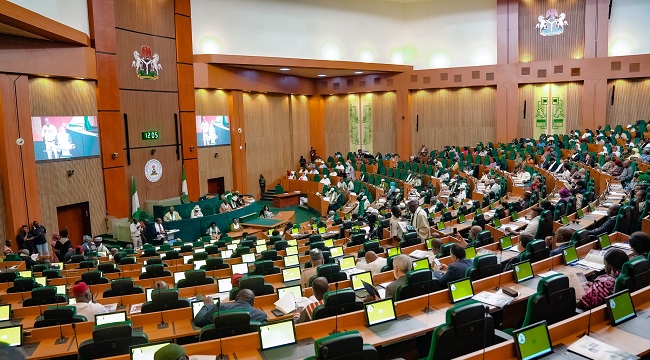
The House resolution for strong diplomatic measures followed the adoption of a motion of urgent public importance sponsored by the member representing Kanke/Kanam/Pankshin Federal Constituency of Plateau State, Yusuf Gagdi.

The motion received unanimous support during plenary presided over by Deputy Speaker Benjamin Kalu.

Moving the motion, Gagdi said Nigeria could no longer remain silent in the face of repeated attacks on its citizens despite years of diplomatic engagements with South Africa.

He said, “The House is aware that the Republic of South Africa has, over the years, witnessed repeated waves of xenophobic violence directed against Nigerians and other African nationals, resulting in the loss of innocent lives, destruction of businesses, unlawful arrests, forced displacement and widespread fear.”

He added, “Recent reports indicate a fresh escalation of attacks targeting Nigerians, Ghanaians, Zimbabweans, Zambians, Mozambicans, Malawians and other African nationals lawfully residing in South Africa.”

The lawmaker further stated that, “The Federal Government of Nigeria has confirmed the recent killing of two Nigerian citizens, including one who reportedly died while in police custody and another who was brutally murdered in front of his business premises.”

According to him, “These tragic incidents have once again exposed Nigerians and other Africans to grave danger despite repeated diplomatic engagements between Nigeria and South Africa.”

See also  Court adjourns case against Joshua’s driver to Jan 20

Recalling Nigeria’s leading role in the struggle against apartheid, Gagdi said the treatment being meted out to Nigerians in South Africa was both unfortunate and unacceptable.

According to him, “Nigeria was one of the foremost nations that stood firmly against apartheid through diplomatic leadership, huge financial support, humanitarian assistance and sustained political pressure that contributed immensely to the liberation of South Africa.

“Thousands of Nigerians made sacrifices, while successive Nigerian governments committed enormous national resources in support of the anti-apartheid struggle, believing in the ideals of African solidarity, justice and freedom.

“It is, therefore, profoundly disturbing that Nigerians and other Africans now face persecution, humiliation and violent attacks in a country whose freedom they helped secure.”

He expressed concern that “Xenophobic violence has become recurrent, systematic and increasingly deadly.”

He noted that, “The repeated attacks have continued despite previous assurances by the Government of South Africa that adequate measures would be taken to guarantee the safety of foreign nationals.”

He further lamented that, “Innocent Africans continue to lose their lives while criminal perpetrators often escape justice, thereby encouraging impunity.”

Gagdi also criticised comments allegedly made by a South African junior minister, saying, “Any inflammatory or hateful public statement capable of inciting hostility against Nigerians or other African nationals as presented by the South African Junior Minister is irresponsible, unacceptable and capable of aggravating an already volatile security situation.”

He warned that, “The continued attacks undermine the ideals of African unity, pan-Africanism, regional integration and peaceful coexistence upon which the African Union was founded.”

The lawmaker further cautioned that failure to decisively address the recurring attacks could further endanger the lives and property of Nigerians in South Africa, adding that the continued inaction of the South African government “may embolden perpetrators and weaken confidence in regional institutions established to protect African citizens.”

See also  UK backs reforms as Abbas, Bamidele list safeguards for State Police

Contributing to the debate, Billy Osawaru (APC, Edo) urged the Federal Government to intensify diplomatic engagement with South Africa to halt the attacks.

“Some measures must be taken to address this problem. We are worried that despite the engagement between our government and that of South Africa, the xenophobic attacks have continued, with the South African security architecture looking away.

“The blood of our innocent citizens is in the hands of these security personnel,” he said.

Lagos lawmaker, Moshood Akiolu, recalled Nigeria’s sacrifices during the anti-apartheid struggle.

“The money we spent to put an end to apartheid could have been used for something else,” he said, while calling on the National Assembly to invite officials of the South African High Commission in Nigeria to explain measures being taken to protect Nigerians.

Also speaking, Ghali Tijjani from Kano advocated tougher measures against Pretoria.

“The attacks against Nigerians did not start today. We cannot keep maintaining diplomatic and economic ties with a country that is doing nothing to stop the killing of Nigerians in its territory,” he said.

Adebayo Adepoju, representing Ibarapa Central/Ibarapa North Federal Constituency of Oyo State, called for legal redress and support for affected Nigerians.

“There must be a way to address the injustice being done to our people. We must seek the help of international law to seek redress.

“We must also find a way to assist them to start life again because to begin afresh will not be easy for most of them,” he said.

Following the adoption of the motion, the House urged the Federal Government to summon the South African High Commissioner to Nigeria to “provide a comprehensive explanation regarding the recent killings and to clearly communicate the official position of the Government of South Africa on the protection of Nigerians and other African nationals.”

See also  NSCDC boss distributes equipment to states, warns against indiscipline

The lawmakers also called for “an independent, transparent, impartial and internationally monitored investigation into the deaths of the affected Nigerians and all other African victims, with a view to ensuring that all perpetrators are identified, prosecuted and punished.”

The House further urged the Federal Government to engage the African Union, the Southern African Development Community, the United Nations and the African Commission on Human and Peoples’ Rights to ensure accountability and the protection of African migrants in South Africa.

It also asked the Federal Government to invoke all available diplomatic and legal mechanisms to seek redress for proven violations of international obligations owed to Nigerians, including pursuing appropriate international judicial processes where necessary.

In addition, the House urged the government to review bilateral relations with South Africa and, where necessary, suspend or recalibrate aspects of cooperation until “credible, measurable and verifiable guarantees” are provided for the protection of Nigerians and other African nationals.

It also called for strengthened consular services, legal assistance, emergency evacuation arrangements and reintegration support for Nigerians who choose to return home.

The House resolved to constitute an ad hoc committee to engage the South African Parliament, the South African Government, the African Union and other relevant institutions, investigate the recurring attacks and report back within 21 days.

Xenophobic attacks in South Africa have remained a recurring source of diplomatic tension between Abuja and Pretoria for more than a decade.

Major outbreaks in 2008, 2015 and 2019 claimed several lives and led to the destruction of businesses owned by foreign nationals, including Nigerians.

While South African authorities have repeatedly condemned the violence and promised greater protection for migrants, concerns have persisted over the safety of foreign nationals and the prosecution of those responsible for the attacks.

FOLLOW US ON:

FACEBOOK

TWITTER

PINTEREST

TIKTOK

YOUTUBE

LINKEDIN

INSTAGRAM

Continue Reading
Click to comment

Leave a Reply

Your email address will not be published. Required fields are marked *

News

CJN bans Nigerian lawyers from using ‘Barrister’ title with immediate effect

Published

on

The Chief Justice of Nigeria, Justice Kudirat Kekere-Ekun, has directed lawyers and court officials to immediately stop using the title “Barrister” before their names in all official dealings with the Supreme Court.

The directive, which takes immediate effect, was issued as part of efforts to strengthen professionalism and standardise official documentation at the nation’s apex court.

Justice Kekere-Ekun said the practice was inconsistent with the professional standards expected in the Supreme Court.

The directive applies to litigation staff, legal practitioners, court registrars and all lawyers conducting official business with the apex court.

The decision was conveyed in a memorandum dated July 13, 2026, signed by the Chief Registrar of the Supreme Court, Kabir Akanbi.

According to the circular, the Chief Justice held that the continued use of “Barrister” as a prefix does not align with the level of professionalism the Supreme Court seeks to uphold in its official processes.

“Consequently, all officers concerned are hereby directed to discontinue the use of the title ‘Barrister’ before their names in all official correspondence, records, documents, identity materials, and any other official engagements with immediate effect,” the memo stated.

FOLLOW US ON:

FACEBOOK

TWITTER

PINTEREST

TIKTOK

YOUTUBE

LINKEDIN

INSTAGRAM

See also  NSCDC boss distributes equipment to states, warns against indiscipline
Continue Reading

News

FG to phase out power sector subsidy from next year

Published

on

The Minister of Power, Joseph Tegbe, has announced plans by the Federal government to phase out subsidy payments in the power sector from 2027.

Tegbe made the announcement during a media parley with newsmen in Abuja on Friday, July 31.

According to the Minister, the subsidy will be gradually removed, but noted that Nigerians will not be deprived of any benefits.

He also ruled out any plans to increase electricity tariffs in the immediate term.

Nigeria’s power sector has long been weighed down by a gap between what distribution companies collect from consumers and what it actually costs to generate and transmit electricity, a shortfall the government has covered through subsidies over the years

FOLLOW US ON:

FACEBOOK

TWITTER

PINTEREST

TIKTOK

YOUTUBE

LINKEDIN

INSTAGRAM

See also  Cleric warns against foreign manipulation, says insecurity not religious war
Continue Reading

News

Ban on sale of sachet alcoholic drinks remains – NAFDAC

Published

on

The National Agency for Food and Drug Administration and Control (NAFDAC) has reaffirmed that it will not reverse its ban on small-volume alcoholic drinks in Nigeria.

Speaking in an interview, the agency’s South-East Zonal Director, Dr Festus Ukadike, said enforcement of the ban is already underway, targeting manufacturers and distributors of sachet alcoholic beverages. Ukadike said the next phase of the enforcement would involve removing the remaining affected products from the market.

He added that the ban would not disrupt legitimate businesses, noting that companies can continue producing alcoholic beverages in bottles of 200ml or more. According to him, arrests and seizures have already been recorded across the South-East, including in Enugu, Imo, Abia, Ebonyi and Anambra states.

Ukadike said protecting children from early exposure to alcohol was a major reason behind the policy. “If our children are no longer exposed to sachet alcohol, they will live healthier lives, curb antisocial behaviours and promote the country’s fight against cancer and other terminal diseases,” he said.

He also urged consumers to moderate their alcohol consumption, saying the absence of sachet alcohol should not be viewed as a major setback. Addressing concerns about affordability, Ukadike maintained that public health considerations take precedence over commercial interests.

He added that within the next 12 months, Nigeria is expected to have a regulatory framework under which no alcoholic drink will be sold in packaging smaller than 200ml. Some consumers expressed mixed reactions to the ban. Charles Otubo said the restriction should apply only in motor parks to help reduce road accidents caused by drunk driving.

See also  PHOTOS: Ogun govt shuts down Ijebu-Imushin market over dirty environment, indiscriminate dumping of refuse

Another consumer, identified simply as Godwin, said he had seen schoolchildren buying sachet alcoholic drinks, putting them in their school bags and taking them to school. He suggested that alcoholic drinks should instead be sold only at designated liquor stores.

FOLLOW US ON:

FACEBOOK

TWITTER

PINTEREST

TIKTOK

YOUTUBE

LINKEDIN

INSTAGRAM

Continue Reading

Trending