Connect with us

News

Tinubu to review state police bill Sept 3

Published

on

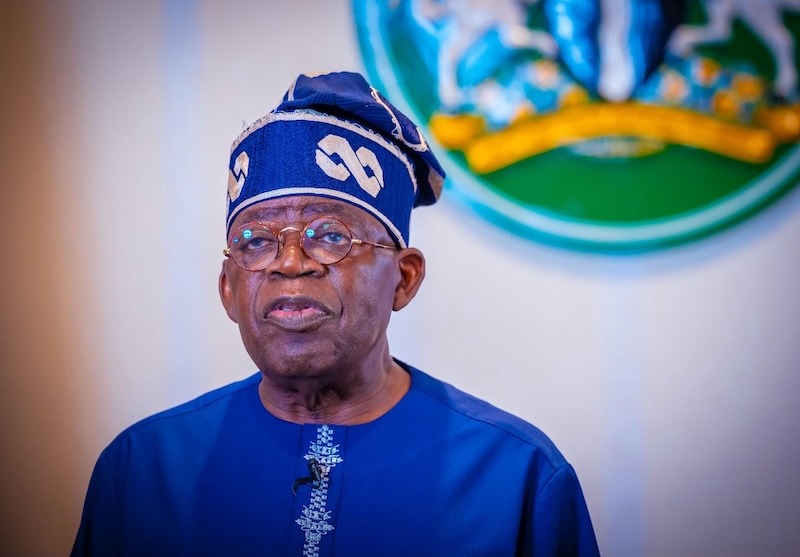
President Bola Tinubu will receive the Executive National Policing Bill for review on September 3, the Presidency revealed on Monday.

This was as it unveiled a public information portal through which Nigerians can submit memoranda and position papers to shape the legislation before it is reviewed by the President and transmitted to the National Assembly.

Chief of Staff to the President and Chairman of the Presidential Working Group on the National Policing Bill, Femi Gbajabiamila, made the disclosures while briefing State House correspondents after convening a meeting of the group at the Aso Rock Presidential Villa, Abuja.

During the briefing, Gbajabiamila disclosed that the approved work programme was a seven-week, milestone-driven exercise running from July 27 to September 14, 2026.

“The resulting Executive Bill package is scheduled for presentation to the President on the 3rd of September.

“Subject to his approval, and I think we have tweaked that so the national consultation will come before the President’s final approval, after which the text and supporting materials will be revised and prepared for formal transmission to the National Assembly,” he said.

He explained that the final package would comprise schedules, an explanatory memorandum, a legal audit and consequential-amendments matrix, a clause-by-clause analysis, a state readiness framework, a fiscal and implementation note, a validation report, a risk register and a controlled digital archive.

According to him, “This is a monumental reform that Nigerians have debated for many years.

“Our central task now is to design a lawful, professional and sustainable federal and state policing system that places greater capability closer to the people while preserving national standards, national security and the rights of every Nigerian.”

The former Speaker of the House of Representatives further distinguished between the constitutional amendment already passed by both chambers of the National Assembly and the operational legislation his group had been tasked with producing.

See also  Nasarawa governor reveals why governors met Tinubu in Lagos

He explained, “The Senate approved the state police constitutional proposal on June 24, 2026, and the House of Representatives passed the executive state police Bill on 23 July 2026.

“The constitutional amendment is, however, not yet in force. It must obtain the approval required from the state Houses of Assembly as prescribed under the Constitution.

“Until that process is concluded, there is no operational state police service anywhere in Nigeria, and the Nigeria Police Force remains the constitutionally recognised police institution.”

On the guiding philosophy of the reform, Gbajabiamila argued that state policing must not become an instrument of political control.

“State Police cannot mean 36 state militias, just as national standards cannot become a disguised method of re-centralising day-to-day state policing.

“No political officeholder should be able to direct the arrest of an opponent, the suppression of lawful political activity or the selective enforcement of the law.

“Federal intervention must remain exceptional, evidence-based, proportionate, time-limited and reviewable.”

Gbajabiamila revealed that the website went live on Monday, and will give Nigerians a direct channel to submit memoranda for roughly two weeks, with a possible extension.

“There will be a website which has gone live already, for members of the public to learn about the stages of what we’re doing, and to actually contribute and send their contributions through that platform.

“So the public is included, no matter your station in life. The website will metamorphose hopefully in the next couple of days,” he said.

Responding to a question on the estimated cost of the new policing system, Gbajabiamila declined to offer a figure, saying, “There is no cost that will be too much to secure lives and property.”

See also  FRSC confirms seven dead, 70 injured in Kano lone accident

He added, “Giving you a cost now will be pulling something out of thin air.

“The cost will be evidence-based, based on thorough research, and on a state-by-state basis, because one state differs from the other in terms of personnel, infrastructure and local needs. It’s a good question, but it’s premature.”

On whether national standards undermine the autonomy state police is meant to provide, he said standards exist purely as a safeguard floor, not a ceiling.

According to him, “National standards are there to ensure safeguards. You can’t just give states carte blanche to do whatever they want; there’s no basic uniformity in that.

“Those standards are just the minimum. States can go beyond if they have the capacity. But no citizen will be shortchanged just because a state cannot meet the minimum.”

On what happens to states unable to demonstrate readiness to implement state police, Gbajabiamila said the federal police would remain the default provider in such states.

“The law abhors a vacuum. We don’t believe there is any state that does not have capacity to establish state police, but if for whatever reason a state truly doesn’t, the federal police remains in place until such a time when the state can come on board,” he explained.

For his part, the Attorney-General of the Federation, Lateef Fagbemi (SAN), warned against state police being weaponised for political persecution.

Fagbemi said, “It is important that we do not make state policing a weapon of political persecution or oppression.

“There must be a minimum threshold to guarantee the continued existence and operation of the society. If you leave the door open, all sorts of situations will come in, and that will not be good enough for society.”

See also  Nurses shun FG talks, begin warning strike today

Ogun State Governor Dapo Abiodun, responding to questions about national standards amounting to federal micromanagement of a state responsibility, argued that someone had to translate the constitutional amendment into workable legislation.

Abiodun argued, “This bill has to do with different consequential amendments to other parts of the Constitution that we may not even realise, the Firearms Bill, for instance, which only recognises a unitary policing system.

“Where do the powers of the federal police stop? Where do the powers of the state police start? These are the things we are working on.”

At a consultative meeting on state police convened at the Presidential Villa, Abuja, on June 5, Gbajabiamila said while the constitutional amendment to establish state police had gained considerable ground, the new structure needed an enabling legislation to operationalise it after the amendment.

The consultative meetings were attended by the Deputy Senate President, Jibrin Barau, and the Deputy Speaker, Benjamin Kalu.

The National Policing Bill, he said at the time, will define national minimum standards, certification processes, funding, jurisdiction, firearms control and the consequential amendments required across dozens of existing federal and state laws before states can lawfully begin operating their own police service.

Monday’s briefing was also attended by the President of the Nigerian Bar Association, Afam Osigwe (SAN); the Inspector-General of Police, Mr Olatunji Disu; the Chairman of the Policy Advisory Committee, Justice Mohammed Liman (retd.), and members of the Working Group’s technical secretariat.

punch.ng

FOLLOW US ON:

FACEBOOK

TWITTER

PINTEREST

TIKTOK

YOUTUBE

LINKEDIN

News

Ukraine sets age requirements for foreigners seeking citizenship

Published

on

Ukraine has outlined age-based requirements for foreigners and stateless persons seeking citizenship, specifying who can apply and when minors must consent in person.

The State Migration Service of Ukraine published the guidelines in accordance with the Law of Ukraine on Ukrainian Citizenship and Presidential Decree No. 215 of March 27, 2001.

Under the requirements, as obtained by PUNCH Online on Wednesday from the state’s migration service of Ukraine’s website, foreigners and stateless persons aged 18 and above must personally submit their applications for Ukrainian citizenship.

For children below 18, applications must generally be submitted by their parents or legal representatives. However, minors aged between 14 and 17 must personally consent to acquiring Ukrainian citizenship.

This means parents or legal guardians cannot independently secure citizenship for teenagers within that age bracket without their consent.

The guidelines divide applicants into three categories based on age.

Children below 14 must have applications submitted on their behalf by a parent or legal representative, while those aged 14 to 17 must provide personal consent even though an adult handles the application.

Applicants aged 18 and above are required to submit their naturalisation applications independently.

The Ukrainian authorities have also outlined requirements for applicants who already hold citizenship of another country.

“Foreign nationals seeking Ukrainian citizenship under the procedure described by the migration authority must pledge to terminate their existing citizenship within two years of being registered as Ukrainian citizens.

“Applicants who make the required pledge are issued temporary Ukrainian identity cards valid for two years rather than full passports during the transitional period,” the migration service added.

See also  Counter-terrorism campaign: FG moves to fast-track trial of 5,000 insurgents

A Ukrainian passport is issued after the individual has formally terminated their previous citizenship or submitted a written declaration renouncing it, in accordance with the applicable procedure.

However, stateless persons are exempt from the requirement to pledge to terminate another country’s citizenship and are not subject to the same two-year transitional arrangement.

The migration authority advised foreigners and stateless persons interested in acquiring Ukrainian citizenship to familiarise themselves with the relevant legal provisions and documentation requirements before commencing the application process.

Further information on citizenship applications and the required procedures is available through the official website of Ukraine’s State Migration Service.

FOLLOW US ON:

FACEBOOK

WHATSAPP CHANNEL

TWITTER

PINTEREST

TIKTOK

YOUTUBE

LINKEDIN

INSTAGRAM

Continue Reading

News

PHOTOS: LAGOS ADVANCES GREEN MOBILITY AS LAMATA, OANDO UNVEIL 11 NEW ELECTRIC BUSES

Published

on

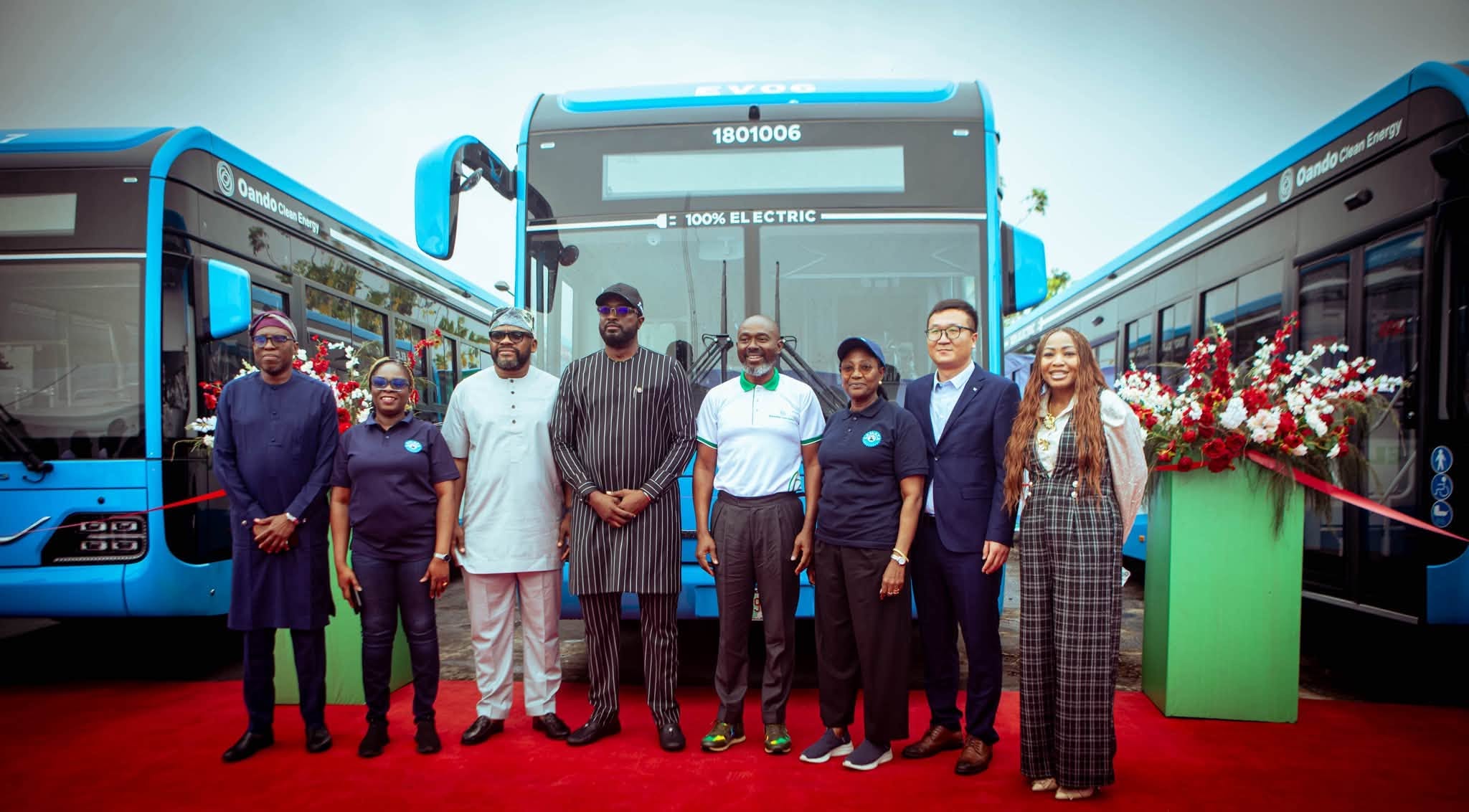
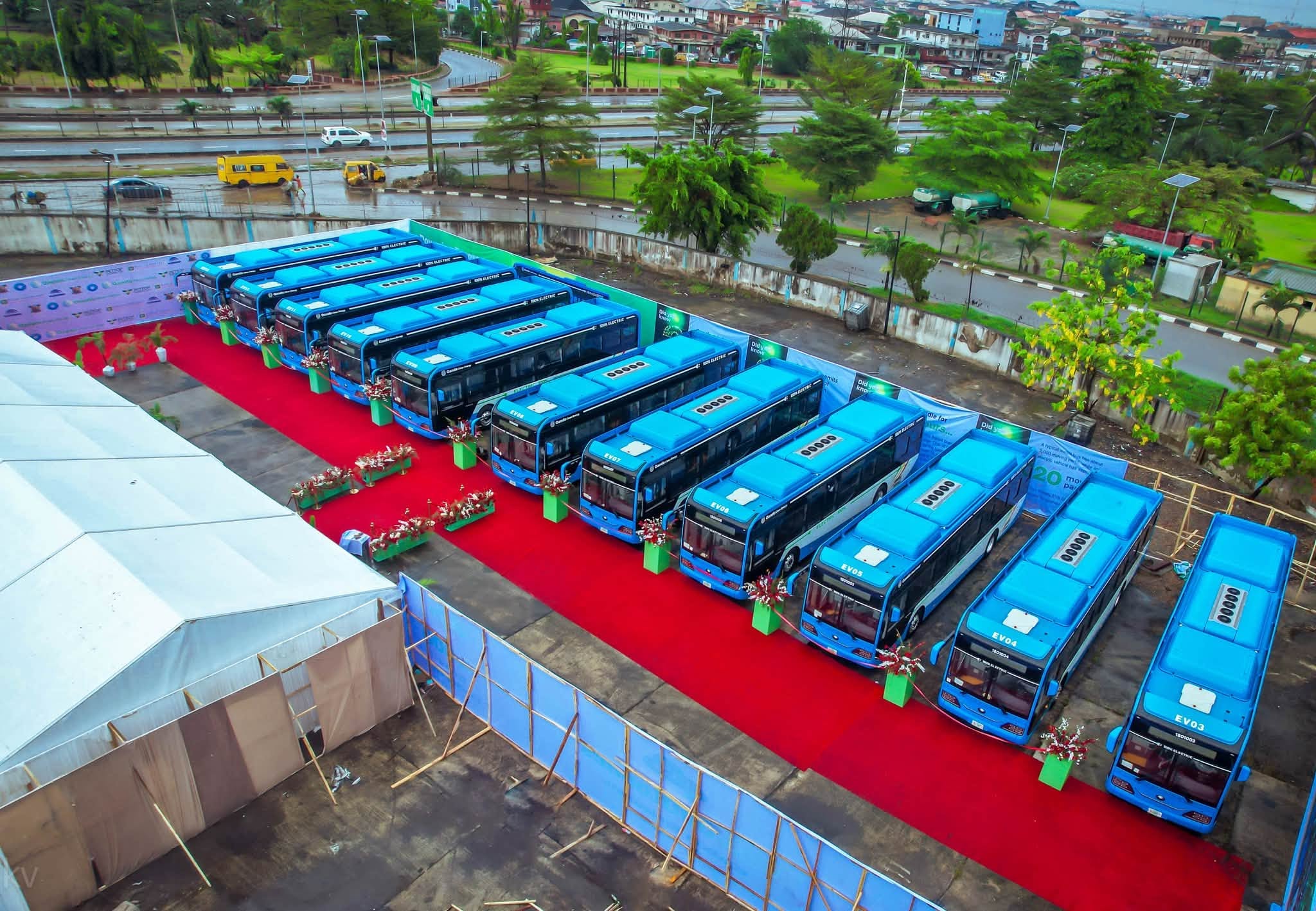
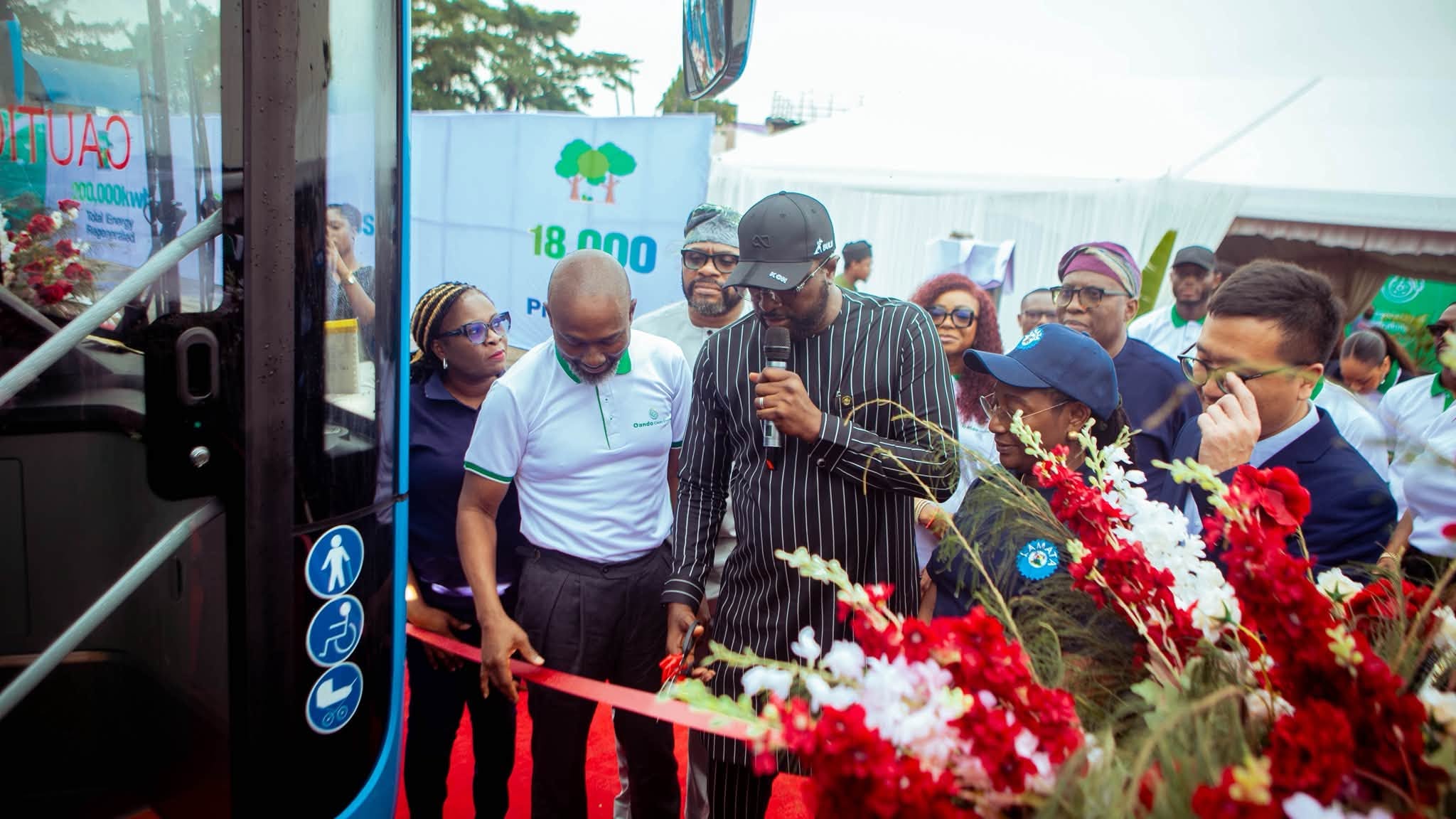
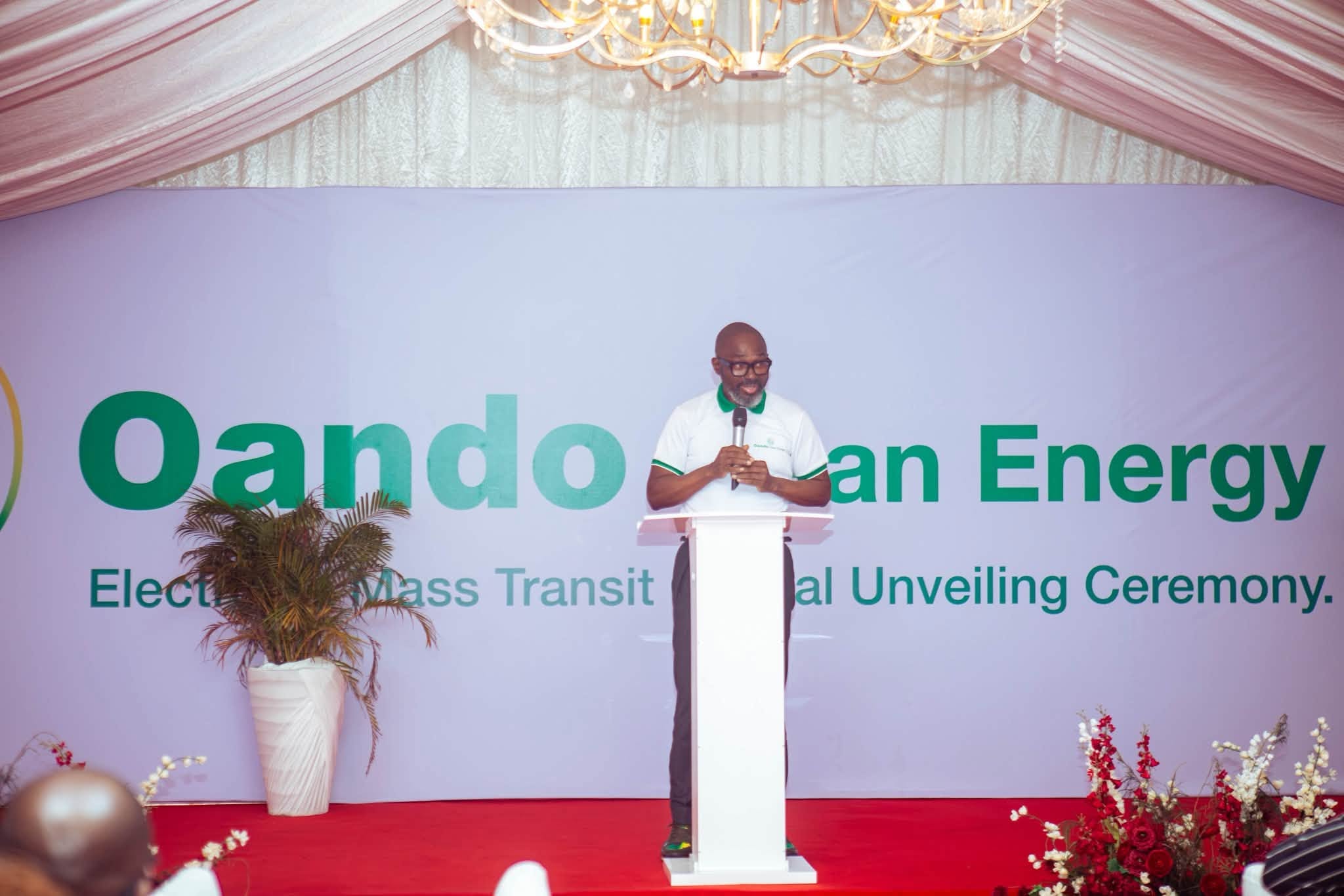
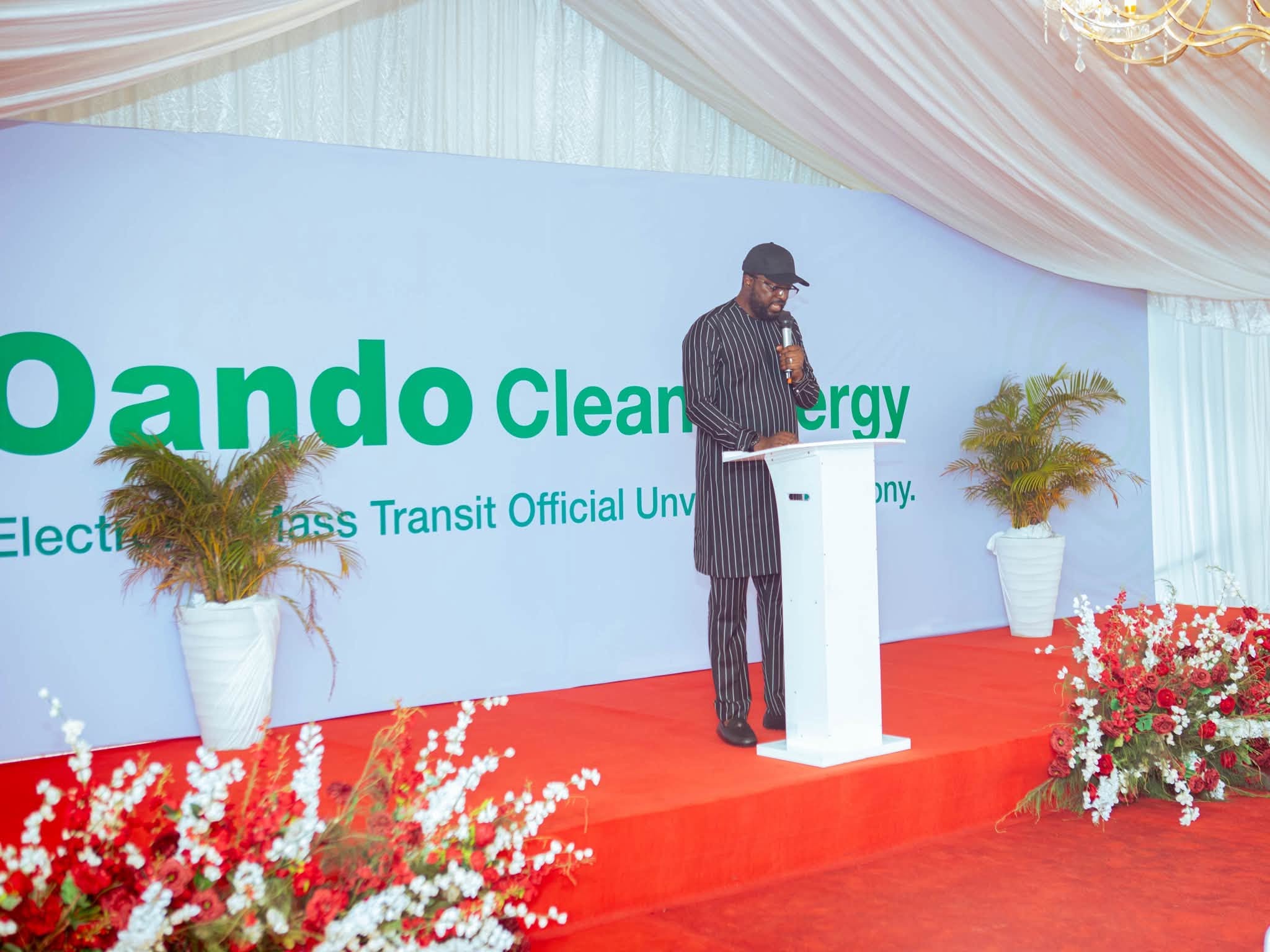
The Lagos State Government has taken another significant step towards transitioning to cleaner and more sustainable public transportation with the addition of 11 new electric buses (EVs) by Oando Clean Energy Limited (OCEL) under the regulation of the Lagos Metropolitan Area Transport Authority (LAMATA).

The presentation of the buses, the first batch of a set of 50-bus commitment under the current phase by Oando, represents a major expansion of the electric bus initiative, which began with two pioneer buses deployed for proof-of-concept operations in 2023.

The initiative is expected to pave the way for the eventual deployment of 552 electric buses across Lagos public transport corridors, reinforcing the state’s ambition to develop an environmentally sustainable and energy-efficient mass transit system.

Speaking at the event, the Commissioner for Transportation, Mr. Oluwaseun Osiyemi, said the transition to cleaner energy was essential to meeting the transportation needs of Lagos as its population and economic activities continue to expand.

He noted that the state government recognises that the future of transportation must be anchored on sustainability, energy efficiency, innovation and environmental responsibility.

According to him, Lagos is pursuing a progressive reduction in carbon emissions in line with the State Government’s net-zero ambitions by 2050.

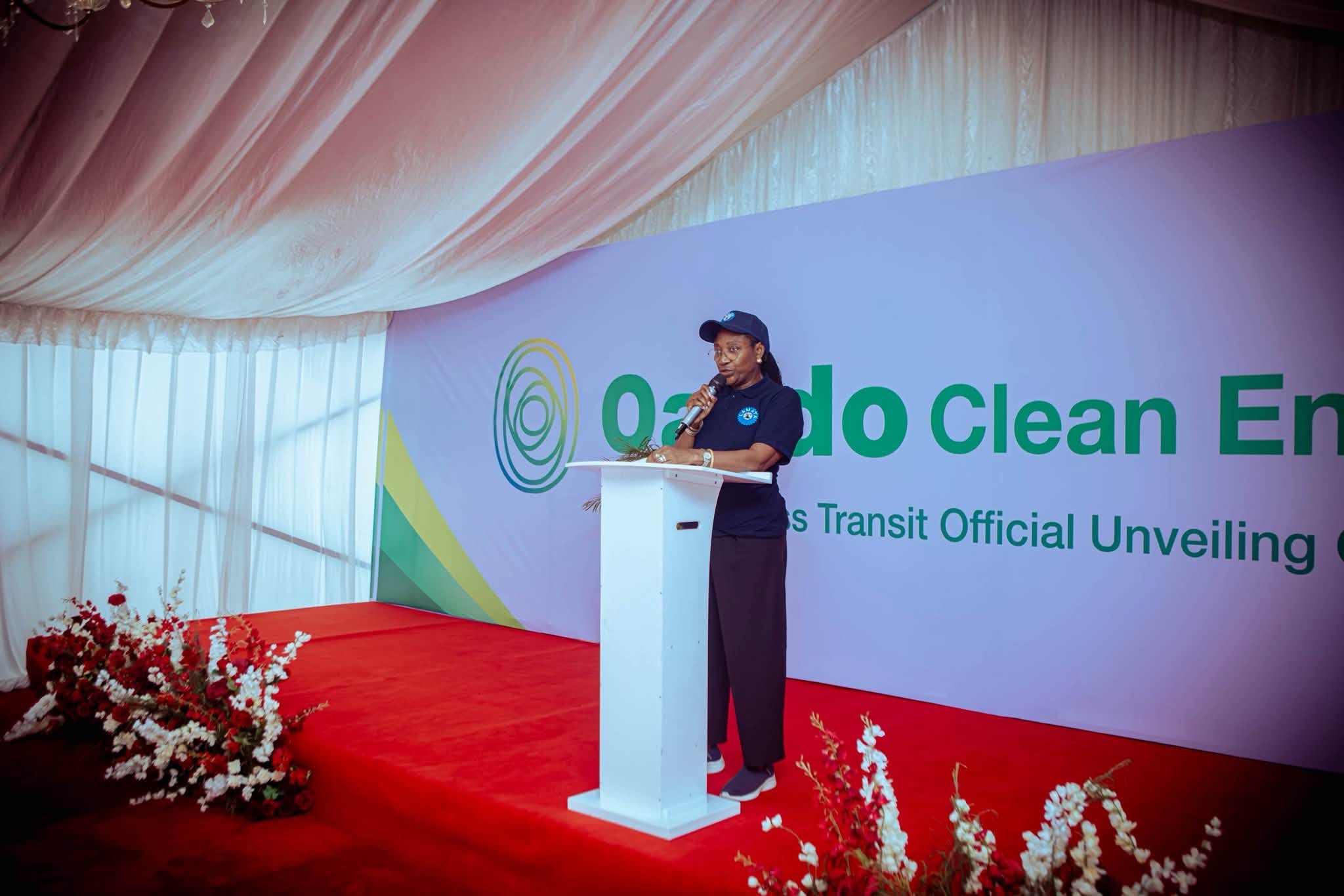
The Managing Director of LAMATA, Engr. Mrs. Abimbola Akinajo, described the presentation as evidence of the progress achieved through sustained collaboration between the state government and its private-sector partners.

She said electric buses offer significant environmental advantages, including reduced greenhouse gas emissions, improved air quality and lower noise pollution, while supporting the development of a more sustainable urban transport system.

See also  Nigerian Air Force airstrikes destroy terrorist hideouts in Borno, read details

Akinajo noted that the partnership with Oando was translating a shared vision for cleaner transportation into practical results, adding that the deployment would strengthen Lagos’ efforts to modernise public transport operations.

In his remarks, the President and Chief Executive Officer of Oando Clean Energy Limited, Mr. Ademola Ogunbanjo, described the initiative as a defining moment in the evolution of electric mobility in Nigeria and Africa.

He said the project went beyond the introduction of electric buses, representing the foundation of a cleaner, more efficient and sustainable transportation ecosystem that could be replicated across the country and the continent.

Ogunbanjo recalled that the partnership between LAMATA and Oando began with the signing of a Memorandum of Understanding in April 2022, followed by the deployment of two pioneer electric buses in 2023.

He explained that the intervening years had been devoted to testing the technology, evaluating its operational resilience, assessing environmental impact and gauging public acceptance.

According to him, the experience and data gathered over the period provided the necessary foundation for moving from proof-of-concept operations to a larger-scale deployment.

Beyond the supply of electric buses, Ogunbanjo said Oando’s ambition was to establish a comprehensive domestic electric mobility ecosystem comprising charging infrastructure, maintenance facilities, technical manpower development, spare-parts supply chains and, ultimately, local vehicle assembly.

He added that the initiative was being supported by financial and technical partners, including the Bank of Industry, Wema Bank and Yutong, with prospective funding partnerships involving the Africa Finance Corporation (AFC) and the International Finance Corporation (IFC).

The partnership reflects the growing importance of public-private collaboration in mobilising the investment, technology and expertise required to transform urban transportation.

See also  Nasarawa governor reveals why governors met Tinubu in Lagos

The deployment of the additional buses is expected to provide further operational experience for the expansion of electric mobility across Lagos, while supporting the state’s broader climate action and sustainable development objectives.

Ogunbanjo expressed confidence in the scalability of the initiative, declaring that the success of electric mobility in Lagos could provide a model for other Nigerian cities.

“If it can work in Lagos, it can work anywhere in Nigeria. The future of mobility is electric, and that future is already taking shape here in Lagos,” he said.

The latest presentation reinforces Lagos State’s determination to position itself at the forefront of Africa’s transition to cleaner urban transportation, with electric mobility emerging as a critical component of its long-term public transport development strategy.

default

FOLLOW US ON:

FACEBOOK

WHATSAPP CHANNEL

TWITTER

PINTEREST

TIKTOK

YOUTUBE

LINKEDIN

INSTAGRAM

Continue Reading

News

Ebola updates: 28 contacts still under surveillance, 34 cleared, says NCDC

Published

on

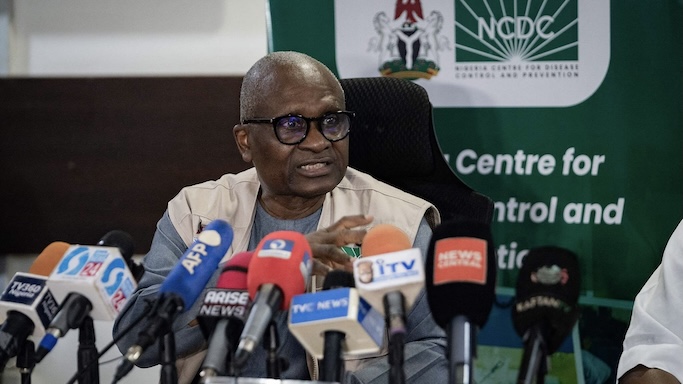
The Nigeria Centre for Disease Control and Prevention has said 28 people linked to the country’s imported Ebola case are still being monitored, while 34 others have completed the mandatory 21-day follow-up.

The Director-General of the NCDC, Dr. Jide Idris, disclosed this in the agency’s national health security update released on Tuesday.

He said Nigeria had continued to strengthen its response to the outbreak through coordinated efforts involving the Federal Ministry of Health and Social Welfare, the Federal Capital Territory Administration, state authorities and development partners.

According to Idris, the response measures include contact tracing, investigation of reported alerts, laboratory testing, infection prevention and control, safe clinical care and surveillance at points of entry.

“As of 9 November 2026, Nigeria had confirmed only one imported case of Bundibugyo virus disease, with no additional confirmed cases,” he said.

“We continue to investigate reported alerts and maintain heightened surveillance across the country to ensure that suspected cases are promptly identified and investigated.

“A total of 62 contacts have been identified. Of these, 34 have completed their individual 21-day follow-up, while the remaining 28 are still under monitoring.”

The NCDC chief clarified that being identified as a contact did not automatically mean that an individual had contracted the virus.

He explained that the 21-day monitoring period was designed to enable health officials to detect possible symptoms early and initiate appropriate medical interventions.

Idris also cautioned against confusing the monitoring period for individual contacts with the total number of days since the index case was confirmed.

See also  Big money, small impact: Governors face fire over N9tn FAAC windfall

Earlier in November, the NCDC projected that surveillance of all 62 contacts traced to the imported Ebola case would be concluded by November 13.

The agency had said, “Contacts are expected to complete follow-up by November. Expected completion dates range from 31 Oct to 13 Nov 2026.”

The Federal Government announced the confirmation of an Ebola case in the FCT in October.

The Coordinating Minister of Health and Social Welfare, Ali Pate, said 44 close contacts had initially been identified for tracing as part of efforts to prevent further transmission.


Pate disclosed that the index patient, a woman who recently arrived in Nigeria aboard an international flight from Uganda, was admitted to a private hospital in the FCT, where she received treatment for several days before the disease was confirmed.

The patient was subsequently evacuated to Switzerland for further medical care.

On October 31, the NCDC also announced the identification of two suspected Ebola cases in the North-East, prompting further surveillance and investigation.

Source: punchng.com

FOLLOW US ON:

FACEBOOK

WHATSAPP CHANNEL

TWITTER

PINTEREST

TIKTOK

YOUTUBE

LINKEDIN

INSTAGRAM

Continue Reading

Trending