Connect with us

Crime

Police impound five Air Peace vehicles over runway blockade

Published

on

The number of Air Peace vehicles impounded by the police for investigation following the recent Lagos airport runway blockade has increased from three to five.

The PUNCH reliably gathered that the vehicles, which are currently in police custody, are marked AJJ 589EX, KTU 440EZ, AAA 831F, KTU 85FH and EPE 656HF.

The development followed an incident in which some persons suspected to be staff members of Air Peace allegedly positioned the vehicles on the airside of the Lagos airport, disrupting the smooth movement of aircraft.

The PUNCH had earlier reported that three Air Peace buses were towed into police custody by the Federal Airports Authority of Nigeria after they were found parked in a manner capable of obstructing airport operations.

Although the police initially confirmed that three vehicles had been impounded, further findings by The PUNCH showed that the number had risen to five.

Speaking with The PUNCH, the spokesperson for the Airport Command of the Nigeria Police, Muhammed Adeola, confirmed that five Air Peace vehicles were now in police custody.

Adeola said that, as part of the investigation, the police had contacted Air Peace and asked the airline to produce the drivers who took the vehicles to the sensitive area of the airport.

He said the airline, however, claimed that some impostors might have been responsible for the alleged unruly conduct involving the vehicles and promised to conduct an internal investigation to identify those responsible.

As of the time of filing this report, Adeola said Air Peace had yet to provide the police with the outcome of its investigation. He added that the vehicles would remain in police custody until the airline produced the drivers who operated them.

See also  Hospital cleaner arrested for allegedly trying to sell placentas

He said, “Yes, you are correct, there are five in our compound. When we started our investigation, we met with Air Peace and expected them to provide us with the drivers. But they told us that they believed some saboteurs must have driven their vehicles and all of that.

“They then promised to conduct an internal investigation and provide us with whoever they found to have driven the buses. Until then, the vehicles will be in our possession, since we must know those who attempted to disrupt the smooth running of airport operations.”

The incident occurred amid an industrial action by aviation unions over Air Peace’s alleged refusal to remit the five per cent Ticket Sales Charge to the Nigeria Civil Aviation Authority, as required by law.

The action, which grounded Air Peace’s operations at the Lagos and Abuja airports, disrupted travel plans and left passengers scrambling for alternative means of transportation. The unions had targeted Air Peace over claims that the airline was the largest debtor of funds due to the NCAA.

Prior to the action, the unions had issued three stages of warnings, threatening to picket airlines that allegedly failed to remit the five per cent TSC to the NCAA. The unions also alleged that some domestic airlines had made it difficult for employees to freely join trade unions, claiming that workers were afraid to express interest in union membership for fear of discrimination or victimisation.

The unions, however, described the industrial action as a measure of restraint, saying they had given the affected airlines several weeks to resolve the issues.

See also  Edo records 70 child defilement cases, fathers top offenders

Efforts to get a reaction from the airline were unsuccessful, as the airline’s spokesman, Efe Osifo-Whiskey, did not respond to questions on the matter.

Source: punchng.com

FOLLOW US ON:

FACEBOOK

TWITTER

PINTEREST

TIKTOK

YOUTUBE

LINKEDIN

INSTAGRAM

Continue Reading
Click to comment

Leave a Reply

Your email address will not be published. Required fields are marked *

Crime

UN, NSCDC move against terror funding, Illegal mining

Published

on

The United Nations Office on Drugs and Crime has called for deeper collaboration with Nigeria Security and Civil Defence Corps Mining Marshals as concerns mount over the growing links between illegal mining, organised crime and terrorism across Nigeria, West Africa and the Sahel.

The call was made during a strategic visit by a UNODC delegation to the Mining Marshals Corps, where the international body commended the specialised unit for its expanding role in tackling illegal mining and related criminal activities.

The Commander of the Mining Marshals, Assistant Commandant of Corps, John Attah, disclosed this in a statement issued in Abuja on Monday.

The UNODC delegation was led by the Chief of the Africa Section of the Terrorism Prevention Branch, Tullio Santini, who praised the Mining Marshals for their enforcement efforts.

“The rising number of arrests and prosecutions is evidence of Nigeria’s commitment to tackling the illicit trade,” he stated.

The visit was part of a broader UNODC mission to strengthen partnerships in Nigeria, engage development partners and review ongoing field operations.

A major focus of the meeting was the introduction of the UNODC Coordination through Operational Networks against the Crime-Terrorism Nexus initiative by a law enforcement expert from the Swedish Police, Robert Haslinger.

The CONNECT Initiative is designed to strengthen cooperation among governments and law enforcement agencies in disrupting the financial and operational links between organised criminal networks and terrorist groups.

Nigeria is among the countries invited to participate in the initiative, which is scheduled for launch in November 2026.

See also  PHOTOS: Troops arrest suspected ISWAP logistics courier in Borno

Responding, Attah, who represented the NSCDC Commandant-General, Prof Ahmed Audi, welcomed the UNODC delegation and described the organisation as a critical partner in strengthening the operational capabilities of the Mining Marshals.

He said, “The previous UNODC-supported training programmes had significantly improved collaboration between the Mining Marshals and the Nigerian Financial Intelligence Unit, enhancing the ability of both institutions to coordinate investigations and intelligence-led operations against illegal mining syndicates.

“The Mining Marshals occupy a unique position within Nigeria’s security architecture, reporting to the Ministry of Interior, the Ministry of Solid Minerals Development, and the NSCDC.

“While their primary mandate remains the suppression of illegal mining activities, the officers, drawn from the NSCDC, also support broader national security operations when required.

“We also use this opportunity to advocate for the formal inclusion of the Mining Marshals in the CONNECT Initiative because disrupting the financial foundations of terrorist organisations requires greater attention to the illegal exploitation of mineral resources.”

Attah said the growing nexus between illegal mining and terrorism had become increasingly relevant to Nigeria’s national security calculations.

He added that the development partly explained the Federal Government’s ongoing reforms in the mining sector, with the Mining Marshals emerging as a key enforcement instrument in the fight against illegal exploitation of the country’s mineral resources.

The Marshals commander also called for expanded capacity-building programmes covering terrorism-related concepts, regional intelligence cooperation and peer-learning opportunities to enhance the unit’s ability to tackle evolving threats associated with illicit mining.

Illegal mining has increasingly attracted security concerns in Nigeria, with authorities warning that proceeds from illicit exploitation of mineral resources can fuel organised criminal activities and insecurity.

See also  PHOTOS: NDLEA busts Illicit drug warehouse recovering over N6.7bn Opioids in Lagos

The UNODC officials commended the institutional structure of the Mining Marshals, describing it as a notable model within Nigeria’s law-enforcement ecosystem.

They noted that the unit had an unusually broad operational mandate, allowing it to handle illegal mining cases from intelligence gathering and prevention to arrest, investigation and prosecution.

The officials also highlighted the unit’s use of non-kinetic measures, including stakeholder engagement and community outreach, in addressing illegal mining.

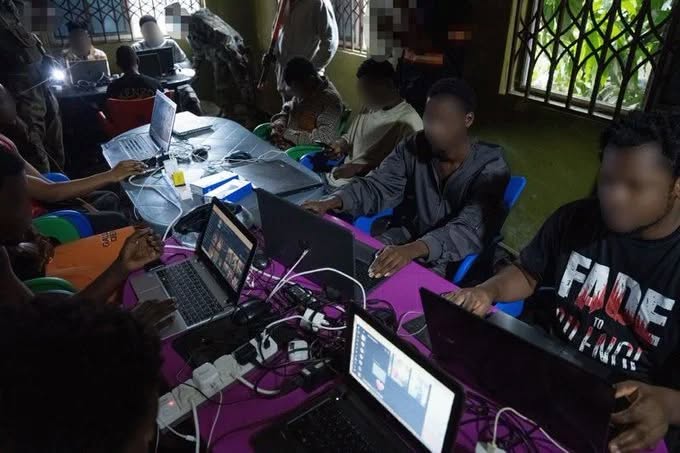
The meeting ended with an exchange of publications, a commemorative photograph session and renewed commitments to strengthen collaboration against the growing convergence of resource-related crime and terrorism in Nigeria and the wider region.

Source: punchng.com

FOLLOW US ON:
FACEBOOK

TWITTER

PINTEREST

TIKTOK

YOUTUBE

LINKEDIN

INSTAGRAM

Continue Reading

Crime

Terrorists kill 28 in Sokoto community, Army GOC visits

Published

on

At least 28 people, including the Chief Imam of Ungushi Izala Jumu’at Mosque, Imam Aliyu, were reportedly killed when bandits attacked Ungushi community in Kebbe Local Government Area of Sokoto State on Sunday evening.

The attack came amid renewed security concerns in Kebbe, where communities have recently faced threats from armed groups allegedly linked to the Lakurawa terrorist organisation.

Confirming the incident, the spokesman of the command, DSP Ahmed Rufai, said it was difficult to ascertain the actual number of victims.

He, however, said no fewer than 28 corpses were recovered in the aftermath of the incident.

Residents said the attackers invaded Ungushi in the evening and opened fire on residents, killing 22 people, mostly civilians.

The killing of Imam Aliyu, a respected religious leader in the community, has particularly shocked residents, who said the victims included farmers, traders, religious leaders and other members of the community.

A resident, who spoke on condition of anonymity for security reasons, said, “These are ordinary people. They are farmers, traders, religious leaders and family members. They have done nothing to deserve this.”

Another source said the attack had heightened fear among residents, with some families fleeing their homes following reports of fresh displacement from neighbouring communities.

“People are no longer sleeping peacefully. Families are leaving their homes because they fear another attack. We need urgent intervention before more communities are deserted,” the source said.

The latest killings followed reports on Friday that a large number of armed men on motorcycles had entered parts of Kebbe LGA, allegedly attacking residents, looting shops and damaging property.

The Sokoto State Police Command confirmed that an incident occurred in the area but said it was still gathering information before issuing a detailed statement.

See also  PHOTOS: Police arrest three for trafficking young girls into prostitution, four victims rescued

Amid the renewed threats, the General Officer Commanding, 8 Division, Nigerian Army, Maj Gen Bemgba Koughna, visited the Forward Operating Base, Kebbe, on Sunday, to assess the security situation and reassure residents of the readiness of troops to confront the threats.

Koughna also met community leaders and residents, listened to their concerns and reviewed the security situation in the area.

He said the Nigerian Army had adjusted its security architecture to prevent further infiltration by terrorists and protect vulnerable communities.

“Troops remain fully deployed, highly alert and operationally focused on protecting lives and property,” the GOC said.

He added that measures had been put in place to ensure emerging threats were quickly identified and contained before they escalated.

“The Nigerian Army remains unwavering in its determination to respond swiftly and decisively to any emerging threats,” Koughna said.

The Army chief assured residents that terrorist elements would not be allowed to establish safe havens in Kebbe and its surrounding communities.

“We will continue to maintain a robust presence in this area and ensure that our troops remain ready to respond to any threat to the peace and security of the people,” he said.

Koughna urged residents not to panic and appealed for stronger collaboration between the military and communities, particularly through timely sharing of credible intelligence.

“Community support remains a critical component in detecting, disrupting and dismantling terrorist networks before they can launch attacks,” he said.

He urged community leaders and residents to report suspicious movements, unfamiliar persons and other activities that could pose security threats.

The GOC reiterated the commitment of troops to protecting lives, property and critical infrastructure in Kebbe and other vulnerable communities within the operational area.

“We will not allow criminal elements to intimidate our people or disrupt their livelihoods. Our troops are prepared and will continue to operate with determination and professionalism,” he said.

See also  PHOTOS: Cross River police arrest alleged fake doctor for operating illegal mobile clinic

Residents, however, called for sustained military presence and intelligence-led operations to prevent further attacks and restore confidence in the affected communities.

A community leader said continued attacks were disrupting social and economic activities in the area.

“People cannot farm, children are afraid to go to school, and families are abandoning their homes. If nothing is done urgently, we may witness the complete displacement of these communities,” he said.

The Army’s operational assessment formed part of ongoing efforts to strengthen security around Kebbe and other vulnerable communities following recent incidents in the area.

The visit was disclosed in a statement issued on Sunday by the Acting Deputy Director, Army Public Relations, 8 Division, Nigerian Army and Sector 2, Operation Fansan Yamma, Lt Col Olaniyi Osoba.

Killings must stop – Atiku

The former Vice-President and presidential candidate of the African Democratic Congress, Atiku Abubakar, has urged the Federal Government to move beyond condolence messages and take decisive action to prevent further killings.

In a statement on Monday on his verified X account, he described the victims as innocent Nigerians whose deaths had further highlighted the worsening insecurity across the country.

“I am devastated by the killing of 32 innocent Nigerians in Ungushi community, Kebbe LGA of Sokoto State,” he said.

He expressed sympathy with the bereaved families and residents of Sokoto State, praying for the repose of the deceased and strength for their loved ones.

“My heart goes out to the bereaved families and the people of Sokoto State. May Allah forgive the departed and give their loved ones the strength to endure this unbearable loss,” he said.

See also  PHOTOS: Mob beat 'r@pist' to de@th, hack off his genitals and drag body through streets over 's£x attack on disabled woman'

The former Vice President, however, said condolences from government officials were no longer sufficient in the face of recurring attacks and killings across the country.

“But condolences are no longer enough. How many more Nigerians must be slaughtered before this government treats the protection of human life as an emergency?” he asked.

Atiku said the frequency of such attacks was alarming, warning that the government must not become comfortable with issuing statements after every massacre without taking effective measures to protect citizens.

“These killings have become frighteningly recurrent, and a government that cannot protect its citizens must not become comfortable issuing statements after every massacre,” he said.

He called on the Federal Government to strengthen intelligence gathering, secure vulnerable communities and ensure that those responsible for the killings were arrested and prosecuted.

“The Federal Government must move from condolences to action: strengthen intelligence, secure vulnerable communities and bring the perpetrators to justice,” Atiku said.

He stressed that the primary responsibility of the government was to protect the lives and property of citizens, adding that Nigerians should not continue to bury their loved ones while those entrusted with their security offered excuses.

“The first duty of government is to protect life. Nigerians cannot continue to bury their loved ones while those entrusted with their security offer excuses,” he said.

Atiku prayed for peace in Sokoto State and across the country, urging the government to take urgent measures to prevent further loss of lives.

“May Allah comfort Sokoto and restore peace to our nation,” he added.

Source: punchng.com

FOLLOW US ON:
FACEBOOK

TWITTER

PINTEREST

TIKTOK

YOUTUBE

LINKEDIN

INSTAGRAM

Continue Reading

Crime

Insecurity causes 31 states spend N252bn on security in six months, read details

Published

on

No fewer than 31 state governments spent an estimated N252.26bn to fight criminality and eliminate insecurity in their respective states in the first six months of 2026, with Kogi, Plateau and Bauchi accounting for the largest share, despite the continued killings, kidnappings and banditry recorded across the country.

An analysis of the fiscal performance of each state, utilising data from the Q1 to Q2 budget performance reports from January to June 2026 obtained from Open Nigerian States, a budgIT-backed website that serves as a repository of government budget data, on Sunday, showed that Kogi topped the table with N34.67bn, representing 13.74 per cent of the total expenditure captured in the data. Plateau followed with N23.69bn, or 9.39 per cent, while Bauchi spent N22.35bn, representing 8.86 per cent.

The states which recorded security-related expenditure include Abia, Adamawa, Anambra, Bauchi, Bayelsa, Benue, Borno, Cross River, Delta, Ebonyi, Ekiti, Enugu, Gombe, Imo, Jigawa, Kaduna, Kano, Katsina, Kebbi, Kogi, Kwara, Lagos, Nasarawa, Niger, Ogun, Ondo, Oyo, Plateau, Sokoto, Taraba and Zamfara, while Akwa Ibom, Edo, Osun, Rivers and Yobe recorded no expenditure in the listed categories.

The figures cover spending on security equipment, homeland security personnel, security votes and operations, ministries of security or special advisers, and security trust funds.

It showed that state-level spending rose sharply in the latest data, with the combined expenditure across the states covered increasing by N176.42bn, or 232.6 per cent, from N75.84bn in 2025 to N252.26bn.

But based on a year-on-year comparison of states with available data, the figures you supplied show that 22 states spent approximately N144.44bn in 2026, compared with N75.84bn in 2025. That is an increase of approximately N68.61bn, or 90.5 per cent.

The figures highlight the efforts by sub-nationals as they deploy resources to complement federal security efforts and respond to threats within their territories.

The comparison, however, is based on the 22 states for which 2025 figures were supplied. The latest data contains figures for more states, so the overall comparison is not a like-for-like 36-state comparison.

On the categories of spending, security equipment expenditure was N37.08bn, while spending on homeland security personnel reached N26.89bn.

Security votes and related homeland security expenditure climbed from N47.67bn to N135.61bn, representing an increase of N87.94bn or 184.5 per cent. Expenditure under ministries of security and special advisers rose from N14.95bn to N42.15bn, up N27.20bn or 181.9 per cent.

Security trust fund spending also increased from N6.82bn to N10.53bn, representing a rise of N3.71bn or 54.4 per cent.

The spending came against the backdrop of persistent insecurity across the country, including killings, kidnappings, banditry, terrorism and communal violence.

The National Human Rights Commission said its Human Rights Observatory documented 651 kidnapping incidents and 492 killings between January and March 2026, with the North-Central, North-West and North-East among the worst affected regions.

The security situation remained severe into the second quarter. A report by SARI Global obtained by The PUNCH showed that 792 people were killed in 882 security incidents across the 36 states and the Federal Capital Territory in June alone.


The data also showed that military and other security agencies conducted about 14,000 operations in the first half of the year, killing 1,597 terrorists and insurgents and rescuing 1,516 kidnapped victims, according to official mid-year operational figures.

The wide gap between security expenditure and security outcomes has therefore continued to raise questions about the effectiveness, transparency and coordination of security spending at both the federal and state levels.

Kogi’s N34.67bn was the highest among the states listed, accounting for 13.74 per cent of the total. It spent N10.98bn more than Plateau, the second-highest spender, and N12.31bn more than Bauchi.

Plateau’s N23.69bn accounted for 9.39 per cent of the total, while Bauchi’s N22.35bn represented 8.86 per cent.

Combined, the three states spent about N80.70bn, accounting for 32.0 per cent of all the security-related expenditure captured in the data.

The figures are particularly significant because all three states have experienced varying degrees of security challenges, including attacks by armed groups, communal violence, banditry and kidnapping.

Bayelsa ranked fourth with N17.49bn, representing 6.93 per cent of the total. Its spending was N17.18bn lower than Kogi’s.

Ekiti followed with N14.83bn, or 5.88 per cent, while Anambra recorded N13.40bn, representing 5.31 per cent.

Sokoto spent N11.27bn, accounting for 4.47 per cent, while Ondo and Kaduna recorded N10.54bn and N10.37bn, representing 4.18 per cent and 4.11 per cent, respectively.

Kebbi spent N10.14bn, or 4.02 per cent, while Adamawa recorded N9.95bn, representing 3.95 per cent.

Zamfara, one of the states at the centre of the country’s banditry crisis, recorded N9.07bn, or 3.60 per cent, while Borno, a major theatre of insurgency, spent N8.29bn, representing 3.29 per cent.

Kano spent N8.26bn, or 3.27 per cent, while Katsina recorded N7.21bn, representing 2.86 per cent.

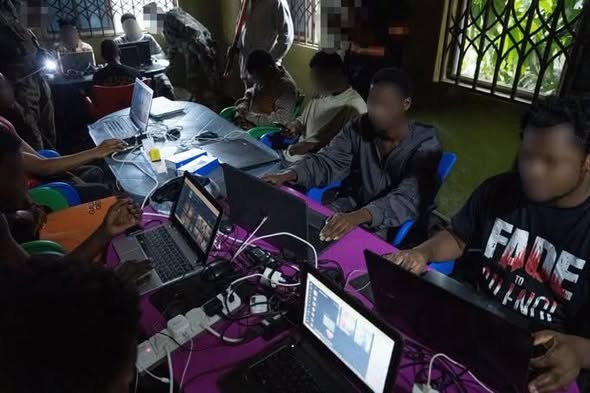
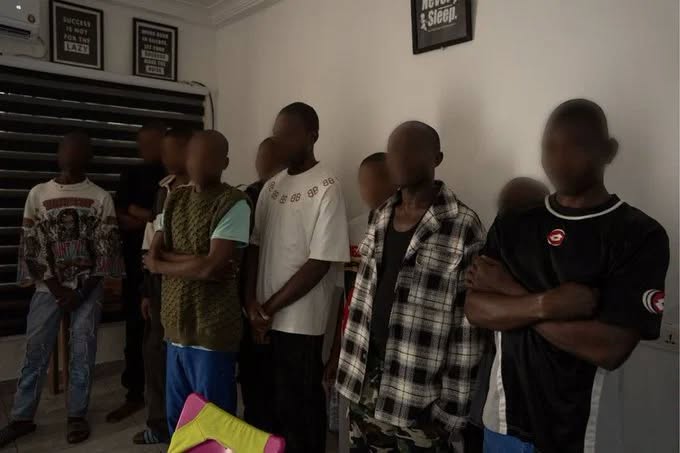
See also  EFCC arrests 38 internet fraudsters in Lagos raid

Niger spent N5.36bn, or 2.13 per cent, while Nasarawa recorded N5.18bn, representing 2.05 per cent.

Ebonyi spent N4.72bn, or 1.87 per cent, while Kwara recorded N4.69bn, representing 1.86 per cent.

Delta’s expenditure stood at N4.63bn, or 1.83 per cent, while Oyo spent N3.82bn, representing 1.51 per cent.

Enugu recorded N3.46bn, or 1.37 per cent, followed by Cross River with N2.43bn, representing 0.96 per cent.

Ogun spent N1.73bn, or 0.68 per cent, while Imo recorded N1.52bn, representing 0.60 per cent.

Taraba expended N1.38bn, or 0.55 per cent, while Abia recorded N766.72m, representing 0.30 per cent.

Lagos deployed N615.12m, accounting for 0.24 per cent, while Jigawa recorded N395.33m, representing 0.16 per cent.

Gombe spent N48.02m, while Benue recorded only N1.58m across the categories captured in the supplied data.

Four states, Akwa Ibom, Osun, Rivers and Yobe, had no expenditure recorded in any of the listed categories in the supplied table.

Edo was also listed without figures, while no separate entry for the Federal Capital Territory was contained in the data.

When compared with 2025 quarter two, Anambra recorded the biggest percentage increase, with its combined security expenditure rising from N22.10m to N13.40bn, an increase of N13.38bn or 60,544.5 per cent. Plateau followed, rising by N11.46bn or 93.7 per cent, from N12.23bn to N23.69bn.

Sokoto’s spending increased by N9.23bn or 452.3 per cent, from N2.04bn to N11.27bn, while Bayelsa rose by N8.35bn or 91.4 per cent, from N9.14bn to N17.49bn.

Zamfara recorded a N8.28bn increase, or 1,054.1 per cent, from N785.90m to N9.07bn. Kaduna increased by N6.03bn or 139 per cent, while Ondo rose by N5.38bn or 104.3 per cent.

Kwara recorded a N4.37bn increase, or 1,385.1 per cent, from N315.79m to N4.69bn, while Adamawa rose by N4.20bn or 73.1 per cent to N9.95bn.

Delta increased by N3.59bn or 348.9 per cent, Jigawa by N367.7m or 62.6 per cent, and Gombe by N27.6m or 129.9 per cent. Oyo rose from N6.76bn to N3.82bn, meaning its expenditure actually fell by about N2.94bn, or 43.5 per cent, while Ebonyi remained broadly unchanged because its security-vote allocation stayed at N3bn.

Kano’s expenditure rose from N5.35bn in 2025 to N8.26bn in 2026, an increase of N2.91bn or 54.3 per cent. Taraba’s spending fell from N2.58bn to N1.38bn, while Borno’s declined from N9.56bn to N8.29bn. Cross River, Benue and Osun recorded changes from their relatively low 2025 bases, while the latest dataset shows substantial new allocations in several states not covered by the 2025 comparison.

Overall, the figures show a significant expansion of state-level security financing, particularly in equipment procurement, personnel and security operations.

The analysis indicates that security spending was heavily concentrated in a relatively small number of states.

The top five spenders-Kogi, Plateau, Bauchi, Bayelsa and Ekiti- accounted for about N112.15bn, or 44.8 per cent, of the total captured.

The top 10 states accounted for approximately N157.65bn, representing 66.9 per cent of the total.

This means the remaining states collectively accounted for roughly N94.61bn, or 37.50 per cent.

The figures also show that the spending pattern does not necessarily correspond directly with the intensity of insecurity. Some states facing serious security threats recorded relatively modest spending, while others with lower levels of reported violence recorded substantial allocations.

For instance, Zamfara, Borno, Katsina, Kaduna, Sokoto and Kebbi, states that have remained major theatres of banditry and insurgency, collectively recorded about N56.04bn, representing roughly 22.2 per cent of the total captured.

Meanwhile, Kogi alone recorded more than N34.67bn, higher than the combined expenditure of several states confronting serious insecurity.

The figures come as the Federal Government and state governments continue to face pressure to improve security while ensuring that resources allocated for the purpose produce measurable results.

In the first half of 2026, insecurity remained widespread. The NHRC’s first-quarter dashboard identified Kwara, Niger, Benue, Borno, Plateau, Zamfara, Kebbi, Katsina, Kogi and Adamawa among the states most affected by kidnapping and killings.

The situation was not limited to the northern part of the country. Reports of kidnapping, cult violence and other criminal activities were also recorded in southern states, underscoring the nationwide nature of the security challenge.

It, however, remains unclear whether increasing allocations to security at the state level is translating into fewer attacks, better intelligence, faster response and greater protection for residents.

Retired personnel

Speaking on the increasing security expenditures, Brig. Gen. Bashir Adewinbi (retd.) commended the authorities for what he described as a new attempt to tackle the country’s security challenges through dedicated funding.

He said although some public officials might be sincere in their efforts, others could have been compromised, urging Nigerians to give the initiative a chance before passing judgment.

Adewinbi said, “It is commendable that they are coming together for the first time to take the bull by the horns. Naturally, while some officials may be sincere, others may not be, and some might have been corrupted along the way.

See also  Edo records 70 child defilement cases, fathers top offenders

“However, we should give them a chance, as an effort of this scale hasn’t been attempted before. They have resolved to allocate funds to combat terrorism and other security threats, even though security votes already exist. How those votes were previously utilised remains a question, but it seems they now recognise that sustainable growth and survival depend on establishing peace and stability.”

The retired general said the initiative could enable the government to acquire the technology and other resources required to tackle terrorism and other security threats more effectively.

He, however, cautioned against reaching conclusions before the funds were deployed, saying the implementation would determine whether the initiative achieved its intended objectives.

“Let us give them a chance and see how things unfold—time will tell. It is a step in the right direction. Many of them likely intend to acquire technology to fight terrorism and set aside dedicated resources to address the crisis properly.

“We cannot make definitive judgments until we see the implementation. Let us wait and see if the funds are applied as intended. Time will tell, as there is a time for everything,” he added.

A former Assistant Inspector-General of Police, Wilson Inalegwu (retd.), said governors should stop making huge lump-sum allocations to security without clear plans on how the funds would reduce crime.

Inalegwu advocated result-based budgeting, saying state Commissioners of Police should prepare annual policing plans outlining security priorities and the resources required to address them.

He said the plans should reflect the prevailing security challenges in each state, including kidnapping, banditry, farmers-herders clashes, insurgency, separatist agitations, cultism and election-related security threats.

“My position is slightly different. I don’t understand when governors just slam or spend N200bn, whatever amount, on security. I believe in process,” he said.

According to him, every Commissioner of Police should submit an annual policing plan, which would enable the governor to identify the security challenges requiring funding and subsequently hold the police leadership accountable for results.

He explained that a policing plan could identify the need for patrol vehicles, surveillance cameras, drones or other equipment, depending on the specific security challenges confronting a state.

“For example, this year, if you were to submit your policing plan in January, you are going to factor the upcoming 2027 national elections, and for those with off-season elections, you factor them. Election is a priority,” he said.

He added that the plan should also identify prevailing crimes in the state and establish measurable targets for reducing them.

Inalegwu said governors should periodically review the implementation of the plans with Commissioners of Police and other relevant officials to determine whether the funds allocated were producing the desired results.

He said, “So, you now sit down. Then you now hold the CP accountable. Every three months, every quarter, the Security Adviser and the Governor will invite the Commissioner of Police: ‘We have seen your policing plan. If we do this and do that, are you going to reduce the crime rate?’

“And in the next three months, the Commissioner is invited… We will now begin to study and look at the crime statistics.

“Then, after three months, the Commissioner comes: ‘We were having 10 cases, and you said if we give you all this, you are going to reduce it to five, for example. Now it has gone to 15. What is happening?’ The Commissioner has an explanation to give. Then you are adopting result-based budgeting.”

The retired police officer said such an approach would ensure that security expenditure had a measurable impact on crime management, while also making the police and other security stakeholders accountable.

He also urged governors to pay attention to community policing, noting that the amended Police Act 2020 provides for the establishment of Community Policing Committees at various levels of the police structure.

Inalegwu said governors should ensure that the committees were functional and adequately supported, arguing that effective community policing would strengthen grassroots participation in crime prevention.

“Part of the orientation of new governors is to understand policing. Because in that money you spend, the amended Police Act 2020, Sections 113 to 117 state that Community Policing Committees should be established at every police station, every police divisional headquarters, every police command, and even at the IG level,” he said.

He added, “I would prefer that it is broken down, and then the Governor and the Commissioner of Police are achieving results, bringing the dividends of democracy to their population through careful planning.”

While acknowledging the importance of technology in modern policing, Inalegwu said it should be deployed based on an identified security need rather than purchased simply to demonstrate government spending.

“Technology is good, but it is a policing plan that will reveal what you need—that this is what you intend to do, and you are now funding what you need,” he said.

See also  PHOTOS: Mob beat 'r@pist' to de@th, hack off his genitals and drag body through streets over 's£x attack on disabled woman'

He said a comprehensive policing plan would enable governors to determine what aspects of security they could fund at a particular time and subsequently expand support as resources became available.

“So when you have a policing plan, technology is there. I told you that where you have some hotspots, you say, ‘Let’s put some cameras there.’ Is that not technology? But what I have done is give you a complete picture of what I think a professional should do.

“I don’t believe in just slamming money on you. No. Let’s agree, so that when the results are not coming, I’ll say, ‘Commissioner, I did this. You said if you have this, this will not happen.’ That’s all I’m trying to say,” he added.

Also commenting on the development, Brig. Gen. George Emdin (retd.) said the huge spending should not be attributed solely to the fight against banditry and kidnapping, noting that governments had historically maintained security votes.

He said insecurity in Nigeria was multidimensional and therefore required different strategies to tackle the various threats confronting the country.

“Really, the expenditure is not just because of the bandits and kidnapping. It has been in existence from time immemorial. They call it the security vote.

“You see, security in Nigeria is multidimensional. You cannot use one tactic or strategy to defeat everyone. To be honest, insecurity cannot be eradicated at once; it takes time because when you deal with one threat, you can then face another.”

CSOs react

The Executive Chairman of the Centre for Anti-Corruption and Open Leadership, Debo Adeniran, said Nigerians had the right to demand accountability for funds allocated to security, arguing that the effectiveness of the expenditure should be measured by its impact on the lives and property of citizens.

“No matter what you spend on security, no matter how confidential they believe it is, we are not satisfied,” he said.

Adeniran noted that security had traditionally received a significant share of government expenditure, but questioned whether the funds were reaching security agencies and personnel who needed them.

According to him, complaints by security personnel about poor welfare and inadequate equipment raised questions about how security funds were being utilised.

He said, “We have the right to ask for accountability. Is the spending going to the right quarters? Are security personnel being well paid?”

The CACOL boss argued that the persistent complaints by security personnel, including soldiers, about poor welfare and inadequate equipment suggested that security allocations might not be reaching their intended purposes.

He said despite the government’s spending on security, Nigerians remained dissatisfied with the level of protection provided, adding that insecurity had placed citizens in a state where many were afraid to travel or go about their daily activities.

Adeniran, however, acknowledged that there had been some improvement in the security situation in recent times, particularly with a reduction in some incidents of mass kidnapping, stating however that, “As long as we are not satisfied, it means that the security vote is not worth spending.”

Similarly, the Executive Director of the Civil Society Legislative Advocacy Centre, Auwal Musa Rafsanjani, questioned the whereabouts of the funds reportedly spent on security.

Rafsanjani said if the money had genuinely been spent as claimed, Nigerians should be able to see corresponding improvements in security.

He asked, “Where is the money? Who has taken the money? What procurements were made with these monies? Which equipment did they buy?”

The CISLAC boss also raised concerns about the welfare and operational capacity of security personnel, noting that many continued to complain about inadequate welfare and insufficient weapons to confront terrorists and other criminal elements.

He said the reported N252bn expenditure did not include security votes controlled by state governors and local governments, suggesting that the total amount spent on security could be substantially higher.

Rafsanjani warned against the alleged use of security spending as a vehicle for diverting public funds, stressing that the lives and property of Nigerians should not become a means of personal enrichment by public officials.

He said, “Government officials must not use security as a means to siphon money. They cannot use the lives and properties of Nigerians as a means to make more money for personal aggrandisement.”

The Executive Director further called on the Auditor-General for the Federation to provide a detailed breakdown of security-related expenditure, including the projects, procurements and other items for which the funds were spent.

He also criticised the National Assembly for failing to adequately exercise its oversight responsibilities over security spending.

“Unfortunately, the National Assembly that should be doing oversight have decided to donate their powers and responsibilities away,” Rafsanjani said.

Source: punchng.com

FOLLOW US ON:
FACEBOOK

TWITTER

PINTEREST

TIKTOK

YOUTUBE

LINKEDIN

INSTAGRAM

Continue Reading

Trending