Connect with us

News

Endless repairs, endless anguish on Lagos-Ibadan Expressway

Published

on

For years, motorists and commuters on the Lagos-Ibadan Expressway have endured repeated repairs and gridlock, with the latest intervention on the Kara Bridge once again bringing the busy highway to a standstill.

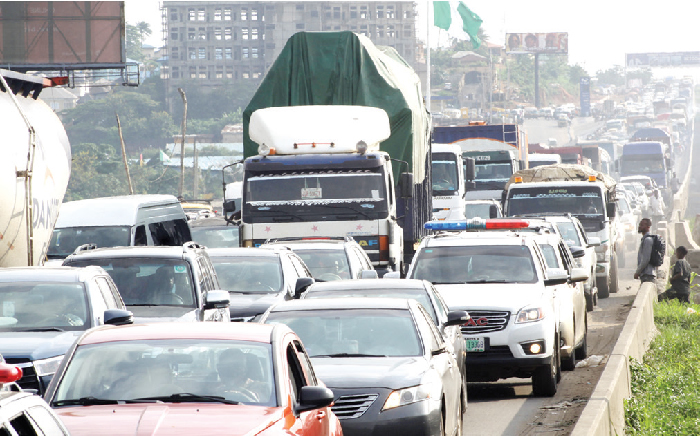
The ongoing repair of the damaged expansion joints of the bridge has triggered severe traffic congestion along the Lagos-Ibadan corridor, leaving thousands of travellers stranded for hours and renewing concerns over the recurring maintenance challenges on one of Nigeria’s busiest highways.

In a routine announcement that has become familiar to motorists plying the route, the Federal Ministry of Works, in a statement on September 5, announced plans to begin a two-week repair of damaged expansion joints on Kara Bridge.

This followed an earlier planned commencement in July, which was later suspended amid concerns about traffic management.

Although there have been repeated rehabilitation and repair works on different sections of the expressway over the years, the most gruelling period dates back to the reconstruction of the 127.6-kilometre highway, described as the busiest in Africa. The rehabilitation, which was approved in 2013 by the administration of President Goodluck Jonathan, lasted a decade before its completion.

During this period, the expressway subjected motorists to severe traffic bottlenecks on different sections of the highway almost daily, particularly around the Lagos-Sagamu Interchange.

Motorists would later heave a sigh of relief following the completion of the reconstruction in 2023.

While the road has since become motorable, with travel time now considered relatively moderate as expected, the repeated rehabilitation of bridges along some sections has become a source of concern for many, as it continues to bring back the experiences associated with the earlier reconstruction of the highway.

With every announcement by the Federal Government on bridge rehabilitation comes the anxiety over the traffic gridlocks expected to follow.

Motorists lamented that the interventions have often been followed by renewed hardship and prolonged traffic disruptions. When the work eventually began on Tuesday, September 8, the impact was immediate.

Motorists were stranded for several hours as traffic built up from the Kara Bridge in Ogun State towards Lagos. By the afternoon, the gridlock had stretched beyond the Secretariat Bus Stop, while motorists coming from Ikeja and Agege and trying to access the Otedola underpass were also caught in the congestion. By nightfall, the gridlock had extended about 15 kilometres into Lagos.

The situation brought together personnel from the police, military, Lagos State Traffic Management Authority, Federal Road Safety Corps and Ogun State Traffic Compliance and Enforcement Corps, who worked to control the movement of vehicles and prevent the situation from worsening.

Yet, for many commuters caught in the traffic, the presence of traffic officials did little to ease the pain of sitting for hours on a journey that ordinarily should take a fraction of the time.

While gridlock has been the most visible consequence of the exercise, the disruption has far-reaching economic implications for motorists, commuters, businesses and transport operators.

See also  Terrorism: French President, Emmanuel Macron Reveals Details Of His Phone Call With Tinubu

It’s a period where a commercial driver is delayed for several hours, losing trips and income, as well as a worker who lives in Ogun State but works in Lagos, spending hours in traffic, arriving late at work or returning home long after closing hours.

Similarly, a traveller heading to another state risks missing a scheduled journey, while others may miss important appointments because of the congestion.

Goods are also delayed as a result of the traffic, while fuel is consumed as vehicles remain stationary for hours. As a result of this, transport operators are consequently forced to factor the additional time and expenses into their operations.

Checks revealed that the situation has become increasingly frustrating for many commuters who use the expressway daily, with some now considering longer alternative routes to escape the congestion.

One of them, Timilehin Adio, told our correspondent that he was considering travelling through Ikorodu and Sagamu or using the Lekki-Epe route.

He said, “With the repairs practically putting the stretch of the expressway on lockdown, I now consider going through Sagamu and Ikorodu to Lagos. I can also take the Lekki-Epe route. The traffic is becoming unbearable.”

Another motorist, who identified himself simply as Saheed, said Tuesday’s gridlock left him stranded for several hours before he eventually got home around 2 am.

Saheed, who lives in the Mowe area of Ogun State and works on Lagos Island, told our correspondent on the first day of the repair that he was also considering an alternative route.

He said, “The gridlock was worse yesterday (Tuesday). I got home around 2 am. The traffic was at a standstill. This was because of the high volume of vehicles coming in from Lagos. I may have to consider going through the Lekki-Epe route or Ikorodu axis when returning home.”

It was also gathered that some motorists whose destination extends beyond the bridge spent close to six hours in the gridlock.

This is as those whose offices are located on the Island had considered staying back at their workplaces or seeking temporary accommodation in Lagos pending the completion of the repair.

The current repair is being done in phases. One half of the affected section is closed while motorists use the other half under controlled traffic arrangements, with work expected to move to the other side as the project progresses.

With what appears to be a seemingly endless cycle of repairs, the latest Kara Bridge intervention raises a more troubling question: why does a road that has undergone several rehabilitation exercises continue to return to the repair table?

A recurring repair cycle

The latest intervention did not begin in isolation. In July 2025, The PUNCH reported concerns by motorists over damaged expansion joints on the Kara Bridge section of the expressway.

During a visit to the area by our correspondent, damaged rubber covers and a section resembling a pothole were observed around the expansion joints, with some motorists swerving to avoid the damaged portions. The Federal Ministry of Works subsequently disclosed that it had begun the process of repairing some of the faulty expansion joints following the report.

By February 2026, the problem had returned to the centre of attention. The Federal Government announced a six-week partial closure of sections of the Lagos-Ibadan Expressway to enable repairs on expansion joints at Kara Bridge, Magboro Bridge and Arepo-Punch Bridge.

See also  Why high-profile native doctors are still in detention – Anambra govt

The Ministry of Works said the joints had deteriorated significantly, posing safety risks and contributing to crashes.

The February intervention itself followed earlier work that had been suspended because of complaints about prolonged traffic congestion.

According to the Federal Ministry of Works, half of each side of the affected bridges had been repaired the previous year before the work was suspended because of the traffic situation. The ministry subsequently returned to the sites, promising improved traffic management and durable repairs.

Then came another planned intervention in July. The Federal Government announced another replacement of expansion joints on the Kara Bridge, but the exercise was postponed after motorists raised concerns about the likely traffic consequences. The repair was, however, back on the agenda by September.

The sequence, however, has left motorists wondering whether the repairs are solving the underlying problem or merely providing temporary relief before another section fails.

An infrastructure governance and sustainability advocate and multidisciplinary built-environment professional, Engr. Babatunji Adegoke, said regular maintenance of infrastructure was essential, but the real concern was how such maintenance was planned and carried out.

He said, “If the current work on Kara Bridge relates to its expansion joints, their deterioration is not unusual. These components are subjected to constant traffic, temperature changes and weather conditions and will naturally wear over time.

“However, on a critical route like the Lagos-Ibadan Expressway, such deterioration should be anticipated and managed before it becomes an emergency.

According to him, the fact that similar repairs were carried out recently should also lead to a proper assessment of why the component is failing repeatedly.

He also noted that the ministry needed to look beyond simply replacing the expansion joint and establish whether the underlying problem was related to design, material quality, installation, drainage or traffic loading.

He said, “What is required is a shift from reactive maintenance to planned and preventive maintenance. Regular inspections and condition monitoring should identify problems early enough for interventions to be scheduled with minimal disruption to traffic.

“Ultimately, the objective should not simply be to repair infrastructure when it fails, but to manage it throughout its lifecycle. That approach will reduce repeated repairs, minimise disruption to motorists and provide better value for money.”

An Assistant Chief Civil Engineer, Bright Ezeonye, said different remedial approaches could be adopted depending on the nature and severity of defects discovered on the bridge.

See also  SERAP Sues INEC Over Alleged ₦55.9 Billion Election Funds Diversion

Ezeonye, however, said repeated repairs to the same components could raise questions about the quality of the previous work and its supervision.

He added that proper traffic impact analysis should also precede major repair works on such a critical route.

“Repeated repairs of the same works on that bridge could be attributed to incompetence and lack of proper supervision

“Adequate traffic impact analysis should have been conducted, and a proper solution on how best to manage the ripple effect should have been proposed,” he added.

On how to prevent recurrent repairs, Ezeonye said the first step was to establish whether the problem affected the structural integrity of the bridge.

“If the finding is not a major one, that is, it is not a structural defect (foundation), then proper planning is needed both procurement-wise and implementation-wise,” he said.

Ezeonye noted that available information suggested that the current work involved damaged expansion joints, which, he said, was not in itself necessarily a structural failure of the bridge.

He also identified corruption, incompetence and funding constraints as possible factors that could contribute to recurrent repairs.

‘Repair should last at least 10 years’

Responding to an inquiry by our correspondent on whether the ongoing intervention was a permanent solution that would put an end to the recurrent repairs of the expansion joints, the Federal Controller of Works in Ogun State, Michael Komolafe, said the current repair was designed to be durable.

He also lamented that the road was overloaded, thereby affecting the infrastructure.

He said, “A durable one, a durable one. What we are doing is a very durable kind, and we expect it to last a certain time. The problem is that there are no alternative routes. Otherwise, concrete is supposed to cure for 28 days to attain its maximum strength.

“But now, although we have increased the strength of the concrete we are using, it is a special one. Within seven days, we are expecting it to attain reasonable strength to withstand the impact of vehicular movement on it.

“But we cannot forget the truth that the kind of loading on our roads is abnormal. A road is designed for 40, 45 or 60 tonnes, and then vehicles are carrying 80 or 90 tonnes. You can imagine that. So, you expect abnormality.

“We still have that issue. It is very important to check all this loading on the road and bridge. If the road is overloaded, it will affect the infrastructure.

“However, what we are doing shall last for a long time. Under normal conditions, we should not be expecting the need for another vehicular-related repair for less than 10 years.”

Source: punchng.com

FOLLOW US ON:

FACEBOOK

TWITTER

PINTEREST

TIKTOK

YOUTUBE

LINKEDIN

INSTAGRAM

Continue Reading
Click to comment

Leave a Reply

Your email address will not be published. Required fields are marked *

News

Mr Macaroni reveals why he stepped back from criticising government

Published

on

Nigerian actor and social commentator Adebowale Adedayo, popularly known as Mr Macaroni, has explained why he has scaled back his public criticism of government, citing fatigue from repeating the same messages, backlash from citizens, and threats he faced.

Mr Macaroni was reacting to a video posted by Wazobia FM on Tuesday, where he spoke about life threats he received over EndSARS protests.

In a series of posts on X on Wednesday, the skit maker clarified that the interview was more than two years old but maintained that the points he raised remain valid.

“Forget about the threats. My issue with us as Nigerians is how we move on quickly. We complain and move on. There is nothing I will say now that I haven’t already said hundred times over. Until we as a people are ready to fight for what is ours, saying the same thing over and over again is just TIRING,” he wrote.

In a follow-up post, he pointed to a March 2026 statement in which he described the administration of President Bola Tinubu as “the Most Useless Government in the history of Useless Governments” and said that day marked the moment he decided to take a break.

He added that a small number of politicians continue to ruin the lives of over 200 million Nigerians “so brazenly without any resistance.”

Until Nigerians abandon “survival mentality” that keeps citizens operating in survival mode rather than demanding an enabling environment for success, “then we are truly not ready,” he added.

In another post, Mr Macaroni addressed perceptions around his reduced commentary.

See also  SERAP Sues INEC Over Alleged ₦55.9 Billion Election Funds Diversion

“I have been persecuted and vilified since I started speaking up against Government. Threats are a usual occurrence. Please don’t mix things up. I am only tired of saying the same thing over and over again. When Nigerians are finally ready, I will be ready too! But till then, please let me continue enjoying my break by redefining myself and Art, which I love as dearly as I love Nigeria.”

The Wazobia FM video captures earlier remarks in which Mr Macaroni detailed the personal cost of his activism.

He said speaking out often made him appear to be “the troublesome person,” while some of the Nigerians he sought to represent turned against him.

“Nigeria is a very funny country. Nigerians are also very funny. And I say this with all seriousness, because I’m not so happy about how things have been. And you keep talking, and it seems like you are the troublesome person. It seems like na you be the—the same Nigerians that you speak for turn against you. They start to fight you,” he said.

Mr Macaroni, who said he was not interested in joining politics, also expressed concern about the effect of the political environment on people he once admired.

He recalled how some people he looked up to from his secondary school and university days entered politics and, according to him, damaged the legacies they had built.

Speaking about his activities after #EndSARS, Mr Macaroni said he continued to speak out despite threats to his life and concerns raised by his family.

“So, you know, End SARS came at risk to my life, threats here and there, serious threats. My family, no time, they were every time calling me, crying, ‘Debo, please. Debo, please.’ Every—every blessed time, my mother. Every blessed time. It was so bad they wanted to fly me out of the country. I said, ‘For what? I’m not running anywhere,’” he said.

See also  Dan Agbese was an institution in journalism - Tinubu

He said he also remained active during the 2023 election, encouraging Nigerians to vote wisely and stating his preferred candidate without asking others to vote for the same person.

“And I didn’t—I didn’t go silent after End SARS. I still came out. I said, ‘We must vote wisely.’ I did series of videos, series of tweets, series of—and not only me, a lot of other people too did, saying, ‘Vote wisely. Do this, do that wisely.’ And I said, ‘Okay, this is the person me I will vote for.’ I did not say vote—everybody should go and vote for this person,” he said.

He said the response to his position included insults and abuse.

“See curse, see insult. ‘You are a omo ale, you are this one, you are that one.’ Now, everybody—people vote. Whether, uh, rig, I no know, there no rig, e—e no concern me, but president dey, yes or no? E dey,” he said.

Mr Macaroni said the outcome of the election also contributed to his reluctance to repeatedly speak on political matters.

“Now, everything don dey as e be. Is affecting me too. But what—okay, okay, oya, what should I come and say again now?” he said.

Source: punchng.com

FOLLOW US ON:

FACEBOOK

TWITTER

PINTEREST

TIKTOK

YOUTUBE

LINKEDIN

INSTAGRAM

Continue Reading

News

Trump dismisses report China gave Iran intel before US base attack

Published

on

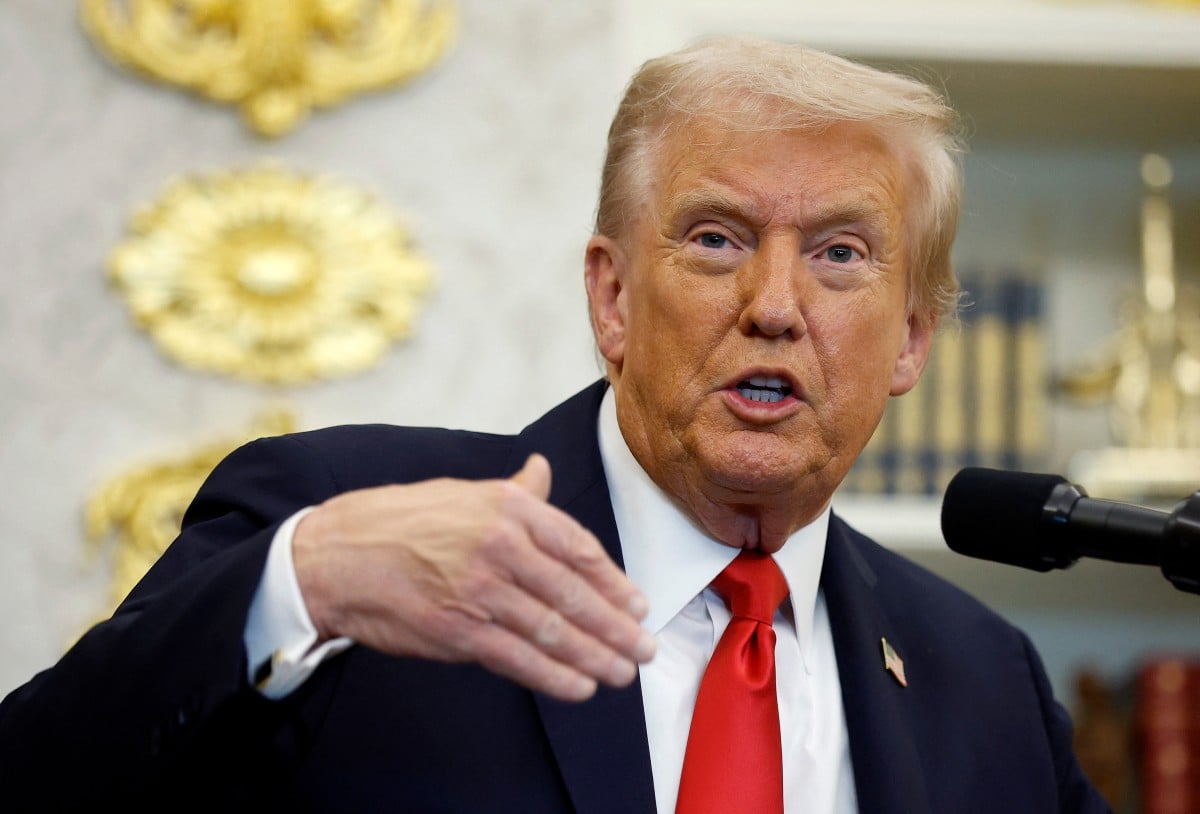
US President Donald Trump on Sunday downplayed reports that Chinese entities supplied Tehran with satellite images of a military base in Jordan before and after an Iranian strike killed three US soldiers.

“You know, when they say that China spies on us, I say you’re right, and we spy on them too,” Trump told reporters aboard Air Force One a day after The Wall Street Journal reported Beijing’s intelligence sharing.

“That’s what we do. They basically do what we do,” Trump said.

The incident could deepen tensions between Washington and Beijing ahead of a planned state visit by Chinese President Xi Jinping to the White House on September 24.

On July 17, Iran launched missile strikes on the Muwaffaq Salti Air Base in Jordan, which houses US forces. Three US Army soldiers were killed.

Unnamed American officials cited in the Journal’s reporting did not name the Chinese entities involved, and did not suggest that Beijing was directly to blame.

Chinese officials asked for proof of the transfer of satellite imagery when prodded by the US officials, and refused to acknowledge that Chinese companies were involved in providing Tehran with satellite images, the Journal reported late Friday.

Trump has warned Beijing not to sell weapons to Iran, and in May, Washington sanctioned three China-based satellite companies for enabling Iran’s military operations.

China is a top economic partner of Iran, buying much of its oil output, and also an important diplomatic backer.

Still, Trump said of Xi on Sunday that “he’s behaved reasonably well, and we behave reasonably well.”

See also  Dan Agbese was an institution in journalism - Tinubu

Asked if he would ever allow Chinese cars to be sold in the United States, Trump said, “I haven’t. I’m the one that kept them out. The tariffs kept them out.”

AFP

Source: punchng.com

FOLLOW US ON:

FACEBOOK

TWITTER

PINTEREST

TIKTOK

YOUTUBE

LINKEDIN

INSTAGRAM

Continue Reading

News

Fani-Kayode demands justice as two more Nigerians killed in South Africa

Published

on

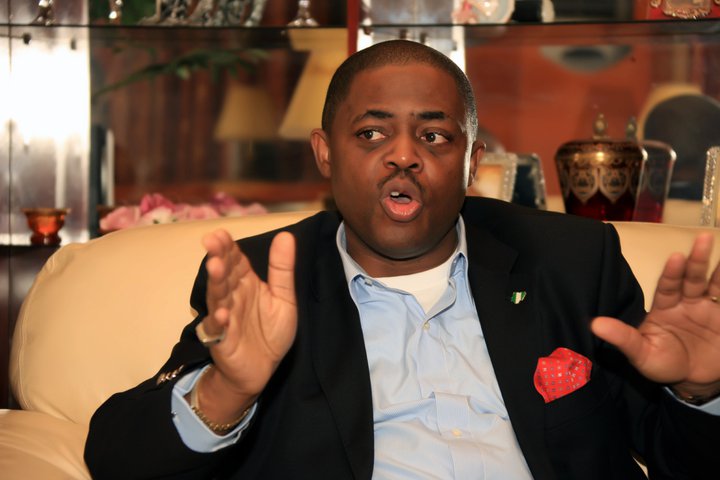
Nigerian High Commissioner-designate to South Africa, Chief Femi Fani-Kayode, has demanded urgent action by the South African Government to protect Nigerians and bring perpetrators of killings involving Nigerian nationals to justice.

Fani-Kayode, reacting to the recent killings of Bishop Michael Taiwo Fakunle and James Uchechukwu Nwankwo in Johannesburg in a statement made available to Tribune, said he was “mortified and deeply shocked” by the developments, warning that Nigeria’s patience over the situation was wearing thin.

Fakunle was allegedly shot dead at his home in Johannesburg on September 4 after receiving a series of threats, while Nwankwo reportedly died on September 5 following what Fani-Kayode described as “gruesome interrogation techniques” by officers of the South African Police Service (SAPS).

According to the High Commissioner-designate, the two deaths bring to eight the number of Nigerians allegedly murdered in South Africa this year, with four of the cases involving South African police officers.

“Bishop Fakunle and Mr. Nwankwo are the seventh and eighth Nigerians to have been murdered in South Africa this year alone. No less than four amongst the eight were murdered by South African police officers,” he said.

Fani-Kayode further claimed that more than 100 Nigerians had been killed in South Africa since 2022, including over 30 allegedly killed by personnel of the SAPS and the South African Defence Force.

He expressed concern that, despite repeated complaints by the Nigerian authorities, no person had been arrested, detained, prosecuted or brought to justice in connection with the alleged killings.

“What is most disturbing is the fact that in spite of our constant expressions of concern about this disturbing state of affairs, not one person has been arrested, detained, prosecuted or brought to justice for any of these heinous crimes,” he said.

See also  Why high-profile native doctors are still in detention – Anambra govt

“This is unacceptable.”

Fani-Kayode called on the South African Government to intensify efforts to protect Nigerian nationals and ensure that those responsible for their deaths were prosecuted.

“We call on the South African Government to do far more to protect our nationals and to bring those that have killed or are planning to kill them to justice,” he said.

“No-one deserves to be targeted and murdered simply because they are Nigerian.”

He said the Nigerian community in South Africa was “deeply disturbed” by the developments and living in fear over what could happen next, adding that the Nigerian Mission in the country was equally concerned.

The High Commissioner-designate also condemned what he described as a fresh deadline issued to African nationals, including Nigerians, to leave South Africa by September 30.

According to him, the deadline was issued by South African non-governmental organisations which he accused of being “brazenly racist, xenophobic and Afrophobic” and of threatening Nigerian and other African nationals who failed to comply.

“We call on the South African Government to protect our people from the excesses of these racist organisations and their misguided members and to apply the full weight of the law against them for their lawless behaviour,” he said.

He also urged the South African authorities to prosecute individuals responsible for allegedly “traumatising, terrorising, torturing and killing” Nigerians.

Fani-Kayode said Nigeria remained committed to strengthening relations with South Africa but warned that continued killings and discrimination against Nigerians could undermine bilateral ties.

“Whilst we seek to establish stronger and deeper ties with the South African Government, one thing remains clear. If this vicious cycle of discrimination against and killing of our nationals does not stop, there will be consequences,” he said.

See also  Terrorism: French President, Emmanuel Macron Reveals Details Of His Phone Call With Tinubu

“Simply put, our patience is wearing thin.”

He added: “South Africans are not targeted and killed in Nigeria by our people or our security forces. The least the South African Government can do is to reciprocate this gesture, protect our nationals and address our legitimate concerns.”

Fani-Kayode condoled with the families and associates of the two deceased Nigerians, praying that the souls of Fakunle and Nwankwo would rest in peace.

Source: tribuneonlineng.com

FOLLOW US ON:

FACEBOOK

TWITTER

PINTEREST

TIKTOK

YOUTUBE

LINKEDIN

INSTAGRAM

Continue Reading

Trending