Connect with us

News

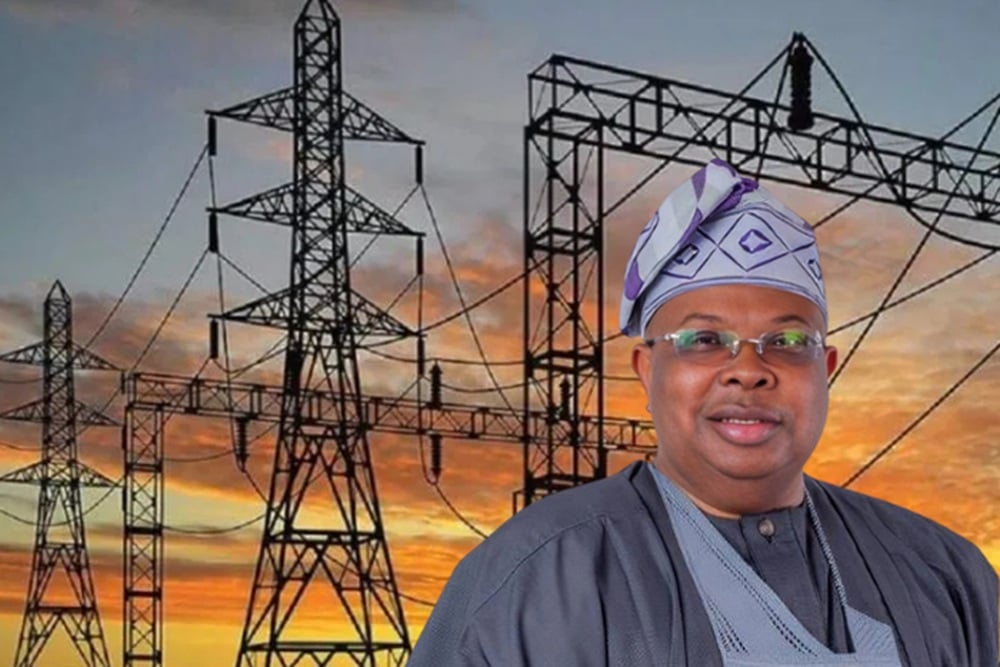
FG plans call centre to resolve power complaints

Published

on

In a bid to hasten solutions to power outages and disruptions across the country, the Federal Government is planning to establish a national call centre where electricity consumers can lodge complaints and have them resolved.

The Minister of Power, Chief Joseph Tegbe, disclosed this on Wednesday at the commissioning of a 3-megawatt hybrid mini-grid project and renewable energy workshop and training centre at the Yakubu Gowon University, formerly the University of Abuja.

According to a statement, Tegbe said the initiative would also provide a dedicated channel for reporting vandalism of critical electricity infrastructure for immediate action and remediation.

“My office is working on a call centre where electricity complaints across the country can be lodged and resolved. This initiative will provide sustainable job opportunities for our youth nationwide.

“In addition, we plan to provide a dedicated channel where vandalism of critical assets can be reported for immediate action and remediation. We are also working through a joint team of the Nigeria Police Force, the Nigeria Security and Civil Defence Corps, and the EFCC to curb the vandalism of electricity assets across the country,” the minister disclosed.

He urged students to support efforts to protect power infrastructure, particularly the newly commissioned solar facility.

“The promise of this investment now places a responsibility on all of us to preserve it. I expect the student community to support our ongoing efforts to stem the tide of vandalism. I therefore charge all of you to report any such act whenever you see it, not just on this solar system, but on other power assets such as transformers and transmission towers.”

See also  Yahoo boys are geniuses who need redirection, not condemnation - Peter Obi

The 3MW hybrid mini-grid came under Phase 2 of the Energising Education Programme, which covers seven universities and two teaching hospitals.

The Yakubu Gowon University installation comprises a 3.3MWp solar array with 3MW of AC output capacity and 2 megawatt-hours of battery storage to support critical loads after solar hours. It also includes a dedicated grid connection for non-critical demand outside daylight periods.

Tegbe said the project would benefit 58,726 students, while 388 streetlights installed under the project would improve campus illumination and security.

He said electrifying the university would strengthen research, reduce dependence on diesel generators and ease pressure on institutional budgets.

“This connection between infrastructure and human capability is central to President Bola Tinubu’s Renewed Hope Agenda. Under his leadership, investment in electricity is being directed towards services and productive activities that improve people’s lives.”

“This sustained investment is a testament to this administration’s constancy of purpose. Continuing a national programme through successive phases, bringing projects to completion, and preparing the next phase reflects the discipline that development requires. For the young people who depend on these institutions, that continuity matters. It means that the commitment to their future remains active beyond any single project or ceremony,” he said.

In his remarks, the Managing Director of the Rural Electrification Agency, Abba Aliyu, said the value of the Energising Education Programme went beyond the megawatts delivered, stressing its impact on functional laboratories, institutional budgets and safer learning environments.

“Over the years, the EEP has taught us that when you build, you have to think about what happens five years from now and whether the investment will continue to create value into the future.”

See also  Kano gov sacks head of service

Aliyu said the Renewable Asset Management Company was the agency’s solution to the sustainability challenge facing renewable energy projects.

“The Renewable Asset Management Company is our solution. We must now become rigorous about asking how we protect and preserve the value of what we have built. RAMCO addresses this sustainability challenge. It recognizes that building infrastructure and managing it are two distinct responsibilities, and that modern renewable energy involves decentralisation.

The Federal Government has created a platform to manage, monitor, maintain and optimise assets over time. RAMCO cannot survive alone; it requires the support of all stakeholders in shared stewardship. The ultimate value of this project will depend not only on what we have installed, but on how well it is sustained,” the REA MD said.

He added that the agency had established a Renewable Energy Workshop and Training Centre to build local technical capacity.

Aliyu encouraged the university to turn the facility into a research hub for distributed energy resources by pioneering new academic courses, driving technological innovation and pushing the technical boundaries of the installation.

He revealed that the EEP had so far delivered over 100MW of power across 22 federal institutions and university teaching hospitals.

The Vice-Chancellor of the Yakubu Gowon University, Prof. Akinwunmi Fawehinmi, said reliable electricity is essential for effective teaching, research and a conducive learning environment.

He praised the Federal Government’s intervention and pledged that the university management would ensure the facility is fully utilised and maintained.

The Chairman of the Senate Committee on Power, Senator Enyinnaya Abaribe, also commended the project, saying it was critical to improving the quality of education across the country.

See also  NASS to harmonise Electoral Bill Monday

Abaribe also applauded the establishment of RAMCO, stating that sustainability is key to ensuring that projects continue to benefit Nigerians long after commissioning.

Source: punchng.com

FOLLOW US ON:

FACEBOOK

TWITTER

PINTEREST

TIKTOK

YOUTUBE

LINKEDIN

INSTAGRAM

Continue Reading
Click to comment

Leave a Reply

Your email address will not be published. Required fields are marked *

News

420-year-old Alaafin’s palace tortoise d!es

Published

on

A ‘420-year-old’ tortoise known as Baba has d!ed at the palace of the Alaafin of Oyo, Oyo State.

Baba d!ed on Monday, September 14, 2026 after falling ill.

Baba, regarded by residents as the oldest indigene of Oyo, was a treasured relic of the Kingdom that had survived generations of monarchs and was cared for by successive Alaafin.

The Director of Media and Publicity to the Alaafin, Bode Durojaiye, disclosed this in a statement issued in Ibadan on Thursday, September 17.

The statement described Baba as more than a tortoise, saying the animal had become a part of the oral history of the Yoruba people and a major attraction at the ancient palace.

According to him, the incumbent Alaafin, Oba Abimbola Akeem Owoade I, met Baba at the palace after his ascension to the throne.

He said Baba had been nourished by successive kings, who inherited the animal as part of the historical relics associated with the palace.

“In Oyo, Baba was regarded as the oldest indigene. It was the Alaafin’s most besotted pet. The incumbent Paramount Ruler met it in the Palace, as Baba was nourished by a succession of Kings, who inherited him as part of the relics of their ancestors,” the statement read.

He said confirmed oral history indicated that Baba was brought from Oyo-Ile, the seat of the old Oyo Empire, to the present palace in Oyo town.

Durojaiye said two palace officials had been responsible for tortoise’s welfare the over the years, while its longevity and unusual size made it a major attraction for visitors to the palace.

See also  NASS to harmonise Electoral Bill Monday

He said many people visited the palace specifically to see Baba, making the animal part of the tourist experience.

Baba was reportedly fed with water melon, corn pap wrapped in leaves and grass.

According to Durojaiye, the tortoise fell ill on Monday and stopped eating before it eventually d!ed.

He said Baba had been buried following its d3ath.

FOLLOW US ON:

FACEBOOK

TWITTER

PINTEREST

TIKTOK

YOUTUBE

LINKEDIN

INSTAGRAM

Continue Reading

News

King Charles warns tech bosses of ‘existential dangers’ of AI

Published

on

King Charles III has warned tech giants of the “existential dangers” posed by artificial intelligence falling into the wrong hands.

He gave the warning during a conference in Scotland on Thursday, according to AFP.

The gathering at Dumfries House brought together senior representatives from Nvidia, Google DeepMind, OpenAI, Anthropic, and Britain’s minister for artificial intelligence.

The debate over the risks of the technology has intensified in recent months, fuelled by several incidents and apocalyptic warnings from industry professionals.

“There seems urgency in adequately considering the existential dangers of such technologies falling into the wrong hands and being used in potentially catastrophic ways.

“Those in our world who value our humanity and its vital moral component are anxiously seeking your reassurance that we will not lose control of our destiny,” Charles told guests at the opening of the conference.

The British monarch called on tech leaders to ensure technology “remains firmly in the service of humanity, community and the natural world.”

Among the guests at the conference were DeepMind chair Demis Hassabis, the head of American semiconductor giant Nvidia, Jensen Huang and OpenAI’s chief financial officer Sarah Friar.

Paolo Benanti, the Vatican’s AI adviser, and Israeli author and historian Yuval Noah Harari were also in attendance.

Buckingham Palace expects the conference to mark the beginning of a process to draw up common principles guiding the development and use of AI.

But no formal agreement is expected at the end of the meeting of tech leaders and other influential figures, which is set to last four to five hours.

The king, who is not taking part in the discussions, urged participants to consider how to harness AI “by putting safety at its heart” and to build international cooperation so that “no nation is left behind.”

See also  Kano gov sacks head of service

Rapid advances in AI have fuelled concerns over job losses as well as the soaring energy demand and the environmental impact of data centres.

Fears that designers of AI agents could lose control of their creations mounted after several models from OpenAI and Anthropic reportedly broke out of their confined environments on their own, accessed the internet, and intruded on websites and platforms.

“The chance of something bad accidentally happening, if we get things wrong, is definitely non-zero,” DeepMind’s Hassabis said in his opening remarks at the summit.

“We’ve already seen the beginnings of this with the recent cyber incidents involving rogue AI agents, and there could be other, much more serious risks on the horizon, including biological and nuclear threats,” he warned.

Nvidia’s Jensen Huang, meanwhile, emphasised the benefits of AI in research and medicine, as well as its potential for “creating jobs in entirely new industries”.

He told reporters that “we have got to debunk some of the myths out there,” and called for “responsible optimism.”

Anthropic CEO Dario Amodei set off alarm bells on Saturday when he called on companies in the sector to slow down their development in order to better understand the risks, receiving support from OpenAI CEO Sam Altman and Elon Musk.

US President Donald Trump and several members of his government have, by contrast, reiterated in recent days their determination not to constrain the sector, out of concern that doing so would allow China to gain the upper hand.

Mark Zuckerberg, the head of Meta, has also rejected calls to slow the development, arguing that market forces and the risk of litigation are the best safeguards.

See also  Nigeria, US Strike Targeted Terrorists, Not Religion — Presidency

Source: punchng.com

FOLLOW US ON:

FACEBOOK

TWITTER

PINTEREST

TIKTOK

YOUTUBE

LINKEDIN

INSTAGRAM

Continue Reading

News

Mambilla power: Nigeria wins $3.38bn battle, 1,500MW project gets lifeline

Published

on

The Federal Government has won a nearly nine-year international arbitration battle against Sunrise Power and Transmission Company Limited over the long-delayed 1,500MW Mambilla Hydroelectric Power Project, defeating claims that put Nigeria’s potential exposure at more than $3.38bn.

The project was originally conceived as a 3,050-megawatt hydroelectric plant in Taraba State, but the Federal Government later reduced the planned capacity by about 50 per cent to 1,525MW before subsequently rescoping it to about 1,500MW to make it financially viable and “bankable” for lenders.

President Bola Tinubu confirmed the victory in a State House statement on Thursday, saying an International Arbitration Tribunal under the auspices of the International Chamber of Commerce in Paris, France, issued an award in Nigeria’s favour and rejected Sunrise’s claims.

The arbitration battle dates back to October 10, 2017, when Sunrise commenced proceedings against Nigeria at the ICC International Court of Arbitration over an alleged breach of a 2003 agreement concerning the development of the Mambilla power project.

According to the Presidency, Sunrise demanded $680m as a settlement sum and interest in the latest arbitration relating to another case in which it is claiming more than $2.7bn in compensation and interest over disputes associated with the development of the Mambilla project in Taraba State.

Combined, the two related claims put Nigeria’s potential exposure at more than $3.38bn.

The final award issued on September 17, 2026, came nearly nine years after the company commenced arbitration proceedings against the Federal Government.

Tinubu said the ruling had removed a major impediment that prevented the multibillion-dollar power project from progressing. “Today’s ICC ruling clears the single biggest legal hurdle that has paralysed the Mambilla hydro power project for years,” the President said.

Details of the award earlier reported by TheCable showed that the three-member tribunal dismissed Sunrise’s claim for a declaration that Nigeria breached its contractual obligations under a settlement agreement and an addendum entered into by the parties.

The tribunal also rejected the company’s request for an order compelling Nigeria to pay $400m, comprising a settlement sum of $200m and another $200m claimed as a default payment.

According to the report, the tribunal further declared that Sunrise promoter, Leno Adesanya, was bound by the arbitration agreement with Nigeria under the settlement agreement and addendum.

See also  Nigerian embassy packed, 269 return as S’Africa protests rise due to Xenophobic tensions

It consequently held that it had jurisdiction over Nigeria’s counterclaim against Adesanya and Sunrise. The tribunal also ordered Sunrise and Adesanya to reimburse Nigeria for 75 per cent of the legal fees and expenses incurred by the country in defending the arbitration.

Nigeria’s legal fees were put at $11.82m, of which $2.5m is expected to be covered directly from funds held in escrow by the ICC and released upon notification of the final award.

Sunrise and Adesanya were ordered to pay the outstanding $9.32m, alongside interest at an annual rate of 10 per cent, compounded annually from the date of notification of the final award until the amount is fully paid.

The arbitration costs were fixed at $1.66m, with Sunrise and Adesanya expected to bear 75 per cent while Nigeria would shoulder the remaining 25 per cent.

TheCable identified the three members of the tribunal as Melaine van Leeuwen, who presided over the panel, alongside Stavros Brekoulakis and Simon Nesbitt as co-arbitrators.

Nigeria was represented by a legal team led by Elizabeth Oger-Gross and Tolu Obamuroh of Paul Hastings LLP.

Tinubu commended the Attorney-General of the Federation and Minister of Justice, Lateef Fagbemi, alongside officials of the Federal Ministry of Justice, for their handling of the dispute.

He also praised the country’s legal team for what he described as its professional defence of Nigeria’s interests.

“This latest decision affirms the Nigerian State’s determination not to succumb to predatory and exploitative claims by corrupt local and international entities and their enablers and funders,” Tinubu said.

Tinubu hails ex-Presidents

The President also hailed former President Olusegun Obasanjo and the late former President Muhammadu Buhari, who testified in Nigeria’s defence during the arbitration proceedings.

“I commend the patriotism and support of former President Olusegun Obasanjo, GCFR, and late President Muhammadu Buhari, GCFR, who testified in the case, which dated back to an illegal 2003 contract to build a 3,050-megawatt hydroelectric plant in Taraba State under a build-operate-transfer model. The Federal Executive Council never authorised the contract,” he said.

Tinubu also acknowledged former ministers, Babatunde Fashola and Suleiman Adamu, who participated as witnesses in the case, as well as experts involved in Nigeria’s defence.

He further commended the National Security Adviser for supporting the government’s case and the Economic and Financial Crimes Commission for its investigation into the dispute.

See also  Wike-naval officer clash: Ex-Generals fume as FG orders probe

Two-decade delay

The dispute has its roots in an agreement reached more than two decades ago over the proposed development of the Mambilla power project. The 2003 contract provided for the construction of a 3,050-megawatt hydroelectric plant in Taraba State under a build-operate-transfer model.

In 2016, then Minister of Power, Works and Housing, Babatunde Fashola, described the project as one that would generate about 3,000MW.

However, in February 2021, then Minister of Power, Saleh Mamman, announced that the Federal Government had revised the planned capacity downward by 50 per cent, from 3,050MW to about 1,525MW.

The stated reason was to reduce the project cost by about $1bn and make it more financially viable.

In July 2021, Mamman told the Senate Committee on Power that the project had subsequently been rescoped to 1,500MW to make it “bankable” and acceptable to lenders.

He said the original 3,050MW capacity was not considered financially viable under prevailing market conditions.

The original project was estimated at about $5bn–$5.8bn, while the rescoped project was reported at roughly 1,500–1,525MW and about $4bn.

The parties subsequently attempted to resolve the dispute through a settlement agreement in 2020.

However, disagreement over the implementation of that settlement led to further arbitration, with Sunrise seeking payment from the Federal Government for allegedly failing to honour the agreement.

The Mambilla project itself has remained largely on the drawing board despite successive administrations identifying it as a major component of efforts to increase Nigeria’s electricity generation capacity.

The project has suffered repeated setbacks arising from legal disputes, financing challenges and changes to its implementation arrangements.

A Federal Ministry of Power implementation document had identified the arbitration, completion of financing arrangements with the Export-Import Bank of China and the need to re-scope the project among the challenges affecting its execution.

In the latest case, Tinubu said the government would continue to honour legitimate contractual obligations and work with genuine investors while defending the country against claims it considered unjustified.

See also  Yahoo boys are geniuses who need redirection, not condemnation - Peter Obi

“I want to assure you that while our country remains committed to partnering with genuine investors and honouring its legal obligations, it will continue to defend all opportunistic claims instituted against our commonwealth strongly,” the President said.

The arbitration victory also comes against the backdrop of Nigeria’s efforts to defend itself against multibillion-dollar international claims arising from disputed government contracts.

In 2023, Nigeria recorded another major legal victory when a United Kingdom court set aside an $11bn arbitration award obtained by Process & Industrial Developments Limited over a failed gas processing agreement.

The PUNCH earlier reported that Justice James Omotosho of the Federal High Court sentenced former Minister of Power, Saleh Mamman, to 75 years’ imprisonment in absentia over a N33.8bn money laundering and fraud case instituted by the Economic and Financial Crimes Commission.

Omotosho further directed Mamman to refund the outstanding balance from the N22bn the prosecution established was diverted from funds meant for the Mambilla and Zungeru hydroelectric power projects.

Former Minister of Power, Prof. Barth Nnaji, recently made an assessment of Nigeria’s power sector, blaming over a decade of stalled investment on policy inconsistency, weak infrastructure development, and the abrupt discontinuation of a financing framework that had begun attracting global capital into electricity generation projects.

Nnaji spoke in Lagos at the 2026 conference of the Nigerian Association for Energy Economics, where he addressed participants on the future of Nigeria’s energy mix, the role of natural gas in powering the economy, the financing bottlenecks facing major projects, and the long-standing delays around strategic assets such as the Mambilla hydropower project.

Nnaji regretted that Nigeria has gone 11 years without financing any new major power plant, a situation he traced directly to the dismantling of a government-backed financing support mechanism introduced during his tenure as minister.

Expanding beyond the financing challenge, Nnaji argued that Nigeria must take a realistic and pragmatic view of energy transition, especially in light of recent global events.

Source: punchng.com

FOLLOW US ON:
FACEBOOK

TWITTER

PINTEREST

TIKTOK

YOUTUBE

LINKEDIN

INSTAGRAM

Continue Reading

Trending