Connect with us

Business

Lagos e-hailing drivers begin indefinite strike over fares

Published

on

E-hailing drivers in Lagos State have begun an indefinite strike over concerns about fare structures, commissions, deductions and welfare.

The drivers, under the Amalgamated Union of App-Based Transporters of Nigeria, announced the industrial action in a notice seen by PUNCH Metro on Saturday, saying it would commence on Monday and continue until further notice or satisfactory progress was made in addressing their grievances.

AUATON, an affiliate of the Nigeria Labour Congress, said the strike followed persistent concerns over operational policies, drivers’ welfare, safety, security and the sustainability of their operations.

“Despite repeated efforts by drivers and stakeholders to draw attention to these concerns, many of the issues remain unresolved,” the union said.

It added that the decision to embark on the strike was informed by the need to address challenges affecting drivers’ earnings and working conditions.

To cushion the impact of the industrial action, AUATON appealed to fleet owners and managers to grant temporary relief from daily remittance obligations and related operational targets for the duration of the strike.

“During the industrial action, drivers will not be generating their normal revenue from which daily remittance obligations ordinarily arise.

“We, therefore, appeal to fleet partners to refrain from imposing penalties, sanctions or adverse measures solely on the basis of a driver’s participation in the action, as drivers are not expected to operate during this period,” the notice read.

The union said its task force would be deployed across all local government areas in Lagos State to monitor compliance with the strike.

It warned that drivers found operating in violation of its directives could face sanctions under its internal disciplinary measures.

See also  PHOTOS: History of Money in Nigeria

AUATON, however, urged fleet owners, managers and affected drivers to maintain open communication and resolve operational concerns through constructive engagement during the strike.

Highlighting the potential benefits of addressing its demands, the union said improved earnings, welfare and operating conditions could help boost driver retention, reduce turnover and improve commitment among drivers.

“Meaningful improvements in driver earnings, welfare and operating conditions may contribute to improved driver retention and reduced turnover, better driver commitment and engagement, more sustainable vehicle utilisation and reduced operational disputes between drivers and fleet partners,” it said.

The union added that better earnings could also improve vehicle maintenance and promote stability in the app-based transportation sector.

It stressed that its objective was not to disrupt businesses unnecessarily but to advocate better operating conditions for drivers and other stakeholders.

The notice was signed by the Lagos State Chairman of AUATON, Jaiyesimi Olalabi Azeez, popularly known as Makavelli, who appealed to fleet partners for understanding and cooperation.

The union reiterated its commitment to peaceful engagement and constructive dialogue with fleet owners, managers and other stakeholders to find lasting solutions to the issues prompting the industrial action.

Source: punchng.com

FOLLOW US ON:

FACEBOOK

TWITTER

PINTEREST

TIKTOK

YOUTUBE

LINKEDIN

INSTAGRAM

Continue Reading
Click to comment

Leave a Reply

Your email address will not be published. Required fields are marked *

Business

Tinubu reveals that World Bank report affirms reform gains

Published

on

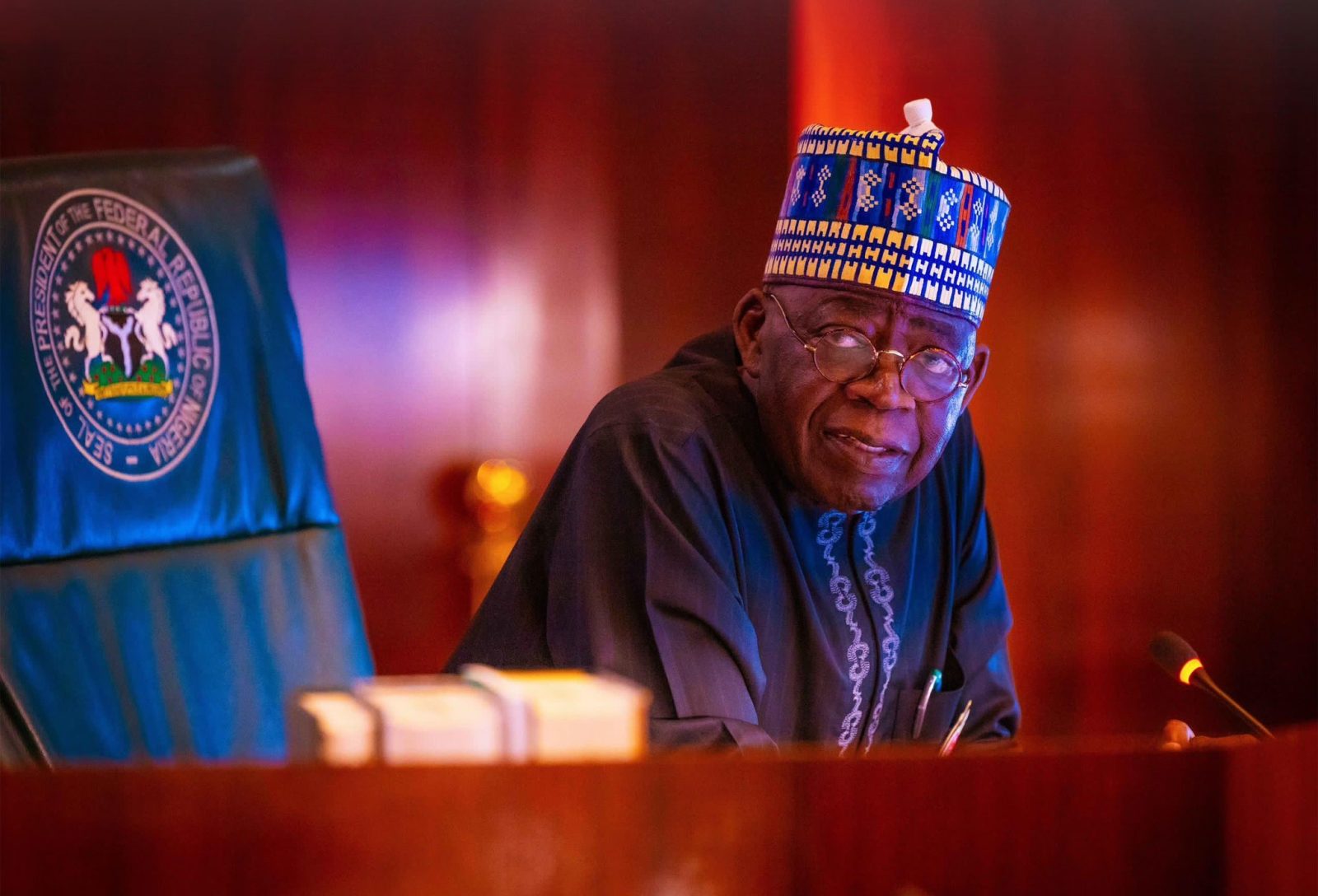
President Bola Tinubu on Sunday welcomed the World Bank’s latest Nigeria Development Update, saying its findings, including that the poverty rate has stabilised for the first time since 2019, confirm that his economic reforms are working.

In a statement on Sunday by his Special Adviser on Information and Strategy, Bayo Onanuga, the President said the October 2026 edition of the report, titled ‘Beyond the Federal Purse: How Higher Revenues Reshaped State Priorities,’ showed that the reforms were delivering results and putting the economy on a firmer footing for sustained growth.

He noted the bank’s expectation that poverty will decline gradually as gross domestic product grows faster than the population.

According to the report, the economy grew 4.2 per cent in the first half of 2026, up from 3.9 per cent in the first half of 2025, despite the impact of the conflict in the Middle East.

The bank projected growth to average at least 4.4 per cent between 2026 and 2028.

On prices, it said inflation fell from 27.6 per cent in January 2025 to 15.2 per cent in December 2025.

Higher global fuel prices linked to the Middle East conflict have since slowed the decline, but the bank said it expects inflation to ease to about 12 per cent by 2028.

The report also said the current account surplus rose to $12bn, or 7.0 per cent of GDP, in the first half of 2026, from $8.6bn a year earlier.

Gross external reserves increased from $45.5bn at the end of 2025 to $53.8bn at the end of August 2026.

See also  FCCPC flags rising circulation of substandard goods

The bank credited the reforms since 2023 with raising federation revenues by 69 per cent in real terms between 2023 and 2025, with states the largest beneficiaries.

It said states used the extra resources to increase capital spending by 151 per cent in real terms over the same period, most of it going to roads and other transport, agriculture, energy and housing.

Twenty-nine of 33 states shifted spending towards economic infrastructure, while real social spending per person rose in all but one state, the report said.

It also found that internally generated revenue grew in real terms in 31 of 35 states; 21 states reduced their debt-to-GDP ratio between 2021 and 2025; and Nigeria’s overall public debt is expected to fall from 40.0 per cent of GDP in 2025 to 38.1 per cent in 2026.

Tinubu said the findings confirmed that “the difficult but necessary decisions to remove the petrol subsidy, unify the foreign exchange market and strengthen fiscal discipline have raised revenues, stabilised the economy and created fiscal space for every tier of government to invest in its people.”

“The dividends of reform are becoming visible,” he said, adding, “But more work remains to ensure they fully translate into better living standards for every household, starting with lower food prices and decent jobs for our young people.”

He said his administration would “stay the course of reform and redouble its focus on inclusive growth under the Renewed Hope Agenda.”

Tinubu promised to keep expanding targeted cash transfers, which he said had already reached more than 10 million households.

See also  RMAFC gives NUPRC 48 hours to dissolve host community trust

He also pledged to accelerate the rollout of Compressed Natural Gas, raise agricultural productivity, and improve access to affordable healthcare and quality education “so that the prosperity being created is shared by all.

President Tinubu urged state governments to use their higher revenues “more prudently” and to prioritise projects that improve living standards and the health and education of residents.

He commended the Economic Management Team, led by the Minister of Finance and Coordinating Minister of the Economy, as well as state governors and other stakeholders, for their cooperation in implementing the reforms.

He said, “I assure Nigerians that the best is yet to come under the Renewed Hope Agenda 2.0, which will accelerate the delivery of shared prosperity for all Nigerians.

Source: punchng.com

FOLLOW US ON:

FACEBOOK

TWITTER

PINTEREST

TIKTOK

YOUTUBE

LINKEDIN

INSTAGRAM

Continue Reading

Business

Nigeria’s debt interest soars 124% above revenue, read details

Published

on

The Federal Government spent N7.7tn on interest payments in the first half of 2026, representing 124.2 per cent of its total revenue of N6.2tn during the period, according to the World Bank.

The figures indicate that interest payments alone exceeded the government’s revenue by N1.5tn between January and June 2026, raising concerns about Nigeria’s debt burden despite improved revenue collections.

The findings were contained in the World Bank’s October 2026 Nigeria Development Update, titled Beyond the Federal Purse: How Higher Revenues Shaped State Priorities, obtained by The PUNCH.

The report showed that interest payments increased by N2.1tn, or 37.5 per cent, from N5.6tn recorded in the corresponding period of 2025, largely due to elevated domestic borrowing costs.

The World Bank stated, “Interest payments increased to 3.1 per cent of GDP (N7.7tn) from 2.5 per cent (N5.6tn) amid high domestic borrowing costs.”

An analysis of the figures showed that the interest-to-revenue ratio declined from approximately 155.6 per cent in the first half of 2025 to 124.2 per cent in the corresponding period of 2026, representing an improvement of 31.4 percentage points.

Despite the improvement, interest obligations continued to exceed the government’s total revenue, leaving limited resources for infrastructure, public services and other expenditure commitments.

According to the report, Federal Government revenue increased by N2.6tn, or 72.2 per cent, from N3.6tn in the first half of 2025 to N6.2tn in the corresponding period of 2026.

The World Bank stated, “Federal revenues rose to about 2.5 per cent of GDP (N6.2tn), from 1.6 per cent of GDP (N3.6tn) a year earlier, supported by a recovery in oil receipts, stronger corporate tax collections, and higher independent revenues, while customs revenues held stable and VAT collections stayed comparatively flat.”

See also  PHOTOS: History of Money in Nigeria

However, the increase in revenue was accompanied by rising expenditure obligations, with total federal spending climbing from N14.6tn in the first half of 2025 to N16.1tn in the corresponding period of 2026, representing an increase of N1.5tn, or 10.3 per cent.

Personnel expenditure also rose from N3.7tn to N4.2tn following wage adjustments, while reported capital expenditure declined sharply. Capital spending fell from one per cent of GDP in the first half of 2025 to 0.3 per cent, equivalent to N700bn, in the corresponding period of 2026.

This means the Federal Government spent 11 times more on interest payments than on reported capital projects during the six-month period.

Combined interest and personnel expenditure amounted to N11.9tn, representing approximately 73.9 per cent of total federal expenditure and nearly twice the government’s revenue.

Despite the rising expenditure pressures, the World Bank reported an improvement in the Federal Government’s fiscal balance, with the deficit narrowing from N11tn, or five per cent of GDP, in the first half of 2025 to N9.9tn, or four per cent of GDP, in the corresponding period of 2026.

However, the institution cautioned that the improvement was partly driven by subdued capital expenditure rather than a significant reduction in recurrent obligations.

“The improved early-year fiscal outturn should be interpreted cautiously given the low reported federal capital spending,” the report stated.

It added, “Personnel and interest costs continue to absorb a large share of fiscal space, and a pickup in capital execution later in the year, alongside recurrent and pre-election spending, is expected to add to pressures.”

See also  Onyema warns new taxes could cripple airlines

The World Bank also identified overlapping budget cycles, weak expenditure planning and poor alignment between approved allocations and implementation capacity as persistent challenges affecting fiscal management.

On the broader public debt position, the report estimated Nigeria’s debt stock at approximately N177tn in 2025, equivalent to 40 per cent of GDP, compared with N67tn, or 27.6 per cent of GDP, in 2021.

It explained that exchange-rate valuation effects and the recognition of previously accumulated liabilities, including securitised Ways and Means advances, contributed significantly to the increase.

The report noted that domestic debt accounted for 57.9 per cent of the country’s debt stock but generated 72.6 per cent of interest payments in 2025, reflecting the relatively high cost of domestic borrowing.

It recommended limiting expensive borrowing, prioritising concessional financing and extending debt maturities to reduce refinancing risks.

The World Bank further projected that Nigeria’s consolidated fiscal deficit would widen from 3.1 per cent of GDP in 2025 to 3.5 per cent in 2026, driven partly by rising federal interest, personnel and pre-election spending.

It urged the government to strengthen revenue mobilisation, improve budget credibility and maintain fiscal discipline to prevent debt obligations from further constraining development spending.

Source: punchng.com

FOLLOW US ON:

FACEBOOK

TWITTER

PINTEREST

TIKTOK

YOUTUBE

LINKEDIN

INSTAGRAM

Continue Reading

Business

US Government Warns American Business Executives About Investing In Nigeria

Published

on

A United States Department of State report has warned American business executives in Nigeria.

The department warned that insecurity, corruption, port inefficiencies, and regulatory uncertainty could significantly hinder investment in Nigeria.

It was reports that the department gave the warning in its 2026 Investment Climate Statements on Nigeria.

The report explained that those challenges continue to weigh on the country’s business environment despite signs of macroeconomic stability.

The department said the country’s investment landscape has been shaped by the outcomes of “painful but necessary” structural reforms introduced by the President Bola Tinubu administration.

The report said the removal of fuel subsidies and liberalisation of the foreign exchange market initially triggered significant economic volatility, although early 2026 indicators suggested some stabilisation.

However, it warned that security concerns, administrative bottlenecks and the social consequences of economic reforms remain significant considerations for foreign investors.

“The security environment is a primary variable which gives pause to potential investors,” the report said.

It noted that although attacks on oil infrastructure in the Niger Delta have decreased, oil theft and illegal bunkering persist.

In the North, the expansion of terrorist and ‘bandit’ groups continues to degrade the climate for agribusiness and mining,” the document added.

The report also raised concerns about how regulators treat foreign business executives in disputes, citing the detention of Tigran Gambaryan, a US citizen and Binance executive, for nearly eight months in 2024.

“Furthermore, the use of coercive exit bans and detentions, highlighted by the high-profile nearly eight-month detention in 2024 of U.S. citizen Binance employee Tigran Gambaryan, serves as a cautionary note for foreign executives regarding the risks of aggressive regulatory friction,” it said.

See also  ‘Travellers suffer fraud as unprofessionalism persists’

The report said such cases could shape perceptions of Nigeria as a destination for foreign investment.

The department identified inefficiencies at Nigerian seaports as another major challenge for businesses, particularly those dependent on imports and exports.

“Port inefficiency remains a significant ‘hidden tax’ on investment,” the report said.

It noted that the Lekki Deep Seaport handled $9.6 billion in trade in 2025 and operated at 50 per cent capacity, helping to ease pressure on older facilities.

FOLLOW US ON:
FACEBOOK

TWITTER

PINTEREST

TIKTOK

YOUTUBE

LINKEDIN

INSTAGRAM

Continue Reading

Trending