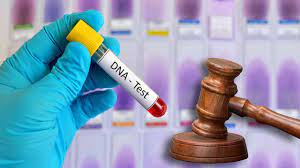
Fresh concerns have trailed the release of the 2025 Annual DNA Testing Report by a testing centre in Lagos, which revealed that Nigeria’s paternity exclusion rate currently stands at 25 per cent.
This means one in every four men tested is not the biological father of the child in question.
The report, released during the week by Smart DNA, also showed that firstborn children were the most affected in paternity disputes, with firstborn sons accounting for 64 per cent of negative results.
Across the country, the revelations have continued to fuel public debate, with many men stating that they would subject their children to DNA tests to confirm their paternity and erase doubts raised by the report.
A Lagos-based tech entrepreneur, Samuel Adegbite, stated that he was considering conducting a DNA test for his children.
In an interview, he said, “I had never actually given serious consideration to conducting a DNA test on my children, but with this recent news, and the types of things I am hearing these days, it is something I will do soon.
“I actually trust my wife and I even feel bad thinking about it. But, it’s just something I need to do for my peace of mind. I believe every man has a nagging feeling that ‘what if’, and I just want to be sure of the paternity of my children once and for all.”
An accounts manager at a public relations and advertising firm, Emeka Njoku, said he would take his children for DNA tests when he could afford it.
He stated that though his wife had never given him any reason not to trust her, he was worried because two of his children had certain character traits that were not shared by him or his wife.
He said, “Two of my children are extroverts and are very expressive. Meanwhile, my wife and I are quiet and reserved people. Many people actually comment innocently that they are not like us at all. Meanwhile, my first child is practically my carbon copy, and behaves exactly like me. It never really meant anything to me, but in recent times, even before the release of the report you’re referencing, I had been giving it serious thought. I have made up my mind that once I am financially buoyant, I will take my three children for tests.”
However, a fashion designer and father of three, Alabi James, said he had no reason to doubt his children’s paternity.
“It’s not about anything else but the fact that I trusted my wife from day one. Besides, I can clearly see my family traits in my children. For these reasons and more, I have never bothered to think otherwise,” he said.
James added that suspicion would only arose from broken trust.
“Tolerance and endurance are qualities this generation has neglected. Be satisfied with whatever your partner can afford,” he said.
Corroborating James stance, another father, who identified himself as Mr. Odunusi, stated that it had never crossed his mind to get a DNA test for his children, citing the striking resemblance he shared with them.
Another man, Emmanuel Ajayi, described the trend as “scary,” stressing the emotional toll it could have on unsuspecting fathers.
He said, “How can a man live with children he believes are his, only to later find out they are not? Although I trust my wife would never do such a thing, I might consider it myself if I have enough money—just for the sake of it.”
For Chibueze Uzor, a father of four, the test is necessary but not urgent.
“We all know women cannot be trusted. I will do the DNA test but not now,” he said.
Asked if he had doubts about the paternity of his children, he responded, “At all. But I will do it to clear all forms of doubt.”
‘Resemblance may be deceptive’
A genetic and molecular expert with Easy Genetics, which partners Alpha Bio Labs in the United Kingdom and Universal Forensics in the United States, Dede Gilbert, explained the science and realities behind paternity testing.
He said, “Everyone has 23 pairs of chromosomes. 22 are autosomes while the last pair is the sex chromosome, which determines a person’s gender.
“During DNA testing, all 23 pairs are analysed, and we also calculate the combined paternity index to make sure the result is accurate.
“There is maternity and paternity testing, and what we call avuncular testing, which is used to establish sibling relationships.”
He further clarified how testing works.
“If it’s a paternity test, we take a sample from the alleged father and the child. For a maternity test, we use the mother’s sample. When the father is not available for a paternity test, his sibling, preferably a male, can be tested.”
On the cost, he noted that prices depended on the laboratory handling the analysis and could vary between N400,000 and N1m.
Responding to why physical resemblance can be misleading, the expert said, “It is very possible to look like someone who isn’t your biological parent. I have seen people who look like me or even my friends. That is called phenotype. Every little child, at some point, looks like everybody. It’s as they grow older that physical traits become more distinct. If your child resembles you, it will be obvious, but once you have reasons to doubt, a test is the surest way to know.”
On the rise in reported negative paternity results, he stressed that the statistics were often misunderstood.
“People who come for DNA tests are not a random sample of society; they usually have strong suspicions already.
“For example, if a couple is living peacefully and the man notices inconsistencies—say his wife claims to be at a conference but is seen elsewhere—that could trigger the need for a test. Others seek testing for immigration purposes, since proof of biological relationship is required when relocating with a child. Some do it because of legal disputes. So, these statistics are not a true reflection of the entire population. In statistics, we regard such a group as a ‘skewed population,’ and you cannot use their results to judge the whole.”
In a similar vein, a DNA consultant, Ayodele Adeniyi, explained that while the demand for the test was rising, DNA testing was not a routine medical requirement.
He said, “Two to three out of 10 cases we have handled came back showing the man is not the father, but this is not a direct representation of the population. Many people who come to us already have suspicions, such as catching a wife cheating or following rumours. The tests are carried out in the United States, and take about two weeks.”
A nurse with Surge Healthcare in Abuja, Happiness Ogenyi, urged families to conduct DNA tests if they had the resources.
She said, “In about one out of every 10 tests we’ve conducted, the man turns out not to be the child’s father. If there are doubts, especially where trust issues exist, that’s where a DNA test becomes necessary. But if you trust your wife, I don’t think there’s any cause for alarm. And if you can afford it, there’s nothing wrong with doing it for all your children.”
She advised families to conduct DNA tests not only for paternity issues but also for health and immigration purposes.
She noted that a test currently costs about N290,000, with results available within four weeks.
Unreliable traditional DNA
An activist and Ifa adherent, Efunsetan Ifagbemi, maintained that long before scientific DNA testing became popular in Nigeria, many communities relied on traditional methods to determine the paternity of children.
According to her, in some riverine areas, a ritual sometimes referred to as “traditional DNA” is still carried out.
She noted that one of the most well-known practices involves throwing a child into a river or placing them on water.
“Community elders believe that the water, seen as a sacred force, will ‘accept’ a child whose lineage is legitimate and ‘reject’ one whose paternity is questionable. In many cases, the child is expected to float briefly or be safely carried by the water, while sinking or struggling is taken as a sign of illegitimacy.
“Although it might be shocking to outsiders, these practices are rooted in cultural beliefs about ancestry, purity, and the spiritual role of natural elements in safeguarding truth. In some communities, rivers are considered deities, and water is regarded as an impartial judge. For families, such rituals offer a way to resolve disputes without going by way of modern science,” she said.
A bank worker and traditionalist, who opted to remain anonymous, also stated that in certain Igbo communities, elders relied on divination oracles, where a spiritualist would consult the gods to determine if a child belongs to a man.
However, these practices are not without risks.
The water ritual has been criticised for endangering children’s lives, and in many areas, it has been abandoned.
Some human rights advocates have argued that such practices amount to child abuse, while health experts note that cultural methods cannot provide reliable evidence compared to scientific DNA testing.
Celebrities caught in paternity fraud controversies
Paternity fraud has become a recurrent trend in the entertainment industry where DNA scandals have made headlines.
The most recent and emotionally charged case involved the late singer, Ilerioluwa Aloba, popularly known as Mohbad, whose sudden death in September 2023 remains shrouded in controversy.
The paternity of his son, Liam, became a subject of heated debate after Mohbad’s father, Joseph Aloba, openly demanded a DNA test to establish whether the boy was truly his grandson.
Mohbad’s saga is only the latest in a long list of celebrity DNA controversies.
Afrobeats superstar, Davido, for instance, has repeatedly found himself entangled in paternity disputes.
Over the years, several women have claimed he fathered their children, leading to public confrontations and DNA tests.
One of the most prominent cases involved Ayotomide Labinjo, who alleged she had a daughter, Aanuoluwapo, for the singer after a relationship in 2013.
She claimed that Davido cut off communication after she announced her pregnancy.
Labinjo further alleged that when a test was arranged by Davido’s father, the result—stating Davido was not the biological father—was manipulated, insisting it was only a blood test and not a DNA analysis.
Davido’s family, however, denied the allegation.
His brother, Adewale Adeleke, insisted the test was properly conducted in the presence of all parties and was conclusive.
Despite the negative result, in an X post on March 17, 2017, Davido said the family offered financial assistance to the mother out of pity.
“Upon finding out the test results were negative Out of pity we still give dem money,” he wrote.
Another celebrity whose personal life was dramatically altered by a DNA revelation is On-Air Personality, Chinedu Emmanuel, popularly known as Nedu Wazobia.
In 2021, the comedian and broadcaster found himself at the centre of a messy public dispute with his estranged wife.
Also, Afrobeat master, Femi Kuti, publicly confirmed that a DNA test taken in 2006 had revealed that two of his children were not biologically his.
Explaining the reason he had taken the test, he said, ““It happened eight years ago. One of my girlfriends was talking on the phone with one of her lovers and I entered the room, took the phone and discovered she was talking to a lover.
“And there was already a rumour in the Shrine that one of my children does not look like me and my sister advised me to address the issue. For security reasons and for the sake of the family, I took all my children for a DNA test and I found out that two were not my children,” he said.
However, in an interview with Saturday Beats, the singer noted that he had already discussed what happened to him and could not advise anyone on whether they should do a DNA test or not.
He said, “Some people even want to accept children that are not theirs and I have no business with that. If anyone wants to do DNA, they should and if anyone does not want to do DNA, they should not do. The moment you have had a child, you are mature enough to decide whether you want to do DNA or not.”
FOLLOW US ON:
FACEBOOK
TWITTER
PINTEREST
TIKTOK
YOUTUBE
LINKEDIN
TUMBLR
INSTAGRAM