
Connect with us

News

Concerns mount over 25% paternity fraud report

Published

on

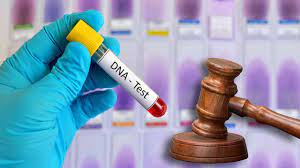
Fresh concerns have trailed the release of the 2025 Annual DNA Testing Report by a testing centre in Lagos, which revealed that Nigeria’s paternity exclusion rate currently stands at 25 per cent.

This means one in every four men tested is not the biological father of the child in question.

The report, released during the week by Smart DNA, also showed that firstborn children were the most affected in paternity disputes, with firstborn sons accounting for 64 per cent of negative results.

Across the country, the revelations have continued to fuel public debate, with many men stating that they would subject their children to DNA tests to confirm their paternity and erase doubts raised by the report.

A Lagos-based tech entrepreneur, Samuel Adegbite, stated that he was considering conducting a DNA test for his children.

In an interview, he said, “I had never actually given serious consideration to conducting a DNA test on my children, but with this recent news, and the types of things I am hearing these days, it is something I will do soon.

“I actually trust my wife and I even feel bad thinking about it. But, it’s just something I need to do for my peace of mind. I believe every man has a nagging feeling that ‘what if’, and I just want to be sure of the paternity of my children once and for all.”

An accounts manager at a public relations and advertising firm, Emeka Njoku, said he would take his children for DNA tests when he could afford it.

He stated that though his wife had never given him any reason not to trust her, he was worried because two of his children had certain character traits that were not shared by him or his wife.

He said, “Two of my children are extroverts and are very expressive. Meanwhile, my wife and I are quiet and reserved people. Many people actually comment innocently that they are not like us at all. Meanwhile, my first child is practically my carbon copy, and behaves exactly like me. It never really meant anything to me, but in recent times, even before the release of the report you’re referencing, I had been giving it serious thought. I have made up my mind that once I am financially buoyant, I will take my three children for tests.”

However, a fashion designer and father of three, Alabi James, said he had no reason to doubt his children’s paternity.

“It’s not about anything else but the fact that I trusted my wife from day one. Besides, I can clearly see my family traits in my children. For these reasons and more, I have never bothered to think otherwise,” he said.

James added that suspicion would only arose from broken trust.

“Tolerance and endurance are qualities this generation has neglected. Be satisfied with whatever your partner can afford,” he said.

Corroborating James stance, another father, who identified himself as Mr. Odunusi, stated that it had never crossed his mind to get a DNA test for his children, citing the striking resemblance he shared with them.

See also  18 senior Army officers retire after 35 years of service

Another man, Emmanuel Ajayi, described the trend as “scary,” stressing the emotional toll it could have on unsuspecting fathers.

He said, “How can a man live with children he believes are his, only to later find out they are not? Although I trust my wife would never do such a thing, I might consider it myself if I have enough money—just for the sake of it.”

For Chibueze Uzor, a father of four, the test is necessary but not urgent.

“We all know women cannot be trusted. I will do the DNA test but not now,” he said.

Asked if he had doubts about the paternity of his children, he responded, “At all. But I will do it to clear all forms of doubt.”

‘Resemblance may be deceptive’

A genetic and molecular expert with Easy Genetics, which partners Alpha Bio Labs in the United Kingdom and Universal Forensics in the United States, Dede Gilbert, explained the science and realities behind paternity testing.

He said, “Everyone has 23 pairs of chromosomes. 22 are autosomes while the last pair is the sex chromosome, which determines a person’s gender.

“During DNA testing, all 23 pairs are analysed, and we also calculate the combined paternity index to make sure the result is accurate.

“There is maternity and paternity testing, and what we call avuncular testing, which is used to establish sibling relationships.”

He further clarified how testing works.

“If it’s a paternity test, we take a sample from the alleged father and the child. For a maternity test, we use the mother’s sample. When the father is not available for a paternity test, his sibling, preferably a male, can be tested.”

On the cost, he noted that prices depended on the laboratory handling the analysis and could vary between N400,000 and N1m.

Responding to why physical resemblance can be misleading, the expert said, “It is very possible to look like someone who isn’t your biological parent. I have seen people who look like me or even my friends. That is called phenotype. Every little child, at some point, looks like everybody. It’s as they grow older that physical traits become more distinct. If your child resembles you, it will be obvious, but once you have reasons to doubt, a test is the surest way to know.”

On the rise in reported negative paternity results, he stressed that the statistics were often misunderstood.

“People who come for DNA tests are not a random sample of society; they usually have strong suspicions already.

“For example, if a couple is living peacefully and the man notices inconsistencies—say his wife claims to be at a conference but is seen elsewhere—that could trigger the need for a test. Others seek testing for immigration purposes, since proof of biological relationship is required when relocating with a child. Some do it because of legal disputes. So, these statistics are not a true reflection of the entire population. In statistics, we regard such a group as a ‘skewed population,’ and you cannot use their results to judge the whole.”

In a similar vein, a DNA consultant, Ayodele Adeniyi, explained that while the demand for the test was rising, DNA testing was not a routine medical requirement.

See also  El-Rufai sparks controversy after airport ‘arrest’ drama

He said, “Two to three out of 10 cases we have handled came back showing the man is not the father, but this is not a direct representation of the population. Many people who come to us already have suspicions, such as catching a wife cheating or following rumours. The tests are carried out in the United States, and take about two weeks.”

A nurse with Surge Healthcare in Abuja, Happiness Ogenyi, urged families to conduct DNA tests if they had the resources.

She said, “In about one out of every 10 tests we’ve conducted, the man turns out not to be the child’s father. If there are doubts, especially where trust issues exist, that’s where a DNA test becomes necessary. But if you trust your wife, I don’t think there’s any cause for alarm. And if you can afford it, there’s nothing wrong with doing it for all your children.”

She advised families to conduct DNA tests not only for paternity issues but also for health and immigration purposes.

She noted that a test currently costs about N290,000, with results available within four weeks.

Unreliable traditional DNA

An activist and Ifa adherent, Efunsetan Ifagbemi, maintained that long before scientific DNA testing became popular in Nigeria, many communities relied on traditional methods to determine the paternity of children.

According to her, in some riverine areas, a ritual sometimes referred to as “traditional DNA” is still carried out.

She noted that one of the most well-known practices involves throwing a child into a river or placing them on water.

“Community elders believe that the water, seen as a sacred force, will ‘accept’ a child whose lineage is legitimate and ‘reject’ one whose paternity is questionable. In many cases, the child is expected to float briefly or be safely carried by the water, while sinking or struggling is taken as a sign of illegitimacy.

“Although it might be shocking to outsiders, these practices are rooted in cultural beliefs about ancestry, purity, and the spiritual role of natural elements in safeguarding truth. In some communities, rivers are considered deities, and water is regarded as an impartial judge. For families, such rituals offer a way to resolve disputes without going by way of modern science,” she said.

A bank worker and traditionalist, who opted to remain anonymous, also stated that in certain Igbo communities, elders relied on divination oracles, where a spiritualist would consult the gods to determine if a child belongs to a man.

However, these practices are not without risks.

The water ritual has been criticised for endangering children’s lives, and in many areas, it has been abandoned.

Some human rights advocates have argued that such practices amount to child abuse, while health experts note that cultural methods cannot provide reliable evidence compared to scientific DNA testing.

Celebrities caught in paternity fraud controversies

Paternity fraud has become a recurrent trend in the entertainment industry where DNA scandals have made headlines.

The most recent and emotionally charged case involved the late singer, Ilerioluwa Aloba, popularly known as Mohbad, whose sudden death in September 2023 remains shrouded in controversy.

See also  Okonjo‑Iweala unveils Abia’s first electric shuttle buses, urges cleaner environment

The paternity of his son, Liam, became a subject of heated debate after Mohbad’s father, Joseph Aloba, openly demanded a DNA test to establish whether the boy was truly his grandson.

Mohbad’s saga is only the latest in a long list of celebrity DNA controversies.

Afrobeats superstar, Davido, for instance, has repeatedly found himself entangled in paternity disputes.

Over the years, several women have claimed he fathered their children, leading to public confrontations and DNA tests.

One of the most prominent cases involved Ayotomide Labinjo, who alleged she had a daughter, Aanuoluwapo, for the singer after a relationship in 2013.

She claimed that Davido cut off communication after she announced her pregnancy.

Labinjo further alleged that when a test was arranged by Davido’s father, the result—stating Davido was not the biological father—was manipulated, insisting it was only a blood test and not a DNA analysis.

Davido’s family, however, denied the allegation.

His brother, Adewale Adeleke, insisted the test was properly conducted in the presence of all parties and was conclusive.

Despite the negative result, in an X post on March 17, 2017, Davido said the family offered financial assistance to the mother out of pity.

“Upon finding out the test results were negative Out of pity we still give dem money,” he wrote.

Another celebrity whose personal life was dramatically altered by a DNA revelation is On-Air Personality, Chinedu Emmanuel, popularly known as Nedu Wazobia.

In 2021, the comedian and broadcaster found himself at the centre of a messy public dispute with his estranged wife.

Also, Afrobeat master, Femi Kuti, publicly confirmed that a DNA test taken in 2006 had revealed that two of his children were not biologically his.

Explaining the reason he had taken the test, he said, ““It happened eight years ago. One of my girlfriends was talking on the phone with one of her lovers and I entered the room, took the phone and discovered she was talking to a lover.

“And there was already a rumour in the Shrine that one of my children does not look like me and my sister advised me to address the issue. For security reasons and for the sake of the family, I took all my children for a DNA test and I found out that two were not my children,” he said.

However, in an interview with Saturday Beats, the singer noted that he had already discussed what happened to him and could not advise anyone on whether they should do a DNA test or not.

He said, “Some people even want to accept children that are not theirs and I have no business with that. If anyone wants to do DNA, they should and if anyone does not want to do DNA, they should not do. The moment you have had a child, you are mature enough to decide whether you want to do DNA or not.”

FOLLOW US ON:

FACEBOOK

TWITTER

PINTEREST

TIKTOK

YOUTUBE

LINKEDIN

TUMBLR

INSTAGRAM

Continue Reading
Click to comment

Leave a Reply

Your email address will not be published. Required fields are marked *

News

FG raises allowances, boosts welfare for civil servants

Published

on

The Federal Government of Nigeria has approved a sweeping increase in peculiar allowances and other welfare benefits for civil servants, in a move aimed at improving take-home pay and boosting morale across the public service.

The announcement was made on Friday by the Head of the Civil Service of the Federation, Didi Walson-Jack, during a press briefing in Abuja, where she outlined key reforms endorsed by the Federal Executive Council.

According to Walson-Jack, the review affects workers under both the Consolidated Public Service Salary Structure (CONPSS) and the Consolidated Research and Allied Institutions Salary Structure (CONRAISS), ensuring a broad-based impact across all cadres.

She said the revised peculiar allowances have been structured to reflect across all grade levels, resulting in a meaningful increase in earnings for both junior and senior officers.

In addition, the government approved an upward review of several key allowances, including duty tour allowance (DTA), estacode, and book allowance. Walson-Jack noted that virtually all allowances listed under the Public Service Rules have now been revised.

A major highlight of the reform is the approval of 100 percent Duty Tour Allowance for civil servants attending approved training programmes, regardless of whether travel is involved.

“Even if you are based in Abuja and attend training within Abuja, you are entitled to full DTA,” she said.

Beyond salary-related adjustments, the government also introduced a new exit benefit scheme for retiring civil servants under the Contributory Pension Scheme. The scheme provides 100 percent of a retiree’s total annual emoluments as an exit package, in addition to their pension, effective January 1, 2026.

See also  Okonjo‑Iweala unveils Abia’s first electric shuttle buses, urges cleaner environment

Walson-Jack described the move as a step toward ensuring dignity in retirement, stressing that no public servant should leave service without adequate financial support.

The government also confirmed the operationalisation of the Employee Compensation Scheme, designed to provide financial protection for workers who suffer job-related injuries or death.

The reforms come amid growing calls from labour unions for improved welfare, as rising living costs continue to put pressure on workers. Analysts say the combined measures could significantly enhance financial stability for civil servants and improve overall productivity in the public sector.

punch.ng

FOLLOW US ON:

FACEBOOK

TWITTER

PINTEREST

TIKTOK

YOUTUBE

LINKEDIN

INSTAGRAM

Continue Reading

News

Wiretapping: El-Rufai pleads not guilty, faces fresh charges

Published

on

The Federal Government, on Thursday, expanded the criminal case against former Kaduna State Governor, Nasir El-Rufai, introducing fresh allegations bordering on interference with critical national infrastructure and unauthorised access to classified information.

The new counts are contained in a further amended five-count charge filed on April 13, 2026, before the Federal High Court in Abuja, replacing an earlier three-count charge instituted on February 16, 2026.

At his arraignment on Thursday before Justice Joyce Abdulmalik, El-Rufai, however, pleaded not guilty to all counts after the court granted the prosecution’s request to substitute the initial charge.

The Department of State Services, through its counsel, Oluwole Aladedoye (SAN), told the court that the amended charge significantly revised the allegations against the former governor, urging the court to adopt the new processes.

Unlike the earlier charge, which focused mainly on alleged unlawful interception of communications, the fresh counts introduce a broader national security dimension.

In count one of the amended charge, the prosecution accused El-Rufai of “intentionally and unlawfully interfer[ing] with the communication” of the National Security Adviser, Nuhu Ribadu, describing the communication channel as part of Nigeria’s critical national information infrastructure.

The charge states that the alleged act contravenes provisions of the Designation and Protection of Critical National Information Infrastructure Order, 2024, and is punishable under the Cybercrimes (Prohibition, Prevention, etc) Amendment Act, 2024.

In a separate and newly introduced count, the prosecution alleged that El-Rufai, “without authorisation, intentionally secured access to classified information” relating to Ribadu, including details of his arrest and detention order issued on February 12, 2026.

This count marks a shift from the earlier framing of the case, which was limited to claims of intercepted communications, to a more serious allegation involving breach of classified state information.

The amended charge also retains and restructures earlier allegations. Count four accuses the defendant of unlawfully intercepting the NSA’s communications, while count five alleges that he and others still at large used technical systems that compromised public safety and national security, thereby instilling fear among Nigerians.

See also  18 senior Army officers retire after 35 years of service

Part of count four reads, “That you, Mallam Nasir El-Rufai, adult, male, intentionally and without authorisation, intercepted the communications of the National Security Adviser, Nuhu Ribadu, as admitted by you on 13th February, 2026, while appearing as a guest on Arise TV Station’s Prime Time Programme in Abuja… and thereby committed an offence contrary to and punishable under Section 12(1) of the Cybercrimes Act.”

Count five further states, “That you… did use technical equipment or systems which compromised public safety, national security and instilling reasonable apprehension of insecurity among Nigerians… and thereby committed an offence contrary to and punishable under Section 131(2) of the Nigerian Communications Act, 2003.”

The February charge had contained only three counts, focusing on alleged admission of unlawful interception, failure to report individuals involved, and actions capable of undermining public safety.

However, the amended charge introduces two additional counts and separates previously combined allegations into distinct offences, effectively broadening the scope of criminal liability.

Defence counsel, Oluwole Iyamu (SAN), confirmed receipt of the amended charge and did not oppose its substitution.

Following this, the court struck out the earlier charge and proceeded with the fresh arraignment.

After the plea was taken, the prosecution applied for an accelerated hearing, seeking three consecutive trial dates.

The defence objected, arguing that El-Rufai’s access to legal counsel could be affected due to his custody under the Independent Corrupt Practices and Other Related Offences Commission.

The defence also drew the court’s attention to a pending bail application filed on February 17, noting that an earlier missing affidavit had been located.

The DSS informed the court that it was not opposing the bail request.

In another application, the prosecution sought to shield the identities of two witnesses, requesting that their names be replaced with pseudonyms in court records, citing security concerns.

See also  SERAP Drags Akpabio, Abbas To Court Over Missing ₦18.6 Billion NASS Office Funds

The defence opposed the request, insisting that it violated the defendant’s constitutional right to know his accusers and that no concrete threat had been demonstrated.

Further arguments arose over access to proof of evidence, with the defence urging the court to compel disclosure to enable proper preparation for trial.

The prosecution opposed the application, describing it as procedurally misplaced.

The defence also filed a motion seeking to quash the amended charge, while the prosecution asked the court to dismiss it as lacking merit.

After listening to both sides, Justice Abdulmalik adjourned the matter to May 18, 19 and 20, 2026, for hearing.

Bail bid fails

The PUNCH gathered that the Kaduna State High Court refused El-Rufai’s bail application on the grounds that the seriousness of the allegations against him, as well as concerns over possible interference with investigations, outweighed the arguments advanced for his release.

The ruling was delivered on 21 April 2026 by Justice D.H. Khobo of the Kaduna Judicial Division in Charge No: KDH/KAD/ICPC/01/2026, filed by the Federal Republic of Nigeria through the ICPC.

El-Rufai had approached the court via a motion dated 25 March 2026, seeking bail “either on self-recognisance or upon such liberal terms as the court may deem fit.”

His application, brought under Sections 35(4) and 36(5) of the 1999 Constitution (as amended) and provisions of the Kaduna State ACJL 2017, argued that the offences were not capital in nature and, therefore, carried a presumption in favour of bail.

He further contended that he had strong community ties, fixed addresses, and substantial assets, which, according to him, eliminated any risk of flight.

El-Rufai also told the court he voluntarily returned from Egypt on 16 February 2026 to honour an EFCC invitation, and argued that the amended charge was “fundamentally defective” and “unintelligible.”

He also raised health concerns, claiming he required specialist medical attention.

See also  Imo communities lament poor state of rural roads, call for government action

The ICPC opposed the application through a nine-paragraph counter-affidavit deposed to by Idris Abubakar, insisting that the offences were serious and “economically sabotaging.”

The anti-graft agency argued that the former governor posed a flight risk, adding that there was a likelihood he could interfere with witnesses and ongoing investigations involving other suspects.

It also alleged an incident at the Nnamdi Azikiwe International Airport, Abuja, on 12 February 2026, where El-Rufai allegedly obstructed law enforcement officers.

The ICPC further dismissed his medical claims, stating that no supporting medical report was provided.

In his ruling, Justice Khobo held that the gravity of the nine-count charge, coupled with allegations of interference and obstruction, made bail inappropriate at this stage.

The court stated, “In the instant application, given the gravity of the nine-count charge against the defendant/applicant, the respondent’s credible apprehension regarding the interference with the ongoing investigations linked to other persons still at large… the interest of justice is best served by ensuring the applicant remains available for an accelerated trial.”

The judge also faulted the defence on health grounds, noting, “The applicant in my view has failed to provide sufficient medical evidence to justify the grant of bail on health grounds.”

Consequently, the court held, “Accordingly, the defendant/applicant’s application for bail pending trial fails and is hereby refused.”

Justice Khobo ordered that El-Rufai “shall remain in the custody of the respondent (ICPC) pending the commencement of the trial,” while directing that proceedings be conducted on an accelerated basis.

The court also fixed June 1, 2, 3 and 4, 2026, for day-to-day hearing, following what it described as a consensus between prosecution and defence counsel.

For now, the former governor remains in ICPC custody as the substantive trial awaits commencement.

punch.ng

FOLLOW US ON:

FACEBOOK

TWITTER

PINTEREST

TIKTOK

YOUTUBE

LINKEDIN

INSTAGRAM

Continue Reading

News

Why El-Rufai’s Bail Application Was Denied

Published

on

A Kaduna State High Court has denied bail to former governor of the state, Nasir El-Rufai, in an ongoing trial over alleged financial misconduct.

Delivering a ruling on Tuesday, Justice Darius Khobo held that it was in the interest of justice for the defendant to remain in custody to ensure his availability for trial.

El-Rufai was arraigned by the Independent Corrupt Practices and Other Related Offences Commission on a nine-count charge bordering on the alleged conferment of benefits under false pretences and dishonest disposal of loan funds.

He pleaded not guilty to all charges.

According to the court, the bail application was supported by a 24-paragraph affidavit, in which the former governor argued that the offences were non-capital.

He also cited his status as a former governor, his strong community ties, and his voluntary return to Nigeria from Egypt.

El-Rufai further claimed that he had underlying health conditions requiring specialist care.

The anti-corruption agency opposed the bail request, filing a counter-affidavit.

The ICPC argued that the offences were “economically sabotaging” and raised concerns about possible interference with witnesses and ongoing investigations.

It also described the defendant as a “flight risk with the means to evade trial due to his high standing in society.” The commission added that no medical evidence was provided to support claims of ill health.

In his ruling, Justice Khobo said the bail application relied heavily on El-Rufai’s status, describing it as “a double-edged sword.”

He noted that concerns raised by the ICPC about interference with investigations were significant.

See also  Imo communities lament poor state of rural roads, call for government action

According to the certified true copy (CTC) of the ruling delivered on April 21, obtained by The Cable, the judge held that the prosecution made “weighty depositions” justifying the refusal of bail, adding that the defence failed to counter them with further evidence.

The judge said, “It is, however, noteworthy here that in spite of these weighty depositions in the Prosecution/Respondent’s counter affidavit, which sought to controvert the depositions in the Applicant’s supporting affidavit, the Applicant never deemed it fit to file a further and better affidavit to further controvert the said weighty depositions in the Prosecution/Respondent’s counter affidavit.

“In the instant case, therefore, failure to file a further affidavit by the applicant to further controvert the above-outlined weighty depositions in the Respondent’s counter affidavit leaves the said weighty depositions in the counter affidavit unchallenged and deemed to be admitted as being correct, and I so hold.

“The law is trite: if in an application for bail pending trial there is good reason to believe or strongly suspect that the accused will jump bail, thereby making himself unavailable to stand his trial, and/or will interfere with the witnesses, thereby constituting an obstacle in the way of justice, the Court will be acting within its undoubted discretion to refuse bail.

“In the instant application, the applicant alluded to facts that he has health conditions requiring specialist monitoring, but the applicant did not attach any medical evidence to substantiate his claim of ill-health.

“The law is settled that where an application for bail seeks to lay claim to ill-health, credible evidence in that branch of medicine ought to be made available before the court by the Applicant.

See also  18 senior Army officers retire after 35 years of service

“Accordingly, the Defendant/Applicant’s application for bail pending trial fails and is hereby REFUSED.

“The Defendant/Applicant shall remain in the custody of the Respondent (ICPC) pending the commencement of the trial.

“The Respondent/Prosecution is hereby ordered to ensure the trial of the Defendant commences expeditiously and shall be given an accelerated hearing by this Court on a day-to-day basis where practicable.”

Afterwards, the prosecutor and el-Rufai’s counsel agreed that the trial should commence the first week of June.

The case was then adjourned to June 1, 2, 3, and 4, 2026.

FOLLOW US ON:

FACEBOOK

TWITTER

PINTEREST

TIKTOK

YOUTUBE

LINKEDIN

INSTAGRAM

Continue Reading

Trending