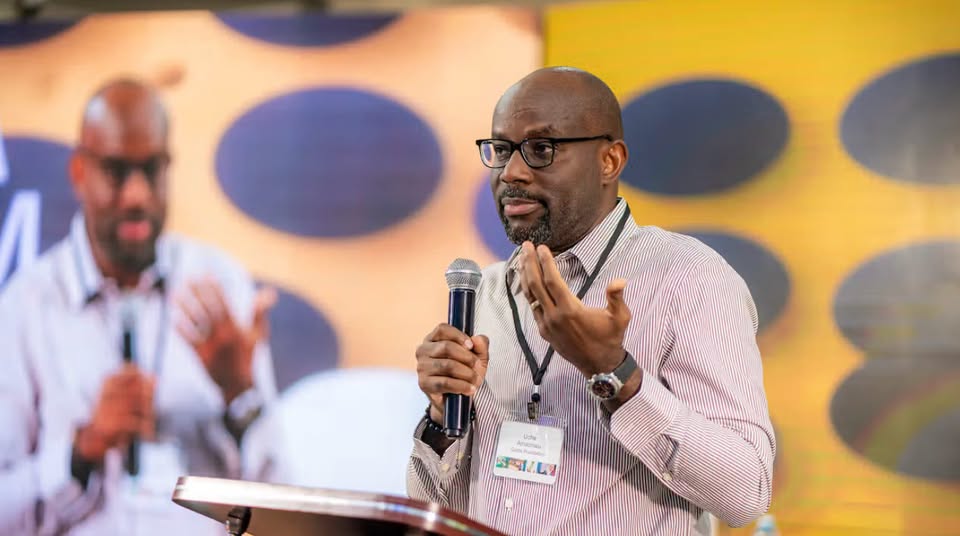
Gates Foundation Nigeria Country Director, Uche Amaonwu, speaks with ANGELA ONWUZOO about how the partnership between the foundation and MTN Group Foundation will use AI and digital tools to benefit 500,000 women, 5,000 health workers and 500 primary healthcare facilities in Nigeria
Nigeria has rolled out several interventions to reduce maternal deaths, yet the burden remains high. What gaps does the Foundation’s investment in AI-enabled tools and digital health seek to close?
It’s about using AI to improve access to care. Preventing maternal deaths is not necessarily complicated because we know what needs to be done. Pregnant women need to attend antenatal clinics, where health workers can identify potential complications. They also need skilled birth attendants to manage deliveries properly. Appropriate treatment is provided when complications are detected early. These interventions are well established. The problem, however, is that pregnant women and health workers themselves may not always have access to the information and tools they need when they need them. The partnership wants to bridge the gap by using digital tools to improve access to timely, reliable health information and support. For instance, many births still take place at home, sometimes without the presence of a skilled birth attendant. A woman with access to a digital device could ask basic questions about symptoms she is experiencing, such as pain or other discomfort, and receive guidance on what to do. This is important at night, when accessing a health facility or speaking to a health worker may be difficult. AI could help bridge that gap by providing trusted information, asking follow-up questions to better understand the symptoms, and helping the woman recognise when she needs urgent medical attention.
For example, if she reports bleeding, the tool could help assess the seriousness of the situation and advise her to seek immediate medical care when necessary. Not every pregnant woman has a health worker readily available at home, but many have access to a mobile phone. Through this partnership, we are also making provisions to ensure that mothers who do not have phones can access affordable devices and data connectivity so that they can use the technology. For healthcare providers, the challenge is sometimes the pressure of managing many patients and the need for additional support when making decisions about a patient’s care. A health worker may attend to a pregnant woman and need guidance on how best to manage her symptoms or determine whether she requires further treatment.
With technology and AI becoming more accessible, the question is how we can harness them to improve communication, provide timely guidance and strengthen the quality of care women receive throughout pregnancy and childbirth.
What does the Gates Foundation partnership with MTN offer that existing maternal and digital health interventions in Nigeria do not?
The partnership focuses on three things, all of which come back to access. First, can we get devices into the hands of people? Second, can we provide connectivity on those devices? Third, can we install an application that allows women to interact with it in their native languages, describing how they feel and receiving relevant responses? That is the level of access and trust we want to establish. MTN’s contribution is particularly important because it has the largest network distribution in Nigeria and across Africa. Even in communities where there may be no health facility, someone may have a device with internet connectivity and be able to access essential health information.
We also need applications that provide accurate and reliable health advice. We are working with other partners who can develop these applications to ensure that women have access to the information they need. We need to create a platform through which women can access reliable maternal health information, particularly in their own languages.
For pregnant women, what will actually change?
Imagine a pregnant woman in a rural area who develops a symptom and goes to a health facility, only to find that it is closed. Instead of travelling to another facility just to get basic guidance, she could access information in her local language by speaking to her phone. The phone could then guide her on what to do immediately while she makes arrangements to get to a hospital. That could make a real difference for her. Without access to reliable information, she might become worried, resort to self-medication, or seek advice from someone else. With the phone, however, she could receive appropriate information to help her understand what to do next.
Now, consider the community health worker. Remember that one part of this intervention will serve women directly, while the other will support healthcare workers, including midwives. If a midwife identifies potentially dangerous symptoms in a pregnant woman, she could quickly seek guidance through the AI-enabled tool. With internet connectivity, she could also consult relevant information or contact other healthcare professionals to confirm what she is observing and determine the appropriate next steps.
So, the partnership is designed to support both the mother in her time of need and the healthcare worker who needs timely guidance to make informed decisions. If these interventions work as intended, women will be better supported, and caregivers will have quicker access to the information they need.
How will the platform work, from accessing information to detecting complications and securing timely care?
All the components are designed to work together. Women will be able to access information in their local languages, while frontline health workers will have connected devices to support their decision-making when examining pregnant women. Imagine a situation where a health worker identifies a potential complication. If she has a connected device, and her primary healthcare centre and the referral hospital at the local government headquarters are also connected, information can be shared quickly across the healthcare system.
The health worker could alert the referral hospital about the woman’s condition, communicate her symptoms, and request that the hospital prepare for her arrival. This would allow the receiving facility to get ready to provide the necessary care before the woman arrives. The system will enable health workers to communicate what they observe, engage other healthcare professionals, and coordinate the next steps in a patient’s care. As I said, pregnancy is a situation where early detection and prompt referral can significantly improve a woman’s chances of survival when complications arise.
Ordinarily, a health worker may have to find a way to transport the woman to a hospital, explain her condition to the receiving team, and ensure the necessary arrangements are made. In some cases, an ambulance may need to be contacted. We will also evaluate the pilot to determine whether it delivers the intended results.
We need to establish whether women can access the information, whether health workers can detect complications earlier, whether the intervention improves the time it takes to get women to hospitals, and whether it enables receiving facilities to prepare better for their arrival. We are starting with a pilot because this concerns women’s lives and health. We need to establish that the solution works effectively and safely before taking it to scale. We are very excited to test it and see what the results show.
The initiative comes with a $25m investment from 2026 to 2030. How much is each partner contributing?
The investment is split equally between the two partners. The Gates Foundation is contributing $12.5m, and MTN is contributing the other $12.5m. Beyond the financial contributions, what is important is understanding what the funds will be used for. As I mentioned earlier, MTN will focus on ensuring that women have access to affordable devices and the connectivity needed to use them.
This includes working with partners to make affordable phones available and ensuring that the devices are connected and deployed where they are needed. That is an area in which MTN has significant expertise, given its extensive telecommunications network and reach across Nigeria, including communities where access to healthcare facilities is limited.
On our side, we will focus on ensuring that the applications developed for these devices provide accurate, reliable, and responsible medical information. We want to work with competent people in the health sector to ensure that the applications are properly designed and that the advice they provide is medically sound.
We also want to ensure that the applications can communicate effectively in local languages. For example, we need language models that can understand and respond in Nigerian Pidgin, Hausa, Igbo and Yoruba.
These models must be rigorously tested and continuously improved because even within languages such as Igbo and Yoruba, there are different dialects. If an AI tool misunderstands a woman’s description of her symptoms because of differences in pronunciation or dialect, it could have serious consequences.
That is why we must be rigorous in developing and testing these tools. Healthcare professionals will also be involved in assessing the technology to ensure that it works as intended and provides appropriate guidance. It requires considerable time and attention.
MTN is also contributing by covering the connectivity costs, including providing zero-rated data for the application. This means women will be able to use the application without their usage consuming their regular mobile data allowance.
Will women incur any additional costs to use this technology?
No. Under this partnership, we are deliberately making the service free to women. We intend to provide the phones at no cost and ensure that the data connectivity needed to run the platform is also free. We are working to make affordable devices available so that women can access the service without having to bear these costs. However, an important question is what happens after the partnership ends. How do we ensure that the intervention can be sustained? This is why we want to embed the lessons from the initiative into government programmes and broader digital health infrastructure. If you have been following the government’s strategy, you will know that there are efforts to mobilise funding for digital connectivity programmes aimed at expanding broadband access across Nigeria. The idea is to extend connectivity to public facilities, particularly primary healthcare centres in rural areas where maternal healthcare needs are significant. That way, healthcare facilities can have reliable internet access and use digital health tools more effectively.
This partnership provides an opportunity to demonstrate what is possible and generate practical lessons that can inform these wider programmes. As the government develops its digital connectivity plans, we can share evidence from the pilot on what works, what needs improvement and what should be prioritised when extending broadband access to healthcare facilities.
We must also consider the availability of devices. There are efforts to expand access to digital devices, including through initiatives involving the Nigerian Communications Commission. If these programmes are implemented, they could help make devices available to more healthcare facilities.
Ultimately, the pilot will help demonstrate what is needed to make digital maternal healthcare work in Nigeria. The intention is not for the Gates Foundation and MTN to sustain the intervention indefinitely, but to test the approach, generate evidence and inform programmes that the government and private sector can adopt and expand.
The partnership aims to reach 500,000 women, 5,000 health workers, and 500 healthcare facilities by 2030. How confident are you that these targets are achievable?
I am fairly confident. This is just the beginning. Nigeria has about 40,000 primary healthcare centres, so reaching 500 facilities represents a relatively small proportion of the total. We are not trying to tackle the entire system at once. If we remain disciplined and focused, I believe we can reach our target. Another reason for our confidence is that the Federal Ministry of Health and Social Welfare has a programme, the Maternal Mortality Reduction Innovation Initiative, where they identified 172 local government areas that collectively account for 60 per cent of maternal deaths. It has also identified healthcare facilities in these areas that are strategically located to serve the population.
How will you ensure that vulnerable women in rural and underserved communities, with limited literacy, poor connectivity, or no smartphones, can use and benefit from the platform?
There are already initiatives aimed at addressing some of these challenges. For instance, the Nigerian Communications Commission is promoting digital literacy and mobile phone literacy, including efforts to encourage mobile phone providers to train users on how to operate their devices. You might be surprised to find that even in my village, almost everyone has a phone. It might be a basic smartphone, but people are finding ways to use their devices. I believe that private-sector providers can play an important role in this initiative. Since expanding device usage is part of their business, they have an incentive to help people understand how their phones work and provide the necessary training. For the women participating in this initiative, the aim is to ensure that they receive these benefits without having to pay for the devices or the connectivity. The training and other support they need to use the technology will also be incorporated into the programme, with the costs covered by the $25m investment.
A wrong AI-generated health recommendation could have life-threatening consequences. What safeguards are in place to prevent unsafe or inaccurate advice from reaching pregnant women and health workers?
That is a very important question. The first thing to understand is that under this partnership, as with any other application that uses AI, the technology is intended to serve as an adviser, not as a substitute for clinical judgment. The healthcare worker must remain the person responsible for deciding what should happen.
It is similar to a doctor consulting a textbook for guidance. The doctor still has to interpret the information in the context of the patient’s condition and make a decision based on what they observe. AI should not be placed in a position where it makes clinical decisions on behalf of healthcare professionals. The same principle applies to pregnant women.
Secondly, the application must be developed using reliable clinical guidelines. Qualified medical professionals will be involved in developing and reviewing the application to ensure that the guidance it provides is medically sound and based on established clinical evidence.
Language is another critical issue because it is a potential source of errors. If the underlying information is not communicated accurately in a woman’s language, there could be serious consequences. That is why we need to ensure that the technology can understand and respond appropriately in local languages and their different dialects. Significant progress has been made in developing language models in recent years, but we still need to address gaps in their ability to understand some local dialects. As part of this partnership, we will assess the available language models to determine which perform best and work to improve their accuracy and reliability.
What commitments do you expect from the federal and state governments?
The first thing I want to emphasise is alignment. We need the people implementing this partnership to work with the government, which is responsible for the lives of Nigerians, to make it succeed. We want to work with those implementing the MAMII programme because this partnership can strengthen it. We need to work together. On the digital side, as connectivity infrastructure is rolled out, we must ensure that rural communities, where people stand to benefit most from the technology, are not left behind. We must prioritise equitable access. To me, alignment and equitable distribution are critical.
Source: punchng.com
FOLLOW US ON:
FACEBOOK
TWITTER
PINTEREST
TIKTOK
YOUTUBE
LINKEDIN
INSTAGRAM