Connect with us

Lifestyle

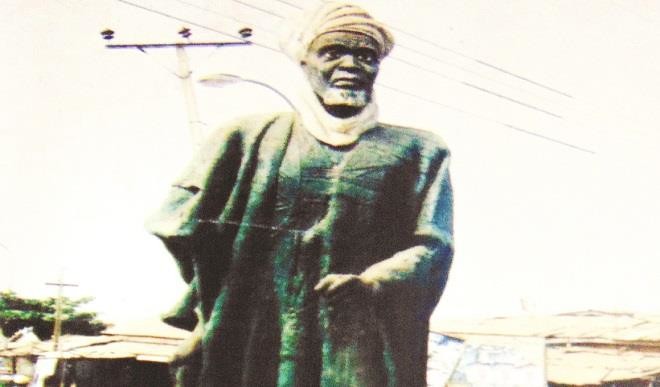
Seriki Williams Abass: From Captive to Contested Power in Badagry (PHOTOS)

Published

on

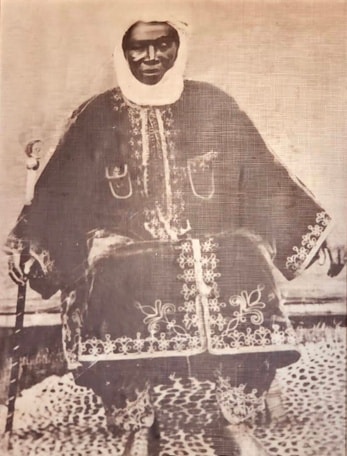
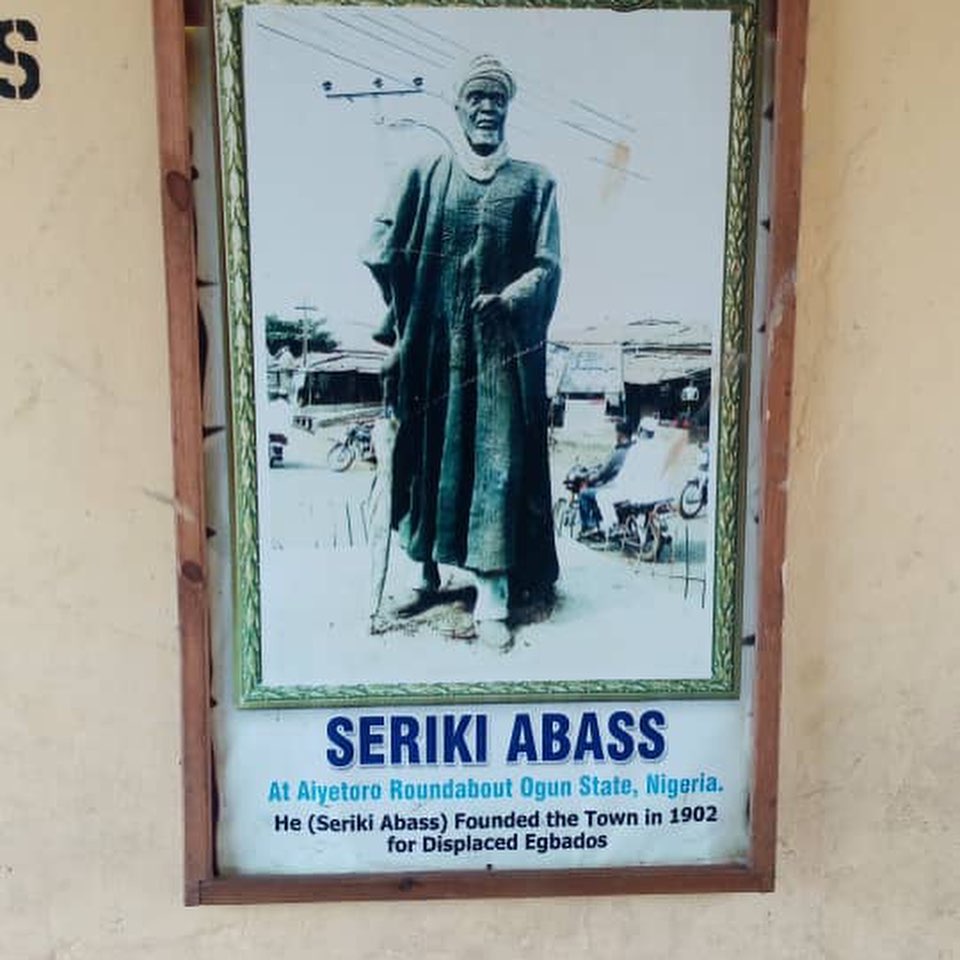
The life of Seriki Williams Abass (born Ifaremilekun Fagbemi) is one of the most striking—and morally complicated—stories in nineteenth-century West African history.

Born in Ilaro (present-day Ogun State), he was captured into the transatlantic trade, transported abroad, and yet returned to become one of Badagry’s wealthiest merchants and a powerful local ruler.

His biography exposes the tangled intersections of slavery, commerce, religion and colonial rule on the Gulf of Guinea coast.

From capture to return

Accounts agree that Abass was taken into slavery as a young man and that, while he kept the Christian/European name Williams and the Muslim/West African name Abass, his original name was Ifaremilekun Fagbemi.

Sources diverge about the precise circumstances of his emancipation and route home: some traditions say he was freed in Brazil before making his way back to West Africa; others point to interludes in ports such as Sierra Leone.

What is clear is that he returned to the Lagos-Badagry littoral with knowledge, contacts and capital that he would convert into commercial power.

A merchant with terrible means

On his return Abass established himself as a major trader in Badagry, a port that long linked interior produce (notably palm oil) to Atlantic markets. In that capacity he became deeply involved in the transactions that sustained the nineteenth-century trade in enslaved and bonded labourers.

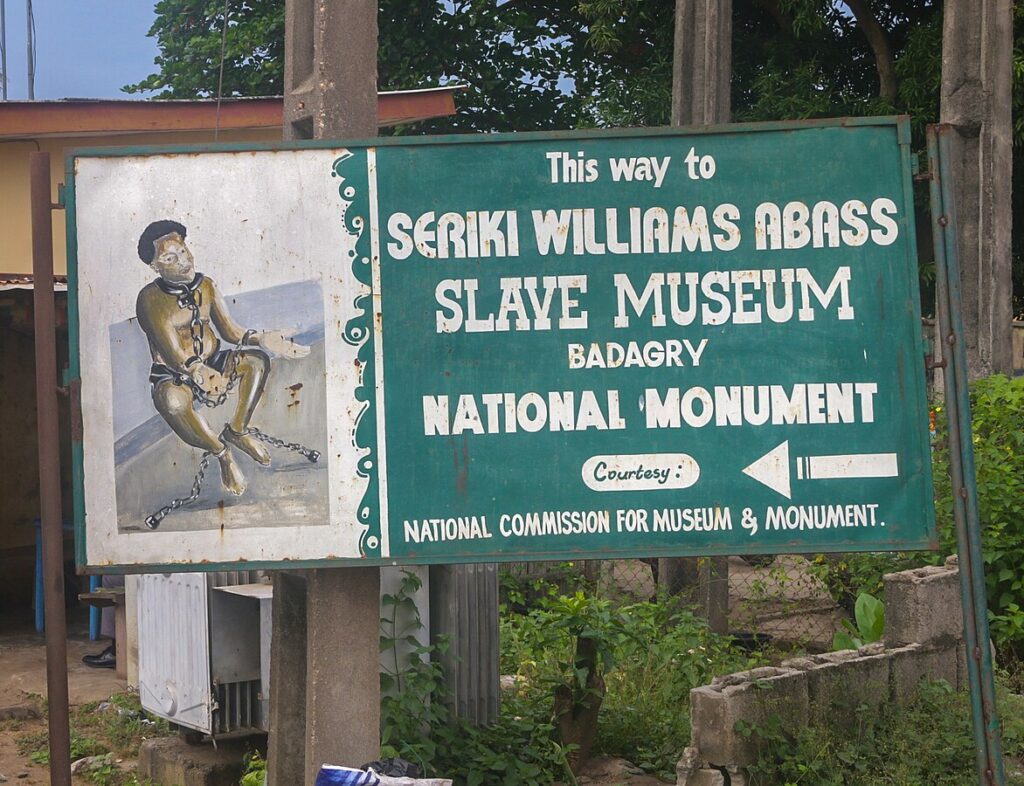
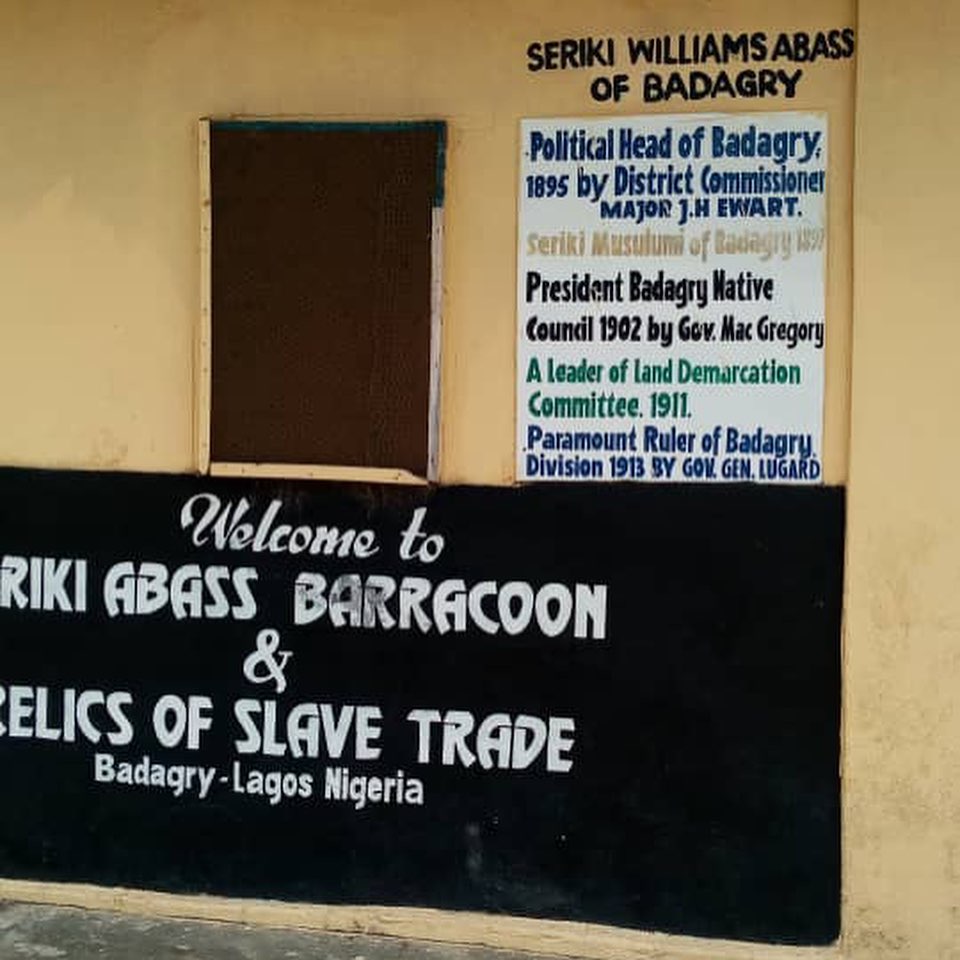
He built a substantial barracoon—a holding structure used to detain captives prior to shipment—part of a complex of buildings on his compound that today survives as part of the Badagry heritage site.

See also  The Creation of the Council of Obas in South West Nigeria

That surviving structure has been preserved and interpreted by the Badagry Heritage Museum and the National Commission for Museums and Monuments as an important, painful testimony to the mechanics of the slave trade on the Gulf of Guinea coast.

Political authority under colonial rule

As Abass’s wealth and local standing grew, so did his political influence. During the period of early British indirect rule he was recognized as a senior chief in Badagry. Local records and colonial documents variously describe him as a paramount local authority or warrant chief; scholars caution that the precise administrative scope of those titles—especially labels such as “Paramount Ruler of the Western District”—is often overstated in later retellings. In short: he was indisputably one of Badagry’s foremost power-brokers, but the territorial reach and formalities of his colonial-era authority vary between sources.

Religious role and social status

Abass was also a prominent Muslim leader in the area and is commonly referred to in local histories by the honorific “Seriki Musulumi” (leader of Muslim faithfuls). This title highlights how his public identity combined commercial, political and religious leadership—an integration typical of many coastal elites of the period. At the same time, his status as a former captive turned trader and chief complicates simple judgments about victimhood or villainy.

Death, memorials and a difficult legacy

Seriki Williams Abass died in 1919 and was buried on his estate in Badagry. Today the barracoon and related colonial-era markers on the site are curated as part of the Badagry Heritage Museum.

Visitors confront in those spaces a layered history: the brutality of human trafficking, the entrepreneurial strategies of returnees and local elites, and the ways colonial administrative practices reshaped local power.

See also  What we’re experiencing bears every mark of genocide – Benue Catholic priests

Historians and heritage practitioners treat Abass’s life as a prism for difficult questions. How did people who had experienced captivity reconcile or rationalize participation in the slave trade?

How should communities remember leaders who were both survivors and perpetrators?

The preserved buildings and cenotaphs at Badagry are deliberately unsettling because they refuse simplistic narratives.

Reading the past with care

Seriki Williams Abass’s biography forces us to resist tidy moral categorizations. He is neither solely a heroic survivor nor merely a villainous profiteer; he embodies a historical reality in which violence, commerce and authority were often entangled.

The barracoon that survives at Badagry remains an essential site for public memory precisely because it preserves those tensions.

Sources
Badagry Heritage Museum / National Commission for Museums and Monuments (site displays and archives)

FOLLOW US ON:

FACEBOOK

TWITTER

PINTEREST

TIKTOK

YOUTUBE

LINKEDIN

TUMBLR

INSTAGRAM

Continue Reading
Click to comment

Leave a Reply

Your email address will not be published. Required fields are marked *

Lifestyle

Igbos built Nollywood, but Yorubas have become dominant” — Francis Duru

Published

on

Veteran actor Francis Duru has sparked debate after saying Igbos played a major role in building modern Nollywood, but Yoruba filmmakers have become more dominant.

Speaking in an interview on Gbam, Duru said Igbo entrepreneurs helped build the home-video industry but argued that the Yoruba community has been more successful at supporting and promoting its own people.

“We [Igbos] created Nollywood, but if you go to Netflix today, you hardly see one movie that speaks of Igbo heritage,” he said.

Duru urged Igbos to learn from the Yoruba community’s ability to protect and project its culture, stressing that his comments were not an attack on Yoruba filmmakers.

FOLLOW US ON:

FACEBOOK

TWITTER

PINTEREST

TIKTOK

YOUTUBE

LINKEDIN

INSTAGRAM

See also  Akume quietly marries Ooni’s ex-queen Zaynab
Continue Reading

Lifestyle

🔥 A HARD QUESTION FOR CHRISTIAN WIVES: WHY DO YOU RESPECT YOUR PASTOR MORE THAN YOUR HUSBAND?

Published

on

Some wives can stand before their pastor with a gentle voice, a respectful attitude, and complete attention. They will never speak to their pastor the way they speak to their husband at home.

But when they get home, the respect disappears.

Is that really the kind of Christian character God wants?

Before you get angry with this question, examine yourself.

📖 Ephesians 5:33 (KJV) says:

“…and the wife see that she reverence her husband.”

The Bible does not tell a wife to reverence her pastor while treating her husband with contempt.

But let us also be fair: God did not command husbands to demand respect while refusing to love their wives.

📖 Ephesians 5:25 (KJV):

“Husbands, love your wives, even as Christ also loved the church, and gave himself for it.”

Marriage is not a competition between husband and pastor.

Your pastor may preach to you, counsel you, and pray for you—but your husband is the person you chose to build a life with.

If you can speak politely to your pastor, why can’t you speak politely to your husband?

If you can listen patiently to your pastor, why can’t you listen patiently to your husband?

If you can honor your pastor publicly, why must your husband receive disrespect privately?

And husbands, this message is for you too:

You cannot demand the respect you refuse to give.

📖 1 Peter 3:7 (KJV):

“Likewise, ye husbands, dwell with them according to knowledge, giving honour unto the wife…”

A Christian home should not be a place where one person demands submission while the other refuses to show love.

See also  Akume quietly marries Ooni’s ex-queen Zaynab

Respect should go both ways. Love should go both ways. Honor should go both ways.

📖 1 Corinthians 16:14 (KJV):

“Let all your things be done with charity.”

🔥 THE REAL QUESTION IS THIS:

If your pastor saw the way you speak to your husband at home, would he recognize the same Christian character you display in church?

👇 BE HONEST:

Do you think some Christians give their pastor more respect than they give their spouse?

YES or NO? Tell us why in the comments.

And if this message challenged you, share it with someone who needs to hear it.

FOLLOW US ON:

FACEBOOK

TWITTER

PINTEREST

TIKTOK

YOUTUBE

LINKEDIN

INSTAGRAM

Continue Reading

Lifestyle

WHEN MAJOR DECISIONS ARE KEPT HIDDEN, THE FOUNDATION OF A MARRIAGE BEGINS TO CRUMBLE

Published

on

Marriage is built on trust, honesty, communication, and unity. When one spouse begins making major decisions in secret—especially decisions involving money, family, relationships, property, or the future of the home—the damage can go deeper than the decision itself. Secrecy creates suspicion, suspicion weakens trust, and when trust disappears, the foundation of the marriage begins to crumble.

The Bible says:

“Wherefore putting away lying, speak every man truth with his neighbour: for we are members one of another.”
— Ephesians 4:25 (KJV)

Husband and wife are no longer two separate people living independent lives; they have become one. Therefore, major decisions that affect the family should not be hidden from one another. Transparency is not weakness—it is a sign of respect and commitment.

The Bible declares:

“And they twain shall be one flesh: so then they are no more twain, but one flesh.”
— Mark 10:8 (KJV)

If a decision will affect your spouse, your children, your finances, your home, or your future, your spouse deserves to know. A marriage cannot remain strong when one person knows the truth while the other is deliberately kept in the dark.

Scripture also teaches:

“The simple believeth every word: but the prudent man looketh well to his going.”
— Proverbs 14:15 (KJV)

Wisdom requires communication before action. Before making major decisions, husband and wife should sit down, talk honestly, listen to each other, pray together, and seek understanding. A decision made secretly may appear successful for a moment, but the consequences of broken trust can remain for years.

See also  Osisikankwu’s Reign of Terror in Abia State

The Bible says:

“Can two walk together, except they be agreed?”
— Amos 3:3 (KJV)

Agreement does not mean that husband and wife will always have the same opinion. It means they are willing to communicate, consider each other’s concerns, and work toward a common direction.

A marriage should not be a place where secrets are protected at the expense of trust. Privacy has its place, but deliberate secrecy about major matters can become destructive. If something is important enough to change the direction of the family, it is important enough to be discussed.

Remember:

A marriage does not usually collapse because of one big decision. Sometimes it begins to crumble through repeated secrecy, hidden actions, broken promises, and the gradual destruction of trust.

Therefore, husbands and wives should choose truth over deception, communication over silence, unity over selfishness, and wisdom over impulsive decisions.

“Two are better than one; because they have a good reward for their labour.”
— Ecclesiastes 4:9 (KJV)

If you want your marriage to remain strong, do not make your spouse a stranger to decisions that shape the life you are supposed to build together. Talk. Listen. Pray. Be honest. Build trust before the cracks become too deep to repair.

FOLLOW US ON:

FACEBOOK

TWITTER

PINTEREST

TIKTOK

YOUTUBE

LINKEDIN

INSTAGRAM
Continue Reading

Trending