Connect with us

Lifestyle

Dolly Parton dies at 80, US lowers flags for one week

Published

on

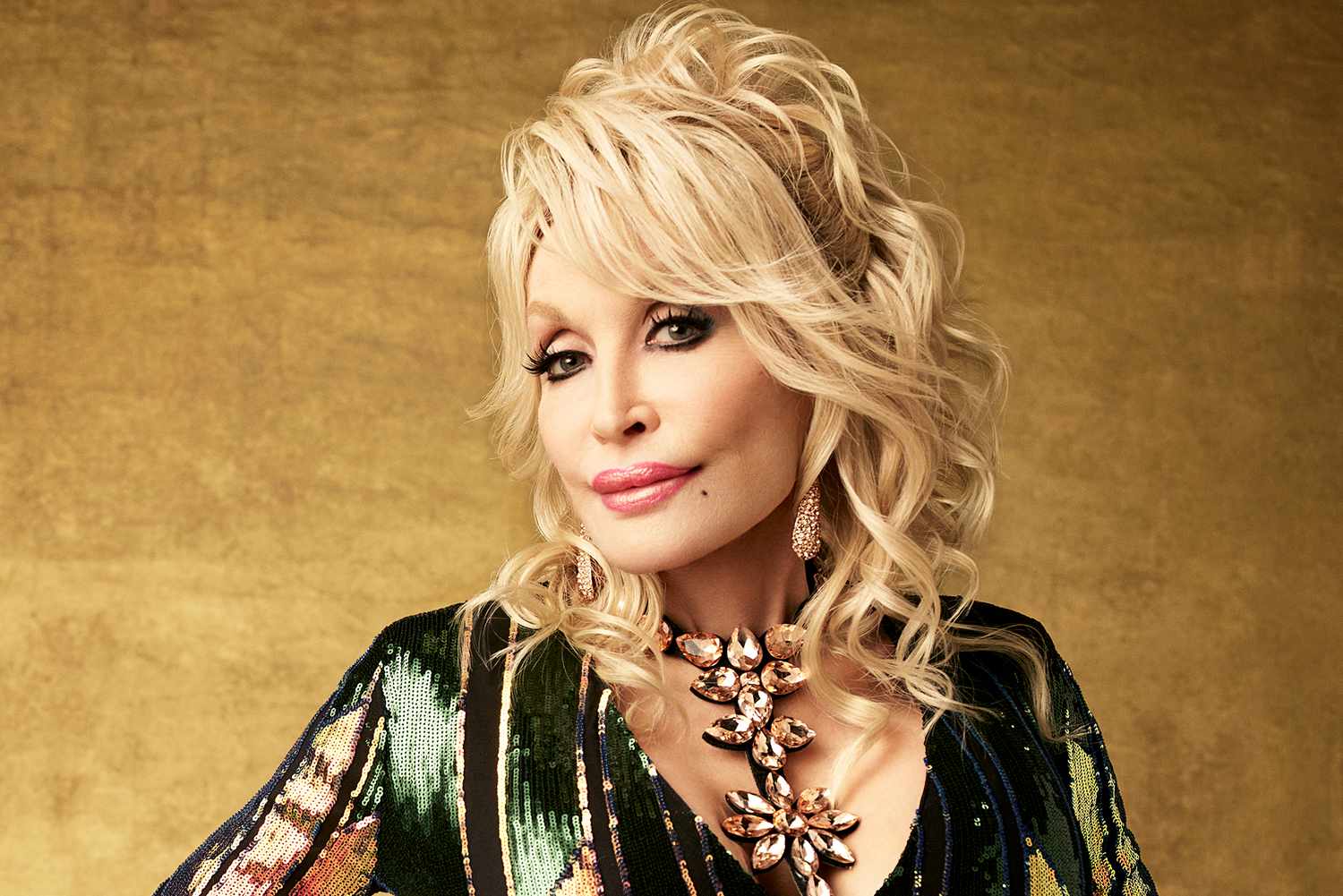
Country music icon Dolly Parton has died at the age of 80, according to multiple reports, including The Independent, The Guardian and Sky News.

Parton’s death was reportedly announced by her nephew, Bryan Seaver, on Instagram on Tuesday.

“I have imagined the heaviness of this moment but haven’t truly felt it until now.

“It is an honour, an honour that is mixed with absolute pride and great sadness,” Seaver said.

In her honour, United States President Donald Trump ordered American flags across the country to be lowered for one week.

Trump described her death as a “true loss for millions of people.”

Parton, who rose from humble beginnings in Tennessee to become one of country music’s most celebrated singer-songwriters, had a career spanning more than six decades.

She sold more than 100 million records globally and became known as the “Queen of Country”, with hits including “Jolene”, “9 to 5” and “I Will Always Love You”.

Parton wrote more than 3,000 songs and won 11 Grammy Awards. She was also a successful actor, appearing in films including 9 to 5, The Best Little Whorehouse in Texas, Steel Magnolias and Joyful Noise.

Born on January 19, 1946, in a two-room log cabin on the banks of the Little Pigeon River in Tennessee, Parton was the fourth of 12 children.

Her father was an illiterate sharecropper who later worked his way up to owning a small tobacco farm.

Parton described her family as “dirt poor” but credited her mother with passing on her love and knowledge of traditional folk ballads and her father for his work ethic.

See also  Awujale: Ruling house slams KWAM1 over protest letter to Abiodun

Parton began performing as a child. By the age of 13, she had appeared on local radio and television in East Tennessee, performed at the Grand Ole Opry in Nashville and recorded her first single, “Puppy Love”.

After graduating from high school in 1964, she moved to Nashville the following day and began establishing herself as a songwriter.

She released her debut album, Hello, I’m Dolly, in 1967, the same year she joined the weekly television programme The Porter Wagoner Show. Wagoner, an established country star, mentored Parton, and the pair released a series of successful albums as a duo.

In 1973, Parton decided to concentrate on her solo career and wrote “I Will Always Love You” about their professional separation. The song became a hit for Parton and was later famously recorded by Whitney Houston for the 1992 film The Bodyguard.

Parton also wrote “Jolene”, one of her signature songs, around the same period. Both songs were included on her 1974 album Jolene, which helped introduce her to a wider audience beyond country music.

Her 1977 album, Here You Come Again, became her first to sell a million copies and earned her first Grammy Award after almost a decade of nominations.

In 1980, Parton made her acting debut alongside Jane Fonda and Lily Tomlin in the workplace comedy 9 to 5. She also wrote and performed the film’s theme song, which became a number one hit and earned an Oscar nomination for Best Original Song.

The film’s success helped launch Parton’s acting career, with roles in films including The Best Little Whorehouse in Texas (1982), Steel Magnolias (1989) and Joyful Noise (2012).

See also  ‘Don’t dig anything less than gold’ – Actress Bukky Wright tells ladies

Parton also built a business empire that included television specials, food products and Dollywood, the Tennessee theme park she acquired an interest in and renamed in 1986.

Beyond music and acting, she was known for her philanthropy, particularly through the Dollywood Foundation’s Imagination Library, which promotes childhood literacy.

She also supported medical research, disaster relief and other charitable causes, including donating $1 million towards COVID-19 vaccine research.

In 2022, she was awarded the Carnegie Medal of Philanthropy.

“I just give from my heart. I never know what I’m going to do or why I’m gonna do it. I just see a need and if I can fill it, then I will,” she said at the time.

Parton’s health concerns became public in September 2025 when she postponed her Las Vegas residency. In recent weeks, she had also withdrawn from public appearances amid ongoing health issues.

Parton’s death comes months after the death of her husband of nearly 60 years, Carl Dean, who died in March 2025 at the age of 82.

The couple married in 1966.

In a post on his Truth Social account on Tuesday, which was also shared by the White House on its X handle, Trump wrote: “Very sad to report that Dolly Parton, one of the greatest Country singers, and far beyond, EVER, has just passed away. This is a true loss for millions of people.

“There has never been anyone like her, and never will. In her honour, I am lowering the American flag throughout the United States for one week beginning tonight at 6:00 PM. Rest in Peace, Dolly! The World loves you. President DONALD J. TRUMP.”

Continue Reading
Click to comment

Leave a Reply

Your email address will not be published. Required fields are marked *

Lifestyle

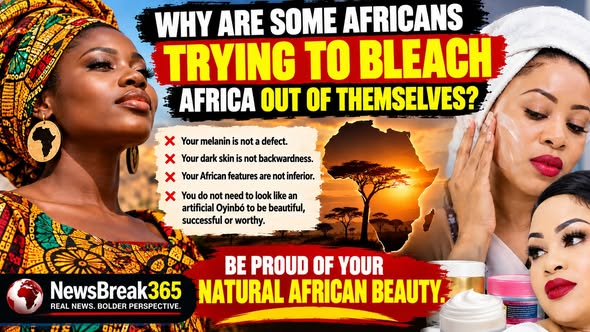
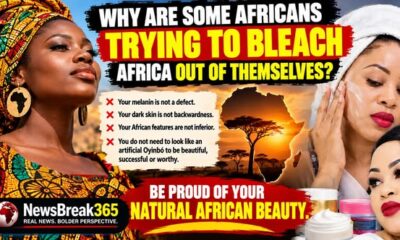
STOP BLEACHING AFRICA OUT OF YOUR SKIN.

Published

on

Let’s say the uncomfortable truth:

When an African looks at their natural Black skin and thinks, “I need to become lighter to be beautiful,” something deeper than beauty may be happening.

Who convinced us that the closer we look to Europeans, the more beautiful we become?

Who convinced the African that dark skin is something to escape?

For centuries, Africans have been exposed to systems that associated whiteness with power, privilege, sophistication and beauty. Even after colonialism ended politically, some of those beauty standards remained deeply embedded in society.

And today, some people are spending money putting chemicals on their skin because they desperately want to become lighter.

Imagine being born with millions of years of African ancestry written into your skin—and being taught to hate it.

Your melanin is not a defect.

Your dark complexion is not backwardness.

Your African nose is not a mistake.

Your African lips are not something to hide.

Your natural appearance does not need to resemble an Oyìnbó before it becomes beautiful.

There is nothing wrong with wanting to look attractive. But beauty becomes dangerous when improving your appearance turns into rejecting your identity.

Africa does not need a population trying to look less African.

Africa needs people confident enough to look in the mirror and say:

“This is my skin. This is my ancestry. This is Africa. And I am not ashamed of it.”

The real bleaching Africa needs is not skin bleaching.

It is the bleaching of the inferiority complex from our minds.

See also  Children Need Love, Caring, Not Abuse

🔥 QUESTION:

If a society repeatedly tells Black people that lighter skin is more beautiful, how much of skin bleaching is really a “personal choice”?

Let the debate begin. 👇🏿

FOLLOW US ON:

FACEBOOK

TWITTER

PINTEREST

TIKTOK

YOUTUBE

LINKEDIN

INSTAGRAM

Continue Reading

Lifestyle

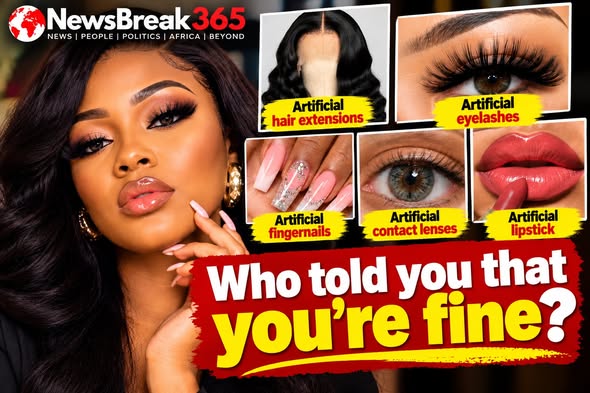
AFRICA, WHY ARE WE SO DESPERATE TO LOOK LIKE SOMEONE ELSE?

Published

on

For generations, African people have been told—directly and indirectly—that certain features are more beautiful because they look closer to European standards.

Now look around:

Wigs and hair extensions.
False eyelashes.
Acrylic nails.
Colored contact lenses.
Heavy makeup.
Skin bleaching.
Filters that completely change our faces.

When did African skin become something to escape from?

Our dark skin is not a defect.
Our natural hair is not a problem to be fixed.
Our African facial features are not inferior.
Our dark eyes do not need to become blue or green to be beautiful.

There is nothing wrong with dressing up, wearing makeup or experimenting with fashion. The problem begins when we start believing that our natural African appearance is somehow less valuable.

Africa has millions of unique cultures, languages, hairstyles, skin tones and facial features. We should not need European approval before we learn to appreciate ourselves.

You don’t have to become an artificial version of somebody else to be beautiful.

Our children are watching us. What are we teaching them about their skin, their hair and their identity?

🔥 Maybe the greatest beauty revolution in Africa is not creating another artificial look—it is learning to love the face, skin and hair we were born with.

Africa, embrace yourself. Stop apologising for your natural beauty.

💬 Is modern beauty culture empowering Africans—or making Africans insecure about their natural appearance?

#NewsBreak365 #Africa #AfricanBeauty #NaturalBeauty #BlackBeauty #SelfConfidence #BeautyStandards #AfricanIdentity

FOLLOW US ON:

FACEBOOK

TWITTER

PINTEREST

TIKTOK

YOUTUBE

LINKEDIN

INSTAGRAM

See also  Kwankwaso joins ADC, sparks Obi alliance talk
Continue Reading

Lifestyle

STOP JUDGING PEOPLE YOU DON’T KNOW!

Published

on

Some people see a person’s appearance, accent, nationality, religion, job, social class or background and immediately create a story about who that person must be.

They call someone lazy without knowing their struggles.

They call someone arrogant without understanding their personality.

They call someone uneducated without knowing their achievements.

They call someone a criminal simply because of where they come from.

That’s stereotyping—and it can be deeply unfair.

Behind every face is a story you may never have heard.

Before you judge someone, talk to them. Know their story. Understand their journey.

Because sometimes, the person you judged wrongly may be carrying battles, achievements and experiences you know absolutely nothing about.

👉 Don’t judge a book by its cover. Get to know the person first.

💬 Have you ever been stereotyped by someone who didn’t even know you? Tell us your experience in the comments.

#NewsBreak365 #StopStereotyping #DontJudge #KnowTheirStory #LifeLessons #SocialAwareness #RespectOthers #Humanity #ThinkBeforeYouJudge

FOLLOW US ON:

FACEBOOK

TWITTER

PINTEREST

TIKTOK

YOUTUBE

LINKEDIN

INSTAGRAM

See also  Why Ooni of Ife won’t react to Alaafin’s 48-hour threat regarding Chieftaincy Title — Palace aide
Continue Reading

Trending