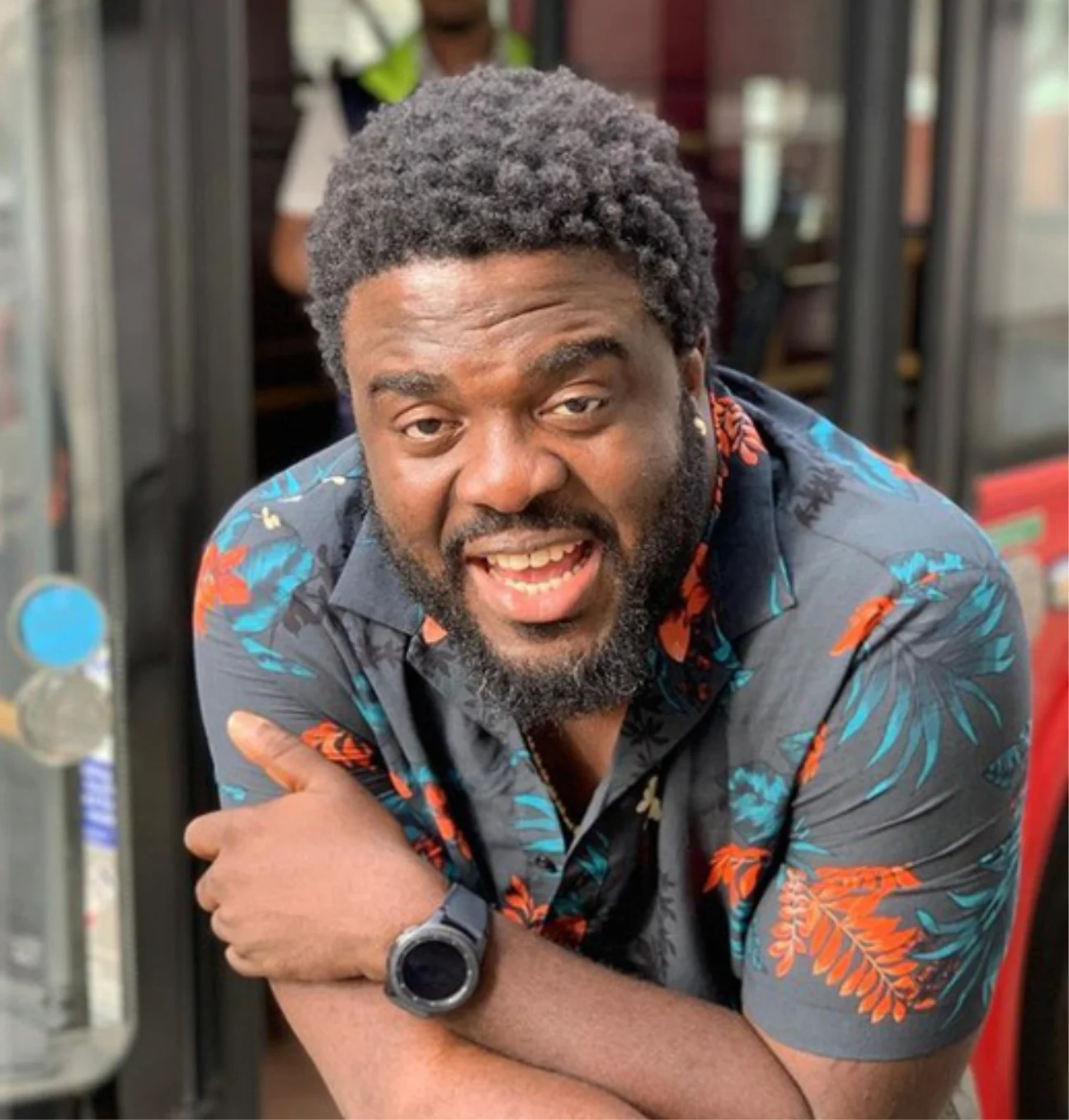
Aremu Afolayan is a Nigerian actor and filmmaker whose career blends personal creativity with the weight of a remarkable cinematic heritage. As the son of the late Adeyemi Afolayan—popularly known as Ade Love, one of the founding figures of Yoruba-language cinema—Aremu grew up surrounded by the art of storytelling and performance. Today, he continues the tradition of excellence that has made the Afolayan family one of the most influential dynasties in Nollywood.
Early Life and Family Legacy
Born into a household where film was both profession and passion, Aremu is one of the younger sons of Ade Love. His siblings include Kunle Afolayan, an internationally acclaimed director known for films such as October 1 and The Figurine, and Gabriel Afolayan, an award-winning actor and musician. From childhood, Aremu was immersed in film sets and rehearsals, experiences that would spark his own dedication to the screen.
The Afolayan family name carries weight in Nigerian cinema. Ade Love’s pioneering work in the 1970s and 1980s helped establish the Yoruba-language film industry and inspired an entire generation of storytellers. Aremu’s career reflects both an inheritance of that legacy and a personal drive to expand it.
Career and Film Contributions
Aremu has appeared in a wide range of Nollywood films, performing in both Yoruba-language and English-language productions. His notable works include the Yoruba classic Idamu Akoto and several contemporary dramas and action thrillers. Critics and audiences have praised his ability to transition smoothly between traditional narratives and modern Nollywood storytelling.
Beyond acting, Aremu has worked as a filmmaker, producing and directing projects that balance cultural depth with popular appeal. His commitment to high-quality storytelling reflects the standards set by his father while embracing new creative opportunities in the evolving Nigerian film industry.
Off-screen, Aremu is known for his bold and outspoken personality. Active on social media, he frequently shares insights on family, fashion, and social issues, which has earned him both admiration and public scrutiny. He has also explored entrepreneurial ventures beyond film, demonstrating a business-minded versatility that complements his creative career.
Legacy and Influence
As a key figure in the second generation of the Afolayan dynasty, Aremu Afolayan stands as both custodian and innovator of Nigerian cinema. While honoring his father’s groundbreaking contributions, he continues to carve a distinct identity that resonates with younger actors and filmmakers.
Through his performances, filmmaking, and public engagement, Aremu strengthens the Afolayan name as a symbol of excellence, creativity, and resilience in Nollywood, ensuring that the legacy of Ade Love remains vibrant for future generations.
Sources
Interviews and profiles of the Afolayan family in Nigerian film archives
The Oluwo of Iwoland, Oba Abdulrosheed Adewale Akanbi, has called for radical reforms to correct the mistakes recorded by unregistered leagues of Muslim clerics.
Oba Akanbi made the call in his remarks while endorsing the launch of a one thousand member registered league of Imams and Alfas for South West states, Edo and Delta in Ibadan on Saturday.
While affirming his full support for the coalition, Oluwo stressed that the registered league is legally binding with full recognition by the government through the Corporate Affairs Commission, CAC.
The monarch noted that “the body will create a sense of belonging through a decentralised power of the state Imams by recognizing Imams and Alfas at the local levels”.
He challenged Yoruba Imams and Alfas to participate in active politics saying, “Active politics will expose the virtues of good Muslims and further provide an opportunity to improve people’s standards.”
Oluwo also called for collaboration and consistency to ensure the newly planted league survives any challenges confronted at the germination stage.
“There may be challenges at the formation stage. I have strong hope that this registered league will strive and become greater. This is the only league of Imams and Alfas known by law, legally binding and recognized by the government. It is here to stay, fully certified and recognised by the Corporate Affairs Commission (CAC) with registration number 9003000.
“Aside from consistency, I appeal for your active participation in politics. If you are politically powerful, the politicians will call you. You won’t run after them as we experience presently. We need you to be in power. You can be elected or appointed. Join a political party today and be active. As Muslims, you need power. The power will not come to you on a plater of gold.
“I charge you all to dedicate yourself to this course of reviving the league through a decentralized power sharing that creates a sense of belonging and togetherness for the local Imams and Alfas.
“I commend those who ensured Yorubaland, Edo, and Delta Muslims under Imams and Alfas are registered to be recognised by law. It’s an improvement and one of the testimonies that our children should be greater than us. It is not a division. It is an improvement,” he said.
The over 1,000 Imams were drawn from the six south west states – Osun, Oyo, Ondo, Lagos, Ekiti and Ogun, as well as Edo and Delta states.
The remains of renowned Nigerian actor and theatre scholar, Chief Dr Adekola Gabriel Oyewo, popularly known as Kola Oyewo, will be laid to rest on Friday, August 7, 2026, in Osun State according to a funeral programme released by his family.
Oyewo, who died at the age of 80, was celebrated as one of Nigeria’s foremost theatre practitioners, with a career spanning several decades on stage, television and in academia.
In a funeral announcement, the Bangbola Oyewo family of the Ese-Ola Royal House, Oba-Ile, described the deceased as “a beloved father, father-in-law, grandfather, great-grandfather, uncle, colleague, esteemed traditional ruler, and a veteran of the Nigerian theatre.”
In a flier issued by the Balogun Oyekola Oyewo Memorial Committee, the three-day funeral programme will run from Wednesday, August 5, to Friday, August 7, 2026.
“With gratitude to God for a life of purpose, honour and enduring impact, the entire Bangbola Oyewo family of the Ese-Ola Royal House, Oba-Ile, announces the passing of our beloved father, father-in-law, grandfather, great-grandfather, uncle, colleague, esteemed traditional ruler and veteran of the Nigerian theatre,” Newspeak quoted the family’s statement as saying on Saturday.
The late actor was also the Balogun of Oba-Ile in Osun State and an Associate Professor of Drama, earning widespread recognition for his contributions to the development of theatre arts in Nigeria.
Activities lined up for the burial rites will commence on Wednesday, August 5, with a wake-keep and service of songs at St Mary’s Catholic Church, Igboya, Ile-Ife.
On Thursday, August 6, a commendation mass will be held at the same church, while an artistes’ night featuring tributes and cultural displays is scheduled for later that day at Oduduwa Hall, Obafemi Awolowo University, Ile-Ife.
A major highlight of the funeral programme will be an exhibition of Oyewo’s works and photographs at the Pit Theatre, African Studies Building, Obafemi Awolowo University, beginning on Thursday and continuing through Friday.
The funeral cortege will leave the late actor’s residence at Ese Ola’s Compound, Oba-Ile, on Friday morning before a requiem mass at St Joseph Catholic Church, Oba-Ile.
Interment will take place at 12:45 p.m. on Friday, August 7, at Labaluyegbe Villa, Oba-Ile, in a ceremony restricted to family members and close associates.
A reception for guests will follow at Aderonmu Grammar School Field, Oba-Ile.
Widely regarded as one of the leading figures in Nigerian theatre, Oyewo inspired generations of actors, playwrights and scholars through his work in performance, teaching and cultural preservation.
His death marks the end of an era in Nigeria’s theatre community, where he remained a respected voice and mentor for decades, the family noted.