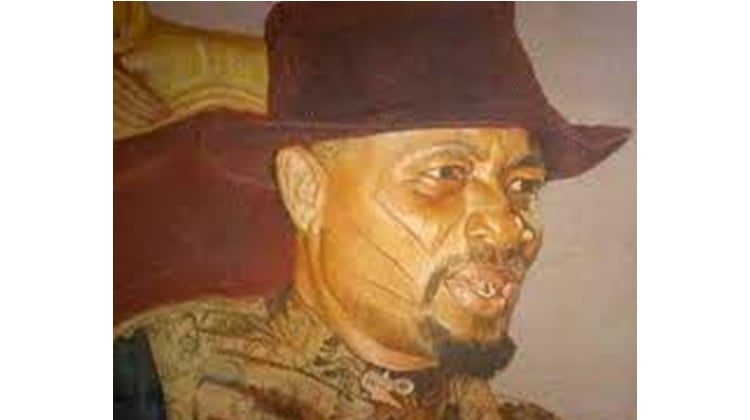
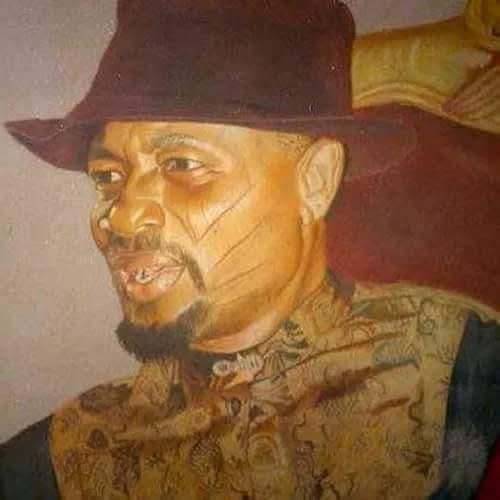
Professor Peller – The Enchanting Story of Nigeria’s Most Famous Magician and how he got Assassinated in 1997
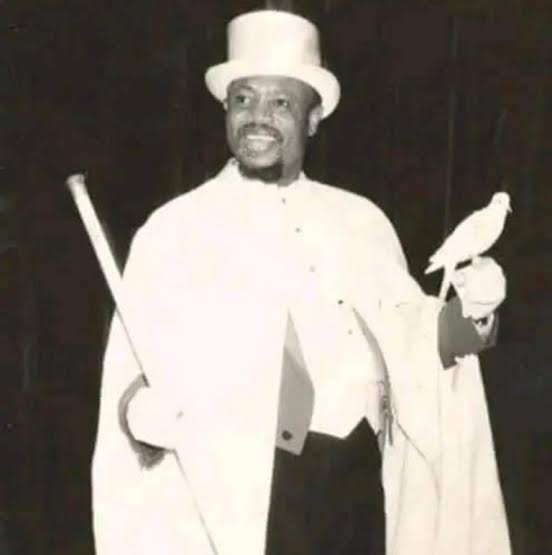
It was one surreal day, around 4:00 pm or so, and I was out on our street for a reason I can’t really remember now, I was pretty young then. Then as I got to the maisuya end of our busy street, I noticed this huge and electrified crowd thronging after a slowly-moving convoy. At the center was a white limousine and from the sun roof, was a man full of charming smiles, waving to the frenzied crowd, he looked very smart, handsome and he was also wearing white, all white, the hat too was white.
It was quite a dazzling spectacle. The limo was headed towards the city stadium where he had a show. I had just set my eyes on Africa’s greatest magician, ‘Professor Peller’. And Abiyamo would never see him again. But for a young African child who was also seeing a limousine for the very first time or so, it was truly a magical moment for me. He performed and left my state leaving incredible tales of outstanding feats. Ladies and gentlemen, this is a piece on Nigeria’s most famous magician, Professor Peller. For about thirty years, Peller held the world’s most populous black nation spellbound with millions gasping at the whisk of his wand. I hope you find this magical.
BIRTH AND EARLY DAYS
He was born in 1941 at Iseyin, Oyo State and he was named Moshood Folorunsho Abiola. He would later pick on the stage name of ‘Professor Peller’, an appellation that has stuck to him like a second skin.
HIS MAGICAL PERFORMANCES AND EXPLOITS
When Professor Peller was alive, he was the most brilliant magician in all of Africa. I am not too sure if the record has been broken. Even in death, Peller remains the greatest of all. He performed not only before princes but also held kings spellbound with his magic. Here is how Femi Oyebode, a Professor of Psychiatry at the University of Birmingham described Peller and one of his shows in 1972 at the George V Stadium in Lagos (that is the old name of the Onikan Stadium):
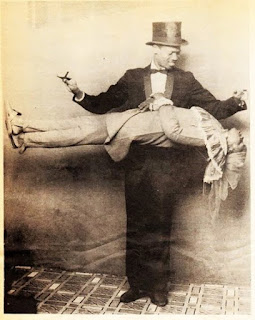
My last ever visit to the stadium was to see Professor Peller, a magician, and said to be a member of the Magic Circle take on the last of our traditional magicians whose name now escapes me (itself a significant fact). Professor Peller was dressed in black tails, a top hat, a wand in one hand, black shoes and well-cut hair. He was a perfect picture of debonair gentleman and was assisted by an attractive young woman. He flicked his white handkerchief and a white dove flew out. He pulled at his cuff links and flowers bloomed under his command. He was confident, majestic. He was suave and graceful. He levitated his assistant.
He cut her in two without drawing blood. He locked her in a cupboard, chained up several times over yet she disappeared! It was a masterly performance. The crowd clapped, hooped. We were seduced against our better judgment. We wished desperately that the traditional magician would enthrall and endear us to his magic, the mysteries of African magic. We were disappointed or shall I say that I was disappointed. When he came on stage dressed only in a loincloth of indeterminate color, you could hear the audience gasp aloud.
This crude, little thin man who seemed recently woken from the dead? He swallowed a stone and turned his backside to us, slipping his loincloth to one side and excreted the stone. Awfulness and shame. He submitted his abdomen to a sharp sword to be sliced open. But by now, the absence of razzmatazz and of finesse had turned us against him. The crowd poured through the gates. That was how disgusted we were. You can say that at George V stadium, in early adulthood I lost two of my childhood dreams.
A master at his craft and a consummate entertainer, he cast a most powerful spell on the following African leaders, right in their presidential palaces:
-The late President Gnassingbe Eyadema of Togo (Eyadema later died after spending 38 years in power, he was the longest-serving ruler in Africa when he died in 2005 (see his picture below). His son, Faure, is currently the President of Togo).
-The late President Samuel Kanyon Doe of Liberia (see picture below). There is an interesting story behind his performance for the late strongman of Monrovia. There was a time Peller had a performance in Liberia in the 1970s and the crowd was just too massive. The Liberian government drafted security forces to the venue of the act to control the surging crowd. One of those responsible for maintaining security that day at Peller’s performance was a young man called Samuel Doe. So when Doe became President, he summoned Peller, Nigeria’s finest magician to come perform for him. Such was the stellar performance of Peller. Doe said he was busy controlling the surging crowd and he could not witness the even properly as at that time when he was a junior soldier.
The former President of Benin Republic, Mathieu Kerekou was also one of those who patronized Peller
Apart from the Presidents mentioned above, Peller also reigned supreme in Nigeria. It was like there was no other conjurer in the land. Chief Obafemi Awolowo, the late Premier of the Western Region was one of those he used to entertain regularly.
-Peller was a prolific magician with many shows, some of which were the Invisible General, the Escaping Box, Changing Dresses and the Zigzag. One thing with Peller’s performances is that they were executed with maximum finesse and excellence. He was thorough and professional. Perhaps, if not for death, he might have even eclipsed David Copperfield of the USA in fame. Copperfield is presently the greatest magician on earth and the first person to make one billion dollars from magic.
-While growing up, he was nicknamed Moshood Olori Pupa (Moshood the Red-Headed Boy).
-One of his classical performances included putting his wife in a ‘magical coffin’ and severing the same coffin into two halves with a ‘magic coffin’.
When Peller was performing, there was really no Internet as we have it today, so it was quite easy to fool people in their millions. Now, YouTube is
spoiling the show for many magicians except the most ingenious of them. Here are few more magic clips on YouTube just to let you know they do not conjure any evil spirit or demon, it is nothing but sheer trickery.
He was described as a very romantic man. His most prominent wife, Alhaja Silifat, fell in love with him while she was still in the secondary school. She confessed that she had always admired him and his performances even before then and each time she watched him perform, her heart fluttered with affection for the fine magician with tribal marks.
In 1967, Iseyin Grammar School in Oyo State became the place where Peller planted the seed of love even if he was there to perform but was carried away by the ravishing young beauty in the crowd called Silifat. Hear her: “I am sure he musthave been attracted to me because of my beauty. So, he just whispered to me: ‘Baby, you are beautiful.’ And I said, ‘Thank you.’ He didn’t ask me out that day. For quite a long time, we were friends.” For a couple of years more, they continued dating and Lady Peller said after two years, she said yes to his advances. They got married in 1971 and they already had a child by then.
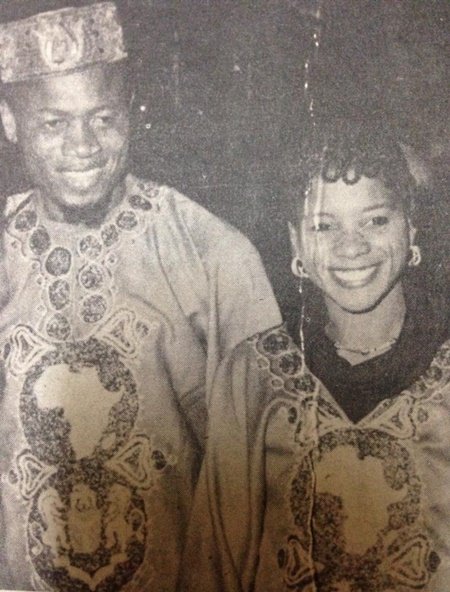
For a man who was a showstopper at any events, it is no surprise that not a few women fell for the enchanting spell of Nigeria’s most famous magician. He was a man of many women and married many of them. However, the best known of these ladies, with whom he performed his magic tricks is Alhaja Silifat Adeboyin Peller (see picture). The whole of Nigeria knew her as Lady Peller and she is most famous for the act in which she was ‘sliced’ into pieces by Peller and had a hard time putting her back. Now 66 years of age with her husband gone and not remarrying, she is tending to her grandchildren while reminiscing over the glittering wonders of an empire of magic that once held sway. Lady Peller was born in Kishi, Oyo State where her father was the Chief Imam and had five children for him, while also raising many other step-children.
However, unknown to many, their rosy marriage later had a deep crack to the extent that they were not staying together anymore. When Peller was killed at his Onipanu residence, he was in Lagos State for a function while Lady Peller was living at the GRA, Ikeja. Although they were not officially separated as they still saw regularly, Peller checked on her in Ikeja but met her absence. As at that time, they had already reconciled and were even planning on coming back together before Peller was prematurely silenced by the assassin’s bullets.
Peller left a message for her to check on him as he was not feeling well and was rushed to Ibadan for treatment. Lady Peller was furious as to why he was taken to Ibadan since they had family doctors at the Ajayi Memorial Hospital and the EKO Hospital in Lagos but upon getting to Ibadan, she was simply told that Peller was dead. She fainted immediately only to wake up to a bucket of water and intense fanning by family members. She said: “It was a great shock and I had never seen that kind of things. I don’t ever wish to go through that kind of thing again.” While he was alive, he also taught her some magic and ensured she got some training in Michigan, USA. Little wonder they always performed together and as far as she is concerned, her religion is not against the brand of magic she performed with her late husband because according to her, ‘it was not fetish’. She still remembers the very good old days and says she will not remarry and will still marry him over and over again, rounding off: They only want to enjoy what Professor Peller was enjoying for several years. But they can’t have it.”
Alhaja Silifat Abiola Peller, the wife of late magician, Professor Peller, has opened up on why the popular socialite was killed.
While speaking in an interview with BBC News Yoruba, Mrs Peller revealed that the assassination of her husband was made possible because of the personal information he leaked to the media after a performance she had with her husband that got everyone scared.
She said during the performance, the late magician sliced her into two on stage but found it difficult to restore her back to normal.
“On that unforgettable day, Professor Peller performed at the National Theatre. He sliced Lady Peller into two but found it difficult to restore her back to normal,” she said.
“He did his best to the point of sweating which was noticed by the spectators. The show ended at that point.
“Thanks to God, Lady Peller later came back to life. But people were yet to know until the following day.
“While Professor Peller was performing (the following day), the spectators were not all that interested. All they wanted to see was Lady Peller.
“As soon as they saw me, they were excited to the point that some of them called it a day, saying my appearance was entertaining enough.”
Silifat said presidents and prominent people used to come to the shows which they performed across the world.
On how she heard of her husband’s death, she said she was in Lagos when she got the information.
“It was an unfortunate day which I can’t really explain. Some said I fainted and later got revive after water was poured on me,” she said.
On how her husband died, Silifat said “He was observing the Sujud prayer when he died.”
She continued, “The media knows how to ask questions that can make one say things he ought not to say.
“Professor Peller was asked by the media to reveal the particular time he could be found without his powers.
“He told them that he could only be found without his powers when he’s observing the Islamic prayers.
“That’s what Professor Peller said that led to his fall.”
Silifat said the assassins who killed the magician ensured they carried out the act at the time he was observing prayers.
As many Africans struggle with poverty and rising living costs, the luxurious lifestyles of some religious leaders are raising questions about faith, financial transparency and accountability.
When the People Struggle to Survive, Who Is Looking After Them?
Across Africa, millions of families face the daily challenge of making ends meet. The cost of food, housing, education and healthcare puts pressure on household budgets, leaving many people wondering how they will provide for their families.
For many, religious institutions remain a source of hope, spiritual comfort and community support. People attend services seeking encouragement, healing, direction and the strength to overcome life’s difficulties.
However, a difficult question continues to arise in public discussions about religion: **Why are some religious leaders associated with extravagant lifestyles while members of their congregations struggle to meet their basic needs?**
From luxury vehicles and expensive mansions to private jets and lavish public appearances, the wealth displayed by some prominent religious leaders has prompted debate about the relationship between religious ministry, personal prosperity and social responsibility.
The issue is not whether a pastor should be wealthy. The deeper question is whether religious institutions are fulfilling their responsibilities to the people who trust them.
The Financial Sacrifices of Ordinary Worshippers
Many worshippers make financial contributions to their religious communities through offerings, tithes, donations and special fundraising campaigns.
Some contribute willingly because they believe in the mission of their church and want to support its activities. Others give because they hope to receive spiritual encouragement or because they feel a strong sense of responsibility towards their faith community.
For low-income families, however, financial contributions can represent a significant sacrifice.
Consider a parent struggling to pay school fees, a worker who can barely afford rent or a family trying to pay medical bills. When such people contribute to a religious institution, they should reasonably expect responsible stewardship of those funds.
Are donations being used to support genuine religious and community activities? Are the institution’s finances managed transparently? Do members have access to appropriate financial reports? And how much assistance reaches vulnerable people within the congregation?
These questions deserve serious consideration, without assuming that every church or pastor misuses donations.
Should Religious Leaders Live in Luxury?
There is no universal rule that a religious leader must live in poverty. Pastors, like other professionals, may receive legitimate compensation for their work, own property and enjoy the rewards of their careers.
Some religious institutions also operate large organisations with substantial expenses, including staff salaries, buildings, media operations and charitable programmes.
Nevertheless, wealth can become a matter of legitimate public concern when an institution relies heavily on donations from financially vulnerable people and provides little information about how those funds are used.
The central issue is not wealth itself, but transparency, responsibility and the treatment of people who provide financial support.**
If a religious leader lives comfortably while the institution also provides meaningful support to vulnerable families, that situation deserves to be assessed on its actual merits.
But when extravagant displays of wealth appear alongside persistent appeals for money, members have every reason to ask reasonable questions about priorities and accountability.
Faith Should Not Be Used to Exploit Vulnerability
People experiencing poverty, illness, unemployment or family difficulties may be especially vulnerable to promises of a dramatic change in their circumstances.
Religious teachings can provide genuine comfort and hope. However, problems arise when spiritual authority is used to pressure people into giving money they cannot afford, or when financial contributions are presented as a guaranteed route to wealth, healing or divine favour.
No person should have to choose between feeding their children and feeling accepted by their religious community.
Religious leaders have an important responsibility to communicate honestly, avoid exploiting people’s desperation and recognise the financial realities facing their congregations.
Faith should encourage compassion and dignity, not shame people who cannot afford to give.
What About the Pastors Who Help the Poor?
A balanced discussion must recognise that many religious leaders and faith-based organisations provide valuable services.
Some support orphanages, distribute food, assist struggling families, fund scholarships, operate schools and clinics, and help people facing emergencies. Many religious workers serve their communities without enjoying extraordinary wealth or public recognition.
These contributions matter and should not be dismissed.
The concern is directed at practices that lack transparency, encourage financially harmful behaviour or place personal enrichment above the welfare of the congregation.
Criticism should focus on documented conduct and institutional practices rather than treating all pastors as if they were the same.
What Should Change?
Religious institutions can strengthen public trust by adopting practical measures, including:
– **Financial transparency:** Provide appropriate reports explaining how donations and other income are spent. – **Independent oversight:** Use suitable financial controls and independent audits where appropriate. – **Responsible fundraising:** Avoid pressuring financially vulnerable members to give beyond their means. – **Community support:** Consider food assistance, education, healthcare support and other programmes that address local needs. – **Accountable leadership:** Establish clear processes through which members can raise concerns and seek answers.
These measures can help ensure that religious institutions remain places of trust, service and genuine community support.
Religion is deeply important to many people, offering meaning, identity, moral guidance and a sense of belonging. It should be possible to respect people’s beliefs while also questioning how religious institutions exercise financial and spiritual authority.
As economic hardship continues to affect many households, conversations about charitable giving, religious wealth and accountability are worth having openly and respectfully.
The question is not whether people should stop praying, attending church or supporting their faith communities.
The question is whether religious institutions can demonstrate that they take the welfare of their members seriously.
**When ordinary people make sacrifices to support a ministry, should that ministry’s success be measured only by the size of its buildings and the wealth of its leader, or also by the lives it improves?**
That is a conversation worth having.
—
### Join the Conversation
Do you believe religious leaders should publicly account for how church donations are spent?
Should churches do more to support members who are struggling with poverty, school fees, rent and medical bills?
Share your views respectfully in the comments.
**Newsbreak365 — Bringing important conversations to the public.**
*Editorial note: This article discusses a general social concern. It does not accuse any specific religious leader or institution of wrongdoing.*
**Suggested SEO keywords:** pastors and wealth in Africa, church financial transparency, religious accountability, poverty in Africa, church donations, faith and social responsibility.
Ten-year-old Nigerian twins, Jason and Jaden Ojo, will launch their first book, titled “JJ The Sloth and the Twins,” in Lagos on October 24.
The book, co-authored by the twins and their mother, Gina Ehikodi-Ojo, narrates how the character named JJ The Sloth helps the twins navigate their everyday activities, such as preparing for school, learning, eating, playing and resting.
The inspiration for the book came after Jason and Jaden were asked to write down their daily routine from memory, and their responses closely reflected the routine their mother had established at home.
Ehikodi-Ojo said the project combines structure with creativity and play.
She said, “As a mother, I have always believed that children need structure, but I also believe that routines should leave room for fun, creativity, and simply being children.
“What began as our everyday family routine eventually became a story that Jason and Jaden could call their own. Seeing them become authors at 10 is incredibly special, and we hope JJ The Sloth will remind families that there really is time for everything.”
The book will be launched as part of Jason and Jaden’s 10th birthday celebration.
The event will feature a book signing by the young authors, family-focused activities, media engagements and the premiere of the first episode of the series.
The book is part of a wider children’s entertainment and learning project built around JJ The Sloth, with plans spanning books, digital content, a plush character, and a television and online series.
The first phase of the series will comprise 13 episodes, with new episodes scheduled for weekly release on YouTube through JJ The Sloth Adventures.
The series will explore themes drawn from children’s everyday lives, including dressing, breakfast, tidying up, screen time, science, arts, play and other routines.
The creators said the project seeks to make conversations about healthy habits and children’s routines more engaging through storytelling, play and relatable characters rather than presenting them solely as lessons.
The project is also expected to expand into school, library and book-club storytelling activities as the JJ The Sloth series develops.
Nigerian gospel singer Tope Alabi has expressed shock and sadness over the death of fellow gospel artiste Toluwanisings.
Alabi, in a heartfelt tribute on her Instagram on Thursday, described the news of his death as a major shock, admitting that she was still struggling to come to terms with the loss.
“It hurts!” the gospel singer lamented, expressing the pain she felt over the passing of her colleague.
Despite the grief, Alabi said her Christian faith remained a source of hope and comfort during the difficult moment.
She also expressed her belief that the late singer was now with the Lord, drawing strength from her faith in the promise of eternal life.
The death of Toluwanisings has brought sadness to members of the gospel music community, with Alabi’s tribute reflecting the emotional impact of the loss.
The singer’s expression of grief also underscores the bond shared among gospel artistes, whose music and ministry have continued to inspire audiences across Nigeria and beyond.