






Connect with us

Business

NNPCL secures N318bn to fund new oil exploration

Published

on

The Nigerian National Petroleum Company Limited has received N318.05bn between January and August 2025 for frontier oil exploration, findings by The PUNCH have shown.

This is according to documents from the September 2025 Federation Account Allocation Committee meeting obtained by The PUNCH.

The deductions represent 30 per cent of Production Sharing Contract profits, which are automatically set aside each month for exploration in inland basins.

The Petroleum Industry Act 2021 created the Frontier Exploration Fund, which mandates that 30 per cent of profits from NNPC’s Production Sharing Contracts be channelled into oil search across under-explored basins, including Anambra, Bida, Dahomey, Sokoto, Chad and Benue.

Regulations also require the Nigerian Upstream Petroleum Regulatory Commission to manage the fund through an escrow account and issue an annual Frontier Basin Exploration and Development Plan.

Further findings by The PUNCH showed that the NUPRC in July 2025 unveiled a Frontier Basin Exploration and Development Plan detailing proposed seismic surveys, stress-field detection, data integration, and wildcat drilling across basins in Benin Dahomey, Anambra, Bida, Sokoto, Chad, and Benue.

The plan outlined work such as logging and testing of the Eba-1 well in the Dahomey basin, drilling of a new wildcat in Bida, reappraisal of Wadi wells in Chad, and reassignment of Ebeni-1 drilling in Benue.

Signed by the Chief Executive of the NUPRC, Gbenga Komolafe, the document stated that the outcome of these activities would determine further de-risking of assets and exploratory drilling in line with statutory requirements.

Analysis of the FAAC documents by The PUNCH further showed that PSC profits so far this year amounted to N1.06tn, below the budgeted N1.58tn, creating a shortfall of N518.76bn.

Despite this gap, the statutory 30 per cent deduction for frontier exploration was consistently applied, month after month, producing an accumulated N318.05bn by August.

The monthly trend reveals the volatility of the fund. In January, N31.77bn was deducted into the frontier line, when PSC profits came in at N105.91bn.

The February deduction rose to N38.30bn from a profit of N127.67bn, representing a 20.6 per cent increase on the January inflow.

March provided the first big surge, with N61.49bn allocated to frontier exploration from profits of N204.96bn, a jump of 60.5 per cent on February’s figure.

April, however, saw deductions ease back to N36.58bn as profits slid to N121.93bn, a 40.5 per cent drop compared with March.

In May, the fund received N38.8bn, only slightly higher than April’s contribution, reflecting profit of N129.33bn.

June delivered the lowest allocation so far this year, just N6.83bn, after profits collapsed to N22.77bn. That represented an 82.4 per cent fall from May.

The flow recovered somewhat in July, with N25.34bn transferred into the fund from profits of N84.48bn.

In August, the line shot up again to its highest level so far this year. With PSC profit surging to N263.13bn, the fund received N78.94bn, more than three times the July amount and twelve times June’s contribution.

See also  Police arrest suspected terrorist financiers in Sokoto

Across the eight months, the monthly allocations to the frontier fund varied sharply, from as little as N6.83bn in June to as much as N78.94bn in August.

Yet by the end of the period, the automatic deductions had steadily accumulated N318.05bn into NNPCL’s control for exploration in new oil basins.

The same 30 per cent rule also applied to NNPCL’s management fees, which mirrored the frontier deductions exactly.

In January, NNPCL booked N31.77bn; in February, N38.30bn; in March, N61.49bn; in April, N36.58bn; in May, N38.8bn; in June, N6.83bn; in July, N25.34bn; and in August, N78.94bn.

This brought the company’s management fees to N318.05bn in the first eight months of the year.

Based on the figures, the oil firm got a total of N636.1bn for frontier exploration and management fees.

The PUNCH further observed that the Federation Account, entitled to 40 per cent of PSC profits, also experienced the same volatility.

It received N42.364bn in January and N51.067bn in February. March brought N81.985bn, the strongest inflow of the first quarter.

April saw a fall to N48.772bn, followed by N51.730bn in May. June gave the lowest figure of the year at N9.110bn.

In July, receipts rose again to N33.792bn, before climbing steeply to N105.250bn in August, the largest monthly payout so far.

Year-to-date, the Federation Account has received N424.071bn from PSC profits, still well behind the budgeted N631.573bn, leaving a shortfall of N207.502bn.

The FAAC documents confirmed that while PSC profits generated just over N1.06tn this year, the deductions left the Federation Account with significantly less to share among the three tiers of government.

The pressure has been compounded by the non-performance of NNPCL’s interim dividend line.

Budgeted at N271.184bn per month, or N2.169tn year-to-date, the company has not remitted any amount so far, leaving a gaping hole in the federation’s revenue plan.

The issue has prompted closer scrutiny. The FAAC documents record that a special subcommittee was set up to examine the 30 per cent frontier deductions.

The committee met with NNPCL, the Nigerian Upstream Petroleum Regulatory Commission, and the Central Bank of Nigeria.

At the meeting, NNPCL presented details of exploration activities carried out in all the inland basins from 1999 to date and outlined its intended activities for 2025.

Committee members, however, demanded greater transparency, insisting that NNPCL provide detailed financial records of projects undertaken before and after the Petroleum Industry Act was passed.

The company was directed to submit the information by September 19, 2025, but the documents noted that the assignment was still “work in progress.”

See also  Economic recovery has begun – Edun

The Director-General of the Budget Office of the Federation, Tanimu Yakubu, earlier said Nigeria had lost nearly 60 per cent of its gross oil revenue to deductions under the Petroleum Industry Act 2022, which allocates 30 per cent to the NNPCL as management fees and another 30 per cent to the Frontier Exploration Fund.

He made this statement at a stakeholders’ engagement in Abuja, organised by the Office of the Accountant-General of the Federation, to review progress and challenges in implementing the extended 2024 capital budget and the 2025 capital budget under the Bottom-Up Cash Planning Policy.

“Once the Act came into effect without new revenue sources to replace the loss, we lost a sizable part of what used to fund 80 per cent of public expenditure,” Yakubu said.

He added that oil revenues had performed even worse in the first half of 2025 due to low prices and output shortfalls.

Yakubu said he had begun moves in the National Assembly to amend the PIA to recover part of the lost revenue.

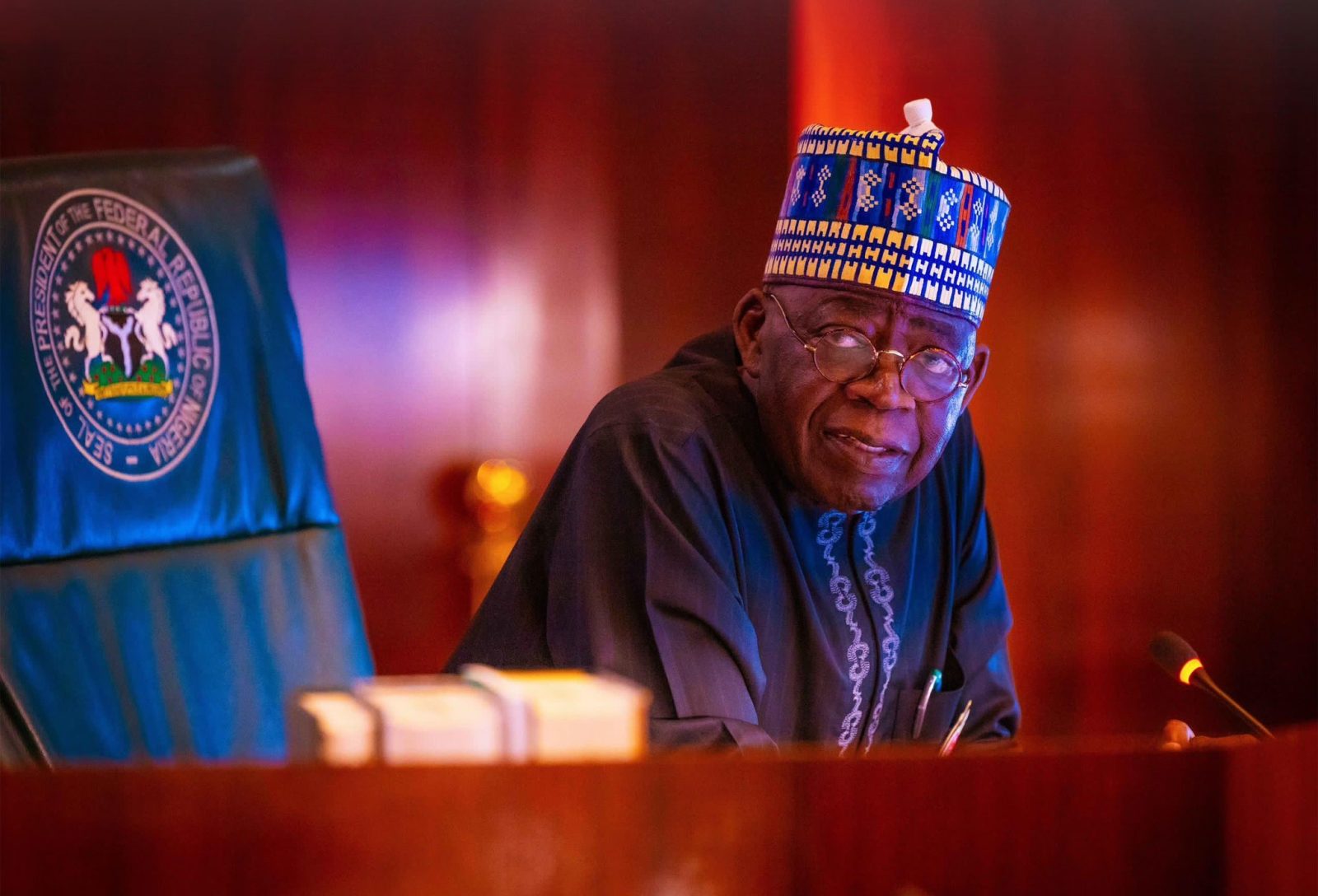
During the Federal Executive Council meeting in Abuja last month, President Bola Tinubu directed a review of deductions and revenue retention practices by Nigeria’s major revenue-generating agencies.

The move aims to boost public savings, enhance spending efficiency, and unlock resources for growth.

The agencies include the Federal Inland Revenue Service, the Nigeria Customs Service, the Nigerian Upstream Petroleum Regulatory Commission, the Nigerian Maritime Administration and Safety Agency, and the Nigerian National Petroleum Company Limited.

Tinubu specifically called for a reassessment of NNPC’s 30 per cent management fee and 30 per cent frontier exploration deduction under the Petroleum Industry Act.

He tasked the Economic Management Team, chaired by Edun, to present actionable recommendations to the FEC on the optimal way forward.

The President said the directive was part of efforts to sustain reforms that have dismantled economic distortions, restored policy credibility, enhanced resilience, and bolstered investor confidence.

However, the Petroleum and Natural Gas Senior Staff Association of Nigeria, as well as the Nigeria Union of Petroleum and Natural Gas Workers, rejected the Federal Government’s plans to divest significant stakes in Joint Venture assets managed by the Nigerian National Petroleum Company Limited.

The two unions warned that the move to allegedly amend the Petroleum Industry Act and remove the running of oil and gas from the NNPCL could endanger the country’s economic stability, weaken its oil industry, and jeopardise the welfare of workers.

They stated that the policies are dangerous and capable of bankrupting the Nigerian National Petroleum Company Limited.

The oil workers urged President Bola Tinubu to intervene and halt the plan.

Experts seek deductions

Speaking with The PUNCH on Wednesday, the Chief Executive Officer of AHA Strategies, who is an oil and gas expert, Mr Ademola Adigun, has faulted the 30 per cent allocation of Production Sharing Contract profits to frontier oil exploration, describing it as “unrealistic and too high.”

See also  Tinubu commends NADF for expanding farm input access

Reacting to revelations that NNPCL received N318.05bn for frontier exploration in just eight months without paying dividends to the Federation Account, Adigun said the current arrangement was not justifiable under prevailing economic conditions.

“The money allocation is unrealistic, too high. It is not well used now,” he stated.

He backed President Bola Tinubu’s call for a review of deductions by major revenue agencies, including NNPCL, insisting that more revenue should flow into the Federation Account. “I don’t think it’s worth it to continue this way,” Adigun added.

The industry expert recommended that the frontier allocation be cut drastically, proposing that it should not exceed 10 per cent.

“Maximum of 10 per cent is what I would suggest,” he said.

However, an energy law scholar at the University of Lagos, Professor Dayo Ayoade, has cautioned against a hasty amendment of the Petroleum Industry Act, stressing that the law took nearly two decades of negotiations and compromises before it was passed.

Reacting to the revelations on frontier deductions, he said, “It took us 19 years of reform to agree on the PIA, and the PIA is actually a delicate balance of a lot of compromises. The Frontier Exploration Fund, in many ways, was like a counterbalance to the Host Community Trust Fund.”

While acknowledging Nigeria’s urgent revenue needs, Ayoade insisted that NNPCL must give a detailed account of the money it has collected for frontier exploration.

“It was one of the biggest problems I had with the PIA because I knew that 30 per cent of PSC profits going into just exploration was too high. I would rather that exploration be liberalised and put in the hands of the private sector,” he explained.

He suggested that private investors willing to take the risk of exploring frontier basins should be offered strong tax and operational incentives, instead of government using public funds through NNPCL.

“There should not be any NNPCL spending government money on this project,” Ayoade added.

The scholar also warned that the current funding model posed risks to fiscal federalism and undermined NNPCL’s commercial credibility.

“The funding structure is not really sustainable, and that is the truth. NNPCL is not really a commercial company. All it does is act as a middleman for government and collect money it has not really earned,” he argued, adding that the company should be judged by profits generated from its own fields and operations rather than from joint ventures or production sharing arrangements.

punch.ng

FOLLOW US ON:

FACEBOOK

TWITTER

PINTEREST

TIKTOK

YOUTUBE

LINKEDIN

TUMBLR

INSTAGRAM

Continue Reading
Click to comment

Leave a Reply

Your email address will not be published. Required fields are marked *

Business

FG tells marketers to reflect global oil price drop in petrol prices

Published

on

Minister of State for Petroleum Resources, Sen. Heineken Lokpobiri, has directed petroleum marketers to immediately reflect the recent decline in global oil prices by reducing the pump prices of Premium Motor Spirit (PMS) and other petroleum products.

Lokpobiri gave the directive at the 2026 Nigerian Midstream and Downstream Petroleum Regulatory Authority (NMDPRA) General Counsel and Legal Advisers Forum on Monday in Abuja.

The forum is themed “Beyond Compliance Certainty and Investment Confidence in Nigeria’s Petroleum Sector.”

Lokpobiri said that with the de-escalation of tensions between Iran and the United States, there was an expectation that the prices of PMS and other petroleum products would be adjusted downward accordingly.

He expressed concern that the anticipated reduction had yet to be reflected at the pumps, stressing that while market forces under the deregulated regime would ultimately restore price equilibrium, marketers should not exploit the situation to make excessive profits.

The minister said the regulator had a statutory responsibility to ensure that deregulation did not become an avenue for profiteering, adding that this must be carried out in line with the provisions of the Petroleum Industry Act (PIA 2021).

“For too long, the dominant question in our regulatory conversations has been: are operators complying? That question matters. It will always matter. But it is no longer sufficient.

“The more consequential question today is this: are our regulatory authorities doing their job? Is it clear, consistent and predictable enough to give investors the confidence they need to commit capital, not just for one cycle, but for the long term?

See also  Banditry crisis: FG rejects northern govs’ call to suspend mining

“Compliance is the foundation. Regulatory certainty is the ceiling we must now be building toward,” he said.

Lokpobiri, while urging marketers to comply with the principles of fair pricing to ensure that consumers benefit from the prevailing market realities, urged regulators to move beyond compliance by promoting regulatory certainty to attracting long-term investments.

“The sector is now fully deregulated, a bold reform that President Bola Tinubu had the courage to implement. That decision paved way for the operationalisation of the Dangote Refinery and other refinery projects currently underway.

“It also ensured that artificial scarcity has become a thing of the past.

“You can attest to the fact that since 2023 there has been availability of products in country even with the recent challenges posed by the US-Israeli /Iranian conflict.

“Beyond allowing prices to be determined by market forces, the question is: what is the regulator doing to ensure that consumers receive the correct quantity of product?

“When someone pays for 10 litres of PMS, they should receive exactly 10 litres, not less,” he warned.

Lokpobiri said while compliance with regulations remained fundamental, investors were increasingly interested in jurisdictions with clear, consistent and predictable regulatory frameworks.

He described general counsel as strategic partners whose responsibilities extend beyond interpreting laws to shaping investment decisions, improving regulatory design and supporting national development.

According to him, legal advisers should provide constructive feedback whenever regulations or guidelines create uncertainty that could discourage investment.

He said Nigeria’s petroleum sector was entering a new phase characterised by expanding domestic refining capacity, increased private sector participation and emerging opportunities across the midstream and downstream segments.

See also  Police hunt kidnappers in Lagos, Ogun forests during Operation Kasoye

According to him, attracting investments will require policy consistency, transparent regulation, efficient dispute resolution and strong collaboration among government, regulators, industry operators and legal practitioners.

He expressed confidence that the recommendations from the forum would contribute to improving governance, regulatory certainty and investment confidence in Nigeria’s petroleum sector. (NAN)

punch.ng

FOLLOW US ON:

FACEBOOK

TWITTER

PINTEREST

TIKTOK

YOUTUBE

LINKEDIN

Continue Reading

Business

Olodo uprising: Tinubu aide faults critics of First Lady’s Akara, Kuli kuli comment

Published

on

The Special Assistant to President Bola Tinubu on Social Media, Dada Olusegun, has defended First Lady Oluremi Tinubu’s recent empowerment of micro-traders, saying criticisms of the initiative are driven by ignorance of her record and the role of Nigeria’s informal economy.

In a statement shared on Monday, Olusegun described the backlash over the First Lady’s focus on traders such as akara and kulikuli sellers as a “performative circus of selective amnesia.”

He argued that critics had ignored the numerous interventions carried out by the Renewed Hope Initiative across healthcare, women’s empowerment, support for military widows and persons living with disabilities.

The First Lady, Senator Oluremi Tinubu
The First Lady of Nigeria, Senator Oluremi Tinubu

According to him, the First Lady’s interventions extend beyond petty traders, citing her donation of ₦1bn to the National Cancer Fund for cervical cancer screening and another ₦1bn for tuberculosis diagnostic equipment in Abuja in 2025.

He also referenced the disbursement of ₦250,000 each to 1,709 widows and orphans of fallen military personnel in 2023, as well as ₦200,000 business grants to persons living with disabilities across the 36 states and the Federal Capital Territory.

Olusegun further highlighted the Renewed Hope Initiative’s partnership with the Tony Elumelu Foundation, which targeted 18,500 women nationwide with ₦50,000 grants and the distribution of equipment, including industrial grinding machines, freezers and generators.

He further criticised what he described as an “Olodo uprising” on social media, accusing critics of reacting to trends without researching the facts.

“This entire controversy perfectly mirrors what is now happening with the broader ‘Olodo uprising” across our social platforms. We live in an era where people jump on trending hashtags and soundbites without dedicating a single minute to researching context. Memes are manufactured in seconds; accurate history takes time to read.

See also  Airlines struggle as losses hit N150bn in two months

“When the critics are done making their superficial memes, writing cynical captions, and circulating ignorant narratives, the reality on the ground will remain unchanged. They would be better off advising their constituents to find credible means to key into these ongoing government initiatives,” he stated.

He maintained that empowering small-scale traders should not be viewed as “weaponising poverty.”

“According to various economic metrics, the informal sector contributes over 50 per cent of Nigeria’s GDP and accounts for over 80 per cent of employment. The akara fryer, the kulikuli processor, and the petty trader are not just marginal actors; they are the literal shock absorbers of our micro-economy.

“When you give a micro-grant or operational tools to an akara seller, you are not validating poverty; you are reducing immediate operational capital friction, securing food chains at the grassroots, and expanding household income. Mocking these initiatives as ‘petty’ shows a deep-seated contempt for the actual working class of Nigeria,” he said.

Olusegun also defended the political value of grassroots empowerment, saying such interventions create trust among beneficiaries.

He cited the TraderMoni and MarketMoni programmes introduced during former President Muhammadu Buhari’s administration under then Vice President Yemi Osinbajo as examples of initiatives that directly impacted market traders.

“The opposition often wonders why the poorest segments of the population continually familiarise themselves with the All Progressives Congress during elections. The answer is simple: the party meets them at their point of immediate need,” he said.

Olusegun added that Tinubu’s record as former First Lady of Lagos State, a three-term senator and now First Lady of the Federation showed a consistent commitment to structured empowerment programmes.

See also  US lawmaker urges Trump to take ‘forceful action’ over Plateau attack

“She will not be distracted by digital static from doing what she has mastered over decades: empowering the poorest among us, one structured intervention at a time,” he said.

punch.ng

FOLLOW US ON:

FACEBOOK

TWITTER

PINTEREST

TIKTOK

YOUTUBE

LINKEDIN

Continue Reading

Business

Dangote refinery imports first UAE crude cargoes

Published

on

The Dangote Refinery has purchased two cargoes of crude oil from the United Arab Emirates, marking its first-ever procurement of Middle Eastern crude as it expands its feedstock sources amid persistent domestic supply constraints.

According to a report by S&P Global Commodity Insights, the two cargoes will be the first sourced by the 700,000-barrels-per-day refinery from any Middle Eastern supplier, signalling a shift from its traditional reliance on Nigerian, African, and United States crude grades.

The report said the purchases followed the resumption of oil exports from the Middle East after the United States and Iran reached an interim peace agreement that restored confidence in shipping through the Strait of Hormuz.

The refinery, designed primarily to process Nigeria’s light sweet crude, has increasingly diversified its crude slate as operations ramp up. S&P Global reported that an agreement between the refinery and the Nigerian National Petroleum Company had guaranteed the supply of between 13 and 15 cargoes of Nigerian crude monthly in naira, helping the refinery reduce its foreign exchange exposure.

However, the arrangement has faced challenges due to inadequate crude availability and operational issues at export terminals. According to the report, Dangote Refinery Chief Executive Officer David Bird had previously disclosed that these constraints had compelled the company to seek additional crude sources outside Nigeria.

The report added that the refinery’s expansion plans would further increase its crude requirements. Dangote plans to double the refinery’s processing capacity to 1.4 million barrels per day by the end of 2028, a level that would enable it to process about 80 per cent of Nigeria’s recent crude oil production in a single day.

See also  Tinubu commends NADF for expanding farm input access

Speaking earlier this year, Bird said the refinery intended to increase the share of heavier crude grades in its feedstock mix. “We definitely want to heavy up the barrel,” Bird said in April.

He added, “We will be in the crude blending game. So you can easily imagine at 1.4 million b/d we could process 30 per cent Middle Eastern grades on each train.”

According to S&P Global, the refinery has been broadening the range of crude grades it processes as part of its ambition to operate as a fully merchant refinery. The report noted that in 2025, about 70 per cent of the refinery’s crude imports came from Nigeria, while 24 per cent originated from the United States.

punch.ng

FOLLOW US ON:

FACEBOOK

TWITTER

PINTEREST

TIKTOK

YOUTUBE

LINKEDIN

Continue Reading

Trending