Connect with us

Lifestyle

From Aba women’s riot to EndSARS: Protests that shaped Nigeria’s history

Published

on

The renewed agitation for Nnamdi Kanu’s release has again drawn attention to Nigeria’s long tradition of protest politics, a history marked by moments when citizens have defied authority to demand justice, reform, or accountability.

From the colonial Aba Women’s Riot to the youth-driven End SARS movement, public demonstrations have often served as the pulse of Nigeria’s democracy, a means through which the governed confront power and force national reflection.

As Nigerians mobilise once more over Kanu’s continued detention, here are five landmark protests that shaped the country’s political and social trajectory:

1. The Aba Women’s Riot (1929)

Location: Eastern Nigeria (Owerri and Calabar provinces)

Thousands of Igbo women took to the streets after the colonial administration moved to impose taxes on them, threatening their economic independence and traditional authority.

According to a report by blackpast, the women feared that the new taxes would destroy their trading livelihoods and endanger the food supply in their communities.

By November 1929, thousands of Igbo women gathered at Native Administration centres across southeastern Nigeria to protest against the warrant chiefs and the planned taxation. Using traditional forms of resistance such as “sitting on a man,” they sang, danced, and mocked corrupt officials, compelling some to step down.

The protests soon intensified, with women attacking European shops, banks, and colonial courts, several of which were set on fire. In retaliation, colonial police opened fire on demonstrators in Calabar and Owerri, killing over 50 women and injuring many others.

Over the course of the two-month uprising, an estimated 25,000 women took part in the movement.

The British colonial government was forced to cancel the proposed tax and review the Warrant Chiefs system. The uprising exposed the flaws of indirect rule and marked one of the first organised resistances against colonial power, led entirely by women.

See also  Clem Ohameze: A Distinguished Career in Nollywood

2. The ‘Ali Must Go’ Protests (1978)

Location: Universities nationwide

A 50kobo increase in tuition and feeding fees under General Olusegun Obasanjo’s military government triggered nationwide student protests, led by the National Union of Nigerian Students and its president, Segun Okeowo. Before the protests, the cost of a meal ticket was ₦1.50 Kobo, which covered three meals, daily.

According to a report by thenigeriaeducationnews, the policy allowed students from low- and middle-income families to sustain themselves within the university system without facing significant hardship. This welfare arrangement was widely regarded as an informal pact between the government and the academic community.

Tensions arose when the Federal Military Government announced an increase in meal ticket prices, raising the cost from ₦1.50 kobo to ₦2.00. Although officials considered the 50 kobo difference negligible, students saw it as a substantial strain. Many relied on meagre stipends from financially stretched parents, and the hike threatened their already fragile economic balance.

Led by its president, Okeowo, NUNS swiftly organised resistance against the policy. Campuses across the country hosted meetings, pamphlets circulated widely, and students were mobilised in what became one of Nigeria’s most organised student movements.

What began as peaceful protests quickly escalated, spreading rapidly to universities in Ibadan, Ife, Lagos, Zaria, and other cities. Students boycotted lectures, took to the streets, and occupied administrative buildings. The rallying cry “Ali Must Go” soon dominated the movement, symbolising their demand for the resignation of Colonel Ahmadu Ali and their rejection of the government’s decision.

The demonstrations turned deadly as security forces clashed with students. Although NUNS was later banned, the government was forced to review the policy. The protest entrenched radical student activism as a major force in Nigeria’s political culture.

See also  THE DANGEROUS CULTURE OF DIVISION IN OUR SOCIETY: ARE WE DESTROYING OUR OWN FUTURE?

3. The June 12 Protests (1993)

Location: Lagos and South-West Nigeria

The protests followed the annulment of the June 12, 1993 presidential election — widely regarded as Nigeria’s freest and fairest poll, which was won by Chief Moshood Kashimawo Olawale (M.K.O.) Abiola of the Social Democratic Party.

The decision by then military ruler, General Ibrahim Babangida, to nullify the results on June 23 sparked widespread outrage across the country.

Civil society groups, labour unions, and pro-democracy movements such as the Campaign for Democracy and the National Democratic Coalition led massive street demonstrations demanding that the election results be upheld. The protests were most intense in Lagos and other South-West states, resulting in violent confrontations with security forces and several casualties.

The relentless public pressure eroded the legitimacy of military rule and forced Babangida to “step aside” in August 1993, handing power to an interim government led by Chief Ernest Shonekan. The agitation continued under successive regimes until Nigeria’s eventual return to civilian rule in 1999.

Today, June 12 is officially recognised as Democracy Day, symbolising the people’s defiance against electoral injustice and their enduring demand for democratic governance.

4. Occupy Nigeria (2012)

Location: Nationwide, major rallies in Lagos and Abuja

Public outrage erupted on January 1, 2012, after President Goodluck Jonathan’s administration removed the fuel subsidy, causing petrol prices to jump from ₦65 to ₦141 per litre overnight. The sudden hike sent transport fares soaring and triggered a sharp rise in the cost of food and essential goods.

For nearly two weeks, labour unions and civil society groups organised strikes, rallies, and street demonstrations across major cities including Lagos, Abuja, Port Harcourt, and Enugu. Social media became a powerful tool for mobilisation, marking one of Nigeria’s first major internet-driven mass movements.

See also  Homicide survivors require therapy to avoid trauma, depression – Psychologists

The government, facing nationwide disruption, partially reversed the policy, reducing petrol prices to ₦97 per litre.

5. End SARS (2020)

Location: Nationwide and in the diaspora

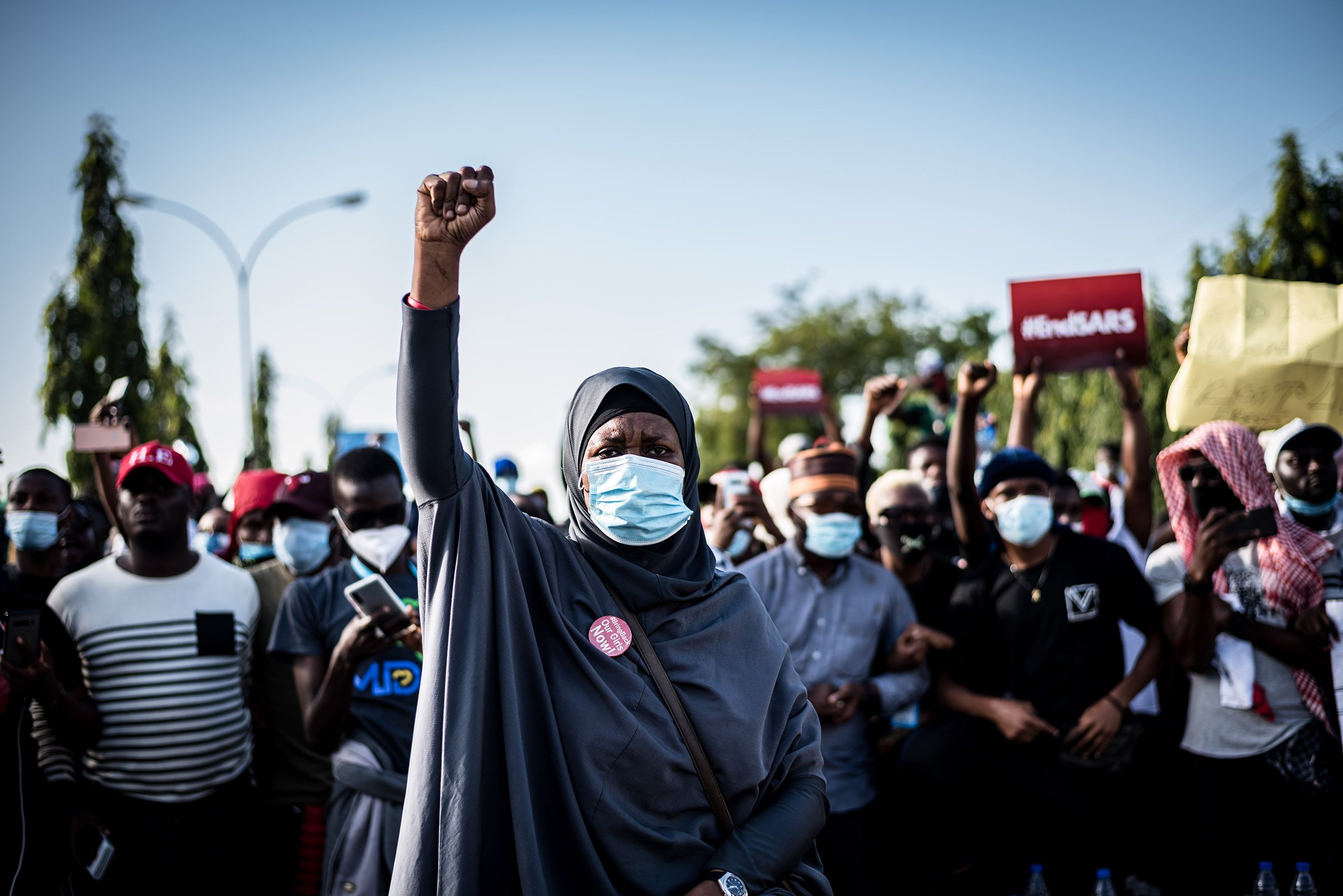
The End SARS movement erupted in October 2020 after years of public anger over police brutality, extortion, and extrajudicial killings by the Special Anti-Robbery Squad. The immediate trigger was a viral video showing a man allegedly shot by SARS operatives in Ughelli, Delta State, sparking nationwide outrage and mass demonstrations.

The protests were decentralised and youth-driven, coordinated largely through social media platforms such as X (formerly Twitter) and Instagram under the hashtag #EndSARS.

Thousands of young Nigerians took to the streets across major cities including Lagos, Abuja, Port Harcourt, and Ibadan, while solidarity marches were held in London, Toronto, and Washington D.C.

With no central leadership, the movement was sustained through crowdfunding and volunteer coordination led by civic groups like the Feminist Coalition. Demonstrations were largely peaceful, but later marred by clashes between protesters, security operatives, and suspected hired thugs.

The protest reached a tragic climax on October 20, 2020, when security forces reportedly opened fire on peaceful demonstrators at the Lekki Toll Gate in Lagos.

In response to the pressure, the Federal Government announced the dissolution of SARS and promised broad police reforms.

The End SARS movement not only forced the disbandment of a notorious police unit but also redefined public protest in Nigeria.

punch.ng

FOLLOW US ON:

FACEBOOK

TWITTER

PINTEREST

TIKTOK

YOUTUBE

LINKEDIN

TUMBLR

INSTAGRAM

Continue Reading
Click to comment

Leave a Reply

Your email address will not be published. Required fields are marked *

Lifestyle

Iyabo Ojo apologises after Ogun monarch snubs handshake, read details

Published

on

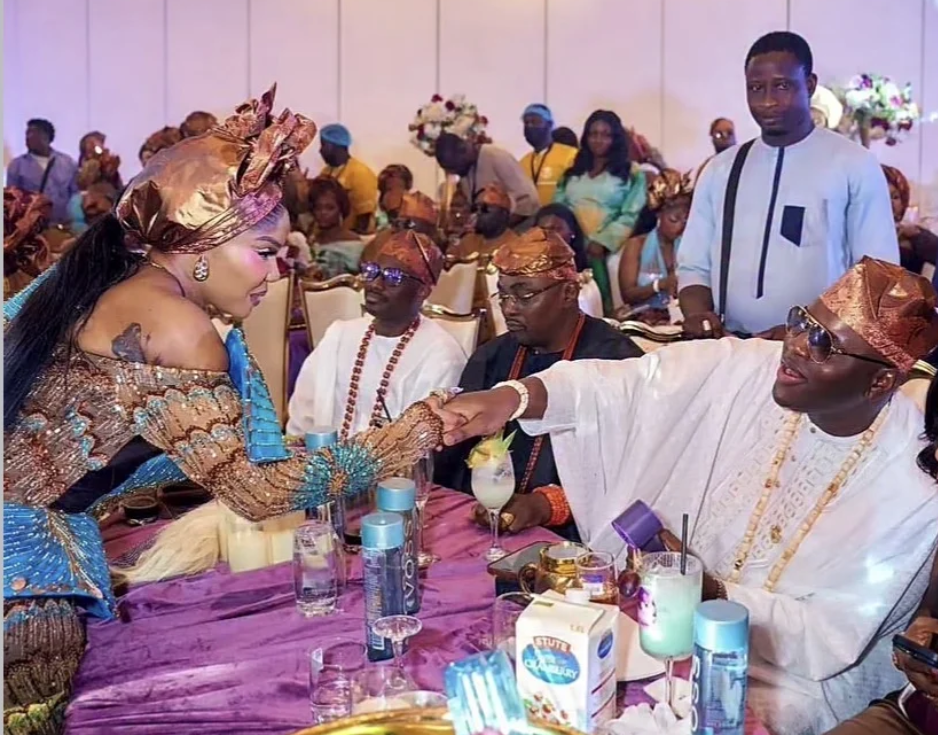
Nollywood actress, Iyabo Ojo, has apologised after a viral video showing a traditional ruler declining her handshake at an event went viral on social media.

Ojo, in a post shared on her Instagram page on Wednesday, said she did not know the individual was a monarch when she approached the table where he and other traditional rulers were seated.

The incident occurred at the 10th wedding anniversary celebration of socialite Mummy Glee and her husband, Mr Still, where Ojo was seen approaching a table occupied by traditional rulers and extending her hand in greeting.

The video showed the actress shaking hands with two of the monarchs, while the Olu of Orile Kemta, Oba Adetokunbo Tejuosho, did not accept her handshake. She then moved on to greet another monarch seated beside him.

Explaining the circumstances surrounding the encounter, Ojo said she had initially been seated when someone informed her that people at the table were sending their greetings.

She said she recognised HRM Oloto, whom she described as a brother, and approached the table to greet him, believing the people seated there were friends.

“I was sitting pretty when someone came to tell me they sent their greetings from that table. When I looked towards that direction and saw HRM Oloto, I said, ‘Ah, okay, that’s my brother, let me go greet him.’

“When I got there, I just greeted all of them because I thought they were friends. I never knew the said person was a king,” she said.

The actress apologised for any offence caused by her action, insisting that she had no intention of disrespecting the monarch or his culture.

See also  🔥 HERE’S A HARD TRUTH: SHARING YOUR BLOOD DOES NOT GUARANTEE THAT SOMEONE WILL STAND BY YOU.

“Honestly, I am very sorry if I caused any offence. I meant no disrespect to his throne and culture. Henceforth, I will be very mindful,” she said.

Ojo also explained that she was accustomed to greeting people with handshakes and hugs, adding that she would be more conscious of the practice going forward.

“I have a bad habit of shaking and hugging people. I am trying to reduce the hugging. I guess I will also reduce the handshakes.

“We learn every day. I meant no disrespect. It’s all love from this side,” she added.

Source: punchng.com

FOLLOW US ON:

FACEBOOK

WHATSAPP CHANNEL

TWITTER

PINTEREST

TIKTOK

YOUTUBE

LINKEDIN

INSTAGRAM

Continue Reading

Lifestyle

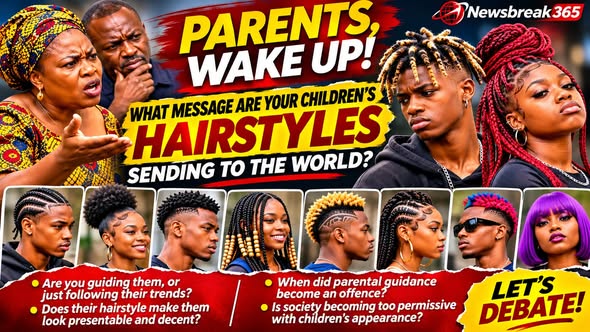
PARENTS, WAKE UP! WHAT MESSAGE ARE YOUR CHILDREN’S HAIRSTYLES SENDING TO THE WORLD

Published

on

Are today’s parents losing control over how their children dress, groom themselves and present their appearance? Or has society simply become too sensitive to correct young people?**

This is a conversation every responsible parent should be willing to have.

Walk through schools, shopping centres and public spaces today, and you will notice how dramatically youth hairstyles have changed. From brightly coloured dreadlocks and unusual haircuts to heavily styled braids, extreme designs, dramatic extensions and unconventional hairstyles, young people are increasingly embracing fashion trends that attract attention.

But here is the uncomfortable question: **Are parents paying attention to the kind of appearance their children are developing, or are they simply allowing social media and peer pressure to make those decisions?**

There is nothing wrong with looking fashionable, embracing creativity or expressing personal identity. However, there is a difference between looking fashionable and understanding how to maintain a neat, appropriate and presentable appearance.

Unfortunately, some parents are so afraid of disagreeing with their children that they have abandoned their responsibility to guide them.

When did parental guidance become an offence?

When did correcting a child’s appearance become an act of oppression?

And when did following every fashion trend become more important than learning self-discipline, personal grooming and appropriate presentation?

**PARENTS, YOUR RESPONSIBILITY DOES NOT END WITH PROVIDING FOOD, CLOTHING AND SCHOOL FEES.**

You must also teach your children how to make sensible decisions, respect themselves and understand that not every popular trend deserves to be followed.

Children need guidance, not unlimited permission. They need parents who can explain the importance of personal presentation without humiliating them or destroying their confidence.

See also  Femi Robinson: The Iconic "Village Headmaster" and Pioneer of Nigerian Television

At the same time, parents must understand that a person’s character cannot be judged by hairstyle alone. Neatness, good behaviour, responsibility and respect matter far more than fashion choices.

The real issue is not whether children should look like their parents’ generation. It is whether parents are actively teaching them the importance of grooming, good judgement and responsibility.

**THE BIG QUESTION FOR PARENTS AND SOCIETY**

Should parents have the final say over the hairstyles of their teenage sons and daughters?

Should children be free to choose any hairstyle they want, even when their parents strongly disagree?

Or are some parents allowing modern fashion trends to replace proper parental guidance?

This debate deserves honest answers, not emotional arguments.

**What do you think? Are today’s parents becoming too permissive, or should children have complete freedom over their hairstyles?**

Share your opinion. Your answer might challenge another parent’s way of thinking.

FOLLOW US ON:

FACEBOOK

WHATSAPP CHANNEL

TWITTER

PINTEREST

TIKTOK

YOUTUBE

LINKEDIN

INSTAGRAM

Continue Reading

Lifestyle

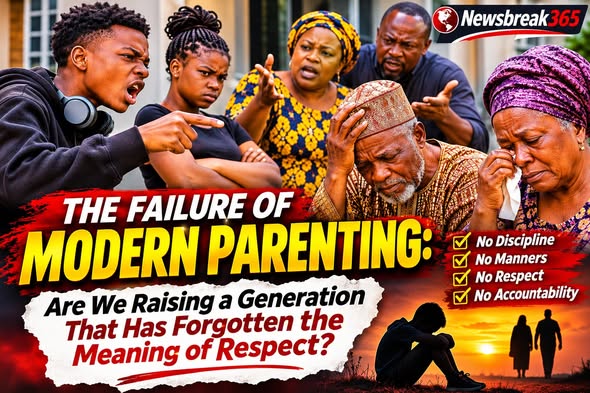
THE FAILURE OF MODERN PARENTING: ARE WE RAISING A GENERATION THAT HAS FORGOTTEN THE MEANING OF RESPECT

Published

on

When children lose their manners, disrespect their elders, reject discipline, and behave without accountability, parents must ask themselves a difficult question: Where did we go wrong?**

One of the most worrying developments in today’s society is the apparent decline in parental discipline, moral upbringing, and respect for elders among some young people.

Sadly, some parents are becoming more interested in defending their children’s unacceptable behaviour than correcting it. A child insults an elderly person, speaks rudely to adults, behaves arrogantly, or shows complete disregard for basic manners, and instead of receiving correction, the child receives protection from the very people responsible for teaching them right from wrong.

Is this the future we want for our society?

## Providing for children is not the same as raising them properly

Many parents believe that their responsibilities end with providing food, clothing, school fees, smartphones, expensive gadgets, and comfortable living conditions.

But parenting goes far beyond material provision.

A child needs more than an education to succeed in life. Children must also learn honesty, humility, self-control, patience, respect, responsibility, and consideration for other people.

You can send a child to the most expensive school in the world, but if that child has no respect for others, lacks discipline, and cannot behave properly in society, then something important is missing from their upbringing.

Academic qualifications cannot replace good character.

## When parents defend bad behaviour, they become part of the problem

Perhaps one of the biggest mistakes some parents make today is refusing to accept that their children can be wrong.

See also  Femi Robinson: The Iconic "Village Headmaster" and Pioneer of Nigerian Television

Instead of correcting disrespectful behaviour, they make excuses. Instead of teaching accountability, they blame teachers, neighbours, relatives, and society.

Some parents even become hostile towards anyone who attempts to correct their children.

What message does this send to the child?

It teaches them that they can behave however they want without consequences, provided their parents are willing to defend them.

A parent who constantly protects a child from correction may unknowingly be preparing that child for much bigger problems in adulthood.

Children need love, but love without guidance, boundaries, and accountability is not responsible parenting.

## Respecting elders should not become an outdated tradition

There was a time when children were taught to greet elders properly, speak politely, listen when adults were speaking, and understand the importance of good manners.

Today, these values appear to be receiving less attention in some homes.

Of course, respect must be mutual. Being older does not give anyone the right to abuse, intimidate, or mistreat younger people.

However, mutual respect should never become an excuse for children to insult, humiliate, or deliberately disrespect others.

Teaching children to respect people is not weakness. It is an essential part of preparing them for responsible adulthood.

## Society will eventually pay the price for irresponsible parenting

The children being raised today will become tomorrow’s parents, leaders, employers, professionals, and decision-makers.

If they grow up without discipline, accountability, compassion, and respect for others, what kind of society should we expect them to build?

We cannot continuously complain about disrespectful behaviour in society while ignoring the importance of moral education at home.

See also  When Did Abuja Become The Capital Of Nigeria?

Parents must understand that raising children is not a competition to see who can provide the most expensive lifestyle. It is a responsibility to raise decent human beings who understand the difference between right and wrong.

## THE BIG QUESTION: ARE WE RAISING CHILDREN OR CREATING TOMORROW’S PROBLEMS?

Parents must stop confusing material provision with proper upbringing.

Buy your children the best clothes, give them quality education, provide comfortable homes, and support their dreams. But never forget to teach them discipline, humility, good manners, honesty, and respect.

A child who has everything materially but lacks good character has not received everything they need from their parents.

The uncomfortable truth is that society cannot successfully repair what irresponsible parenting continues to destroy.

The responsibility begins at home.

**WHAT IS YOUR OPINION?**

Are parents becoming too protective of their children, even when those children display unacceptable behaviour? Or is society itself contributing to the decline in discipline and respect among young people?

Let’s have an honest discussion.

*Newsbreak365 – Speaking Up on Issues That Matter.*

FOLLOW US ON:

FACEBOOK

WHATSAPP CHANNEL

TWITTER

PINTEREST

TIKTOK

YOUTUBE

LINKEDIN

INSTAGRAM

Continue Reading

Trending