Connect with us

Lifestyle

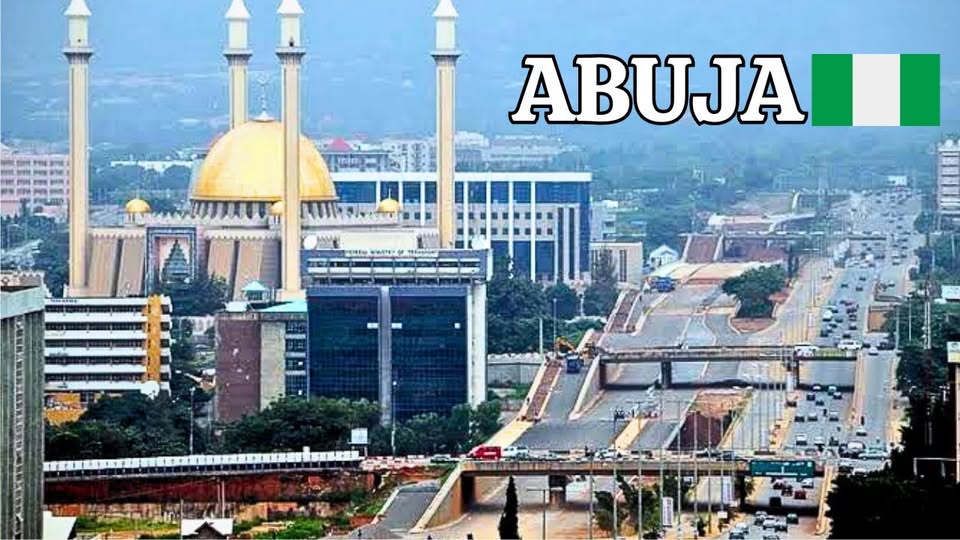
When Did Abuja Become The Capital Of Nigeria?

Published

on

Abuja officially became the capital of Nigeria on December 12, 1991, replacing Lagos. The decision to move the capital was made to address issues such as overpopulation, congestion, and the geographic limitations of Lagos.

Located at the geographic center of Nigeria within the Federal Capital Territory, Abuja was planned and developed beginning in the late 1970s to serve as a neutral, accessible, and modern administrative center for the country.

Why Was The Capital Moved From Lagos To Abuja?

The decision to move Nigeria’s capital from Lagos to Abuja was influenced by several reasons: political, economic, geographic, and symbolic.

Lagos had served as the capital since 1914, but by the 1970s, it had become increasingly overcrowded and unsuitable for national administration.

Lagos had grown into one of Africa’s largest cities and Nigeria’s main commercial center. But this growth came with problems.

The city faced constant traffic, housing shortages, poor sanitation, and overstretched infrastructure. Its location, surrounded by water and limited by natural barriers, made expansion difficult.

Another major concern was political neutrality. Nigeria is home to hundreds of ethnic groups. Lagos, located in the Yoruba-dominated southwest, was seen as favoring one region over others.

Abuja was chosen because it sits near the geographic center of the country and doesn’t belong to any major ethnic group.

Abuja’s central location also made it more accessible from all parts of Nigeria. Unlike Lagos, which sits on the far southwest coast, Abuja allows for easier coordination and travel from different states.

See also  Veteran juju musician Ahuja Bello dies at 83

This strategic positioning supports national governance and the development of interior regions. Security played a part, too. Lagos, being a coastal city, was harder to defend and more exposed to external threats.

Abuja offered a more secure inland site with better control over access and planning. There was also symbolic meaning. Lagos had been the colonial capital under British rule.

Moving the capital to Abuja was a way to show Nigeria’s independence and growth as a nation. However, the move began in the mid-1970s under General Murtala Mohammed.

A panel led by Justice Akinola Aguda recommended Abuja. Construction started in the late 1970s, and by December 12, 1991, the capital officially moved under General Ibrahim Babangida’s leadership.

Who Declared Abuja The Capital Of Nigeria?

Abuja was officially declared the capital of Nigeria by General Ibrahim Badamosi Babangida on December 12, 1991. However, the journey to that declaration began much earlier and involved some key leaders.

The first person to propose moving the capital was General Yakubu Gowon in 1974. At the time, Lagos was overcrowded, chaotic, and geographically limited.

Gowon believed a more central and neutral location would be better for the country’s unity and administration. But it wasn’t until General Murtala Mohammed came into power in 1975 that the idea gained real momentum.

Murtala Mohammed created a seven-man committee, led by Justice Akinola Aguda, to study whether Lagos should remain the capital or not.

After detailed research, the committee recommended relocating the capital to a new area in the center of the country, which we now know as the Federal Capital Territory (FCT).

See also  Toyin Adegbola: The Enduring Star of Yoruba Cinema

The location was chosen for its neutrality among Nigeria’s major ethnic groups and its central position, which made it easier to access from all parts of the country.

Sadly, Murtala Mohammed was assassinated in 1976, and the project slowed down. But the idea didn’t die. In 1979, President Shehu Shagari revived the effort. By 1980, the planning phase began.

An American firm, International Planning Associates, designed the master plan. Japanese architect Kenzo Tange also contributed to the city’s modern design. Eventually, under Babangida’s leadership, Abuja was developed quickly.

Despite facing major challenges, like limited infrastructure and air access, his administration made the final move. On December 12, 1991, the seat of Nigeria’s federal government was officially moved from Lagos to Abuja.

Which Is bigger, Lagos Or Abuja?

When comparing Lagos and Abuja, Lagos is the biggest city in terms of population, economic significance, and urban scale. While Abuja is Nigeria’s capital and growing rapidly, it still lags behind Lagos in several key areas.

Population Size

As of 2025, Lagos has an estimated population of about 17.16 million people, making it the largest city in Nigeria and all of Africa.

Abuja’s population is around 4.2 million, roughly one-quarter the size of Lagos. Lagos has grown from just 325,218 people in 1950 to over 17 million today, with an annual growth rate of around 3.75%. Though Abuja’s growth rate is slightly higher at 4.58%, it is still much smaller in overall numbers.

Geographical Size And Density

Geographically, Abuja is larger. It spans about 1,769 square kilometers, compared to Lagos’s 1,171 square kilometers.] But Lagos is far more crowded.

See also  Abubakar Gimba: Nigerian Author, Economist, and Voice of Moral Conscience

Its population density is about 6,871 people per square kilometer, while Abuja has far fewer people spread over a larger area. This makes Abuja feel more open and organized, while Lagos is often congested and densely packed.

Economic And Social Value

Lagos is Nigeria’s economic capital. It produces roughly 25% of the country’s GDP and is home to major industries, ports, and businesses.

It’s also extremely diverse, with over 250 ethnic groups living and working there. On the downside, about 66% of Lagos residents live in slums and face major infrastructure challenges.

Abuja, also, is the political and administrative center. It houses the Presidency, National Assembly, foreign embassies, and other federal institutions.

FOLLOW US ON:

FACEBOOK

TWITTER

PINTEREST

TIKTOK

YOUTUBE

LINKEDIN

TUMBLR

INSTAGRAM

Continue Reading
Click to comment

Leave a Reply

Your email address will not be published. Required fields are marked *

Lifestyle

‘I have cancer,’ Nollywood actress Cynthia Anijekwu cries, calls for support

Published

on

Nollywood actress Cynthia Anijekwu has made an emotional appeal to Nigerians for financial assistance after revealing that she is battling cancer for the second time.

In a video circulating on social media on Tuesday, the actress disclosed that she was first diagnosed with cancer in 2023, when she underwent surgery followed by chemotherapy in a bid to halt the disease.

She maintained that doctors initially managed the condition after the treatment, but the cancer later returned and has since spread to her bones, requiring more intensive care, including radiation therapy and another surgery.

According to Anijekwu, recent medical examinations revealed that the cancer has spread to her bones, significantly increasing the cost and complexity of her treatment up to N600,000 every month.

The actress said doctors have recommended radiation therapy and another surgery as part of her ongoing care.

“I have cancer in 2023 (sic). I did my surgery and took chemotherapy, but later it came back again. I’ve been in and out of the hospital. The doctor recently told me it has reached my bones, and the treatment is now much more expensive,” she said.

“I need to live. I need to survive. I’m asking Nigerians to please help me. Anyone that can help, please, I need help. Even my hands have swollen. The cancer has affected both breasts. I need to live. Please help me. I need to survive.

“Your one naira, your two naira can add up to something reasonable for me to get the proper treatment for this cancer. I’m begging you, please help me,” she pleaded.

See also  Woman's old post advising women on how to keep their husbands forever emerges as the same woman cries out after her husband married second wife without her knowledge

Before her health challenge became public, Anijekwu built her career in Nollywood, featuring in several English- and Igbo-language productions.

However, there is no publicly verifiable record identifying a major blockbuster film or comprehensive filmography associated with the actress, as public attention has largely shifted to her battle with cancer in recent years.

The actress said the financial burden has become overwhelming for her family, prompting her to seek help from members of the public.

punch.ng

FOLLOW US ON:

FACEBOOK

TWITTER

PINTEREST

TIKTOK

YOUTUBE

LINKEDIN

Continue Reading

Lifestyle

It’s not easy, surrogate mother shares emotional journey

Published

on

A masked Nigerian surrogate mother has opened up about how financial hardship and what she described as an irresponsible partner led her to become a surrogate, saying the decision came after the loss of her second child.

The woman disclosed this during a new episode on Cruise TV published on YouTube on Sunday, where she recounted the emotional, financial and psychological realities of carrying children for other families.

She said becoming a surrogate was one of the hardest decisions she had ever made, describing the emotional attachment that develops during pregnancy despite knowing the child does not belong to her.

“Emotionally it’s not easy. Even when I started the journey, when the pregnancy was three months, I called my nurse that I don’t think I can cope again because it’s not easy to carry what is not yours.

“When you start having the emotional attachment, you keep reminding yourself that this is not mine. I tell myself it is a job, and that helps me cope, but the emotions still come and go.”

The woman explained that she became a gestational surrogate through IVF, meaning she had no biological connection to the babies she carried.

Speaking on what pushed her into surrogacy, she said her partner failed to provide for the family despite her efforts to support them.

“I had my first child. Unfortunately, my husband is not the person that is hardworking and he doesn’t take responsibility. I do work. There is no work I cannot do.

“When I became pregnant the second time, I could no longer work. We couldn’t even afford hospital bills.”

See also  Veteran juju musician Ahuja Bello dies at 83

She said complications during the pregnancy eventually led to the death of the baby, an experience that changed her outlook.

“That baby died, and that was the reason I made that decision. Instead of giving him another baby, I would rather help people who have the money to take care of me.

“If you don’t have the money to care for my health, I won’t do it for you.”

She disclosed that she initially declined financial compensation beyond medical care, accommodation and allowances, a decision she now regrets.

“I told them I didn’t want any compensation aside from the process, monthly allowance, wardrobe allowance and accommodation fee, but that was a mistake.

“I won’t do it again,” she said.

The surrogate mother also said she would not encourage her daughter to follow the same path because of the emotional and health risks involved.

“I cannot advise my daughter to be a surrogate.”

She added that she relocated during one of her pregnancies to avoid stigma and often told people the baby had died whenever they asked questions.

According to her, surrogate mothers also face psychological challenges after delivery despite undergoing counselling before and after childbirth.

While acknowledging that surrogacy has helped many couples struggling with infertility, she maintained that the process is far more demanding than many people realise.

“Surrogacy is not as simple as people think.”

She called for stronger regulation of the practice to protect surrogate mothers from exploitation and ensure adequate emotional and financial support.

punch.ng

FOLLOW US ON:

FACEBOOK

TWITTER

PINTEREST

TIKTOK

YOUTUBE

LINKEDIN

Continue Reading

Lifestyle

I waited 18 years before welcoming twins – Nollywood star Ricardo Agbor

Published

on

Veteran Nollywood actor, Ricardo Agbor, has opened up about his 18-year journey to parenthood, revealing that he and his wife waited nearly two decades before welcoming their twins.

The actor disclosed this during an interview with AfricanAList published on Sunday, where he reflected on his marriage, faith and the challenges he faced before becoming a father.

Agbor said he remained committed to his wife throughout the period, despite the long wait for children.

“I wanted to get married to a particular lady; I married her regardless of where she is from. She is not from my tribe. So ordinarily, we were supposed to have strife; no, it was very fair,” he said.

Speaking about the couple’s struggle with childlessness, the actor said he specifically prayed for twins and refused to give up despite waiting for 18 years.

“It took 18 years for me to have the twins. And I waited. God knows, 18 years and they are 14 now, so I told God I wanted twins.

“So while that wait was on, if it were someone else, he would cross. But at the end of the day, I have twins. I have a boy and a girl. I asked God what I wanted,” he added.

Agbor also recounted what he described as the most painful experience of his life — the death of his mother.

According to him, she had been receiving treatment for about three weeks without any improvement before doctors advised that she should be flown to South Africa for further medical care.

The actor said his mother requested to be moved to another private hospital in Surulere, but she died in his arms while he was helping her into the car.

See also  Woman's old post advising women on how to keep their husbands forever emerges as the same woman cries out after her husband married second wife without her knowledge

“My mom died right in my arms. At the hospital, they were bringing almost 10 doctors to do tests… the sickness was not improving after almost three weeks.

“It was after three weeks that they told me to come and carry my mom and take her to South Africa. I took my mom away and took her to another private hospital within Surulere. It was my mom that told me to take her away from that place. As I was carrying her into the car, she gave up,” he said.

Agbor said the loss left him devastated, noting that it was the first time he had cried outside acting.

“I think that was the first time I cried in my life. I don’t cry. If I cry, maybe it is in a movie and it is a role. So I cried. It was painful,” he added.

punch.ng

FOLLOW US ON:

FACEBOOK

TWITTER

PINTEREST

TIKTOK

YOUTUBE

LINKEDIN

Continue Reading

Trending