

Connect with us

News

120 Iranians deported from US to arrive their country this week

Published

on

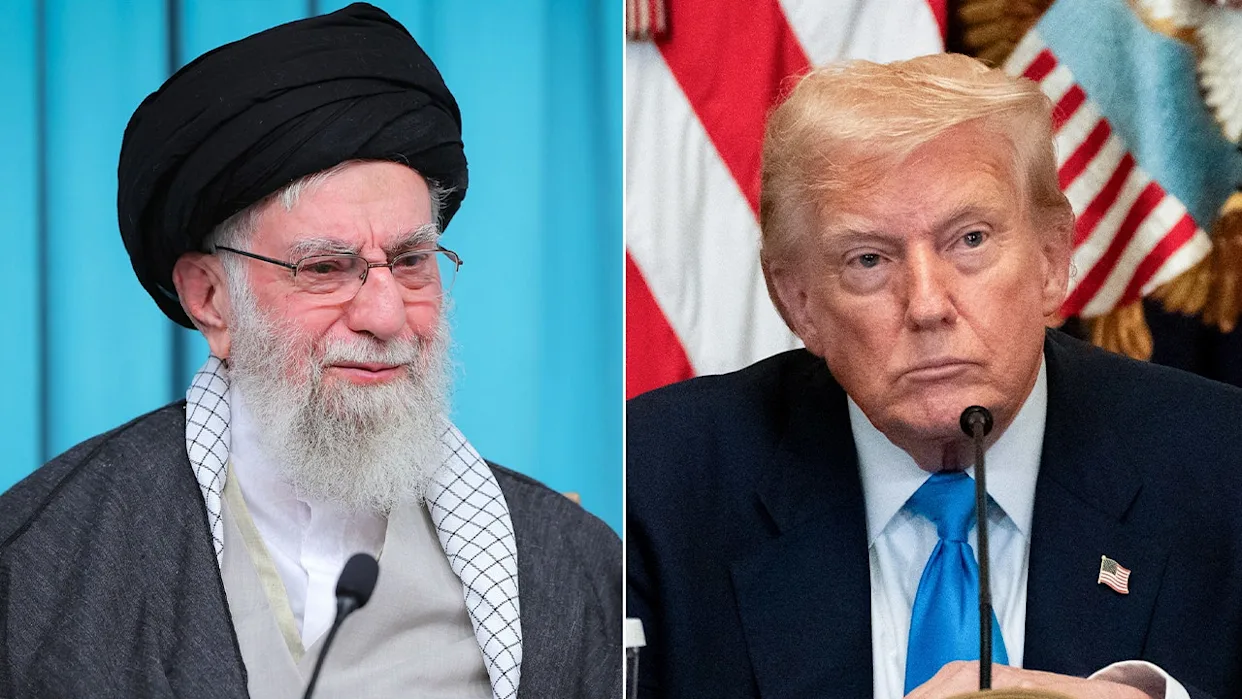
Iran has announced that 120 of its citizens are being deported from the United States this week as part of President Donald Trump’s immigration crackdown.

“120 people should be deported and flown home over the next couple of days,” Hossein Noushabadi, a consular affairs official at Iran’s foreign ministry, told the Tasnim news agency on Tuesday, September 30. He added that US authorities had decided to remove around 400 Iranians currently in the country, most of them accused of entering illegally.

The New York Times reported that roughly 100 Iranians who had sought refuge in the US were being returned under an agreement reached between Washington and Tehran after months of negotiations, a rare deal between two governments long at odds.

According to the paper, a US-chartered aircraft departed Louisiana on Monday evening and was scheduled to land in Tehran on Tuesday after a stopover in Qatar. It described the move as “the most stark push yet by the Trump administration to deport migrants even to places with harsh human rights conditions.”

Neither the US State Department nor immigration authorities have immediately commented. Earlier this year, Washington deported several Iranians, many of them Christians, to Costa Rica and Panama, highlighting the administration’s drive to send migrants to third countries despite concerns over safety and rights conditions.

FOLLOW US ON:

FACEBOOK

TWITTER

PINTEREST

TIKTOK

YOUTUBE

LINKEDIN

TUMBLR

INSTAGRAM

See also  Senate approves Tinubu’s N1.15tn domestic loan to fill 2025 budget gap
Continue Reading
Click to comment

Leave a Reply

Your email address will not be published. Required fields are marked *

News

Why Tinubu doesn’t want his FBI records released – Reno Omokri

Published

on

Former presidential aide, Reno Omokri, has defended President Bola Tinubu’s opposition to the public release of his records held by the United States Federal Bureau of Investigation, arguing that the documents are not necessarily criminal records.

Omokri said the presence of Tinubu’s name in FBI records did not mean that the President had a criminal record, arguing that the agency maintains extensive non-criminal files on individuals.

He stated this in a statement on X on Monday while reacting to the controversy surrounding Tinubu’s efforts to prevent the release of unredacted records held by the FBI and Drug Enforcement Administration.

Reno Omokri
File photo of the former presidential aide, Reno Omokri.

Omokri said, “President Bola Tinubu has no criminal record in the United States, Nigeria, or anywhere else, and the FBI has not provided any criminal record on the President to anyone because none exists. Yes, FBI records may contain his name, but they are NOT criminal records.”

He explained that the FBI could have records on foreign nationals who had applied for US visas or undergone background checks.

“This is because the FBI conducts MANDATORY background screenings on behalf of the Department of State and the Department of Homeland Security on US visa applicants,” he said.

“Thus, as a US citizen or resident, or even as a foreign national, if your name is run through the FBI databases, it is likely to bring up hundreds of pages of records. This does not mean that the records are criminal. In most cases, they will be benign.”

According to Omokri, the records could contain sensitive personal information, including biometric, biographical and financial details.

“Such records may include personal biometric, biographical, and financial information, such as fingerprints, DNA, bank statements, and other private records,” he said.

See also  ICPC arraigns El-Rufai, court hears bail application March 31

He then questioned whether Nigerians would want their private information released to political opponents.

“Would you, as an individual, want your private records released to your political opponents, even if they were non-criminal?”

Omokri also claimed that the US authorities had previously cleared Tinubu of criminal wrongdoing.

He referred to correspondence he said was exchanged between the US Embassy and Nigeria’s then Inspector-General of Police, Tafa Balogun, in February 2003.

According to him, Balogun had written to the US Embassy seeking information on whether the FBI had any criminal records involving Tinubu, who was then Governor of Lagos State.

Omokri said the embassy responded the following day and gave what he described as an “all clear” regarding criminal records involving Tinubu.

He said, “This was consistent with my findings when I visited Chicago in 2022, as a member of the opposition, to establish the truth about then-Presidential candidate Bola Tinubu’s academic and other records.”

Omokri added, “Nigerians may want to find attached the response from the Embassy of the United States absolving the then-Governor of Lagos of any wrongdoing or criminal conduct, charges, or activity whatsoever.”

He challenged anyone who doubted the authenticity of the document to seek clarification from the US Embassy.

“Those who may question the authenticity of this document may also wish to contact the US Embassy in Abuja or Lagos for clarification,” he said.

Omokri’s comments came amid an ongoing legal battle in the United States over access to Tinubu’s records.

PUNCH Online had reported that Tinubu had asked the United States District Court for the District of Columbia to reject a request seeking the release of his unredacted records held by the FBI and DEA.

See also  Nigeria’s Worst Days Are Over, Tinubu’s Reforms Yielding Results – Gbenga Daniel

The President’s lawyers argued that the US Freedom of Information Act and Privacy Act protected the records from disclosure, while also contending that there was no public interest recognised under US law that justified releasing the information.

The lawyers also argued that the request was politically motivated and sought information about Tinubu because of his position as Nigeria’s President.

The case followed a FOIA request by American transparency activist Aaron Greenspan, who sought access to records relating to Tinubu.

The FBI has invoked several FOIA exemptions in resisting the release of portions of the records, including provisions relating to privacy, confidential sources, investigative techniques and the safety of individuals.

The controversy over Tinubu’s US records dates back to the 1990s and became a major issue during the build-up to the 2023 presidential election.

In 1993, a US District Court in Illinois ordered the forfeiture of $460,000 held in an account linked to Tinubu after US authorities alleged that the funds represented proceeds of narcotics trafficking or were involved in prohibited financial transactions.

The All Progressives Congress maintained during the presidential election litigation that the proceeding was a civil forfeiture case and not a criminal conviction.

The Presidential Election Petition Court, in September 2023, held that the petitioners had failed to establish that Tinubu was arrested, arraigned, convicted or sentenced in a criminal case in the US.

Omokri maintained that the current controversy should not be used to portray Tinubu as having a criminal record.

He said, “President Bola Tinubu has no criminal record in the United States, Nigeria, or anywhere else.”

See also  IG directive: Police launch crackdown on unregistered number plates

He also argued that the public should distinguish between an FBI file and a criminal record.

“Please fact-check me: The US FBI regularly keeps billions of non-criminal files on American citizens and residents, as well as foreign nationals, through the FBI’s Central Records Systems and Next Generation Identification database,” he said.

Omokri said the release of private records should not be treated as an automatic public right merely because the individual concerned is a political figure.

“Would you, as an individual, want your private records released to your political opponents, even if they were non-criminal?” he repeated.

Meanwhile, opposition groups have continued to demand the release of the records, arguing that Nigerians have a right to know information about the President’s past.

The African Democratic Congress spokesperson, Bolaji Abdullahi, said Tinubu should support the release of the records if he had nothing to hide.

“Why is the President opposing the release of his past records? That is suspicious. The President should allow them (records) to be released to clear himself,” he said.

Similarly, the Nigeria Democratic Congress National Publicity Secretary, Osa Director, said Nigerians deserved to know the truth and urged Tinubu to allow the release of the records.

The ongoing US case concerns access to government records under the FOIA and does not, by itself, constitute a criminal prosecution or establish that Tinubu committed a drug-trafficking offence.

Source: punchng.com

FOLLOW US ON:

FACEBOOK

TWITTER

PINTEREST

TIKTOK

YOUTUBE

LINKEDIN

INSTAGRAM

Continue Reading

News

Latest developments in the US-Iran war

Published

on

The Middle East war has flared again for the first time in a month, with American strikes on Iran prompting retaliation from Tehran on Monday.

Here are the latest developments:

– Iran attacks Jordan, UAE –

Iran’s Revolutionary Guards said Monday they attacked two US military air bases with ballistic missiles in Washington-allied Jordan, causing “heavy damage,” state media reported.

Jordan’s army said it had intercepted eight missiles, without stating their origin.

Iran said later it had targeted US military personnel at an air base in the United Arab Emirates.

– US strikes Iran –

The United States said Sunday it had carried out air strikes on Iranian rocket launchers on a small island in the Strait of Hormuz, its first attacks on Iran since late July.

“Earlier today, US forces struck two Iranian launchers on Larak Island. Islamic Revolutionary Guard Corps forces were observed preparing to launch rockets with sea mines into the Strait of Hormuz,” US Navy Captain Tim Hawkins said in a message to AFP.

– Iran president to meet Putin, Xi –

Iran’s President Masoud Pezeshkian was due to take part in a summit starting Monday of the Shanghai Cooperation Organisation, a regional bloc that seeks to be a counterinfluence to the West.

Russia’s Vladimir Putin is expected to hold separate bilateral talks with Pezeshkian and China’s Xi Jinping, among other leaders, Kremlin spokesman Yuri Ushakov said.

– US to pressure Iran at G20 –

US Treasury Secretary Scott Bessent will step up efforts to isolate Iran economically as he hosts G20 counterparts this week, a US official said Thursday, in a gathering clouded by war and trade tensions.

See also  Segun Showunmi urges stricter regulations for broadcast media

Bessent has laid out plans to isolate Iran economically, widening secondary sanctions threats and warning of dire consequences for countries that fail to join the campaign.

– Iran supreme leader calls for unity –

Iran’s supreme leader Mojtaba Khamenei on Sunday called on Muslim countries in the region to unite against the United States and Israel, in a written message issued six months on from the start of the Middle East war.

Khamenei, who took power after his father Ali Khamenei was killed at the start of the war, has yet to be seen in public since his appointment, and authorities have not released any video or audio of him.

– UAE inspects Egyptian bank’s branches –

The central bank of the United Arab Emirates said Saturday it would inspect a major state-owned Egyptian bank’s branches, after Washington said it would cut off the institution’s operations in the Gulf state from the US financial system as it tries to choke Iran off economically.

“For Banque Misr branches in the UAE, the Central Bank has decided to conduct a special and urgent examination that includes a forensic/in-depth lookback covering the period referred to in the statement issued by the US authorities,” it said in a statement.

AFP

Source: punchng.com

FOLLOW US ON:

FACEBOOK

TWITTER

PINTEREST

TIKTOK

YOUTUBE

LINKEDIN

INSTAGRAM

Continue Reading

News

FBI Submits Tinubu’s Records To US Judge

Published

on

The United States Federal Bureau of Investigation (FBI) has submitted records relating to President Bola Tinubu’s 1993 drug-trafficking and money-laundering case directly to a federal judge in Washington, D.C., court documents have shown.

According to Peoples Gazette, the materials were delivered to Judge Beryl Howell of the US District Court for the District of Columbia under seal, meaning they are currently accessible only to the court as it considers whether to make the records public.

The submission followed a prolonged legal battle over a Freedom of Information Act request filed by American transparency campaigner Aaron Greenspan, who has been seeking access to Tinubu’s records from the FBI.

Court filings indicated that the bureau delivered the documents on Friday, August 28, after Howell ordered it to explain its continued refusal to release the records.

The documents were submitted without notifying Greenspan of their contents.

According to the filing, the records were “hand delivered to the Court on August 28, 2026 in compliance with this Court’s Minute Order dated August 20, 2026.”

Greenspan had originally sought the records through a FOIA application submitted in 2023. He worked with Nigerian journalist David Hundeyin in pursuing the request.

The case later became a dispute over how quickly the FBI was processing the request, with the agency repeatedly asking for more time.

Howell reportedly gave the FBI several opportunities to explain why it was withholding the records but grew increasingly dissatisfied with the delays.

The judge eventually set August 28 as the deadline for the bureau to comply with her directive.

See also  Nigeria’s Worst Days Are Over, Tinubu’s Reforms Yielding Results – Gbenga Daniel

The bureau had argued earlier that releasing the records could infringe on Tinubu’s privacy rights.

It also maintained that the Freedom of Information Act was primarily intended to promote transparency concerning government operations and records, rather than provide unrestricted access to information about private individuals.

The controversy surrounding the records dates back several years and is linked to allegations concerning Tinubu’s activities in the United States in the early 1990s.

FOLLOW US ON:

FACEBOOK

TWITTER

PINTEREST

TIKTOK

YOUTUBE

LINKEDIN

INSTAGRAM

Continue Reading

Trending