



Connect with us

News

Out-of-school children, fertile ground for B’Haram recruitment – Obasanjo

Published

on

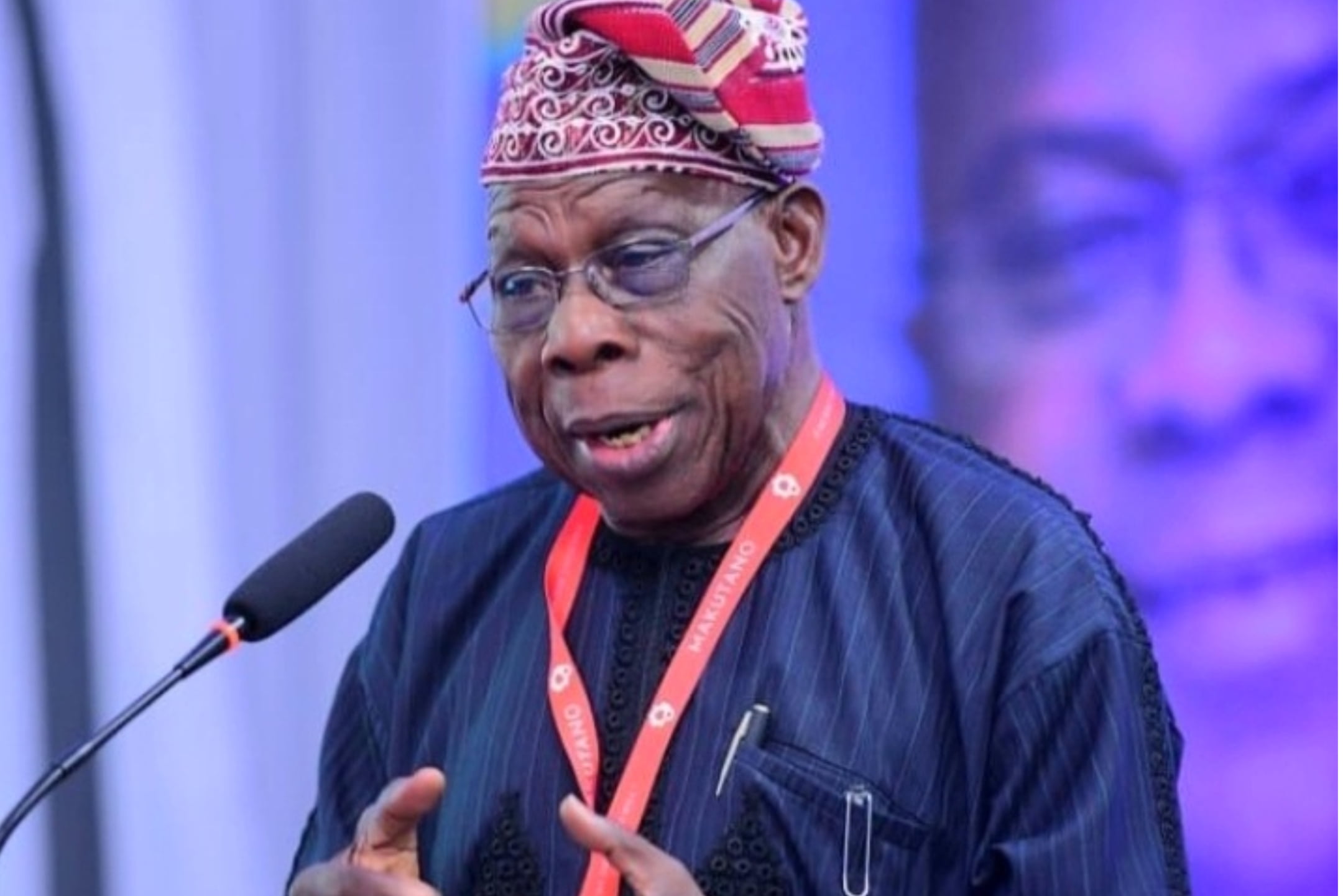
Former President Olusegun Obasanjo has called for urgent action on the country’s out-of-school children crisis, warning that they risk being recruited by Boko Haram terrorists.

Speaking on Tuesday at the inauguration of the Bakhita ICT Centre in Sokoto, Obasanjo described the neglect of the country’s estimated 24 million out-of-school children as a “time bomb” waiting to explode.

“You don’t need an oracle to know they will become the recruiting ground for the Boko Haram of tomorrow,” the former president declared, urging leaders to prioritise “human development, empowerment, and employment.”

The warning comes against a backdrop of grim statistics that place northern Nigeria at the epicentre of the nation’s education and poverty challenges.

UNICEF estimates that more than 10 million of the country’s out-of-school children are in the North, many of them in the Almajiri system.

The region also bears the brunt of violent extremism, banditry, and mass abductions of schoolchildren, which have disrupted education for years.

“If we fail to prepare now, the Boko Haram of today will be child’s play compared with what we may face in the future,” Obasanjo warned.

The newly inaugurated Bakhita ICT Centre, equipped with 250 laptops and 50 tablets, was built by the Catholic Bishop of Sokoto Diocese, Most Rev. Matthew Hassan Kukah, with support from philanthropist Aare Afe Babalola.

It is designed to equip young people with digital skills and vocational training.

Unveiling the facility, Bishop Kukah urged northern leaders and communities to reject the fatalistic acceptance of poverty as destiny.

See also  Survivors tell horrific tales of Lagos highrise inferno in Afriland Tower

“Among the almajiri on our streets, there could be an Albert Einstein,” he said. “Our duty as leaders, parents, pastors, and imams is to shine the light on their potential.”

Kukah also emphasised the importance of unity across faith lines: “Christians and Muslims may quarrel, but mosquitoes don’t discriminate. They bite everyone in the mosque and in the church. We all catch malaria. That is God’s way of reminding us to work together.”

The Sultan of Sokoto, Alhaji Muhammad Sa’ad Abubakar, also addressed the gathering, warning against narratives that exaggerate Nigeria’s divisions, particularly on religion.

“If we can sit here in Sokoto, just five minutes from the Sultan’s palace, to commission a Bakhita ICT Centre with Christians and Muslims praying side by side, why does nobody talk about that?” he asked.

He stressed that diversity must be seen as strength, not weakness: “When you are sick, sickness doesn’t ask whether you are a Muslim or a Christian. Hunger doesn’t know your tribe. Problems affect us all, and solutions must come from us working together.”

The event, attended by traditional rulers, clerics, politicians, and youths, featured cultural performances celebrating Nigeria’s shared heritage.

punch.ng

FOLLOW US ON:

FACEBOOK

TWITTER

PINTEREST

TIKTOK

YOUTUBE

LINKEDIN

TUMBLR

INSTAGRAM

Continue Reading
Click to comment

Leave a Reply

Your email address will not be published. Required fields are marked *

News

Presidency closes public submissions on state police today

Published

on

The Presidency has announced that public submissions on the proposed National Policing Bill will close by 5 pm on Thursday, August 13, 2026, urging Nigerians to submit their views on the planned establishment of state police.

The Chief of Staff to the President and Chairman of the Presidential Working Group on the National Policing Bill, Femi Gbajabiamila, disclosed this on Wednesday, saying the consultation was designed to incorporate the experiences and professional expertise of Nigerians into the proposed legislation.

He said the submissions would be particularly useful in addressing concerns over political interference, oversight, police misconduct and intelligence-sharing between federal and state police services.

He said the consultation would not replace the role of the National Assembly, which would retain the power to scrutinise, amend, reject or pass the Bill when transmitted.

Gbajabiamila urged Nigerians to contribute to the process, particularly on how police services could be protected from political interference, who should investigate serious misconduct and how federal and state forces could share intelligence across state boundaries.

He said, “For too long, the debate has been framed as a choice between effective local policing and protection from political abuse. Nigeria needs both.

“We can bring policing closer to the people while building strong national standards, independent oversight and firm safeguards for every citizen. The time to fix policing in Nigeria is now, and we must see the work through.”

Gbajabiamila also stressed that the proposed state police system must contain strong safeguards to prevent governors from using the force against political opponents, protesters, journalists, minority communities and other citizens.

See also  ‘Economic Illiterate’ – Onanuga Attacks ARISE TV Anchor, Rufai Oseni

Gbajabiamila, a former Speaker of the House of Representatives, said although state police could bring policing closer to communities and improve responses to local security challenges, its proximity to state governments raised legitimate concerns about political interference and abuse of power.

He said, “But proximity does not guarantee justice. The concern that governors might use state police against political opponents, minority communities or dissenting voices is serious and must be answered in the design of the law.”

He added that state police services must have lawful authority within their jurisdictions while remaining subject to the constitution, human rights and the rule of law.

According to him, the proposed framework should ensure that police officers are properly recruited, trained, equipped and supervised, while citizens must have access to credible complaints and oversight mechanisms.

Gbajabiamila said the reforms were aimed at creating a policing system that was “closer, faster and better informed by local conditions,” noting that officers familiar with a community’s language, geography and crime patterns would be better positioned to gather intelligence and respond to security threats.

He, however, stressed that the reform must protect citizens from abuse regardless of their political affiliation.

“The law must protect citizens regardless of who holds office. It must protect opposition parties, peaceful protesters, journalists and minority communities.

“It must make unlawful orders easier to resist, misconduct easier to investigate and political interference harder to hide,” he said.

On the legislative process, Gbajabiamila explained that the constitution currently provides for only one police force, the Nigeria Police Force, under Section 214, making constitutional amendment necessary before state police could be established.

See also  US eyes religious persecutors’ trial, China backs Tinubu

He said both chambers of the National Assembly had approved proposed constitutional changes providing for a Federal Police Service and State Police Services, but the process was not yet complete.

According to him, the National Assembly must complete the remaining stages and transmit the amendment to the state Houses of Assembly, where it must be approved by at least 24 of the 36 state legislatures before it can proceed to the President for assent.

He stressed that until those steps were completed, state police remained a proposal.

Gbajabiamila also disclosed that the Presidential Working Group was preparing the National Policing Bill alongside the constitutional amendment process.

He said the Bill would establish national standards for recruitment, vetting, training, remuneration, pensions, equipment and professional conduct, as well as rules on the use of force, complaints, discipline, independent oversight, intelligence sharing and cooperation between federal and state police services.

He said state police would not automatically be established across the country even after the constitutional amendment and the National Policing Bill became law.

“Each state that chooses to establish a service will still need its own enabling law, institutions and funding. It must also meet the national conditions for operation before its officers can begin policing,” he said.

Gbajabiamila said a state that was not ready to establish its own police service would continue to be served by the Nigeria Police Force.

Source: punchng.com

FOLLOW US ON:

FACEBOOK

TWITTER

PINTEREST

TIKTOK

YOUTUBE

LINKEDIN

INSTAGRAM

Continue Reading

News

Yoruba gospel singer Evang. G.A. Idowu Aworinde d!es at 76

Published

on

Popular Yoruba gospel singer and evangelist, Evang. G.A. Idowu Aworinde, has reportedly d!ed at the age of 76.

Aworinde reportedly passed away on Monday, August 10, 2026. He was known for his Yoruba gospel songs and evangelism, with his music touching generations of Christian worshippers.

The visually impaired gospel minister was also a member of Victory Voices Spiritual Singers and was known for songs including Mo Ki Obi Mi.

FOLLOW US ON:

FACEBOOK

TWITTER

PINTEREST

TIKTOK

YOUTUBE

LINKEDIN

INSTAGRAM

See also  US judge strikes down Trump policies targeting immigrants from 39 countries
Continue Reading

News

No legal basis for CJN’s ban on ‘Barrister’ title — Law society

Published

on

The Nigerian Law Society has rejected the directive of the Chief Justice of Nigeria, Justice Kudirat Kekere-Ekun, asking lawyers to stop using “Barrister” as a title and adopt “Esquire” instead.

The society argued that the directive has no clear basis in existing legislation.

Recall that the CJN directed lawyers and court officials to immediately discontinue the use of “Barrister” before their names in official engagements at the Supreme Court.

The directive was contained in a July 13, 2026 memo signed by the Chief Registrar of the Supreme Court, Kabir Akanbi, and addressed to legal practitioners, court registrars and other lawyers.]

The memo said the measure was intended to promote professional standards at the apex court.

However, the NLS, through its Executive Director, Dr Tonye Jaja, in a statement released on Wednesday, said the Legal Practitioners Act, 1962 recognises “Barrister” and “Solicitor of the Supreme Court of Nigeria” as titles applicable to lawyers called to the Nigerian Bar.

Jaja explained that although the use of “Barrister” alone does not capture the full professional title, “Esquire” is also not expressly provided for in the relevant legislation.

“Using ‘Barrister’ as a title is a half-truth that leaves out the title of ‘Solicitor’. As an alternative title, the title of ‘Esquire’ or its abbreviated version ‘Esq.’ was to be used as the appropriate suffix by Nigerian lawyers in their official correspondences to the Supreme Court of Nigeria,” Jaja observed.

He argued that the CJN’s directive could not be traced to any provision of the Legal Practitioners Act.

See also  CAF postpones WAFCON 2026 to July

“The problem with this recommended title of ‘Esquire’, or even other alternatives ‘Barrister-At-Law’ or ‘Attorney-At-Law’ is that they do not appear inside the Legal Practitioners Act, 1962,” Jaja said.

He added that, under the existing legal framework, neither the CJN, the Legal Practitioners Privileges Committee nor the Nigerian Bar Association could impose requirements on lawyers that were not expressly contained in the Act.

The NLS also challenged what it described as inconsistency in the treatment of the controversial “Blue Silks” rank of Senior Counsel of Nigeria, SCN.

The society faulted arguments by the LPPC and Justice James Omotosho of the Federal High Court in Abuja suggesting that the SCN title should not be recognised because it is not expressly provided for in the Legal Practitioners Act.

According to the NLS, the fact that the Senior Advocate of Nigeria, rank is expressly mentioned in the law does not automatically make other professional titles illegitimate.

Jaja accused the CJN and LPPC of applying different standards in dealing with professional titles.

He stated, “The Blue Silks rank of Senior Counsel of Nigeria, SCN, is not stated inside the Legal Practitioners Act, 1962. This is the more reason why neither the NBA nor the LPPC has any powers of regulation over the Blue Silks rank as per the judgment of Hon. Justice Mohammed Garba Umar of the Federal High Court Abuja.

“It is an act of contradiction and hypocrisy for both the CJN and the Chief Registrar of the Supreme Court of Nigeria to impose a ban upon a title ‘Barrister’ that is explicitly listed inside the Legal Practitioners Act, 1962 and replace it with alternatives that are not explicitly stated inside any statutes.

See also  US judge strikes down Trump policies targeting immigrants from 39 countries

“Another level of the hypocrisy and contradiction which is manifestly discriminatory in violation of Section 42 of the Constitution of the Federal Republic of Nigeria, 1999 is for the CJN and LPPC to permit Nigerian lawyers to use some titles (such as ‘Esquire’ for example) that do not appear in any statutes but attempt to ban the use of others (such as the Blue Silks rank of Senior Counsel of Nigeria-SCN).”

Jaja further argued that the SAN title itself evolved from the British King’s Counsel tradition rather than being created directly by Nigerian legislation.

He said Nigeria adopted the SAN title in 1975 after inheriting the King’s Counsel tradition, which dates back to the 1500s in Britain, with Francis Bacon identified as the first holder.

He also maintained that the absence of a title from a statute does not, in itself, make its use unlawful.

Jaja said the Senior Counsel of Nigeria title, conferred by the Nigerian Law Society and the Body of Senior Counsel of Nigeria, BOSCON, similarly derives its legitimacy from guidelines rather than direct statutory creation.

He argued that those guidelines were established pursuant to Section 40 of the Nigerian Constitution and Section 19 of the National Assembly Service Commission Act, 2014.

Source: punchng.com

FOLLOW US ON:

FACEBOOK

TWITTER

PINTEREST

TIKTOK

YOUTUBE

LINKEDIN

INSTAGRAM

Continue Reading

Trending