Following its designation of Nigeria as a ‘Country of Particular Concern’, the United States has said it will work with the Federal Government to take decisive actions aimed at arresting perpetrators of religious violence, protecting Christians, and rescuing those held hostage.
The Chair of the United States Commission on International Religious Freedom, Vicky Hartzler — whose recommendation led President Donald Trump to blacklist Nigeria as a violator of religious freedom — disclosed this while welcoming the US leader’s decision.
Hartzler, in a statement, commended Trump for taking steps to address what she described as the persecution of Christians in Nigeria.
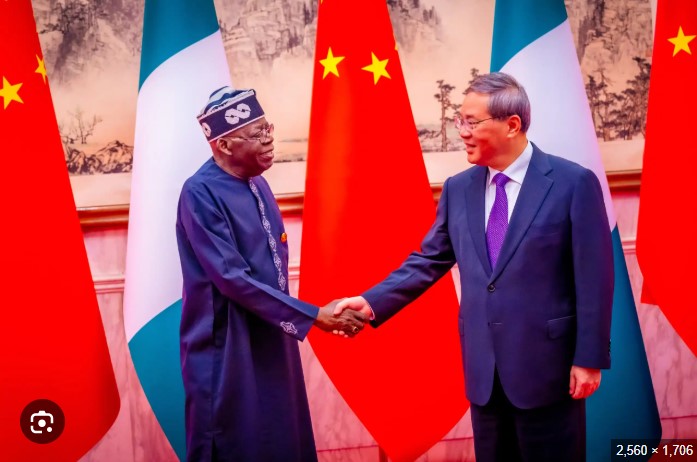
China, however, voiced strong support for Nigeria and criticised what it called foreign interference in the country’s internal affairs.
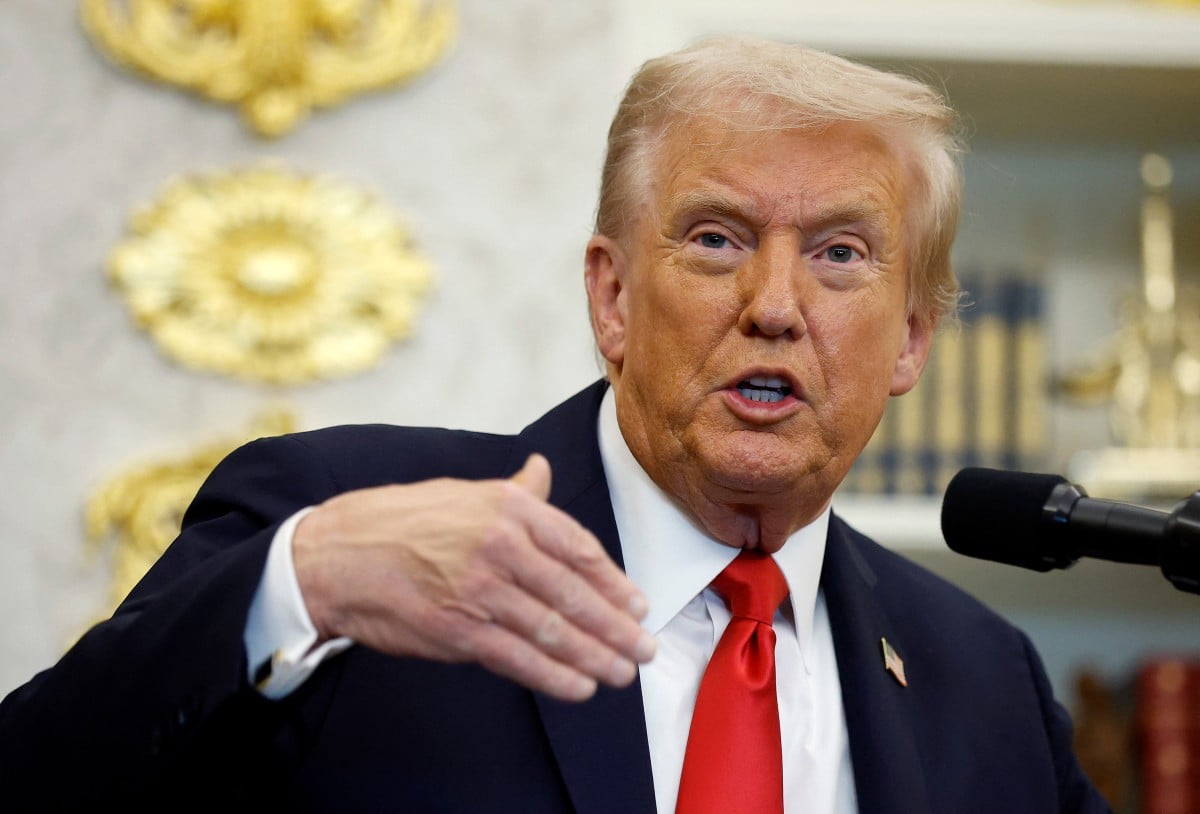
Trump had announced Nigeria’s designation as a Country of Particular Concern in a post on his Truth Social platform on Friday, alleging that Christianity in Nigeria faces an “existential threat” and claiming that thousands of Christians have been killed by radical Islamists.
He warned that the United States could take decisive measures — including possible military intervention — if the Bola Tinubu administration failed to act.
In its reaction, the Federal Government rejected the US claim, describing it as inconsistent with facts, and reaffirmed Nigeria’s commitment to combating violent extremism, protecting citizens, and promoting religious freedom and inclusiveness.
As part of its response to Nigeria’s alleged violations, the United States Congress is considering a bill that would impose severe sanctions on state governors, public officials, and non-state actors involved in enforcing the Sharia Penal Code.
The bill, sponsored by Republican Senator Ted Cruz, has passed second reading and been referred to the Senate Committee on Foreign Relations for further consideration.
The draft legislation, S. 2747, dated September 9, 2025, is titled ‘Nigeria Religious Freedom Accountability Act of 2025.’ It directs the US Secretary of State to designate Nigeria as a Country of Particular Concern, impose specific sanctions, and take other related measures.
The proposed legislation also targets terrorist groups and individuals implementing or supporting Islamic laws in the country.
Under the draft law, penalties would extend to judges, magistrates, prison officials, and other judicial or law enforcement officers found complicit in terrorism, corruption, or the enforcement of blasphemy laws.
It specifically includes anyone responsible for prosecuting, convicting, imprisoning, or otherwise depriving individuals of their liberty on charges of blasphemy.
Reacting to the executive action, the USCIRF chair, Vicky Hartzler, said, “USCIRF applauds President Trump for speaking out on the religious freedom crisis in Nigeria and making Nigeria a Country of Particular Concern.”
“The US Government can now develop a tough plan with Nigeria to ensure that perpetrators of violence are held to account, people of faith are protected, and those held hostage are rescued,” she added in a statement published on the commission’s website on Monday.
The USCIRF vice chair, Asif Mahmood, also told The PUNCH in an emailed response on Tuesday that the commission would ensure the Trump administration implements a series of executive actions against Nigeria, which it described as a serial violator of religious freedom since 2009.
During Trump’s first administration, the US State Department had placed Nigeria on its Special Watch List in 2019 and designated it as a Country of Particular Concern in 2020, citing recurring violent attacks against religious communities.
“The United States Commission on International Religious Freedom welcomes President Trump’s making Nigeria a Country of Particular Concern,” the statement read. “USCIRF has recommended this designation since 2009 because of the government’s engagement in and tolerance of systematic, ongoing, and egregious religious freedom violations.”
The statement cited several recent incidents, including the killing of at least 200 people — among them internally displaced persons — at a Catholic mission in Benue State in June, and the murder of at least 27 worshippers during an early-morning mosque attack in Katsina State in August.
“These and other violent incidents targeting religious communities are escalating tensions and threatening Nigerians’ ability to freely express their faith,” it added.
Mahmood noted that, in addition to violence by non-state actors, the Nigerian government must also be held accountable for allowing the enforcement of blasphemy laws in 12 states.
“Enforcing these laws and tolerating violence targeting Christians, Muslims, and other communities justify the CPC designation,” he said. “Now the administration can use this opportunity to impose Presidential Actions under the International Religious Freedom Act to incentivise needed change in the country.”
In his email to The PUNCH, Mahmood reiterated that Nigerian authorities had “repeatedly failed to address ongoing violence targeting religious communities.”
“In our 2025 Annual Report, which covered the calendar year 2024, we reported on violence targeting religious communities where Nigerian authorities far too often fail to adequately respond,” he wrote.
He explained that USCIRF uses international human rights standards, including the Universal Declaration of Human Rights, under the International Religious Freedom Act, to determine when to recommend a Country of Particular Concern designation for any government that “engages in or tolerates particularly severe violations of religious freedom.”
“Nigeria has met that standard since 2009,” Mahmood said, noting that 12 state governments continue to enforce strict blasphemy laws used to prosecute Christians, Muslims, and humanists for alleged insults to religion.
He added that the USCIRF, in its annual reports, had repeatedly recommended policy actions the US government and Congress could adopt to improve religious freedom conditions in Nigeria.
“Now that President Trump has named Nigeria a CPC, the International Religious Freedom Act empowers the US government to execute multiple Presidential Actions,” Mahmood said. “We encourage the administration to do so and not to waive these actions.”
On steps Nigeria could take to secure a reprieve, Mahmood explained that ending or significantly reducing “systematic, ongoing, and egregious” violations of religious freedom, as outlined in USCIRF’s Annual Report, was the key condition for removal from its list of Countries of Particular Concern.
“Our recommendation is based on international human rights law, facts on the ground, and our statutory mandate,” he stated. “USCIRF’s monitoring and reporting efforts are ongoing, and our next CPC recommendations will be included in our 2026 Annual Report, which is due to Congress no later than May 1 of each year.”
Beijing backs Tinubu
However, the People’s Republic of China has strongly criticised the US action against Nigeria, describing it as a flagrant interference in the country’s internal affairs.
At a press conference in Beijing on Tuesday, Foreign Ministry spokesperson Mao Ning said China stood firmly with Nigeria in pursuing its own development path and opposed the use of religion or human rights as tools for political pressure.
Her remarks, circulated by the Chinese Embassy in Abuja, read, “As a comprehensive strategic partner of Nigeria, China firmly supports the Nigerian government in leading its people on a development path that aligns with its national realities.
“We oppose any country’s interference in other nations’ internal affairs under the pretext of religion or human rights. We also oppose the wanton threat of sanctions or the use of force.”
Meanwhile, the Minister of Information and National Orientation, Mohammed Idris, said President Bola Tinubu was taking concrete steps to ensure the safety of lives and property across the country.
Speaking with State House correspondents after a meeting with the President at the Presidential Villa, Abuja, on Tuesday, Idris said his discussions with Tinubu included the recent US comments on Nigeria.
He noted that the President had called for calm, assuring Nigerians that his administration remains focused on strengthening national security and promoting unity amid growing international scrutiny.
“It’s a routine meeting that we always have with Mr President,” Idris said. “Of course, the issue of the US also came up, and we discussed that extensively.”
According to him, the President is “calm and taking a holistic view of the situation,” while working to ensure the international community better understands Nigeria’s ongoing efforts to maintain peace and security.
“Only last week, Mr President, in his desire to reinvigorate the country’s security architecture, appointed a new Chief of Defence Staff and other service chiefs. That tells you he’s been working seriously to ensure Nigeria remains safe for all,” Idris added.
He explained that the government was deliberately keeping its diplomatic tone measured while expanding engagement with international partners to clarify Nigeria’s position.
“We are opening channels of communication so that the international community understands what Nigeria has been doing and intends to do to address any domestic or international concerns,” he said.
Responding to calls for broader engagement with religious and community leaders, Idris said Tinubu had adopted a multi-pronged approach.
“Discussions with the leadership of religious groups are ongoing,” he noted. “Mr President has been meeting with them and will continue to do so. They are important stakeholders in the Nigerian project.”
The minister added that Tinubu would sustain regional and continental engagements to counter what he called “false narratives” about Nigeria’s religious climate.
“For us to be characterised as a country that is not tolerant of religion is absolutely false,” Idris declared. “Nigeria is home to Muslims, Christians, and even those of no faith, and our Constitution guarantees freedom of religion. Mr President will uphold that to the letter.”
Idris blamed extremist elements for pushing divisive narratives aimed at portraying the country negatively, urging citizens to resist such propaganda.
“Yes, we have security challenges,” he said, “but there has never been any government decision to favour one religion over another or to inflict violence in the name of faith. This is a time to reflect on our unity and come together — not a time for division, rhetoric, or politics, but a time for nation-building.”
He reaffirmed that President Tinubu is “taking the situation very seriously” and has directed relevant agencies to handle the issues “with all the responsibility and depth they require.”
“At the end of the day, we believe that we will come out of this stronger,” Idris assured.
ECOWAS, EU react
The Economic Community of West African States has dismissed claims that the recent surge in terrorist attacks across the region, including Nigeria, amounts to genocide.
In a statement on Tuesday, the regional body said the attacks indiscriminately target civilians of all faiths and backgrounds, stressing that the violence cannot be classified as genocide against any particular religious group.
ECOWAS urged the United Nations and other international partners to continue supporting member states in their efforts to counter violent extremism.
“As independent reports have confirmed over the years, terrorist-related violence does not discriminate on the basis of gender, religion, ethnicity, or age,” the statement read.
“ECOWAS calls on the United Nations and all partners to support member states in their fight against these groups and to treat as false any claims that these terrorist groups target one community, or that there is genocide of one religious group in the region.
“ECOWAS strongly rejects these false and dangerous claims that seek to deepen insecurity in communities and weaken social cohesion in the region.”
Reaffirming its commitment to regional peace and unity, the bloc reiterated that combating terrorism requires a collective response grounded in facts and solidarity, not in divisive or misleading narratives.
“ECOWAS calls on the whole world to stand by the countries in the region in their fight against terrorism that targets all communities,” the statement concluded.
In a related development, the European Union has reaffirmed its commitment to protecting religious freedom and promoting peaceful coexistence in Nigeria.
The spokesperson for EU Foreign Affairs and Security Policy, Anouar El Anouni, made this known during a press briefing on Monday. His comments were shared with reporters in Abuja on Tuesday by the EU’s press officer, Modestus Chukwulaka.
“When it comes to Nigeria, the EU has taken note of the statements made by the American administration. The EU reaffirms its commitment to freedom of religion and belief, and to the protection of all communities, especially minorities,” El Anouni said.
“We underline our commitment to the peaceful coexistence of the Nigerian population, beyond geographical, ethnic, political, or religious differences.”
While acknowledging the US position, the EU cautioned against attributing Nigeria’s violence solely to religion.
“We recognise the many factors behind the violence in Nigeria. Let us note that religion is only one of these factors — and only in certain instances,” he added.
The EU said it continues to work with Nigerian authorities to strengthen peacebuilding efforts and support victims of violence and displacement.
“The European Union cooperates with the competent Nigerian authorities and implements multifaceted support in Nigeria to prevent violence, consolidate peace, and assist victims of violence and forced displacement,” El Anouni said.
US military base
A former Chief of Army Staff and ex-Minister of Interior, Lt. Gen. Abdulrahman Dambazau (retd.), alleged that the United States might be seeking to establish a military base in Nigeria under the pretext of protecting Christians from persecution.
Dambazau, who spoke in Abuja on Tuesday at an event organised by the Just Friends Club of Nigeria, said recent narratives by some American politicians and religious leaders about “Christian genocide” in Nigeria could be linked to external interests.
“Religious tensions have been amplified by both domestic and foreign actors, sometimes resulting in the mischaracterisation of security incidents as targeting specific faith groups,” he said.
Dambazau questioned the motive, recalling that despite hosting two US military bases for over a decade, Niger Republic still suffers severe insecurity.
“In the more than ten years of US presence in Niger, what did they do to prevent the growth of terrorism? I think the US is looking for an opportunity to establish an alternative base in Nigeria,” he said.
The retired general argued that terrorism in Nigeria affects both Muslims and Christians and is part of a wider regional crisis in the Sahel and Lake Chad Basin.
He said Nigeria’s weak security capacity had worsened the situation, citing the Abuja–Kaduna train attack and Kuje prison break as examples.
“Communities in Zamfara and Katsina have even signed agreements with bandits to avoid attacks. People now rely on criminals for protection,” he added.
Dambazau warned that foreign interests could exploit Nigeria’s internal divisions and urged the government to promote unity and strengthen security institutions.
“We must not allow external actors to manipulate our differences for their own interests,” he said.
Middle Belt leaders
Amid growing concerns over a possible diplomatic face-off, leaders of the Southern and Middle Belt Forum described the development as a “wake-up call” for the Federal Government to urgently tackle insecurity and the persistent killings across the country.
In a communiqué issued after its National Caucus meeting on Saturday, November 1, 2025, in Abuja — and signed by spokesman Luka Binniyat, alongside Oba Oladipo Olaitan (Afenifere), Dr. Bitrus Pogu (Middle Belt Forum), Senator John Azuta-Mbata (Ohanaeze Ndigbo Worldwide), and Ambassador Godknows Igali (PANDEF) — the forum outlined its stance on insecurity, justice, national unity, and the 2027 elections.
“The SMBLF notes with very serious concern the designation by US President Donald Trump of Nigeria as a Country of Particular Concern over alleged persecution against Christians,” the communiqué stated.
“However, we consider this a wake-up call to the Federal Government to pursue, with urgency and responsibility, the halting of ongoing mayhem and killings.”
The forum urged the government to disarm and prosecute armed militias, killer herdsmen, and terrorists, and to restore “occupied lands to their rightful owners” across Benue, Plateau, Southern Kaduna, Taraba, Gombe, Southern Borno, and other affected states.
While welcoming recent changes in the military hierarchy, the group called on President Bola Tinubu to extend reforms to the offices of the National Security Adviser, Minister of Defence, and Minister of State for Defence, to ensure inclusivity and balance in national security management.
The SMBLF also renewed calls for the release of Nnamdi Kanu, leader of the Indigenous People of Biafra, saying it would aid peace and reconciliation in the country.
Meanwhile, a former Governor of Sokoto State, Alhaji Attahiru Bafarawa, urged President Tinubu to avoid confrontation with Washington and instead seek diplomatic engagement.
“I advise President Tinubu to shun confrontation and reach out to the American government to present Nigeria’s side of the story,” Bafarawa said in a statement on Tuesday.
“America and Nigeria are strategic partners in international politics and diplomacy. It will, therefore, be in Nigeria’s best interest to strengthen this long-standing relationship.”
In a related reaction, the Yoruba Ronu Group, a socio-political organisation, in a statement issued in Abuja and signed by its chairman, Diran Iyantan, said Trump’s remarks accusing Nigeria of “killing Christians” were “false and dangerously provocative.”
“Trump’s warlike tone is not diplomacy—it is incitement,” Iyantan warned. “Such reckless language emboldens terrorists, undermines our military gains, and insults our sovereignty. Every U.S. intervention, from Libya to Afghanistan, has left behind ruins and chaos. Nigeria will not be their next experiment.”
The National Civil Society Council of Nigeria also criticised the Federal Government for failing to appoint ambassadors amid the crisis, describing the lapse as “unhealthy and unthinkable.”
In a communiqué signed by Oscar Kalu, chairman of the communiqué drafting committee, the council said, “The government must handle the allegations of Christian genocide with professionalism and diplomacy, confronting the matter with verifiable facts and figures.”
Similarly, a former Kwara State House of Assembly Commission member and APC chieftain, Kehinde Bankole, cautioned Trump against making inflammatory remarks that could distract Nigeria’s leadership.
“Article 2(1), (4), and (7) of the UN Charter affirm every nation’s right to determine its political, social, economic, and cultural systems without external interference,” Bankole said.