





Connect with us

Business

Strike countdown begins as PenCom, Labour disagree on Pension funds

Published

on

•PenCom reacts, NSITF silent as Labour issues seven-day strike notice over alleged 40% pension fund diversion

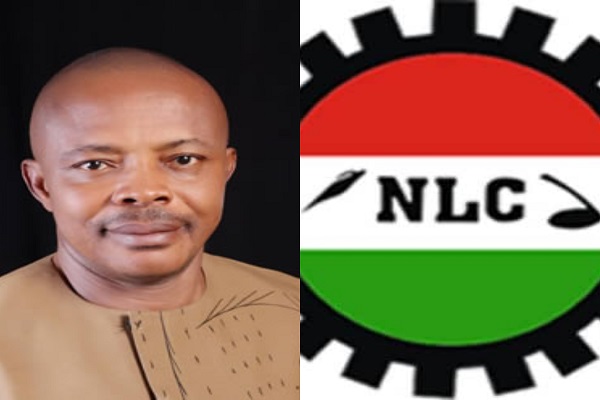
The Nigeria Labour Congress has threatened a nationwide strike if the Federal Government fails to return what it claims to be billions of naira taken from workers’ insurance contributions. It also demanded that the government fill the leadership gap in the country’s pension regulatory commission within a week.

The NLC accused the Federal Government of syphoning 40 per cent of contributions from the Nigeria Social Insurance Trust Fund into the national treasury. The fund, which is financed by payroll deductions from millions of workers, is meant to protect them in the event of injury or job loss.

However, the National Pension Commission argued that the Contributory Pension Scheme remains secure and continues to grow, as it kicked against claims of missing funds.

“The (NLC) Central Working Committee expressed outrage at the ongoing assault on workers’ social protection rights through the Federal Government’s diversion of 40 per cent of workers’ contributions to the national coffers as revenue, in flagrant violation of the statutes establishing the NSITF,” NLC President Joe Ajero said in a communique shared on Thursday.

The union noted the move violated the laws establishing the NSITF and stripped it of its role as a safety net. “Pension funds are deferred wages, not government revenue,” Labour stated, warning that any further interference would trigger industrial action.

The group also criticised the government’s failure to appoint a governing board for the National Pension Commission, leaving the administration in sole control of billions in retirement savings. The union said the vacuum created heightened risks of mismanagement and political interference in the pension sector.

See also  Fuel Scarcity Looms As PENGASSAN Declares Nationwide Strike

The standoff comes amid broader disputes over pension management across the country. In July, a coalition of labour unions in Ogun State gave state officials 72 hours to halt the planned rollout of a contributory pension scheme, citing a 17-year backlog of unpaid contributions worth over N82bn. They called for a return to the old pension system or a delay until the arrears are cleared.

The communiqué stated that the NSITF must refund all diverted funds within seven working days and that PenCom must submit a full status report of pension funds and have its Governing Board constituted within the same period. It warned that if these demands were not met, the NLC would no longer guarantee industrial peace, signalling the possibility of nationwide strikes and protests.

PenCom, NECA react

Responding to the union’s claims, the Head of the Corporate Communications Department, PenCom, Ibrahim Buwal, told The PUNCH that the appointment of a Governing Board is a matter for the Federal Government rather than the regulator.

“The issue of the board is not an agency issue; it is for the Federal Government, so we are not in a position to comment on that,” he said, adding that the commission is still studying the NLC communiqué.

On the safety of pension assets, he maintained that funds under the Contributory Pension Scheme remain secure and continue to grow. “The safety of pension funds is confirmed by the consistent growth and accumulation of the assets because of regular contributions and profitable investments,” he said.

He noted that contributors receive monthly or quarterly statements of their Retirement Savings Accounts and stressed, “Nobody’s money is missing. I can confirm there are no pension funds under the CPS that are missing.”

See also  FG fixes June 12 deadline for oil bids

The Nigeria Employers’ Consultative Association earlier called on the Federal Government to reconstitute the governing body of PenCom in compliance with the Pension Reform Act.

“That’s what the Act says. Not constituting it is a violation of the Act.

Since this government has shown respect for the due process and rule of law, we expect that the important thing should be done,” the Director-General of NECA, Adewale-Smatt Oyerinde, stated.

“The board should be constituted. It’s necessary; it’s important. There are only two stakeholders in the pension income industry. There are only two. The employers and the workers. Because it’s only the employers and the workers who are contributing. So, NLC and NECA members are the critical stakeholders, the only stakeholders. So if the stakeholders have said they should constitute the board, we trust that the president will do the needful.”

NSITF silent

The Nigeria Social Insurance Trust Fund said there is no official response yet to the seven-day ultimatum issued by the NLC over alleged diversion of workers’ contributions and the non-constitution of the PENCOM board.

Manager of Actuaries, Planning and Research at the Fund, NSITF, Emmanuel Ulayi, disclosed this in a phone call with our correspondent in Abuja. “No official response yet,” he said.

The Head of Corporate Affairs of the Fund, Alexandra Mede, could not be reached. In response to a text message sent to her by our correspondent, she said she was currently hospitalised.

Other issues

The NLC meeting also ratified the dissolution of the Edo State Council’s leadership for what it described as acts of unethical behaviour, anti-union conduct, and violations of the NLC Constitution. A caretaker committee has been appointed to run the council’s affairs until fresh elections are conducted.

See also  World Bank unveils $510m deal to boost investments

Reviewing the broader state of the nation, the NLC criticised government policies it said had worsened runaway inflation, joblessness, hunger, insecurity, and the collapse of public services. The Congress urged the adoption of a people-centred development model anchored on public ownership of strategic sectors, living wages, industrial revival, and robust social protection systems.

Ajero also condemned what it called a false claim of ownership by the administration over the NLC National Headquarters, which it stressed was purchased with workers’ contributions, and alleged the government had engaged in cyber and media intimidation of trade unions while covertly seeking to amend the NSITF Act to gain full control of the funds.

“This represents a direct attack on workers’ rights, hard-earned resources, and the principle of tripartite governance enshrined in international labour standards,” the communiqué read, adding that the NSITF belongs solely to the Nigerian working class and that the NLC would mobilise all legitimate means to protect workers’ interests.

FOLLOW US ON:

FACEBOOK

TWITTER

PINTEREST

TIKTOK

YOUTUBE

LINKEDIN

TUMBLR

INSTAGRAM

Continue Reading
Click to comment

Leave a Reply

Your email address will not be published. Required fields are marked *

Business

Abia begins relocation of transport operators to new terminal

Published

on

The Abia State Government has commenced the enforcement of its new centralised transport system in Umuahia, with the phased relocation of transport operators to the Nnenna Otti Bus Terminal, Umuahia.

The Commissioner for Information, Okey Kanu, made this known at Government House, Umuahia, on Tuesday while briefing newsmen on the outcome of this week’s State Executive Council (EXCO) meeting presided over by Governor Alex Otti.

The commissioner disclosed that, in order to ensure compliance by transport operators, the state government took time to hold a series of meetings with transport stakeholders, during which their concerns were addressed.

Kanu added that, following the steps taken by the government, full operations had commenced at the terminal, with informal transport operators and unions already moved to the facility, despite the normal resistance that accompanies change.

“There appears to be some push backs among some of the operators and this is as a result of the fact that people are not easily giving in to change.

“What is happening is that all the parks in the state have been moved to the bus terminal.

“The Honourable Commissioner for Transport and his team have been holding a series of meetings with all the operators. They had one yesterday. And a few of their anxieties will be addressed very soon. Enforcement also will commence today to bring all the operators into the terminal.

“The first phase of operations involves the operations of the Abia Green Shuttle buses. The second phase involves informal transport operators, while the third phase will involve the formal transport operators,” Kanu stated.

See also  65 golden moments of Nigerian sports since 1960

Answering questions from newsmen, the Commissioner for Transport, Dr Chimezie Ukaegbu, said the state government had not taken away anybody’s means of livelihood but had instead introduced a more organised system to sanitise the transport sector and improve it.

He revealed that transport unions and operators were told to bring four of their workers each to the terminal, where they would be properly identified with reflective tags and carried along.

He further noted that the terminal operates a transparent system that allocates loading opportunities on a first-come, first-served basis irrespective of union affiliations, insisting that about 80 to 90 per cent of operators had embraced the initiative. He added that continuous engagements were being held with those yet to fully comply with the government’s transport policy.

He equally noted that the government provided a drivers’ lodge, fully air-conditioned and furnished with seats, while passengers sit in a conducive air-conditioned environment, adding, “what else will you need as a transporter or even as a passenger? I think everything good about transportation is embedded in that Nnenna Otti Bus Terminal,” Ukaegbu stated.

Contributing, the Special Adviser to the Governor on Media and Publicity, Mr Ferdinand Ekeoma, said that the centralisation of transport operations would reduce urban congestion, indiscriminate loading bays, expenses incurred by transport operators on their loading bays, and security challenges associated with the influx of unregulated transport operators, thereby enabling transport operators to make more gains.

He added that, over the years, “we have seen transport operators extort people, by coming up with this organised system, we are solving our problems,” Ekeoma stated.

See also  INEC derecognises Mark, Aregbesola, parties revolt

punch.ng

FOLLOW US ON:

FACEBOOK

TWITTER

PINTEREST

TIKTOK

YOUTUBE

LINKEDIN

INSTAGRAM

Continue Reading

Business

Court orders Virgin Atlantic to pay N13m for missed flight

Published

on

A Federal High Court in Lagos has ordered Virgin Atlantic Airways Limited to pay Mrs. Joy Ezetah the sum of $5,906.50 in damages after it failed to allow her board a scheduled Lagos-London flight, an incident that disrupted her onward trip to Canada and caused her financial loss.

Justice Ibrahim Kala in the judgement delivered on Monday, held that the airline was liable for the losses suffered by the claimant after she was denied boarding at the Murtala Muhammed International Airport on 6 April 2024.

The claimant had asked the court for N100m in general damages, arguing that she bought a business-class ticket through Air Canada for a four-leg trip from Lagos to Toronto and back, but was stopped from boarding the Virgin Atlantic flight “without justification.”

She told the court that she arrived early, completed check-in, and was issued a boarding pass for the Lagos-London leg.

According to her, airline officials later prevented her from boarding, stating they could not connect her ticket to her Air Canada connecting flight from London to Toronto.

Ezetah stated that the airline owed her a duty of care and should have resolved the issue with Air Canada or made other arrangements instead of denying her boarding.

She further maintained that when she later contacted Air Canada, the airline confirmed that her ticket was valid and that she was expected on the connecting flight.

Virgin Atlantic, however, denied liability. It said it was “not the issuing carrier” and insisted that the ticket had been purchased directly from Air Canada under a codeshare arrangement.

See also  Nigeria targets 7% GDP growth, $14bn infrastructure — Edun

The airline also argued that an error code in the reservation system prevented it from issuing a boarding pass for the connecting flight and that it acted professionally by advising the passenger to contact the ticket issuer.

It further contended that the claimant’s inability to complete online check-in before arriving at the airport showed that there was already a problem with the ticket.

After reviewing the evidence, submissions and legal authorities cited by both sides, Justice Kala held that the claimant’s case had merit.

The court awarded $5,906.50 in damages against Virgin Atlantic and ordered that the sum be paid using the prevailing exchange rate published by the Central Bank of Nigeria. Based on the highest official rate of N1,365.50 to a dollar, the award translates to about N8.07m.

Justice Kala also ordered the airline to pay 10 per cent interest per annum on the judgment sum until full liquidation of the debt.

Additionally, the court awarded N5m as costs against Virgin Atlantic, noting that the claimant had been forced to approach the court to enforce her rights.

punch.ng

FOLLOW US ON:

FACEBOOK

TWITTER

PINTEREST

TIKTOK

YOUTUBE

LINKEDIN

INSTAGRAM

Continue Reading

Business

States kick as Senate moves to amend Electricity Act; read details

Published

on

A fresh battle over the control of Nigeria’s electricity sector is brewing, as state electricity regulators have accused the National Assembly of attempting to claw back powers already devolved to states under the Constitution and the Electricity Act 2023.

In a strongly worded memorandum submitted to the Senate Committee on Power and obtained by our correspondent on Tuesday, electricity regulatory commissions and bureaus from 16 states warned that the proposed Electricity Act (Amendment) Bill 2026 could reverse one of the most significant reforms in Nigeria’s power sector.

The regulators argued that the amendment bill, rather than strengthening the electricity market, seeks to restore extensive federal oversight over matters they insist have constitutionally become the responsibility of states.

The concerns were contained in a letter dated May 26, 2026, addressed to the Chairman of the Senate Committee on Power and signed on behalf of the State Electricity Regulatory Commissions and Bureaus.

Signatories to the document included the chairmen and chief executives of electricity regulators in Abia, Anambra, Bayelsa, Edo, Ekiti, Enugu, Gombe, Imo, Kogi, Lagos, Nasarawa, Niger, Ogun, Ondo, Oyo and Plateau states.

The regulators said they had taken advantage of the Electricity Act 2023 to begin building sub-national electricity markets and had already engaged investors based on the framework created by the law.

They noted that they had earlier met with the Senate committee and were subsequently requested to consolidate their concerns into a single memorandum for the consideration of lawmakers, the Nigerian Electricity Regulatory Commission and other stakeholders.

The letter stated, “We represent State Regulatory Commissions/Bureaus that have taken advantage of the Electricity Act 2023 to commence the development of our sub-national electricity markets and sectors.

We are grateful for the audience you granted us to raise concerns on the ongoing consideration of the proposed Amendment Bill 2026 to the Electricity Act 2023.

“As agreed during our discussion, we have collated and consolidated the comments into one document which is hereby attached for the consideration of the Senate and House Committees on Power, NERC and other stakeholders.”

The state electricity regulators said they had identified 17 contentious provisions in the proposed amendments to the Electricity Act that they believed could undermine the constitutional powers already granted to states in the electricity sector.

According to the regulators, the areas of disagreement include the authorisation of State Houses of Assembly to legislate on electricity matters, the supremacy of state laws within state electricity markets, and provisions seeking to retain federal control over all activities connected to the national grid.

Other disputed clauses relate to restrictions on states’ participation in the wholesale electricity market, matters concerning the Nigerian Wholesale Electricity Market, the authority of states over independent transmission and distribution networks, and the establishment and administration of the Power Consumers Assistance Fund.

The regulators also raised concerns over the proposed expansion of the powers of the Nigerian Electricity Management Services Agency, the structure and decisions of the Forum of Electricity Regulators, and the provision granting the Nigerian Electricity Regulatory Commission final administrative appellate jurisdiction on certain issues arising within the forum.

See also  65 golden moments of Nigerian sports since 1960

They further opposed provisions designating electricity generation, transmission, distribution and supply as essential services, as well as clauses dealing with government-owned enterprises as licensees and obligations to host communities.

Additional areas of contention include the regulation of intra-state electricity matters that may have implications for the national grid, the imposition of timelines and phased conditions for states transitioning into independent electricity markets, and proposed federal oversight on consumer protection, anti-trust measures and tariff design within state electricity jurisdictions.

The regulators argued that the disputed provisions require further consultation to ensure that the decentralisation objectives of the Electricity Act are not weakened by subsequent amendments.

“A review of the Bill suggests that the general intention is to reverse the devolution of legislative, governance and regulatory powers over electricity matters that occur solely within the respective states to the state governments, in favour of a reconsolidation of powers at the federal level, with the Nigerian Electricity Regulatory Commission retaining full supervisory powers over the market. Effectively, it appears that the intention of the Bill is that Nigeria should continue with the same regime that, for 20 years, has not led to any significant increase in power availability or per capita consumption for Nigerians, despite ever-increasing (and unsustainable) federal debt.”

At the centre of the dispute is the interpretation of the constitutional amendments that allowed states to legislate on electricity matters within their territories. The regulators argued that the proposed amendment bill wrongly assumes that state legislatures derive their powers from the National Assembly rather than directly from the Constitution.

According to them, any attempt by the National Assembly to grant, restrict or redefine those powers through ordinary legislation would amount to a constitutional violation.

The memorandum stated, “Section 2 of the Bill aims to amend Section 2(2)(a)-(e) of the Principal Act. By that section, the National Assembly reserves to itself the power to delegate legislative powers to States’ Houses of Assembly, suggesting that the Bill (or the Principal Act) is the source of the powers of a state to make laws on its electricity markets.

“This provision is based on a shocking miscomprehension of Nigerian constitutional law—it proceeds from the wrong assumption that the NASS, by ordinary legislation and not constitutional amendment, can confer (or restrict) the legislative power of states.

“The constitutional division of powers is fundamental to federalism, ensuring a balance between national unity and state autonomy. There is no legal framework for the NASS to ‘empower’ state governments to make law by ordinary legislation, as the language of the Bill attempts to do.

“The constitutional division of powers is fundamental to federalism, ensuring a balance between national unity and state autonomy. There is no legal framework for the NASS to ‘empower’ state governments to make law by ordinary legislation, as the language of the Bill attempts to do. Consequently, Section 2 of the Bill, seeking to amend Section 2 of the Act, is not consistent with the Constitution.”

See also  11th NASS: Senate blocks ex-govs, Uzodimma from principal offices

The regulators described as “a shocking miscomprehension of Nigerian constitutional law” the provisions of the bill that appear to suggest that the National Assembly is the source of states’ authority over electricity matters.

They warned that the proposed law could undermine the principle of federalism by weakening state autonomy. Beyond constitutional concerns, the regulators said the bill could create uncertainty in the electricity market and discourage investors who had already committed resources based on the existing legal framework.

“The clear intention behind the new drafting is to reconsolidate in the Federal Government matters solely within the state electricity markets which had been devolved to the states,” the memorandum stated.

“This will defeat the key objectives of the Electricity Act and the various states’ electricity laws, even before the regime introduced by them has taken any root. It will introduce avoidable disruption in the industry as significant investment decisions have already been taken based on the Electricity Act 2023, and these investments are now put at risk by this proposed amendment.”

The state regulators specifically faulted provisions relating to federal oversight of activities connected to the national grid, restrictions on state authority over wholesale electricity transactions, the proposed expansion of NERC’s powers and changes affecting mini-grids and independent distribution systems.

They argued that allowing NERC to retain overriding authority over electricity activities merely because they have some connection to the national grid would effectively render state powers meaningless.

The memorandum stated, “What is required, in order to attain the full benefits of the decentralisation of the Nigerian Electricity Supply Industry that is the theme of the Fifth Alteration and provided for in the Principal Act, is proper coordination on transmission matters between NERC and state regulators, and not top-down federal legislation.”

The regulators also rejected provisions that would permit NERC to exercise final administrative appellate jurisdiction over disputes involving state electricity regulators. According to them, NERC and the SERCs are on equal standing within their respective constitutional spheres of authority.

“NERC and the SERCs are on equal standing within their respective constitutional spheres of authority,” the memorandum said. “The National Assembly cannot arrogate to NERC quasi-judicial authority over SERCs, especially where the dispute might be on a matter over which NERC has no authority.”

They further argued that the Constitution already vests judicial powers in the courts and that such responsibilities cannot be transferred to a regulatory agency. The proposed establishment of a Forum of Electricity Regulators also drew criticism.

Although the regulators acknowledged the importance of coordination among electricity regulators, they argued that participation in such arrangements should be voluntary rather than imposed through federal legislation.

See also  Africa exposed to Middle East war – Experts

“The better approach would be a Memorandum of Understanding or similar instrument jointly negotiated by all relevant regulatory bodies in which the principles of coordination and harmonisation will be agreed,” they said.

The state regulators equally opposed provisions declaring generation, transmission, distribution and supply of electricity as essential services covering both federal and state electricity markets.

According to them, such provisions could inadvertently expand NERC’s jurisdiction into areas already devolved to states, including tariff regulation. “The provision is invidious, regressive and should be expunged,” the memorandum stated.

The regulators also faulted proposals empowering NERC to determine contributions to the Power Consumers Assistance Fund from electricity consumers. They argued that since electricity tariffs and retail supply have become matters for state regulation, decisions relating to subsidies and customer contributions should similarly reside with state authorities.

Other contentious areas identified by the regulators included host community obligations, the role of the Nigerian Electricity Management Services Agency, licensing arrangements involving government-owned electricity enterprises and timelines for states transitioning into independent electricity markets.

The dispute highlights the growing tension between the Federal Government and states over the future structure of Nigeria’s electricity industry. The Electricity Act 2023 was enacted following the Fifth Alteration to the 1999 Constitution, which removed electricity from the Exclusive Legislative List and empowered states to generate, transmit and distribute electricity within their territories.

Since then, several states have enacted electricity laws and established regulatory agencies to oversee emerging sub-national electricity markets. Lagos, Enugu, Ekiti, Ondo, Edo and other states have already commenced varying stages of implementation of their electricity reform programmes.

Energy experts have repeatedly described the decentralisation of the sector as a major opportunity to attract investment, improve efficiency and expand access to electricity. However, the latest amendment proposals appear to have reopened the debate over how regulatory powers should be shared between Abuja and the states.

As the National Assembly continues deliberations on the amendment bill, the position adopted by lawmakers could shape the future direction of Nigeria’s electricity reforms and determine whether the country deepens its experiment with decentralisation or returns to a more centralised regulatory model.

The Electricity Act 2023 was designed to operationalise the constitutional amendments that empowered states to participate directly in electricity generation, transmission and distribution within their boundaries. Since its enactment, several states have passed their own electricity laws and established regulatory commissions.

The proposed Electricity Act (Amendment) Bill 2026 seeks to amend several provisions of the principal legislation. However, state regulators contend that some of the proposed changes amount to an attempt to reverse the gains of decentralisation and restore broad federal control over the Nigerian Electricity Supply Industry.

punch.ng

FOLLOW US ON:

FACEBOOK

TWITTER

PINTEREST

TIKTOK

YOUTUBE

LINKEDIN

INSTAGRAM

Continue Reading

Trending