Connect with us

Lifestyle

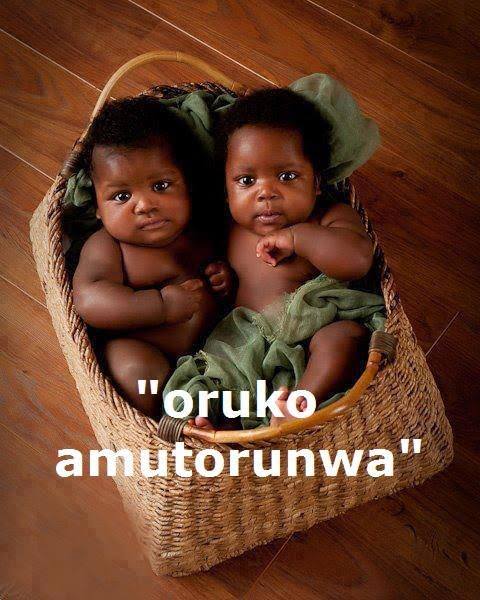
Oruko Amutorunwa (Pre-Destined Names) In Yorubaland

Published

on

In Yoruba land, one of the most important things done when a child is born is to give the child a name.

This comes after the child’s ritual birth, massage of specific body parts and other rites as well. Names are given to the child by the father, mother, grandparents (paternal and maternal) and some close relatives also. But sometimes, the circumstance of a child’s birth will automatically give the child a name. This name is known as ‘orúko àmútọ̀runwá’ (pre-destined or generic name) in Yorubaland.

The most common generic names (orúko àmútọ̀runwá) in Yoruba land are ‘Taiwo‘ and ‘Kehinde‘ (altogether known as Ìbejì) which are given to twins. The first born of the twins is called Táíwò, a shortened form of Tò-aiyé-wò (taste the world) while the last born of the twins is called Kéhìndé which literally means “the last to come”. Contrary to the popular belief that Taiwo, being the first born of the twins, is older than Kehinde, it is said by Yoruba elders that Kehinde is older than Taiwo because Taiwo was sent by Kehinde to have a taste of the world and announce his coming as well. The child, whether male or female, born after the twins is called Idowu. The Idowu is known to be stubborn and troublesome, and is therefore regarded as “Eshu lehin Ibeji” (the devil after twins).

The Yoruba people believe, though not strongly, that if the mother of a twins should fail to give birth to another child after the twins i.e. Idowu, she is likely to run mad because the spirit of the stubborn Idowu will fly into her head and make her go insane. The child born after Idowu is called Idogbe (if male) and Alaba (if female). In some cases where triplets are born, they are named Taiwo, Kehinde and Èta ọkọ̀ respectively.

See also  Legal advice deepens Mary Habila, Umahi’s death mystery

Apart from the twins series, other children born in Yoruba land in peculiar circumstances or ways are given pre-destined names too. They are as follows:

* Ilori– This is a child born during the absence of menstruation;

* Ojo and Aina– This is a child born with the umbilical cord twisted round his/her neck. If this kind of child is male, he is named Ojo, and if female, Aina;

* Dada– This is a child born with long, thick and curly hair which is not to be cut at anytime. Dada is also called Dada awuru or olowo ori and are known to be strong and stubborn;

* Oke– This is a child born with unruptured membranes all over his/her body;

* Olugbodi– This is a child born with supernumerary digits (six fingers);

* Ige– This is a child born with breech or footing presentation i.e. the child came out of the womb with the legs first;

* Omope– This is a child born later than the normal period of utero-gestation;

* Ajayi– This is a child born with face downwards. This child is also called Ogidi olu;

* Salako (male) or Talabi (female) – This is a child born with his/her body covered in rupted membranes;

* Abiona– This is a child born on a pathway usually when the mother is away from home or on a journey;

* Abiodun– This is a child born in festive periods;

* Jo‘hojo– This is a child whose mother died during labour;

* Babatunde– This is a male child born shortly after the death of his grandfather. It is believed the grandfather reincarnated. Babatunde literally mean ‘father has come again’;

See also  Lagos tops Nigeria’s HIV burden as new infections hit 102,025

* Yetunde– This is a female child born shortly after the death of her grandmother. Yetunde means ‘mother has come again;

* Babarimisa– This is a child whose father fled at his/her birth.

* Oni– This is a neurotic child who at his/her birth cries all day and night

It is important to note that having a pre-destined name does not mean that a child cannot have other names. A child can be given as many names as possible, but in most Yoruba families, the pre-destined (oruko amutorunwa) stands as the first name of the child.

Reference-

* Samuel Johnson; The history of the Yorubas, Lagos, CSS Limited; 1921; pg. 80-81
kindly join the thread by dropping your generic name in the comment box below.

FOLLOW US ON:

FACEBOOK

TWITTER

PINTEREST

TIKTOK

YOUTUBE

LINKEDIN

TUMBLR

INSTAGRAM

Continue Reading
Click to comment

Leave a Reply

Your email address will not be published. Required fields are marked *

Lifestyle

LACK OF TRUST IN MARRIAGE

Published

on

A marriage can survive difficult times, financial struggles, and disagreements—but when trust disappears, the relationship begins to lose its foundation.

When a husband no longer trusts his wife, or a wife no longer trusts her husband, even innocent actions can become suspicious. A simple phone call becomes a question. Coming home late becomes an accusation. A private conversation becomes a source of fear and jealousy.

Lack of trust creates emotional distance.

It produces constant suspicion, arguments, insecurity, resentment, and sometimes secretive behaviour. Instead of feeling safe with each other, couples begin to feel like enemies living under the same roof.

Trust is not built by controlling your spouse, checking their phone every minute, or constantly demanding explanations. Trust is built through honesty, faithfulness, transparency, consistency, and keeping your word.

If trust has been broken, don’t pretend everything is fine. Talk about it. Admit mistakes. Forgive where possible. Set healthy boundaries. And be willing to rebuild what has been damaged.

Remember: love may bring two people together, but trust helps keep them together.

💔 Don’t allow suspicion to destroy what communication and honesty can repair.

BUILD TRUST. BE FAITHFUL. BE HONEST. PROTECT YOUR MARRIAGE.

“Wherefore putting away lying, speak every man truth with his neighbour.”
— Ephesians 4:25 (KJV)

FOLLOW US ON:

FACEBOOK

TWITTER

PINTEREST

TIKTOK

YOUTUBE

LINKEDIN

INSTAGRAM

See also  Lagos tops Nigeria’s HIV burden as new infections hit 102,025
Continue Reading

Lifestyle

LACK OF OPENNESS IN MARRIAGE

Published

on

A marriage can look beautiful on the outside and still be struggling on the inside when there is no openness between husband and wife.

When couples stop communicating honestly, keep secrets, hide their feelings, or are afraid to discuss important issues, emotional distance begins to grow. What starts as “I don’t want to cause a problem” can eventually become mistrust, resentment, loneliness, and constant misunderstanding.

Openness does not mean telling your spouse everything in a hurtful or careless way. It means creating a safe relationship where both partners can honestly talk about their feelings, concerns, mistakes, finances, expectations, struggles, and dreams without fear of unnecessary humiliation or condemnation.

A strong marriage requires:

• Honest communication — Talk about problems instead of allowing them to grow in silence.
• Trust and transparency — Avoid unnecessary secrecy that can damage confidence in the relationship.
• Active listening — Listen to understand, not simply to respond or attack.
• Emotional vulnerability — Let your spouse know when you are hurting, worried, disappointed, or afraid.
• Respect — Honesty should never become an excuse for insults, threats, or emotional abuse.
• Forgiveness — When mistakes are acknowledged, work together toward healing and restoration.

The Bible says:

“Where no counsel is, the people fall: but in the multitude of counsellors there is safety.” — Proverbs 11:14 (KJV)

And:

“Let every man be swift to hear, slow to speak, slow to wrath.” — James 1:19 (KJV)

Marriage should be a place where two people can feel safe enough to communicate, honest enough to admit their weaknesses, and humble enough to work through their differences.

See also  Freedom or Fashion? Why women are going ‘ bra less’…

Don’t allow silence, secrets, and suspicion to build walls between you and your spouse. Talk. Listen. Understand. Forgive. Grow together.

❤️ Openness builds trust. Trust strengthens intimacy. And healthy communication helps build a stronger marriage.

FOLLOW US ON:

FACEBOOK

TWITTER

PINTEREST

TIKTOK

YOUTUBE

LINKEDIN

INSTAGRAM

Continue Reading

Lifestyle

THE EFFECT OF LAYING CURSES ON YOUR CHILDREN

Published

on

Be careful with the words you speak to your children.

A child should not grow up hearing, “You will never succeed,” “You are useless,” “Nothing good will come from you,” or “You will suffer in life.” Words spoken repeatedly by a parent can deeply affect a child’s emotions, confidence, and relationship with the family.

Even when spoken in anger, such words can become negative messages that a child may carry for many years.

SOME EFFECTS OF CONSTANTLY CURSING YOUR CHILDREN:

1. It can destroy their confidence.
Children need encouragement and guidance. Constant insults and negative declarations can make them believe they are not good enough.

2. It can create fear and insecurity.
A child who is constantly threatened or cursed may become afraid of making mistakes, expressing themselves, or trying new things.

3. It can damage the parent-child relationship.
Instead of seeing the parent as a source of love and protection, the child may grow resentful, distant, or bitter.

4. It can affect their emotional well-being.
Repeated humiliation, rejection, and negative words can contribute to sadness, anxiety, low self-worth, and emotional distress.

5. It can influence how they see themselves.
Children often believe what the people closest to them repeatedly tell them. Speak to the potential you want them to develop—not the failure you fear.

6. It can teach them to use hurtful words themselves.
Children learn from what they experience. If they grow up hearing curses and insults, they may eventually speak to others in the same way.

CORRECT YOUR CHILDREN, BUT DON’T DESTROY THEM.

See also  Freedom or Fashion? Why women are going ‘ bra less’…

Discipline is necessary, but discipline should teach—not humiliate. Correct their mistakes, set boundaries, explain consequences, and show them how to do better.

The Bible says:

“Death and life are in the power of the tongue: and they that love it shall eat the fruit thereof.”
— Proverbs 18:21 (KJV)

And:

“And, ye fathers, provoke not your children to wrath: but bring them up in the nurture and admonition of the Lord.”
— Ephesians 6:4 (KJV)

Your child may make mistakes today, but that does not mean their future is ruined.

Don’t curse your children. Correct them with wisdom. Pray for them. Encourage them. Bless them. Speak words that build their character, strengthen their confidence, and remind them that they are loved.

YOUR WORDS CAN LEAVE A SCAR OR BUILD A FUTURE.
CHOOSE YOUR WORDS WISELY.

FOLLOW US ON:

FACEBOOK

TWITTER

PINTEREST

TIKTOK

YOUTUBE

LINKEDIN

INSTAGRAM
Continue Reading

Trending