Connect with us

Lifestyle

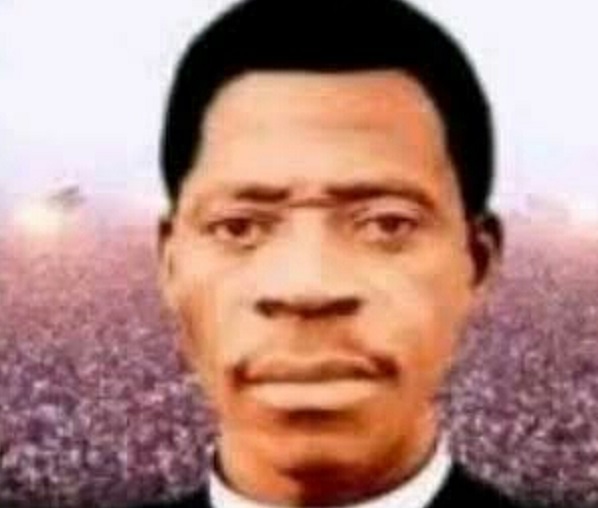
Apostle Joseph Ayodele Babalola – The Story of the Powerful Leader of the Christ Apostolic Church, popularly called CAC in Nigeria

Published

on

Apostle Joseph Ayodele Babalola – The Story of the Powerful Leader of the Christ Apostolic Church, popularly called CAC in Nigeria

Joseph Ayodele Babalola was born on April 25, 1904 to David Rotimi and Madam Marta Talabi who were members of the Anglican Church. The family lived at Odo-Owa in Ilofa, a small town about ninety kilometres from Ilorin in Kwara State, Nigeria. His father was the Baba Ijo (literally meaning, father of the church) of the C.M.S. Church at Odo-Owa. According to Pastor Medayese in his book, “Itan Igbe dide Woli Ayo Babalola”, mysterious circumstances surrounded the birth of Apostle Babalola. On that day, it was believed that a strange and mighty object exploded and shook the clouds

On January 18, 1914, Apostle Babalola was taken by his brother M.O. Rotimi, a Sunday school teacher in the C.M.S. Church at Ilofa, to Osogbo. Babalola started school at Ilofa and got as far as standard five at All Saints’ School, Osogbo. However, he quit school when he decided to learn a trade and became a motor mechanic apprentice. He did not continue long in this vocation before joining the Public Works Department (PWD) and he was among the road workers who constructed the road from Igbara-Oke to Ilesa, working as a steam roller driver.

Apostle Babalola was called by God into the prophetic office to stand before men. His strange experience started on the night of September 25th, 1928 when he suddenly became restless and could not sleep. This went on for a week and did not know the cause of such experience. One day when he was working on the Ilesa-Igbara-Oke road, the steam roller’s engine suddenly stopped to his utter amazement. There was no visible mechanical problem, and he became shocked. He was in this state of confusion when a great voice “like the sound of many waters” called him three times. The voice was loud and clear, telling him that he would die if he refused to heed the divine call to go into the world and preach. Babalola did not want to listen to this voice and he responded like many of the Biblical prophets, who, when they were called by God, did not normally yield to the first call. Apostle Babalola gave in only after he had received the assurance of divine guidance.

See also  More photos from Mr Eazi and Temi Otedola's wedding in Iceland

To go on the mission, he had to resign his appointment with the Public Works Department. Mr. Fergusson, the head of his unit, tried to dissuade him from resigning but Apostle Babalola was bent on going on the Lord’s mission. The same voice came to Apostle Babalola again, asking him to fast for seven days. He obeyed and at the end of the period he saw a great figure of a man who, according to Pastor Alokan, resembled Jesus. The man in a dazzling robe spoke at length about the mission he was to embark upon. The man also told him of the persecution he would face and at the same time assured him of God’s protection and victory. A hand prayer bell was given to Apostle Babalola as a symbol. He was told that the sound of the bell would always drive away evil spirits. He was also given a bottle of “life-giving water” popularly called “Omi-iye” to heal all kinds of sicknesses. Consequently, wherever and whenever he prayed into water, miracles of effective and total healing were recorded for those who drank the water. Thus, Babalola became a prophet and a man with extraordinary powers. Enabled by the power of the Holy Spirit, he could spend several weeks in prayer. Elder Abraham Owoyemi of Odo-Owa, said that the prophet regularly saw angels who delivered divine messages to him. An angel appeared in one of his prayers and forbade him to wear caps.

During one of his prayer sessions an angel appeared to him and gave him a big yam which he ordered him to eat. The angel told him that the yam was the tuber with which God fed the whole world. He further revealed that God had granted unto him the power to deliver those who were possessed of evil spirits in the world. He was directed to go first to Odo-Owa and start preaching. He was to arrive in the town on a market day, cover his body with palm fronds and disfigure himself with charcoal paints.

In October 1928, he entered the town in the manner described and was taken for a mad man. Babalola immediately started preaching and prophesying. He told the inhabitants of Odo-Owa about an impending danger if they did not repent. He was arrested and taken to the district officer at Ilorin for allegedly disturbing the town’s peace. The district officer later released him when the allegations could not be proven. However, it was said that a few days later, there was an outbreak of smallpox in the town. The man whose prophecies and messages were once rejected was quickly sought for. He went around praying for the victims and they were all healed

See also  Ned Nwoko breaks silence, blames Regina’s outburst on drug abuse

In March 1932, a warrant for the arrest of Babalola was issued from Ilorin in present Kwara State.

He was taken to Ilorin and then transferred to Benin City where he was charged to court.
He was sentenced to jail for six months in Benin City in March, 1932

an attempt to end the ministry of this resurging prophet who was causing some mission churches and the colonial government a great deal of concern.

Now, there was another prisoner at the Benin prison yard by the name Cyprian Ufon. Mr Ufon who hailed from Creek Town in Calabar area was very sick and depressed. Babalola prayed for him and he was healed and cured of his depression. He quickly became a follower of Babalola. Babalola later understood that he (Ufon) was the instrument of honour God had told him about during his prayer retreat at Ilofa.

Babalola electrified and turned the prison yard to a house of God. Many prisoners and warders were healed and saved.

Notably was the case of a pregnant lady, also from Creek Town who had safe delivery through the ministration of Babalola in the prison. The warders also brought their families and relatives to receive healing through the prayers of Babalola. On June 2, 1932, Pastors Idris Vaughan and George Perfect arrived in Nigeria as the first missionaries of the Apostolic Church based in Britain. They traced Babalola to Prison and paid him a visit. During the visit, the missionaries heard with their own ears what the Lord had done through Babalola in the lives of the warders and prisoners. Apostle Babalola was eventually released from prison in October, 1932 after serving his jail term.

The C.A.C. believes that the spiritual power bestowed on Babalola placed him on an equal level with Biblical apostles like Peter, Paul and others who were sent out with the authority and in the name of Jesus.

See also  My father fought well to stay alive – Onigbinde’s son

In 1930, his fame began to spread abroad most especially due to his amazing exploits at the Great Revival that happened at Ilesa which changed the spiritual climate of the western region. The impact of the great revival was felt virtually all over the country and Apostle Joseph Ayo Babalola became a force to be reckoned with in the Nigerian church. He became the leader of the pentecostal movement in Nigeria and his name was on every lip both of friends and foes, admirers and critics. Apostle Babalola however remained single and many of his family members, followers and colleagues became curious as to why he was not considering marriage being a church leader.

After persistent pressure from his father, Pa David Rotimi Talabi, Apostle Joseph Ayo Babalola got married to Dorcas on April 25, 1935. About 6000 people attended the wedding and he received a total gift of 3 pounds, 10 shillings and 6 pence. The wedding took place at the first Aladura assembly at Efon Alaaye and was conducted by Pastor David Odubanjo, Pastor J.S.B Odusona and Pastor Medaiyese. Apostle Babalola met his wife a virgin and had to give her 2 pounds and 10 shillings for the virginity, a custom of the Yoruba people at that time.

During their lifetime, Babalola used to call his wife ” Mama Abiye” and Dorcas would also call him “Baba Abiye”. They settled down in Efon Alaaye.

After a successful completion of his assignment, Apostle Joseph Ayo Babalola slept in the Lord in 1959.

Though he died several decades ago many CAC members still pray with his name. Whenever they pray they add Olorun Joseph Ayo Babalola. That is how much he is reverred by CAC adherents. He was the founder of Christ Apostolic Church (CAC).

Another noticeable feature of his work was the usage of water for healing which prompt the popular C.A.C song then: “Babalola Olomi Iye re o. Omi Iye, Iye, Iye, re o. Omi Iye…”

Tag a #CAC member.

Source:
The New People Movement
City People Magazine
Yorubaness

FOLLOW US ON:

FACEBOOK

TWITTER

PINTEREST

TIKTOK

YOUTUBE

LINKEDIN

TUMBLR

INSTAGRAM

Continue Reading
Click to comment

Leave a Reply

Your email address will not be published. Required fields are marked *

Lifestyle

Nigeria’s ambassador-designate to Algeria, Lele, dies at 50

Published

on

The Federal Government has announced the death of Nigeria’s ambassador-designate to Algeria, Mohammed Mahmud Lele, who died at the age of 50.

The Ministry of Foreign Affairs disclosed this in a statement issued in Abuja on Wednesday by its spokesperson, Kimiebi Ebienfa.

According to the ministry, Lele died in the early hours of April 19, 2026, in Ankara, Türkiye, after a protracted illness.

The ministry described the late diplomat as a dedicated officer who served the country with distinction.

“The late Ambassador Lele, until his death after a protracted illness, was the Director in charge of the Middle East and Gulf Division in the Ministry of Foreign Affairs.

“Ambassador Lele, a career diplomat, was recently appointed by President Bola Ahmed Tinubu as Ambassador-designate to the People’s Democratic Republic of Algeria, following the Nigerian Senate’s confirmation of his nomination,” the statement said.

Born in Gamawa, Bauchi State, in 1976, Lele studied Economics at Bayero University, Kano, and went on to serve in Nigerian missions in Berlin, Lomé and Riyadh.

“Ambassador Lele was known for his intellectual depth, strategic insight and commitment to the advancement of Nigeria’s foreign policy objectives,” the statement added.

The Permanent Secretary of the ministry, Dunoma Umar Ahmed, who received the remains of the late diplomat at the Nnamdi Azikiwe International Airport, Abuja, described him as “a hardworking, humble and fine officer, who will be sorely missed by the ministry.”

The ministry added that his death “is a monumental loss not only to his immediate family but also to the entire Foreign Service community and the Federal Republic of Nigeria.”

See also  Profile: Major General Akomaye Parker Undiandeye, Nigeria’s Chief of Defence Intelligence

Lele was buried on Wednesday in Kano in accordance with Islamic rites.

The ministry extended condolences to his family, associates, and the government and people of Bauchi State, praying for the peaceful repose of his soul and strength for those he left behind.

Continue Reading

Lifestyle

Governor Amuneke reveals party officials offered him dollars to alter anti-govt skits

Published

on

Comedian Kevin Chinedu, popularly known as Kevinblak, has revealed that officials of a political party offered him dollars to change his satirical skits criticising politicians and governance.

He made the disclosure on Monday in an interview on ARISEtv’s Arise 360 programme, where he spoke about the pressures facing content creators who hold public officials accountable through humour.

Chinedu, known for his character Governor Amuneke, said the approach came at a particularly vulnerable moment, shortly after his wife had a Caesarean section and he was under financial strain.

“They said they were going to change my life, that I’m earning crumbs, you know, give me dollars. They mentioned that my colleagues are in the game and all of that,” he said.

He declined to name the party, saying only that it was “Amuneke’s party”, a reference to the fictional political figure in his skits, and cautioned against any attempt to identify it publicly.

“Don’t mention names, trust me, don’t mention names,” he said.

Despite the financial pressure, the comedian said he turned down the offer, recalling how the officials had tried to lure him to Abuja with the promise of a life-changing sum.

“I had a lot of bills on my head and I just heard come, come to Abuja, let’s change your life. Dollars upon dollars,” he said.

He said he ultimately held firm, guided by a personal code he had maintained throughout his career.

“I looked at it, I said, no, I am who I am. I’ve been here for a long time, and I’ve never been in any illegal thing, and I’ve never been somewhere, you know, I’m doing something because I’m being influenced, because of money.

See also  More photos from Mr Eazi and Temi Otedola's wedding in Iceland

“If I want to do it, it should be something I’m doing because I want to do it. So, you know, it is what it is,” he said.

When asked whether friends had urged him to accept the money, Chinedu said his inner circle was equally principled, and had themselves been approached and refused.

“I don’t have friends that are easily overwhelmed with money. I have people who have principles because they have, you know, approached them, they themselves. So, we always have that conversation,” he said.

punch.ng

FOLLOW US ON:

FACEBOOK

TWITTER

PINTEREST

TIKTOK

YOUTUBE

LINKEDIN

INSTAGRAM

Continue Reading

Lifestyle

Over 4,600 Nigerian doctors relocate to UK in three years – Report

Published

on

Nigeria’s already fragile healthcare system is facing renewed strain as no fewer than 4,691 doctors have relocated to the United Kingdom since President Bola Tinubu assumed office on May 29, 2023, fresh data from the General Medical Council shows.

The UK GMC is a public official register detailing the number of practising doctors in the UK alongside other details such as their areas of speciality, country of training, among others.

The mass migration represents not just a human resource crisis but a significant economic loss.

With the Federal Government estimating that it costs about $21,000 to train a single doctor, Nigeria has effectively lost at least $98.5m in training investments within less than two years.

The figure put the total number of Nigeria-trained doctors currently practising in the UK to about 15,692, making Nigeria one of the largest sources of foreign-trained doctors in Britain, second only to India.

As of May 28, 2025, official records showed that the number of Nigerian-trained doctors in the UK was a little over 11,000. The figure has grown significantly since then.

The exodus of doctors comes as Nigeria’s doctor-to-population ratio hovers around 3.9 per 10,000 people, far below the minimum threshold recommended by the World Health Organisation.

For many health experts, the numbers confirm what has long been visible: a system gradually losing its most critical workforce.

The Nigerian Medical Association has repeatedly warned that poor remuneration, unsafe working conditions, and inadequate infrastructure are pushing doctors out of the country.

“Our members are overworked, underpaid and exposed to unsafe environments daily. Many are simply burnt out,” the NMA said in one of its recent statements addressing workforce migration.

See also  More photos from Mr Eazi and Temi Otedola's wedding in Iceland

Similarly, the National Association of Resident Doctors has consistently highlighted the toll on younger doctors, who form the backbone of Nigeria’s tertiary healthcare system.

“Doctors are leaving because the system is failing them—irregular salaries, excessive workload, and lack of training opportunities,” NARD noted during one of its nationwide engagements.

Ironically, the doctor exodus persists even as Nigeria continues to spend heavily on healthcare abroad.

While official foreign exchange data shows only modest spending on medical tourism in recent years, broader estimates suggest Nigerians still spend hundreds of millions of dollars annually seeking treatment overseas.

For instance, a recent report by The PUNCH revealed that foreign exchange outflow for health-related travel by Nigerians surged to $549.29m in the first nine months of 2025, a 17.96 per cent increase from $465.67m in the same period of 2024, according to official data by Nigeria’s apex bank.

A public health expert, Dr David Adewole, noted that the Federal Government’s national policy on health workforce migration, aimed at curbing the growing trend of health professionals leaving the country—commonly referred to as ‘Japa’—is a good initiative, but may not do much to address the fundamental problems of the shortage of skilled healthcare professionals in Nigeria, particularly in rural and underserved areas.

According to him, many of the push factors for health professionals emigrating to greener pastures, like insecurity, emolument and lack of basic amenities like potable water, health facilities, cost of living and constant electricity, persisted.

He stated: “To make healthcare workers stay here, let the salaries be enough so that what you earn will be much more than the multiples of what you need for basic needs, like food, power supply, housing, and so forth.

See also  Danish aid worker shares new photo of two boys rescued 11 years ago in Akwa Ibom after being accused of being witches

“People still look at life after retirement. You might have a good policy, but its implementation is the issue. For example, you are retired, and for your retirement package, you don’t need to know anyone for it to be processed promptly.

“Then subsequently, your monthly pension, without pressing anybody, should be paid. Those things are not here.

“And when you go to the hospital abroad, if you tell them that you are in a hurry, you go to your home; they’ll bring the medicines to your doorstep.”

Continue Reading

Trending