






Connect with us

News

FG defends passport price hike to N100,000, N200,000

Published

on

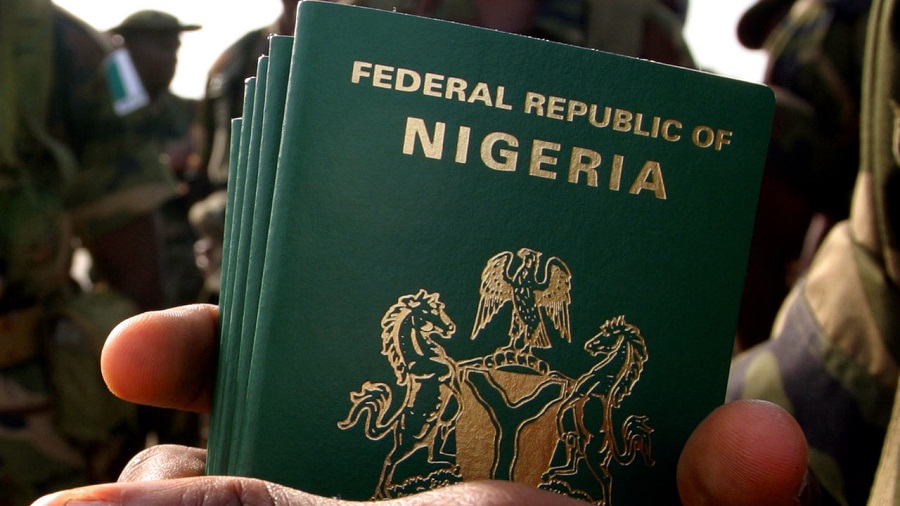
The Federal Government, on Thursday, defended the upward review of Nigerian passport fees to N100,000 and N200,000, saying it was necessary to sustain quality, curb corruption, and ensure timely delivery of travel documents.

The Nigeria Immigration Service, in a statement signed by its Public Relations Officer, ACI AS Akinlabi, on Thursday, announced that from September 1, 2025, applications made within Nigeria will attract new fees of N100,000 for the 32-page, five-year validity passport and N200,000 for the 64-page, 10-year validity passport.

“The review which only affect Passport Application fees made in Nigeria, now set a new fee thresholds for 32-page with five-year validity at N100,000 and 64-page with 10-year validity at N200,000,” the statement read.

The NIS, however, said Nigerians in the diaspora will continue to pay $150 for the 32-page, five-year passport and $230 for the 64-page, 10-year passport.

It explained that the adjustment was aimed at maintaining the integrity of the document while making issuance processes more efficient.

The increase comes barely a year after the Federal Government approved an earlier adjustment in August 2024, which raised the 32-page, five-year booklet from N35,000 to N50,000, and the 64-page, 10-year booklet from N70,000 to N100,000.

At the time, the NIS said the hike was necessary to sustain the quality of the passport and improve service delivery.

On Thursday, the Minister of Interior, Dr. Olubunmi Tunji-Ojo, defended the new hike.

Speaking in Abuja during the ministry’s mid-tenure performance retreat, Tunji-Ojo said the hike would ensure timely delivery of passport and eliminate corruption,

See also  Tinubu unveils renovated National Arts Theatre October 1

He said, “Our target is very clear: within one week of enrolment, every Nigerian should have their passport in hand. Not just delivering quickly, but delivering quality passports that reflect our integrity as a nation,” he said.

He noted that the new system was designed to eliminate long delays and extortion that once forced citizens to wait up to seven months or pay as much as N200,000 to fast-track processing.

“The system that we inherited that had six months backlog which we were able to clear in two and a half weeks. Nigerians will apply for passports and wait endlessly, or be asked to pay hundreds of thousands of naira.

“My own daughter had that bad experience. Even when I was chairman of the House Committee on NDDC, my daughter wanted passport, it was a problem. I had to pay hundreds of thousands to be able to get a passport for my daughter, a 12-year-old girl. That era is over,” Tunji-Ojo said.

The minister disclosed that the centralised personalisation centre, the largest in Africa, would ensure faster processing and tighter security.

“With this facility, we can print five times more passports than we currently need. Once you enrol, it doesn’t take us more than 24 hours to vet. Printing capacity is no longer our problem,” he explained.

As part of the reforms, Tunji-Ojo announced that Passport Control Officers will no longer have the power to approve or delay applications.

“Some PCOs had so much power that they could decide not to approve or not to print a passport until they were settled. That abuse of power ends now,” he declared.

See also  Trump adding $100k fee to H-1B visa application in latest crackdown on foreign workers

According to him, centralising the approval process would curb corruption and restore credibility to Nigeria’s travel documents.

“We realised that the best way to cut corruption is to remove human contact to the barest minimum. Passport approval will no longer rest with PCOs. My responsibility is not for them to like me — it is to deliver efficiency. Let Nigerians be happy,” he said.

He added that the reforms will also protect the integrity of Nigeria’s passport.

“My responsibility is not just to make passports available, but to ensure that anybody carrying it is a Nigerian. If you are not a Nigerian, you cannot carry it. It’s about our national integrity.”

Citing past abuses, he recalled how foreigners once procured Nigerian passports illegally.

“In one incident, a Ugandan woman carrying a Nigerian passport was arrested at Lagos Airport after paying $1,000 to procure it. That cannot continue. Our passport must remain a true symbol of Nigerian identity,” the minister stressed.

FOLLOW US ON:

FACEBOOK

TWITTER

PINTEREST

TIKTOK

YOUTUBE

LINKEDIN

TUMBLR

INSTAGRAM

Continue Reading
Click to comment

Leave a Reply

Your email address will not be published. Required fields are marked *

News

TikTok restricts late-night live access for Nigerian users

Published

on

TikTok has temporarily restricted access to its LIVE feature for users in Nigeria during late-night hours, issuing an in-app notice to creators as part of what it described as an ongoing safety investigation.

At midnight Nigerian time on Sunday, the platform sent a system notification to users stating,”LIVE⚫ Notices
TikTok LIVE Update in Nigeria
We’re temporarily limiting LIVE late at night in Nigeria as part of our investigation to ensure our platform remains safe and our community stays protected.”

File Copy: The notification gotten by the app users in Nigeria

Checks by PUNCH Online showed that LIVE sessions, which were active earlier in the night, became inaccessible between 11pm and 5am, with affected accounts displaying a “No Access” label.

The restriction also prevented creators from viewing LIVE broadcasts from other countries.

Only creators with at least 1,000 followers, the minimum requirement to host a LIVE session, received the notification.

Several confirmed that all LIVE activities had been halted overnight.

Despite the disruption, creators who earn through LIVE gifting have their balances and previous earnings intact, easing concerns of financial loss.

As of Monday morning, LIVE access had been restored, sparking discussions across social media as users speculated about the cause of the sudden, nationwide restriction.

Night-time hours are typically peak periods for Nigerian streamers who host matches, entertainment segments, trends and other interactive sessions that attract viewers and virtual gifts.

The development comes weeks after TikTok released updated safety statistics for West Africa.

During its West Africa Safety Summit in Dakar, Senegal, the company disclosed that in the second quarter of 2025, it took action against 2,321,813 LIVE sessions and 1,040,356 LIVE creators globally for violating its LIVE Monetisation guidelines.

See also  Pope Leo names Nigeria among countries witnessing Christian persecution

In Nigeria alone, 49,512 LIVE sessions were banned within the same period.

TikTok also reported removing 3,780,426 videos in Nigeria between April and June 2025 for breaching Community Guidelines, with 98.7% taken down before being viewed and 91.9% removed within 24 hours.

TikTok Live is an in-app feature letting users broadcast in real-time, fostering direct engagement with viewers through comments and virtual gifts, unlike pre-recorded videos, creating interactive sessions for Q&As, talent showcases, or just chatting.

To go live, you generally need 1,000+ followers (though sometimes less), be at least 16 (18 to earn money), have a clean account, and use the ‘+’ button to select ‘LIVE’, adding a title and effects before starting.

punch.ng

FOLLOW US ON:

FACEBOOK

TWITTER

PINTEREST

TIKTOK

YOUTUBE

LINKEDIN

TUMBLR

INSTAGRAM

Continue Reading

News

Nnamdi Kanu acted like Awolowo by disengaging lawyers — Consultant

Published

on

Aloy Ejimakor, legal consultant to the convicted leader of the Indigenous People of Biafra , Nnamdi Kanu, has likened him to the late Premier of the Old Western Region, Chief Obafemi Awolowo, over his decision to represent himself in court.

In a conversation with our correspondent on Sunday, Ejimakor suggested that Kanu’s refusal to hire lawyers may be delaying the filing of his appeal against his life imprisonment by the Federal High Court in Abuja.

“MNK has not filed his appeal yet because he has refused to hire lawyers. You know he disengaged us as his lawyers, so we now act in the capacity of a consultant. I am a consultant to him,” Ejimakor said. “I don’t know why he does not want a lawyer, but I believe it is because he is a great man. Many great men are like that. They believe you can’t present their case like they can themselves. Even Awolowo refused to hire lawyers in his time. MNK wants to represent himself, and there are about four or five processes he has to follow to file the appeal before the Appellate Court.”

Ejimakor also backed Kanu’s request to be tranferred to Abuja from the Sokoto Correctional Centre.

He said, “The court already said he can’t be in Kuje prison, so that is fine, but he needs to be closer to Abuja, so if the court will grant his motion to be transferred to Suleja prison or Keffi. To me, there is nothing special about any prison in Nigeria. They are all the same, but MNK needs to be close to Abuja.”

See also  Bianca Ojukwu meets Ghanaian officials over ‘Nigerians must go’ protest

During his trial, Kanu opted to represent himself after disengaging his legal team, headed by a former Attorney General of the Federation and Minister of Justice, Kanu Agabi (SAN).

On November 20, the court found him guilty on all seven terrorism-related charges brought by the Federal Government and sentenced him to life imprisonment.

Following his sentencing, Kanu was moved to the Sokoto correctional Facility due to concerns for his safety at Kuje, where previous prison breaks had been recorded.

He later filed a motion before Justice James Omotosho of the Federal High Court seeking a transfer from Sokoto to a custodial facility closer to Abuja, such as Suleja or Keffi.

In the motion, personally signed by him, Kanu asked that it be deemed moved in absentia and sought an order compelling the Federal Government or Nigerian Correctional Service to effect the transfer.

Citing eight grounds in the motion marked FHC/ABJ/CR/383/2015, Kanu explained that his detention in Sokoto—over 700 kilometres from Abuja—made it impracticable to prepare his notice of appeal and record of appeal.

He stressed that all persons critical to assisting him, including relatives, associates, and legal consultants, are based in Abuja.

“The applicant’s continued detention in Sokoto renders his constitutional right to appeal impracticable, occasioning exceptional hardship and potentially defeating the said right, in violation of Section 36 of the Constitution of the Federal Republic of Nigeria, 1999 (as amended),” the motion stated.

Kanu argued that transferring him to a facility nearer Abuja would enable him to effectively prosecute his constitutionally guaranteed right of appeal.

Continue Reading

News

U.S. Court Jails Nigerian Fraudster Oluwaseun Adekoya To 20 Years For Impersonation And 2M U.S.Dollars Fraud

Published

on

A U.S. federal court has sentenced Oluwaseun Adekoya, a Nigerian serial fraudster who operated under multiple aliases while running a sprawling nationwide bank-fraud and money-laundering enterprise, to 20 years in prison for masterminding schemes that stole and laundered more than $2 million through a network of impersonators, fake accounts, and coordinated withdrawals across several states.

Adekoya’s arrest and conviction capped years of sophisticated financial crimes that federal investigators say left a trail of victims stretching from New York to multiple U.S. states.

The case broke open after the State Employees Federal Credit Union (SEFCU), headquartered in Albany, New York, detected a pattern of suspicious impersonation transactions across Capital Region branches. SEFCU’s alert triggered a multi-agency federal investigation led by the FBI’s Albany Field Office, which eventually exposed Adekoya as the mastermind of an extensive identity-theft and bank-fraud ring involving at least 13 accomplices.

Investigators said Adekoya consistently reinvented himself with new identities, new roles, and new operational tactics, as he expanded the criminal enterprise. His run ended on December 12, 2023, when FBI agents executed a search warrant at his luxury apartment.

During the raid, Adekoya attempted to remotely wipe the primary cellphone used to coordinate the schemes. Agents nevertheless recovered a trove of incriminating evidence, including:

• Multiple burner phones
• High-end luxury items such as Rolex watches
• A $51,000 Tiffany engagement ring
• Designer handbags
• More than $26,000 sitting in a laundering account

All items have since been forfeited.

Following two superseding indictments that added charges and additional defendants, Adekoya was convicted on multiple fraud and money-laundering counts. He has remained in custody since his arrest.

See also  FRC, SEC push ethical governance at SCGN’s 20th anniversary

In addition to the 20-year sentence, he will serve five years of supervised release, pay over $2.2 million in restitution, remit a $1,100 special assessment, and faces removal from the United States upon completing his prison term.

Federal prosecutors said the ring relied on coordinated identity theft, impersonation of account holders, and strategic branch-by-branch withdrawals. Accomplices posed as legitimate bank customers, using stolen personal data to siphon funds, which were then laundered through controlled accounts, cash couriers, and luxury purchases.

The ring’s operations were “structured, disciplined, and highly adaptive,” investigators said, changing methods frequently to avoid detection.

Thirteen co-conspirators earlier pleaded guilty to roles ranging from impersonation to cash-movement, account manipulation, and logistical support. Their sentences include:

• David Daniyan, 61 (Brooklyn): 54 months’ imprisonment, one year supervised release, restitution over $2.2m.
• Kani Bassie, 36 (Brooklyn): 11 years’ imprisonment, five years supervised release; restitution pending.
• Davon Hunter, 27 (Richmond): 42 months’ imprisonment, three years supervised release, $469,499.18 restitution.
• Christian Quivers, 20 (Richmond): 42 months’ imprisonment, three years supervised release, $385,650 restitution.
• Jermon Brooks, 20 (Richmond): 36 months’ imprisonment, two years supervised release, $385,650 restitution.
• Akeem Balogun, 56 (Brooklyn): 21 months’ imprisonment, two years supervised release, $262,200 restitution.
• Victor Barriera, 64 (Bronx): Time served, three years supervised release, $203,352 restitution.
• Danielle Cappetti, 46 (Bronx): Time served, three years supervised release, $142,796 restitution.
• Jerjuan Joyner, 50 (Brooklyn): 12 months’ imprisonment, three years supervised release, $135,998 restitution.
• Gaysha Kennedy, 46 (Brooklyn): Time served, two years supervised release, $24,500 restitution.
• Crystal Kurschner, 44 (Brooklyn): Time served, three years supervised release, $220,850 restitution.
• Sherry Ozmore, 56 (Richmond): Time served, three years supervised release, $229,303.18 restitution.
• Lesley Lucchese, 53 (Manhattan): Pleaded guilty and awaits sentencing in 2026.

See also  Buhari’s voting bloc falls apart as followers pitch tents

U.S. prosecutors say the dismantling of Adekoya’s syndicate underscores the increasing sophistication of fraud networks operating across state lines, and the growing cooperation among federal, state, and local law-enforcement agencies to disrupt them.

Officials noted that the investigation required extensive coordination across jurisdictions and financial institutions, describing it as “a model of inter-agency effectiveness.”

Source: Newsmakerslive

FOLLOW US ON:

FACEBOOK

TWITTER

PINTEREST

TIKTOK

YOUTUBE

LINKEDIN

TUMBLR

INSTAGRAM

Continue Reading

Trending