Barely 17 months after the Tinubu administration first expressed interest in establishing a decentralised police force, several sociopolitical groups, civil society organisations and ex-service men and women have intensified calls for its implementation.
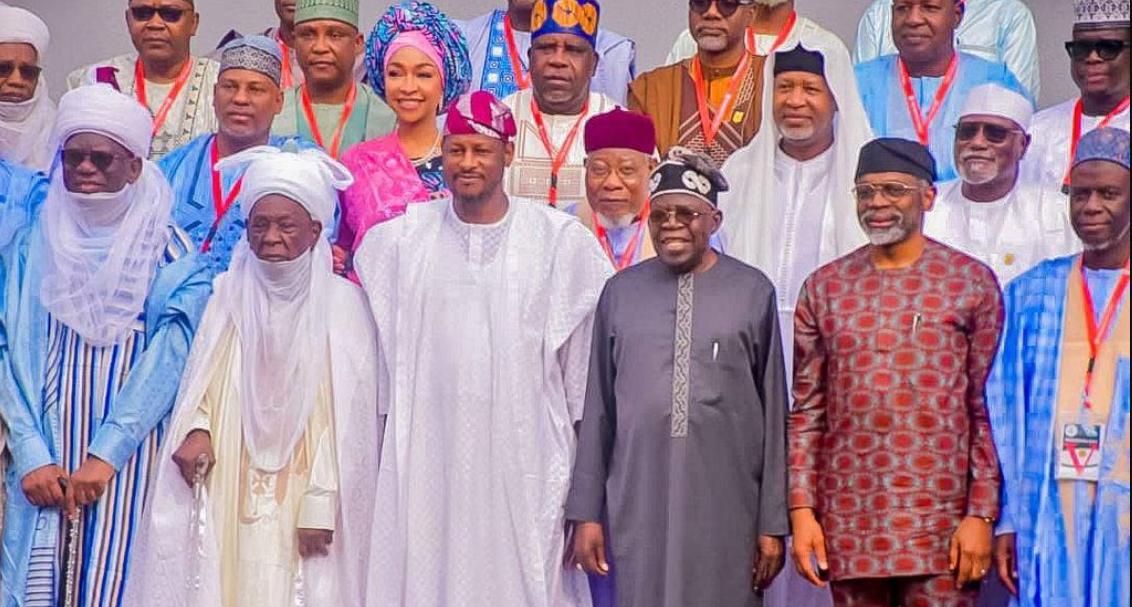
This followed Tuesday’s meeting between President Bola Tinubu and eminent citizens of Katsina State, where he stated that the Federal Government will hasten the devolution of power to the sub-national levels and further equip recently deployed forest guards.
“I am reviewing all the aspects of security; I have to create a state police,” Tinubu told the delegation led by Governor Dikko Radda.
On Thursday, the National Publicity Secretary of the pan-Yoruba socio-political organisation, Afenifere, Jare Ajayi, welcomed the renewed call by the President.
Speaking in Ibadan, the Oyo State capital, Ajayi expressed hope that Tinubu would remove delays clogging the implementation pipeline before the end of 2025.
“As is well known, the idea of state police has been on the front burner for quite a while. We recall that Tinubu has never hidden his desire to have state police.
“Indeed, going by the posture of Mr. President, one had thought that the scheme would have taken off before now,” he stated.
Ajayi cited a briefing by the Minister of Information, Mohammed Idris, who, in February 2024, announced Tinubu’s renewed move to create state police after talks with state governors at the Aso Rock Villa.
“We have a feeling that for Tinubu to again openly describe state police as inevitable now means that the Federal Government is ready to have it take off,” he opined.
According to him, the National Chairman of Afenifere Executive Committee, Olu Falae, called the creation of state police “long overdue.”
On February 15, 2024, the FG, alongside the 36 states, began talks expected to culminate in the creation of state police. This formed part of the agreements reached at the emergency meeting between the President and state governors.
It followed pockets of killings and kidnapping recorded nationwide, hikes in food prices and economic hardship.
The Minister of Information and National Orientation, who addressed journalists after the meeting, explained that the process was still in its infancy and would only take shape after more deliberations between stakeholders.
“The Federal Government and the state governments are mulling the possibility of setting up state police,” said Idris, adding that “this is still going to be further discussed. A lot of work must be done in that direction. But if our government and the state governments agree to the necessity of having state police, this is a significant shift.”
Consequently, the National Economic Council requested each state to submit detailed reports outlining their positions and plans for implementing state police.
By March 2024, 16 states had submitted their reports, with the remaining states expected to submit theirs by May. However, the lagging states only submitted their reports in December 2024.
Although all 36 states had submitted reports, NEC has delayed full deliberations on the issue three times.
On April 24, 2025, the Council deferred talks on State Police until its next meeting.
“Unfortunately, we were unable to get to that bit of it,” Bayelsa Governor, Duoye Diri, told State House Correspondents after the Council’s 149th meeting at the Aso Rock Villa.
NEC meetings are held on the last Thursday of the month. However, the gatherings have been infrequent over the last couple of months.
At its last meeting in August, the Council gave Kwara, Sokoto, Kebbi, and the Federal Capital Territory until September 9 to submit their positions, with a final decision expected in January 2026.
Kaduna State Governor, Uba Sani, confirmed that there is widespread agreement among state governments on the matter.
“Most of us agreed that the establishment of state police is the way forward. We have a lot of ungoverned space in Nigeria, and also we have a lot of deficit in terms of the number of boots on the ground,” Sani said.
The Afenifere spokesperson expressed regret that the Council had not convened another meeting since then to deliberate on the matter.
Ajayi said, “Governor Duoye Diri of Bayelsa State, who spoke with the media after the meeting, cited lack of enough time as the reason for not discussing it.”
The renewed calls come amid a surge in brutal attacks across multiple regions in recent weeks. On August 19, an armed assault on a mosque in Unguwan Mantau, Malumfashi LGA of Katsina State, during dawn prayers killed at least 50 worshippers.
In the northwest, the military freed 76 hostages, including children, in airstrikes targeting kidnappers near Pauwa Hill, following an earlier attack that left dozens dead.
In Zamfara State, a cholera outbreak further magnified the crisis, with eight dead and over 200 infected, as health response was delayed due to bandit violence.
According to the National Human Rights Commission, at least 2,266 people were killed in the first half of 2025, more than double the 1,083 deaths recorded during the same period in 2024, and already surpassing the total of 2,194 for the whole of last year.
Analysts say the security vulnerabilities have increased, particularly in areas where the national police are sorely overstretched or inaccessible.
Calls for state-level policing have also intensified, with most proponents arguing that the nationally administered Nigeria Police Force is too centralised to manage localised security threats effectively. Security experts say that decentralisation could empower states to respond more quickly and tailor strategies to local needs. Critics counter that state forces could be politicised, used by governors to suppress opponents.
Afenifere asserted that it had been calling for state police since the Buhari years and described Tinubu’s body language as laudable.
It called on the National Assembly to, as a matter of urgency, take all necessary steps to enact appropriate law and/or amend the relevant sections of the 1999 Constitution to facilitate the immediate take-off of state police.
MBF queries Tinubu’s readiness on state police
The Middle Belt Forum questioned the President’s commitment to tackling insecurity, citing the delays despite rising insecurity in the country.
Speaking in Jos on Thursday, the Forum’s national President, Dr. Bitrus Pogu, expressed concern, noting that the group had constantly advocated state police because it aligns with true federalism.
“We have continually advocated for state police. Our reasons are quite simple: current policing in Nigeria is not in line with true federalism, Pogu said.
He explained that at independence, Nigeria had a two-tier policing system, with the native authority police performing well before its abolition by the military.
“Since then, we have been in a mess,” he lamented.
Pogu dismissed concerns of potential abuse of state police by governors, saying, “We pretend and say if we have a state police, the state governors will abuse it, as if the Federal Government is also free from abusing it.”
He urged the FG to expedite the implementation of state police, stressing, “It is long overdue.”
PANDEF demands action
For its part, the apex socio-political body of the South-South geo-political zone, Pan Niger Delta Forum, said the establishment of state police is long overdue, urging the FG to order a constitutional amendment to give effect to it.
PANDEF said the existing vigilante groups working with regular police and traditional institutions suggest that state police exist, but without the necessary legal backing.
It observed that with the present structure of the police, in which a Commissioner of Police is answerable to the Inspector General and not the Governor, who is the chief security officer of the state is a drawback.
PANDEF’s National Publicity Secretary, Dr Obiuwevbi Ominimini, stated this while responding to questions from one of our correspondents on Thursday.
Ominimini stated, “PANDEF has been advocating for state police. That is one of the issues in the devolution of powers. We want more powers to be devolved to the sub-nationals.
“In Nigeria today, the insecurity is rising and it is only state policing that can help to curb the upsurge of insecurity. We want to emphasise that there is already the existence of state police. However, it has not been official.”
He continued, “What we are now advocating for is the legalisation of state police. For example, we have vigilantes working with traditional rulers, governors, and community leaders everywhere.
“In fact, in most police posts, the number of vigilantes that work with the police are more than the police themselves, which means there is already state policing, but it has not been legalised.
“So what we are saying is that the federal government should be sincere enough to legalise state policing. In fact, there should be a constitutional amendment to encourage state policing because the present structure, the structure of the Nigeria police, does not allow a commissioner of police to take instruction from the governor as against the instruction of IGP, AIG or DIG.”
Omonimini said state police will make the governors, who are the Chief Security Officers of their various states, effective.
On its part, the Movement for the Survival of the Ogoni People said the issue of state police, whilst important, is not the most pressing challenge in the country.
MOSOP argued that there would be no need for state police if the FG addressed core economic issues that lead to insecurity.
The Movement’s Publicity Secretary, Oscar Imeabe, who made this statement, criticised the government for not prioritising its responsibilities.
Imeabe said state policing is not the solution to Nigeria’s security woes.
“It is unfortunate that we have a government that is going about wrong with its priorities in the country.
“As much as we have insecurity in the country, as much as insecurity is one of the major setbacks we are having in the country, we believe that state police are not the solution to the security challenges we are facing,” he stated.
He said the push for state police is political to give the governors more powers to actualise their ambitions at the 2027 polls.
“Some of these security issues are a result of economic aspects. It is not when you talk about insecurity; there are factors that contribute to it.
“The current hardship in the country is enough to create insecurity. When people are unable to find a source of income and economic hardship becomes too great, it can also create insecurity.
“Then decisions and policies of the government are another thing that causes insecurity, it is not something that came out of the moon, but sometimes as a result of government policies,” he stated.
The Jigawa Next Forum, a prominent youth advocacy group, called on the Northern Elders Forum, Arewa Consultative Forum, and other influential groups to pressure both state governors and the FG over State Police.
In a phone interview on Thursday with The PUNCH Correspondent, the Forum’s leader, Habu Isa, expressed frustration over the delay.
“The prolonged silence and lack of movement by the Nigerian government and northern governors reflect a worrying lack of urgency. Our people are losing lives every day and the delay undermines efforts to restore peace,” he stated.
Isa explained, “It’s imperative that these leaders unite and show real leadership by fast-tracking the state police policy, which has been languishing in bureaucratic limbo. We cannot afford more delays. Our lives matter, and we expect our government and leaders to act decisively.”
Supporting this view, Jigawa-based activist Shu’aibu Kafingana told one of our correspondents in a separate interview: “We have waited long enough. The implementation of state policing is critical to addressing localised insecurity effectively. The National Economic Council’s delay is unacceptable, and those responsible must be held accountable.”
“Young people in Jigawa and across the north deserve better protection. We urge our leaders not to be distracted by politics but focus on actionable security reforms,” Kafingana added.
A former Commissioner of Police, Emmanuel Ojukwu, criticised the Federal Government’s handling of the debate on state policing, accusing authorities of indecision and lack of sincerity.
“Reading the body language of the government of the day, it does appear to me that they have an approach-avoidance conflict. They want state police and its advertised advantages. But they do not know what it implies and how to go about it. And they are not consulting experts,” Ojukwu said.
According to him, the Federal Government is deliberately reluctant because the existing policing structure benefits those in power.
“On the other hand, the government is playing hide-and-seek. They know the present system favours them. The unitary police, erroneously called federal, favours the government of the day.
“An impoverished, ill-trained and ill-equipped police favours the establishment. A system where there is no constabulary independence, and where the police is tied to the apron strings of the president favours the government. ,” he argued.
Ojukwu also accused lawmakers of avoiding their responsibility on constitutional reforms to address state policing, adding that the government was insincere in tackling insecurity, as there was no will to apprehend criminals.
“The NASS knows what to do to amend section 214 of the Constitution, but there is no seriousness in that regard. The government is paying lip service to the protection of the lives of the citizens. Every now and then, they tell us that they have identified the sponsors of terrorism. But that is where it stops. On television. There is no will to apprehend the oil bunkerers, vandals, or the actual benefactors of kidnapping and banditry,” he said.
FG reacts
The Minister of Information and National Orientation, Mohammed Idris, has defended the Tinubu administration over the delays in implementing state policing.
He assured Nigerians that the initiative remains a top priority in the government’s broader security reform agenda.
Idris gave the assurance on Thursday in an interview with The PUNCH, amid growing public frustration over the country’s worsening insecurity and criticism of perceived federal inaction.
“President Bola Tinubu’s avowal to create a state police stemmed from the need to add a layer to the national security apparatus in the country,” Idris said.
He noted that the delay in operationalising state police should not be interpreted as a lack of political will.
“The President was also clear that the objective required working with the National Assembly leadership to dismantle political and bureaucratic bottlenecks that could stall the operationalisation of the state police,” he added.
Idris emphasised that the initiative is being approached with the seriousness it deserves.
“The idea, and the agitation for a state police in Nigeria, is not new, but the President is keen to have additional security buffers that will be indigenous to the communities across our vast country,” he said.
He further noted that, “President Tinubu is deeply concerned about the security situation and is doing everything to stem the tide, through our gallant security forces who are out there protecting our nation from the actions of subversive elements.
“Certainly, the state police, which requires legislative mainstreaming, underscores the President’s total commitment to addressing the security situation through a multi-pronged approach.”
Meanwhile, the Northern Youth Council of Nigeria has branded the creation of state police a “misplaced priority” that would do little to reform the nation’s beleaguered security architecture.
In a statement issued on Thursday in Kaduna, the NYCN National President, Isah Abubakar, said the plan threatens to compound existing problems, including underfunding, manpower shortages, inadequate welfare packages, poor equipment, and alleged corruption in security agencies.
“It is a misplaced priority. Creating state police is simply a waste of time. What we need is a commitment to fix and strengthen the current system,” Abubakar said.
He maintained that existing institutions, especially the Nigeria Police Force, struggle with systemic constraints, including inadequate budgets and staff, outdated logistics, and operational inefficiencies.
Abubakar noted that if the government was serious about tackling insecurity, “there must be a robust recruitment drive and proper welfare provisions within the NPF rather than broadening the scope with new agencies.”
Highlighting the political risks of a state-controlled police force, he warned that such an entity could become a tool for intimidation and suppression.
“Nigerian politicians are not yet mature enough to handle a security structure without federal oversight. We are convinced they will abuse the authority entrusted to state police and violate citizens’ fundamental rights,” he said.
Abubakar proposed the immediate inauguration of a committee to overhaul and expand the Nigeria Police Force. According to him, a nation with a population exceeding 200 million currently operates with fewer than 300,000 officers, which he considers inadequate.
“We are proposing a law enforcement body of at least five million officers. That number better aligns with contemporary demands and demographic realities.
“History will vindicate us. In moments of crucial national decisions like this, we must add our voice and say no to state police.
“The alternative is to build a stronger, better-resourced, and more accountable federal police force, not a politically segmented one,” he added.
FOLLOW US ON:
FACEBOOK
TWITTER
PINTEREST
TIKTOK
YOUTUBE
LINKEDIN
TUMBLR
INSTAGRAM
















 News2 hours ago