Connect with us

Lifestyle

Actor Charlie Sheen opens up about sexual encounters with men for the first time

Published

on

Charlie Sheen is opening up about his past by getting candid about past sexual experiences with men.

The actor revealed all in two upcoming new projects — his memoir The Book of Sheen, due Sept. 9, and the Netflix documentary aka Charlie Sheen,  to be released on Sept. 1.

He admitted that after years of having sex with women, he decided to try something new.

He says he’s no longer hiding from his past, but owning it.

"I

“I’m not going to run from my past, or let it own me,” he tells PEOPLE in this week’s cover story.

In the documentary when the interviewer asks Sheen how it feels to be talking publicly for the first time about having sex with men, he says, “Liberating. It’s f***ing liberating… [to] just talk about stuff. It’s like a train didn’t come through the side of the restaurant. A f***ing piano didn’t fall out of the sky. No one ran into the room and shot me.”

Sheen, who also spoke about the subject Friday, September 5, on Good Morning America, says his sexual experiences with men began when he was using crack.

"I

“That’s what started it,” he says. “That’s where it was born, or sparked. And in whatever chunks of time that I was off the pipe, trying to navigate that, trying to come to terms with it — ‘Where did that come from?… Why did that happen? — and then just finally being like, ‘So what?’ So what? Some of it was weird. A lot of it was f***ing fun, and life goes on.”

See also  ‘Table talks ongoing’ – Doris Ogala gives update on face-off with Chris Okafor

During his drug-fueled exploits, Sheen contracted HIV, which he tried to keep private. However, some of his overnight guests would see his medication, take photos of it and then threaten to expose Sheen if he didn’t pay them. He paid them in the beginning, but then came out with his HIV status in 2015 on the Today show.

“I do know for a fact that I never passed it on,” he says of the virus.

Sheen says with the book and the documentary he just wanted to tell his full truth and own his stories, and he didn’t want to censor anything.

“The stories I can remember anyway,” he jokes. While he says he spent the past eight years making amends to people he’d hurt while he was spiraling with his drug and alcohol addiction, he doesn’t want to play the victim in the book or the doc.

“It takes two to tango,” he says.

These days, Sheen lives a much quieter lifestyle out of the spotlight, and he says he’s been single for years, after going through two very tumultuous divorces, with his exes Denise Richards and Brooke Mueller.

"I

“My romantic life is as uneventful as it possibly could be, and it’s been that way for a long time,” he says.

He adds, “But I am open to love again. Probably not marriage, though!”

Continue Reading
Click to comment

Leave a Reply

Your email address will not be published. Required fields are marked *

Lifestyle

STOP CONFUSING WEALTH WITH SUCCESS! NOT EVERYTHING THAT GLITTERS IS GOLD!

Published

on

In Nigeria today, if you drive an expensive car, build a mansion, wear designer clothes, and spray money at parties, many people will automatically call you a successful person.

Nobody asks questions. Nobody looks deeper. Everybody wants to associate with you!

But if you live in a modest house, drive an ordinary car, and live within your means, some people will look down on you as if you have failed in life.

What a dangerous way to measure human worth!

We live in a society where appearances can earn you more respect than character, where people are celebrated for displaying wealth but rarely questioned about the values behind it.

A man may build a magnificent mansion while his family is falling apart. A woman may post beautiful pictures every day while struggling emotionally. Someone may spray millions of naira at parties but owe people money. Another person may be living quietly, paying their bills, raising their children, and building a secure future without making noise on social media.

Who is truly successful?

The problem is not wealth. There is absolutely nothing wrong with being rich, driving a luxury car, or living in a beautiful house. The problem begins when we judge people entirely by what they possess instead of who they are.

In Nigeria, we must stop teaching our children that success means becoming rich at all costs. We must stop worshipping politicians and celebrities simply because they display wealth. We must stop assuming that everybody who travels abroad is doing better than those who remain at home.

See also  Olubadan seeks integration of traditional medicine with modern healthcare

A person’s lifestyle is not proof of their character, the source of their wealth, or the happiness they experience behind closed doors.

Dear Nigerians, learn to think beyond what your eyes can see. Ask questions. Examine facts. Value integrity over intimidation, wisdom over showmanship, and peace of mind over public applause.

Because at the end of the day, the size of your house cannot measure the quality of your life, and the price of your car cannot determine your worth as a human being.

LET ME ASK YOU A QUESTION:

If a Nigerian man drives a ₦150 million car but has no peace of mind, while another man drives an ordinary car, pays his bills, has a loving family, and sleeps peacefully every night, WHO IS TRULY RICH?

Are we celebrating genuine success in Nigeria, or have we become prisoners of appearances?

Drop your honest opinion in the comments. Let’s have a serious discussion!

Share this message if you believe Nigerians need to change the way they define success.

#Nigeria #NigerianSociety #NotEverythingThatGlittersIsGold #TrueSuccess #CriticalThinking #LifeLessons

FOLLOW US ON:

FACEBOOK

TWITTER

PINTEREST

TIKTOK

YOUTUBE

LINKEDIN

INSTAGRAM

Continue Reading

Lifestyle

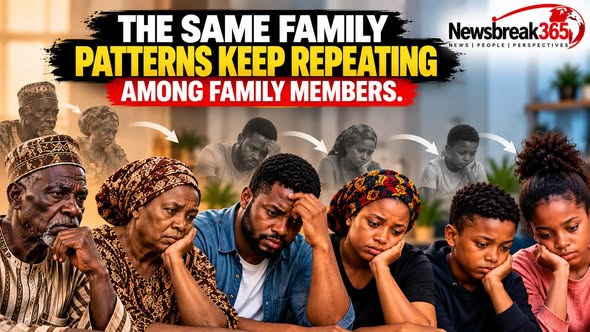
AFRICAN FAMILIES: WHY DO WE KEEP REPEATING THE SAME MISTAKES FROM ONE GENERATION TO THE NEXT?

Published

on

In many African families, the same problems seem to travel from grandparents to parents and from parents to their children. Different faces, different years, but sometimes the same suffering.

A grandfather who ruled through fear raises a father who believes that shouting is leadership. A mother who was silenced throughout her marriage may teach her daughter to endure the same treatment. Children who grew up watching their parents fight may enter adulthood without learning how to resolve conflict peacefully.

And when somebody dares to challenge these patterns, the response is often:

“THAT IS HOW WE WERE BROUGHT UP!”

But since when did the way we were raised become proof that everything we learned was right?

In some African households, questioning an elder is considered disrespect. Family secrets must remain hidden to protect the family name. Children are expected to obey, even when adults refuse to listen. Marriage problems are sometimes concealed to avoid public shame, while relatives pressure people to tolerate situations that deserve to be addressed.

We tell our children to respect their elders, but do we teach elders to respect their children?

We tell young people to preserve our culture, but do we encourage them to distinguish between valuable traditions and harmful habits?

We demand that children become successful, but do we examine the behaviours, attitudes, and family environments that shape their future?

AFRICAN CULTURE IS NOT THE PROBLEM. THE PROBLEM IS WHEN WE REFUSE TO QUESTION HARMFUL BEHAVIOURS SIMPLY BECAUSE THEY HAVE EXISTED FOR GENERATIONS.

See also  You’re a deadbeat father, Oluwo ex-wife slams monarch

Our ancestors passed down wisdom, courage, community spirit, and valuable traditions. We should preserve those things. But we should not blindly inherit every fear, prejudice, unhealthy relationship pattern, or destructive family rule.

Respect does not require silence. Love does not require suffering. Tradition does not excuse wrongdoing.

The African family must learn that breaking a harmful cycle is not a betrayal of one’s parents. Sometimes, it is the greatest gift a person can give the next generation.

Imagine an African generation that teaches boys emotional intelligence instead of aggression, girls self-respect instead of silent endurance, parents communication instead of intimidation, and families honesty instead of protecting appearances.

THAT IS HOW GENERATIONAL CHANGE BEGINS.

One generation must have the courage to question what the previous generation accepted.

One generation must be willing to heal what the previous generation ignored.

One generation must decide that its children deserve better.

LET’S TALK! 👇🏿

What is one harmful pattern in African families that you believe must end with our generation?

Is it excessive parental control, favouritism among children, family pressure, toxic marriages, fear of questioning elders, or hiding family problems to protect the family name?

Speak your mind respectfully. Someone reading your comment may realise that a cycle they considered normal can actually be changed.

#AfricanFamilies #AfricanCulture #BreakTheCycle #GenerationalPatterns #FamilyValues #AfricanSociety #Newsbreak365

FOLLOW US ON:

FACEBOOK

TWITTER

PINTEREST

TIKTOK

YOUTUBE

LINKEDIN

INSTAGRAM

Continue Reading

Lifestyle

BIG HOUSES. LUXURY CARS. EXPENSIVE LIFESTYLES. LOTS OF MONEY. YET, STILL NOT HAPPY.

Published

on

We live in a world where people are constantly told that happiness is waiting for them behind a bigger house, a more expensive car, designer clothes, exotic vacations, and a bigger bank account.

But here is the uncomfortable truth:

You can afford almost everything and still feel empty inside.

You can sleep in a mansion and still struggle to find peace.
You can drive a luxury car and still cry when nobody is watching.
You can have millions in the bank and still feel lonely.
You can post a perfect life online while privately fighting battles nobody knows about.

Money can buy comfort.
Money can buy opportunities.
Money can buy beautiful experiences.

But money cannot automatically buy purpose, genuine love, inner peace, or emotional fulfilment.

And this is something many societies—including African societies—need to talk about.

We often celebrate people because of what they own rather than who they are. We admire the car before asking whether the person behind the steering wheel is actually happy.

Maybe success should not only be measured by what you can buy.

Maybe success is also having peace of mind, meaningful relationships, good health, purpose, and the freedom to enjoy your life without constantly proving your worth to others.

Because at the end of the day:

A wealthy life is not necessarily a fulfilled life.

What do you think?

Can money buy happiness—or does happiness come from something deeper?

#Money #Happiness #Success #Wealth #Life #AfricanPerspective #MentalWellbeing #CriticalThinking #Purpose #SocialMedia

FOLLOW US ON:

FACEBOOK

TWITTER

PINTEREST

TIKTOK

YOUTUBE

LINKEDIN

INSTAGRAM

See also  Osisikankwu’s Reign of Terror in Abia State
Continue Reading

Trending