Connect with us

Lifestyle

Jonathan Adagogo Green: Nigeria’s First Indigenous Professional Photographer

Published

on

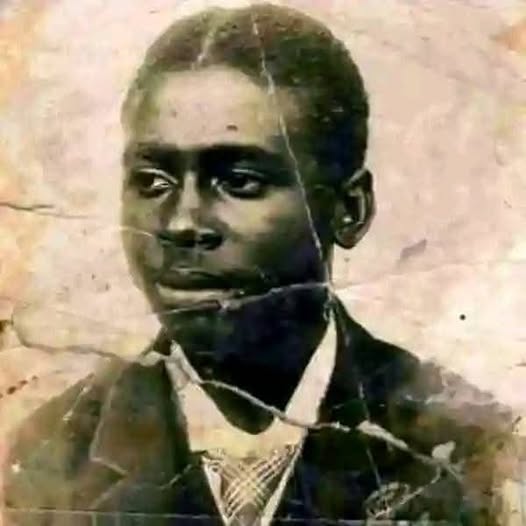
Jonathan Adagogo Green (1873–1905) occupies a unique place in Nigerian cultural history as the country’s first indigenous professional photographer. At a time when the camera was still a rare and foreign tool, Green used it to document the Niger Delta during an era of social transformation, leaving behind an invaluable visual record of both tradition and colonial encounter.

Early Life and Education

Born in Bonny, Rivers State, Green was of Ibani (Ijaw) heritage. His upbringing placed him at the heart of a cosmopolitan trading hub, where encounters with Europeans, missionaries, and local aristocracy shaped his worldview. Photography was still an emerging craft in West Africa when Green showed interest. He pursued formal training in Sierra Leone, where he studied the technical aspects of photography, though some scholars suggest he may also have apprenticed with European photographers in Nigeria before traveling.

By the time he returned home, Green had mastered his craft and set up his own studio in Bonny, a groundbreaking step that made him one of the first Nigerians to establish a professional career in photography.

Career and Artistic Vision

Green’s portfolio was as diverse as it was culturally rich. His subjects included:

Local chiefs and dignitaries, often portrayed in elaborate regalia that emphasized traditional authority.
British colonial officials, reflecting the growing imperial influence in the Niger Delta.

Everyday life, trade, and rituals, which provided an intimate glimpse into the rhythms of a society navigating both continuity and change.

His work was widely distributed in postcards and albums, circulating within Nigeria and beyond. This not only shaped local identity but also framed how outsiders perceived the Niger Delta.

See also  Beko Ransome-Kuti: Human Rights Activist and Physician

Green had a distinctive eye for balance. His portraits often juxtaposed tradition and modernity—capturing chiefs in ceremonial attire alongside colonial officers in uniform, or Nigerian elites in European suits still rooted in indigenous culture. His photography, therefore, was not merely aesthetic but interpretive, offering commentary on the hybrid realities of colonial-era Nigeria.

Challenges of Recognition
For decades, Green’s identity was obscured by his English surname. Many early historians mistakenly assumed he was a European photographer, which delayed the recognition of his role as a Nigerian pioneer. It was only through scholarly research that his Ibani (Ijaw) heritage and indigenous identity were firmly established.

Legacy

Though his career was cut short by his untimely death in 1905 at just 32 years old, Jonathan Adagogo Green left behind a powerful archive of images that remain central to Nigeria’s visual history. Many of his works are preserved in the National Museum, Lagos, as well as in international collections.

In 2003, the National Gallery of Art in Abuja curated an exhibition of his works, reaffirming his status as the “father of Nigerian photography.” Scholars like S. O. Ikpakronyi have since helped cement his rightful place in the narrative of Nigeria’s cultural heritage.

Today, Green is celebrated not just as a photographer but as a visionary who understood the power of the image in defining identity, culture, and history. His work bridged the gap between tradition and modernity, leaving a legacy that continues to inspire generations of Nigerian photographers and visual storytellers.

Source: Ikpakronyi, S. O. Jonathan Adagogo Green: Pioneer Nigerian Photographer. National Gallery of Art, Abuja, 2003.

See also  I want nine kids, says ex-BBNaija housemate Liquorose

FOLLOW US ON:

FACEBOOK

TWITTER

PINTEREST

TIKTOK

YOUTUBE

LINKEDIN

TUMBLR

INSTAGRAM

Continue Reading
Click to comment

Leave a Reply

Your email address will not be published. Required fields are marked *

Lifestyle

Nigeria’s ambassador-designate to Algeria, Lele, dies at 50

Published

on

The Federal Government has announced the death of Nigeria’s ambassador-designate to Algeria, Mohammed Mahmud Lele, who died at the age of 50.

The Ministry of Foreign Affairs disclosed this in a statement issued in Abuja on Wednesday by its spokesperson, Kimiebi Ebienfa.

According to the ministry, Lele died in the early hours of April 19, 2026, in Ankara, Türkiye, after a protracted illness.

The ministry described the late diplomat as a dedicated officer who served the country with distinction.

“The late Ambassador Lele, until his death after a protracted illness, was the Director in charge of the Middle East and Gulf Division in the Ministry of Foreign Affairs.

“Ambassador Lele, a career diplomat, was recently appointed by President Bola Ahmed Tinubu as Ambassador-designate to the People’s Democratic Republic of Algeria, following the Nigerian Senate’s confirmation of his nomination,” the statement said.

Born in Gamawa, Bauchi State, in 1976, Lele studied Economics at Bayero University, Kano, and went on to serve in Nigerian missions in Berlin, Lomé and Riyadh.

“Ambassador Lele was known for his intellectual depth, strategic insight and commitment to the advancement of Nigeria’s foreign policy objectives,” the statement added.

The Permanent Secretary of the ministry, Dunoma Umar Ahmed, who received the remains of the late diplomat at the Nnamdi Azikiwe International Airport, Abuja, described him as “a hardworking, humble and fine officer, who will be sorely missed by the ministry.”

The ministry added that his death “is a monumental loss not only to his immediate family but also to the entire Foreign Service community and the Federal Republic of Nigeria.”

See also  PHOTOS: Imoleboja Rock Shelter: Kwara State’s Natural Cathedral of Stone

Lele was buried on Wednesday in Kano in accordance with Islamic rites.

The ministry extended condolences to his family, associates, and the government and people of Bauchi State, praying for the peaceful repose of his soul and strength for those he left behind.

Continue Reading

Lifestyle

Governor Amuneke reveals party officials offered him dollars to alter anti-govt skits

Published

on

Comedian Kevin Chinedu, popularly known as Kevinblak, has revealed that officials of a political party offered him dollars to change his satirical skits criticising politicians and governance.

He made the disclosure on Monday in an interview on ARISEtv’s Arise 360 programme, where he spoke about the pressures facing content creators who hold public officials accountable through humour.

Chinedu, known for his character Governor Amuneke, said the approach came at a particularly vulnerable moment, shortly after his wife had a Caesarean section and he was under financial strain.

“They said they were going to change my life, that I’m earning crumbs, you know, give me dollars. They mentioned that my colleagues are in the game and all of that,” he said.

He declined to name the party, saying only that it was “Amuneke’s party”, a reference to the fictional political figure in his skits, and cautioned against any attempt to identify it publicly.

“Don’t mention names, trust me, don’t mention names,” he said.

Despite the financial pressure, the comedian said he turned down the offer, recalling how the officials had tried to lure him to Abuja with the promise of a life-changing sum.

“I had a lot of bills on my head and I just heard come, come to Abuja, let’s change your life. Dollars upon dollars,” he said.

He said he ultimately held firm, guided by a personal code he had maintained throughout his career.

“I looked at it, I said, no, I am who I am. I’ve been here for a long time, and I’ve never been in any illegal thing, and I’ve never been somewhere, you know, I’m doing something because I’m being influenced, because of money.

See also  PHOTOS: Victoria Aguiyi-Ironsi (1923–2021)

“If I want to do it, it should be something I’m doing because I want to do it. So, you know, it is what it is,” he said.

When asked whether friends had urged him to accept the money, Chinedu said his inner circle was equally principled, and had themselves been approached and refused.

“I don’t have friends that are easily overwhelmed with money. I have people who have principles because they have, you know, approached them, they themselves. So, we always have that conversation,” he said.

punch.ng

FOLLOW US ON:

FACEBOOK

TWITTER

PINTEREST

TIKTOK

YOUTUBE

LINKEDIN

INSTAGRAM

Continue Reading

Lifestyle

Over 4,600 Nigerian doctors relocate to UK in three years – Report

Published

on

Nigeria’s already fragile healthcare system is facing renewed strain as no fewer than 4,691 doctors have relocated to the United Kingdom since President Bola Tinubu assumed office on May 29, 2023, fresh data from the General Medical Council shows.

The UK GMC is a public official register detailing the number of practising doctors in the UK alongside other details such as their areas of speciality, country of training, among others.

The mass migration represents not just a human resource crisis but a significant economic loss.

With the Federal Government estimating that it costs about $21,000 to train a single doctor, Nigeria has effectively lost at least $98.5m in training investments within less than two years.

The figure put the total number of Nigeria-trained doctors currently practising in the UK to about 15,692, making Nigeria one of the largest sources of foreign-trained doctors in Britain, second only to India.

As of May 28, 2025, official records showed that the number of Nigerian-trained doctors in the UK was a little over 11,000. The figure has grown significantly since then.

The exodus of doctors comes as Nigeria’s doctor-to-population ratio hovers around 3.9 per 10,000 people, far below the minimum threshold recommended by the World Health Organisation.

For many health experts, the numbers confirm what has long been visible: a system gradually losing its most critical workforce.

The Nigerian Medical Association has repeatedly warned that poor remuneration, unsafe working conditions, and inadequate infrastructure are pushing doctors out of the country.

“Our members are overworked, underpaid and exposed to unsafe environments daily. Many are simply burnt out,” the NMA said in one of its recent statements addressing workforce migration.

See also  Actor Odunlade Adekola has sadly lost his father

Similarly, the National Association of Resident Doctors has consistently highlighted the toll on younger doctors, who form the backbone of Nigeria’s tertiary healthcare system.

“Doctors are leaving because the system is failing them—irregular salaries, excessive workload, and lack of training opportunities,” NARD noted during one of its nationwide engagements.

Ironically, the doctor exodus persists even as Nigeria continues to spend heavily on healthcare abroad.

While official foreign exchange data shows only modest spending on medical tourism in recent years, broader estimates suggest Nigerians still spend hundreds of millions of dollars annually seeking treatment overseas.

For instance, a recent report by The PUNCH revealed that foreign exchange outflow for health-related travel by Nigerians surged to $549.29m in the first nine months of 2025, a 17.96 per cent increase from $465.67m in the same period of 2024, according to official data by Nigeria’s apex bank.

A public health expert, Dr David Adewole, noted that the Federal Government’s national policy on health workforce migration, aimed at curbing the growing trend of health professionals leaving the country—commonly referred to as ‘Japa’—is a good initiative, but may not do much to address the fundamental problems of the shortage of skilled healthcare professionals in Nigeria, particularly in rural and underserved areas.

According to him, many of the push factors for health professionals emigrating to greener pastures, like insecurity, emolument and lack of basic amenities like potable water, health facilities, cost of living and constant electricity, persisted.

He stated: “To make healthcare workers stay here, let the salaries be enough so that what you earn will be much more than the multiples of what you need for basic needs, like food, power supply, housing, and so forth.

See also  PHOTOS: Man marries two wives same day in Abia

“People still look at life after retirement. You might have a good policy, but its implementation is the issue. For example, you are retired, and for your retirement package, you don’t need to know anyone for it to be processed promptly.

“Then subsequently, your monthly pension, without pressing anybody, should be paid. Those things are not here.

“And when you go to the hospital abroad, if you tell them that you are in a hurry, you go to your home; they’ll bring the medicines to your doorstep.”

Continue Reading

Trending