Connect with us

Lifestyle

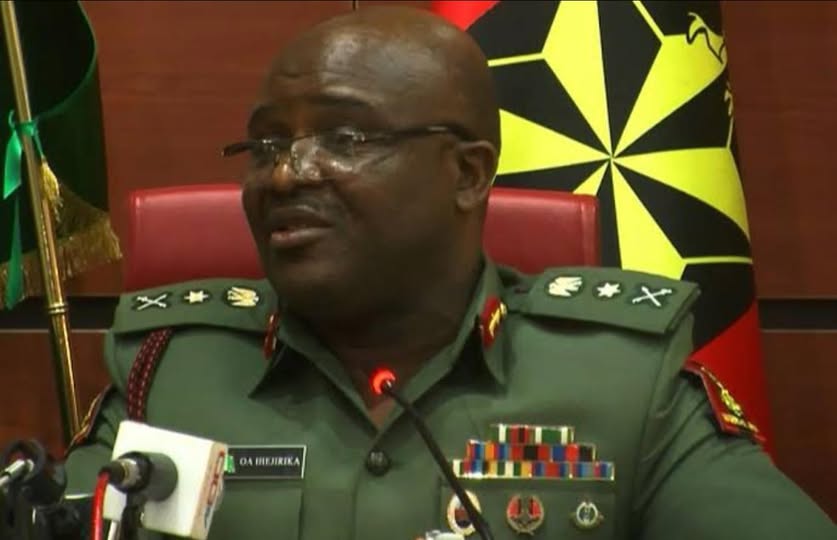
Lieutenant General Onyeabor Azubuike Ihejirika: Nigeria’s First Igbo Chief of Army Staff and Counter-Terrorism Reformer

Published

on

Lieutenant General Onyeabor Azubuike Ihejirika, CFR (b. February 13, 1956), is a retired Nigerian Army officer who served as the Chief of Army Staff (COAS) from September 2010 to January 2014.

His tenure marked a decisive moment in Nigeria’s fight against Boko Haram, as he spearheaded reforms that reshaped the Army’s counter-terrorism strategy and infrastructure.

He also holds historical significance as the first Igbo officer to be appointed Chief of Army Staff since the Nigerian Civil War (1967–1970)—a development that carried deep symbolic weight in the country’s post-war reconciliation.

Early Life and Military Career

Born in Isuikwuato, Abia State, Ihejirika excelled in academics and graduated from Williams Memorial High School in 1975.

He joined the Nigerian Defence Academy and was commissioned into the Army Engineers Corps as a second lieutenant in December 1977.

He expanded his expertise with a BSc in Quantity Surveying from Ahmadu Bello University, and attended the Armed Forces Command and Staff College, Jaji, as well as the National War College, Nigeria.

Over his military career, he held several critical positions, including:

Commander, 41 Division Engineers

Acting General Officer Commanding (GOC), 1 Division

GOC, 81 Division

Principal Staff Officer at Defence and Army Headquarters

Directing Staff, Command and Staff College

These posts prepared him for the challenges he would later face as Nigeria’s Army Chief.

Tenure as Chief of Army Staff

Appointed in 2010 by President Goodluck Jonathan, Ihejirika assumed command at the height of Boko Haram’s insurgency.

His leadership was defined by reforms and operational strategies that targeted Nigeria’s evolving security threats.

See also  2026: Pastor Adeboye predicts reduction in hunger, growth of small businesses

Expansion of Army Deployment

He established new army brigades in the North-East, increasing the military’s footprint in the region most affected by Boko Haram.

Building Counter-Terrorism Capacity

Ihejirika created specialized schools for counter-terrorism and counter-insurgency, professionalizing the Army’s response to asymmetric warfare.

Strengthening Doctrine and Discipline

He cautioned soldiers against collusion with insurgents and introduced reforms in training, barracks infrastructure, and special unit formation.

These measures aimed to improve morale, effectiveness, and loyalty within the ranks.

Public Accountability

In 2012, he publicly reported that Boko Haram had killed more than 3,000 Nigerians since 2009, underscoring the scale of the crisis and the need for new military doctrines.

Controversy and Exoneration

In 2014, Australian hostage negotiator Stephen Davis alleged that Ihejirika, alongside former Borno governor Ali Modu Sheriff, had funded Boko Haram. Ihejirika strongly denied the accusations and filed a N100 billion defamation suit.

The State Security Service (SSS) later cleared his name. Spokesperson Marilyn Ogar described the allegations as “wicked and uncharitable,” praising Ihejirika’s counter-insurgency efforts (Daily Trust, 2014).

Legacy and Recognition

After his retirement in January 2014, Ihejirika was honored in his community with the chieftaincy title “Dike Abia” (Warrior of Abia). His legacy rests on:

Strengthening Nigeria’s military structures during the insurgency.

Building specialized counter-terrorism institutions and training.

Serving as a historic symbol of national unity as the first Igbo Army Chief post-civil war.

Today, he remains an important voice in discussions on Nigerian military reform, counter-terrorism policy, and national service.

Sources
Daily Trust – SSS exoneration and related commentary

See also  Youths hold prayer session in Kano to celebrate Seyi Tinubu at 40

FOLLOW US ON:

FACEBOOK

TWITTER

PINTEREST

TIKTOK

YOUTUBE

LINKEDIN

TUMBLR

INSTAGRAM

Continue Reading
Click to comment

Leave a Reply

Your email address will not be published. Required fields are marked *

Lifestyle

Tinubu, Soyinka, Ladoja relive NADECO battle at Opadokun’s book launch; read details

Published

on

President Bola Tinubu, Nobel laureate Prof Wole Soyinka, and the Olubadan of Ibadanland, Oba Rashidi Ladoja, on Wednesday, relived memories of Nigeria’s pro-democracy struggle at the unveiling of a book written by General Secretary, National Democratic Coalition, Ayo Opadokun.

The book, titled “The NADECO story,” was unveiled at the Shell Hall of the MUSON Centre, Onikan, Lagos.

The event featured a historical reflection and a national call for continued defence of democratic values by pro-democracy actors, leading statesmen and scholars.

Speaking on behalf of Tinubu, former Ogun State Governor, Chief Olusegun Osoba, said the administration recognised the sacrifices made by NADECO members and other pro-democracy activists, noting that their actions helped preserve Nigeria’s democratic trajectory.

Tinubu said the struggle against military dictatorship came with enormous personal risks, including exile, detention, harassment and loss of livelihood.

“The President has asked me to convey his deep appreciation to all those who stood firm at a very difficult period in the history of our country,” he said.

He added that Nigeria’s current democratic stability could not be divorced from the courage of those who resisted military rule in the 1990s.

“What you did then laid the foundation for the democracy we are all enjoying today,” he said.

Tinubu also recalled the internal dynamics of NADECO, noting that the coalition brought together politicians, activists, labour leaders and intellectuals who were united by the goal of restoring democratic governance.

He urged younger Nigerians to study the history of the struggle to better appreciate the country’s democratic evolution.

On his part, Soyinka described “The NADECO Story” as a rare historical correction, saying it provided authenticity to a period often distorted in public discourse.

See also  Youths hold prayer session in Kano to celebrate Seyi Tinubu at 40

“I have had to describe Nigeria as a republic of liars,” Soyinka said, adding that “This is one instance where I will say the nation is redeemed from that reputation of permanent lying.”

He said the book stood out because it combined personal experience, documentary evidence and investigative narration of events that defined the resistance against military rule.

“Every page of this book rings of truth – truth that can be verified even by those who were not directly involved,” he said.

Soyinka, however, warned against reducing the struggle to a simplified narrative, stressing that the resistance movement was complex, dispersed and sustained by countless unnamed actors.

“If we were to tell the full story of that struggle, we would be here for a year, perhaps even longer,” he said.

The Nobel laureate paid tribute to late pro-democracy figures, particularly Dr Beko Ransome-Kuti, whom he described as “one of the most fearless and tragic figures of that era.”

Recounting his exile years, Soyinka said the struggle stretched across continents and involved clandestine meetings, financial sacrifices and personal risks.

“There were individuals who disappeared from our lives after playing their roles. They were not seeking recognition; they simply answered the call of history,” he said.

He also called for broader recognition of lesser-known participants, including citizens who contributed materially or logistically to the struggle.

“Sometimes it was just someone picking up a bill, or offering shelter, or quietly helping activists survive,” he said, adding that “Those gestures mattered more than we often admit.”

Soyinka further urged Nigerians to consider symbolic gestures of recognition for all contributors to the democratic struggle, saying their sacrifices should not be forgotten.

In his remarks, Oba Ladoja said democracy was preserved not only by those who protested publicly but also by individuals who worked quietly behind the scenes.

See also  The First Reported Three-Storey Building in Lagos: Petesi Anduru

“People think that everybody must be on the streets. I think some of us might be in the background and do our work effectively,” he said.

Ladoja described himself as a committed democrat, noting that his political journey during the military era included participation in political processes, exile, and engagement with key figures in the pro-democracy movement.

“I am a democrat, and I will do anything to protect democracy,” he said.

The monarch recalled the turbulence of the Abacha era and how political rivalries and national struggles intersected at local and national levels.

He stressed that the June 12 crisis was not only about national leadership but also about grassroots political struggles and survival within a volatile system.

The event attracted a wide array of participants, including Dr Olisa Agbakoba, Dr Joe Okei-Odumakin, Dr Labaran Maku, Prof Anthony Kila, Wahab Shittu (SAN), Sam Omatseye, Tokunbo Ajasin, Moshood Erubami, Laolu Akande, Prof Sylvester Akhaine, among others.

In his welcome address, the author, Opadokun, described the event as a historic milestone aimed at correcting distortions in Nigeria’s democratic history.

He said ‘The NADECO Story’ was a documentation of resistance against military rule between 1994 and 1998, capturing sacrifices made by individuals and groups who opposed dictatorship.

“This ceremony is not just about remembrance. It is about national healing, historical accuracy and civic education,” Opadokun said.

He said many contributors to the struggle had been overlooked, adding that the book was an attempt to ensure that future generations understand the cost of democracy.

Between 1994 and 1998, he said, Nigeria stood at “the edge of political and moral collapse,” but was saved by the courage of activists, journalists, and international allies who resisted authoritarian rule.

See also  2026: Pastor Adeboye predicts reduction in hunger, growth of small businesses

“Men and women chose truth over fear and sacrifice over comfort,” he said.

Reviewing the book, Prof Sylvester Akhaine said ‘The NADECO Story’ provided a critical intervention in Nigeria’s historiography, particularly in correcting narratives around the June 12 struggle and military dictatorship.

He said many accounts of Nigeria’s political transition had been shaped by those who benefited from power, leaving gaps in historical documentation.

“The NADECO Story comes as a necessary corrective to distorted narratives,” he said.

Akhaine added that the book also highlighted structural issues in Nigeria’s political development, including federal imbalance, military interference and elite contests for power.

He noted that the annulment of the June 12, 1993, election remained a turning point that reshaped Nigeria’s democratic journey.

The event also saw renewed appeals for national recognition of all actors in the pro-democracy movement, including lesser-known contributors whose roles, speakers said, were often overlooked.

The event featured the presentation of awards to media houses, journalists, civil society organisations, diplomats, individuals, activists, and institutions who were committed to the struggle for democracy.

The PUNCH newspapers received an award for its “steadfast reporting of our activities which sustained the voice of freedom in the face of repression, intimidation and closure.”

punch.ng

FOLLOW US ON:

FACEBOOK

TWITTER

PINTEREST

TIKTOK

YOUTUBE

LINKEDIN

INSTAGRAM

Continue Reading

Lifestyle

Singer Niniola loses husband

Published

on

Nigerian afro-house singer, Niniola Apata, has announced the death of her husband.

The Grammy-nominated artist made the disclosure in a series of emotional posts on her Instagram story in the early hours of Wednesday.

Her husband, Michael Ndika, was the Chief Executive Officer of NaijaReview, a multimedia platform focused on afro-house and contemporary African music. before his death

“God took him,” she wrote in the first post.

“My husband died,” she added in a second.

In a third, she wrote: “God took him. 13 years. 13 f***ing years.”

Photo: Officialniniola

Each post came with a photo of she and her husband.

The circumstances of the death of her husband were not immediately disclosed as she has always kept her private life away from the public and social media.

Apata, 39, rose to prominence after finishing as a top contestant on Project Fame West Africa in 2013 and has since become one of Nigeria’s most celebrated music exports.

Her 2017 single, Maradona, earned international acclaim, drawing collaborations and recognition from artists including DJ Snake, Drake, Timbaland, and Beyoncé.

Photo: Officialniniola


Photo: Officialniniola

punch.ng

FOLLOW US ON:

FACEBOOK

TWITTER

PINTEREST

TIKTOK

YOUTUBE

LINKEDIN

INSTAGRAM

See also  Youths hold prayer session in Kano to celebrate Seyi Tinubu at 40
Continue Reading

Lifestyle

New SlumPact initiative to empower women, youth in underserved areas

Published

on

A newly established non-governmental organisation, the SlumPact Initiative, has officially launched its operations in Nigeria, pledging a commitment to transforming informal settlements and driving inclusive development across the country.

The group, according to a statement on Sunday, enters Nigeria’s development space at a critical time when millions of citizens residing in slum environments continue to battle severe socio-economic challenges, including substandard housing, deplorable healthcare access, high unemployment rates, and systemic social exclusion.

Speaking at the official launch of the non-profit organisation, the Founder of the SlumPact Initiative, Prof. Davies Adeloye, stated that the group’s primary mandate is to bridge the widening gap between overlooked populations and sustainable economic opportunities.

Adeloye said, “Our initiative is not just about addressing poverty but also about unlocking potential, amplifying voices, and fostering dignity within communities that are often overlooked

Communities defined by deprivation also possess immense potential, and we are set to deliver sustainable, community-driven interventions that improve the overall quality of life.”

Reaffirming the organisation’s strategic focus on the most vulnerable demographics within these informal sectors, the management noted that its core framework relies heavily on multi-sectoral collaboration to achieve lasting impact.

The statement read, “The organisation will focus on empowering vulnerable populations, especially women, youth, and children, through targeted programmes that address both immediate needs and long-term development goals. SlumPact Initiative’s strategy is anchored on collaboration, working closely with local communities, government institutions, development partners, and private sector stakeholders to ensure that its interventions are impactful and sustainable.”

Addressing the gathering of development experts, stakeholders at the event noted that the intervention aligns seamlessly with national priorities and international developmental frameworks.

See also  Another Nigerian found dead in UK apartment

“The launch is highly timely given the increasing need for structured and scalable interventions in Nigeria’s rapidly growing informal settlements. The organisation’s focus directly aligns with national development priorities and global frameworks such as the Sustainable Development Goals, particularly those related to poverty reduction, sustainable cities, and reduced inequalities,” the stakeholders added.

The SlumPact Initiative concluded its launch by announcing that its operational roadmap will span critical development areas, including youth empowerment, skills acquisition, public health awareness campaigns, and active advocacy for inclusive urban policies.

In line with its values, management is committed to transparency, financial accountability, and measurable impact across all project locations.

As operations begin in designated informal settlements, the NGO is calling on corporate bodies, government agencies, international donor entities, and public-spirited individuals to partner with the movement to build resilient communities and create clear pathways out of poverty for vulnerable Nigerians.

Continue Reading

Trending