Connect with us

Lifestyle

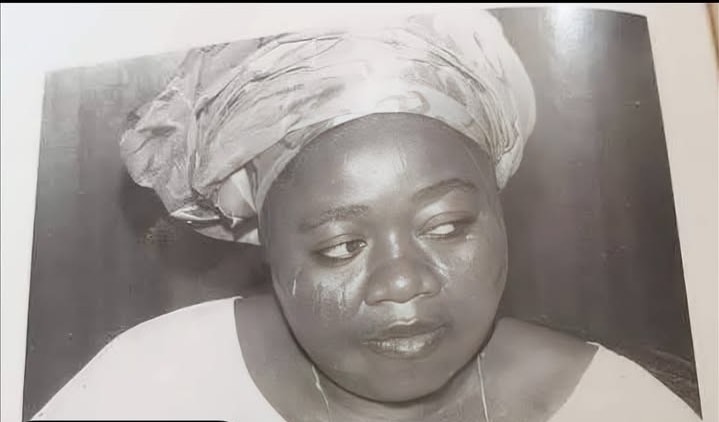
Alhaja Suliat Adedeji: The Businesswoman and Political Activist Silenced by the Abacha Regime

Published

on

Alhaja Suliat Adedeji was a Nigerian businesswoman, philanthropist, and political figure from Ibadan, Oyo State, who became one of the most notable civilian casualties of Nigeria’s military dictatorship under General Sani Abacha. Her murder on November 14, 1996, remains one of the darkest symbols of state-linked political violence during that period.

Early Life, Education, and Background

Born in Ibadan, Oyo State, Suliat Adedeji grew up in a modest Yoruba household but rose to prominence through hard work and an entrepreneurial spirit. Although little is documented about her formal education, she became known for her intelligence, business acumen, and passion for social justice. Over the years, she established herself as a successful trader and business tycoon in Ibadan’s commercial scene, earning respect among political leaders and local communities alike.

Her wealth and influence did not isolate her from the struggles of everyday Nigerians—rather, they deepened her desire to advocate for fairness and justice. Her home was a meeting point for grassroots politicians, activists, and young people she mentored.

Political Involvement and Activism

Adedeji was deeply involved in politics during the early 1990s, particularly during the tense period following the annulment of the June 12, 1993, presidential election, which was widely believed to have been won by Chief Moshood Kashimawo Olawale (M.K.O.) Abiola. She was a strong supporter of Abiola’s democratic mandate and a vocal critic of the Abacha-led military regime.

Her political activities placed her in the crosshairs of the authorities. She was known for openly challenging military oppression and for funding political movements that called for the restoration of democracy in Nigeria. This boldness, in an era when many were silenced by fear, made her both respected and targeted.

See also  PHOTOS: First Lady, Remi Tinubu, showcases vegetables she harvested from Aso Villa Garden

Death and Circumstances

On the night of November 14, 1996, armed men stormed her residence in Bodija, Ibadan, and brutally murdered her in cold blood. Reports from multiple sources, including local newspapers and human rights organizations, suggested that her assassination was politically motivated. It occurred at the height of General Sani Abacha’s crackdown on pro-democracy activists, journalists, and opposition figures.

Her killers were allegedly linked to state security agents, though no one was ever formally convicted. The chilling message her murder sent resonated across Nigeria: that those who dared to oppose the dictatorship risked their lives.

Family and Personal Life

Alhaja Suliat Adedeji was a mother and a devout Muslim. She was widely known for her generosity and commitment to her community, providing financial support to widows, students, and struggling families in Ibadan. Even in her success, she lived close to her people, hosting communal gatherings and empowering women to engage in business and civic life.

Her family, deeply affected by her untimely death, continues to honor her legacy as a woman who lived courageously for the sake of justice and truth.

Legacy

Alhaja Suliat Adedeji is remembered as a martyr for democracy in Nigeria. Her name is often mentioned alongside other victims of political repression during the 1990s. In Ibadan, her story is told as that of a woman who refused to be silenced in the face of tyranny.

Her murder is still cited by historians, activists, and journalists as an example of the human cost of Nigeria’s struggle for democracy. It stands as a reminder of the sacrifices made by courageous individuals whose vision for a freer Nigeria transcended personal gain.

See also  Bukky Wright Warns Fans Against Fake Accounts, Disowns Fraudulent UK Job Offer

Sources:

The Guardian Nigeria: “Remembering Alhaja Suliat Adedeji”

Vanguard Newspaper: “The Assassination That Shook Ibadan”

Premium Times: “Abacha Years: Revisiting the Deaths That Defined an Era”

Nigeria History Channel: “Women of Courage: The Story of Suliat Adedeji”

FOLLOW US ON:

FACEBOOK

TWITTER

PINTEREST

TIKTOK

YOUTUBE

LINKEDIN

TUMBLR

INSTAGRAM

Continue Reading
Click to comment

Leave a Reply

Your email address will not be published. Required fields are marked *

Lifestyle

Women Who Love and Listen to Their Pastors More Than Their Husbands Should Be the Pastor’s Second Wife

Published

on

This statement may sound funny, provocative, or even offensive, but it raises an important question about priorities in marriage and religion.

A pastor is a spiritual leader, but he is not supposed to replace a woman’s husband. If a married woman consistently values her pastor’s opinions above her husband’s, obeys her pastor while dismissing her husband, or shows greater loyalty and admiration toward her pastor than toward her spouse, then something may be seriously wrong with the balance in that marriage.

Marriage requires communication, mutual respect, trust, and understanding. A pastor can provide spiritual guidance, but that guidance should not become a reason for a husband and wife to lose respect for each other.

At the same time, husbands should not expect their wives to obey them blindly. Both husband and wife should seek God’s wisdom, communicate openly, and make decisions with love and respect.

So perhaps the real question is not whether such a woman should become the pastor’s “second wife,” but why has the pastor become more important in her marriage than her own husband?

Put God first. Respect your spouse. And never allow a spiritual leader to become a substitute for your marriage partner.

FOLLOW US ON:

FACEBOOK

TWITTER

PINTEREST

TIKTOK

YOUTUBE

LINKEDIN

INSTAGRAM

See also  Umaru Dikko: Statesman, Diplomat, and the “Dikko Affair”
Continue Reading

Lifestyle

Why is it only in Africa that we hear so much about “generational curses”?

Published

on

This is a question worth asking—not to insult African traditions or dismiss anyone’s beliefs, but to encourage honest reflection.

Across Africa, it is common to hear people explain repeated family problems as a “generational curse.” When poverty, broken relationships, addiction, failure, sickness, family conflict or misfortune appears to repeat from one generation to another, some people immediately conclude that an ancestor, spiritual force or past wrongdoing is responsible.

But is every repeated family problem truly a curse?

If a child grows up in poverty, has limited access to quality education, receives little financial support and then struggles as an adult, is that necessarily a spiritual curse—or could it be the result of circumstances that have been passed from one generation to another?

If children grow up watching violence, substance abuse, unhealthy relationships or constant conflict, they may unknowingly repeat those patterns. That does not necessarily mean they are cursed. Sometimes behaviour is inherited through environment, not through supernatural forces.

And Africa is certainly not the only place where people believe in supernatural explanations for suffering or misfortune. Different societies around the world have their own concepts of inherited wrongdoing, family misfortune, ancestral consequences, fate and spiritual punishment.

So perhaps the more important question is not:

“Who cursed my family?”

But:

“What pattern has been passed down to me, and what can I do to stop passing it to the next generation?”

We should be careful not to use the idea of a curse to discourage people from taking action. A family facing poverty may need education, opportunity and financial planning. A family experiencing repeated conflict may need healthier communication. A person struggling with addiction may need professional support and a strong recovery environment. Communities facing injustice may need better institutions, accountability and opportunity.

See also  Katsina to sponsor mass wedding for 1,000 couples

Faith and spirituality are deeply meaningful to many people, and everyone has the right to hold their beliefs. But faith should not prevent us from examining the practical causes of our problems.

We cannot change the past, but we can change what we pass forward.

Instead of teaching our children that they are victims of an unavoidable family curse, let us also teach them knowledge, discipline, emotional strength, financial responsibility, education, healthy relationships and the courage to break destructive patterns.

Maybe the greatest “curse” is not something mysterious placed upon a family.

Maybe sometimes it is simply a problem that nobody stopped long enough to understand and change.

And the greatest inheritance we can give the next generation is not fear of a curse—but the knowledge and courage to build a better future.

FOLLOW US ON:

FACEBOOK

TWITTER

PINTEREST

TIKTOK

YOUTUBE

LINKEDIN

INSTAGRAM

Continue Reading

Lifestyle

You are very proud to speak big English, but yet you cannot speak your own language?

Published

on

There is nothing wrong with speaking English fluently. In fact, being able to communicate confidently in different languages is a valuable skill. But we should ask ourselves a deeper question: while learning to speak the language of another culture, are we slowly losing the language that connects us to our own roots?

Your mother tongue is more than just words. It carries the stories of your ancestors, the wisdom of your grandparents, the jokes that only your people understand, the traditional greetings, the names, the songs, the history and the identity of your community.

Imagine being able to speak perfect English, but struggling to have a simple conversation with your own grandmother because you do not understand the language she grew up speaking. Imagine your children knowing foreign languages but being unable to understand the language of their own heritage.

That should make us pause.

Speaking English does not make you more intelligent, and speaking your indigenous language does not make you less educated. One is a communication skill; the other can be a connection to your heritage. We should not have to choose between being educated and preserving our identity.

Learn English. Speak it confidently. Learn French, Dutch, Spanish or any other language that opens doors for you.

But don’t let the pursuit of foreign languages close the door to your own.

Teach your children your language. Speak it at home. Ask your parents and grandparents to teach you the words you never learned. If you have forgotten it, it is never too late to start again.

See also  PHOTOS: Nollywood Actress Binta Ayo Mogaji

Because when a language disappears from a family, something precious disappears with it.

Be proud of your education. Be proud of your ability to speak English. But also be proud of where you come from.

Your language is not something to be ashamed of. It is a part of your story. Preserve it before the next generation only knows it as something their ancestors once spoke.

FOLLOW US ON:

FACEBOOK

TWITTER

PINTEREST

TIKTOK

YOUTUBE

LINKEDIN

INSTAGRAM

Continue Reading

Trending