
Connect with us

Education

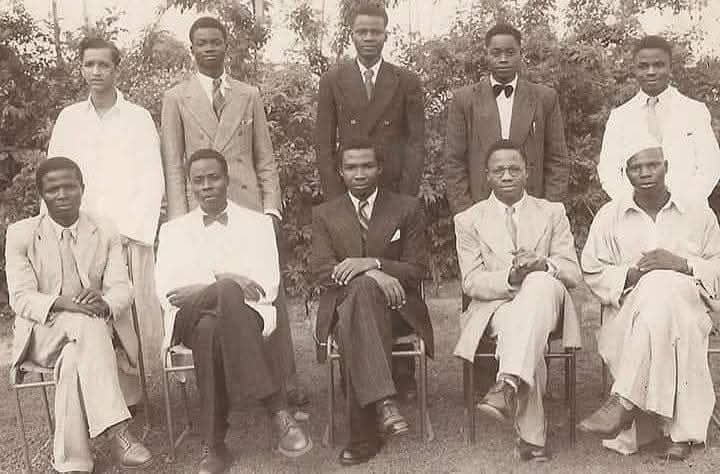
The First Graduating Set of Medical Doctors from University College, Ibadan, 1951

Published

on

In 1951, Nigeria marked a defining milestone in its educational and healthcare history: the graduation of the first set of medical doctors trained locally at University College, Ibadan (UCI). This historic event symbolized the beginning of self-reliance in medical training, reducing dependence on British institutions, and laying the groundwork for modern medical education in the country.

The Birth of Medical Training in Nigeria

University College, Ibadan, was established in 1948 as the country’s first university-level institution. It began as an affiliate of the University of London, which supervised its curriculum and examinations to ensure international standards. Among its earliest faculties was the Faculty of Medicine, designed specifically to address the shortage of indigenous doctors in colonial Nigeria.

Before this development, Nigerians who aspired to practice medicine had to study abroad, mostly in Britain. Notable pioneers such as Dr. Isaac Ladipo Oluwole (1892–1953) trained overseas, often at great personal and financial cost. The establishment of UCI’s medical school changed this dynamic permanently.

The First Seven Medical Doctors

In 1951, only seven students successfully completed the rigorous program to become the first medical graduates trained in Nigeria. This small but groundbreaking group included:

Dr. Ishaya Audu, later the first professor of medicine from Northern Nigeria, Vice Chancellor of Ahmadu Bello University, Zaria, and Nigeria’s Ambassador to the United States.

Dr. Olajide Akinoso, who went on to make significant contributions in medical practice and public health.

Several others who would rise to prominence in clinical medicine, education, and administration.
Though small in number, this cohort represented a turning point in the nation’s history.

See also  Tinubu Makes Fresh Appointment In Education Sector (Full List)

Significance of the 1951 Graduation

This graduation was not merely ceremonial; it was revolutionary. For the first time, Nigeria had produced its own cadre of doctors within its borders, trained to the same standards as their British counterparts. The development gave Nigeria confidence in its capacity to sustain higher education and professional training locally.

It also reflected the colonial government’s recognition of the need to indigenize the health sector at a time when infectious diseases, maternal mortality, and shortages of healthcare workers posed urgent national challenges.

Ishaya Audu: A Pioneering Figure

Among the seven, Dr. Ishaya Audu stood out as a trailblazer. Beyond his medical career, he became a statesman and educator, embodying the multiple roles that graduates of that first set would go on to play in Nigeria’s development. His journey illustrated how the medical profession could serve as a springboard for leadership in other national spheres.

From University College, Ibadan to the University of Ibadan

It is important to note that in 1951, the institution was still University College, Ibadan (UCI), functioning under the University of London. Full autonomy came later in 1962, when it was renamed the University of Ibadan (UI), becoming Nigeria’s first independent university. The medical school that began with seven graduates now produces hundreds of doctors annually and remains one of Africa’s foremost training centers.

Legacy

The 1951 graduates were more than pioneers—they were nation-builders. They helped establish the credibility of Nigerian medical education, mentored subsequent generations, and shaped healthcare policies in the decades that followed.

Today, their legacy lives on in the University of Ibadan’s College of Medicine, which stands as a leading institution for research, clinical training, and innovation in Africa. The journey that began with seven doctors in 1951 has now produced thousands, ensuring that the vision of self-reliance in healthcare continues to thrive.

See also  FG, ASUU unveil agreement to end strikes, varsities closures

Sources
University of Ibadan Archives

FOLLOW US ON:

FACEBOOK

TWITTER

PINTEREST

TIKTOK

YOUTUBE

LINKEDIN

TUMBLR

INSTAGRAM

Continue Reading
Click to comment

Leave a Reply

Your email address will not be published. Required fields are marked *

Education

How Nigerians can apply for 2027/2028 UK commonwealth scholarship – FG

Published

on

The Federal Ministry of Education has invited qualified Nigerian university graduates to apply for the 2027/2028 Commonwealth Scholarships and Fellowship Plan, with applications closing on October 20, 2026.

The scholarship notice was shared by the Lagos State Scholarship Board.

The scholarships, which are tenable in the United Kingdom, are available for a one-year taught Master’s programme or doctoral studies of up to three years.

The notice was issued by the ministry’s Department of Scholarship Awards, formerly known as the Federal Scholarship Board, and signed by the Director Overseeing the Office of PSE, Dr Folake Olatunji-David, for the Minister of Education.

According to the notice, applicants for the Master’s category must have a first degree with at least a Second Class Upper Division.

For doctoral studies, applicants are required to possess a relevant Master’s degree in addition to at least a Second Class Lower Division in their first degree.

Applicants for both categories must have secured admission into at least two UK institutions.

Doctoral applicants are also required to provide a supporting statement from a prospective supervisor at their chosen UK institution.

The ministry further listed evidence of participation in the National Youth Service Corps among the eligibility requirements.

The notice stated that the selection process would focus on three key areas.

“Applications will be assessed on Academic merit, Development impact on completion and Quality of Study plan,” it said.

How to apply

The notice said all applications must be submitted through the Electronic Application System.

Applicants are required to register on the EAS portal and complete the application form online.

See also  School not scam, foundation warns pupils

They must also upload scanned copies of their passport photographs, university academic transcripts, birth certificates and admission letters received from a UK institution listed in the application form.

Completed applications must be submitted online on or before October 20, 2026.

After submitting the application, candidates are required to create a PDF version of the completed form, download and print one hard copy for submission at the interview venue.

The notice said foreign certificates must be accompanied by official translation and evaluation.

It also advised applicants to consider Nigeria’s developmental priority areas relevant to their fields of specialisation when preparing their study proposals.

The priority areas include education; health; economic growth and the private sector; governance and conflict; climate and environment; water and sanitation; engineering; science and technology; food and nutrition; and humanitarian disasters and emergencies.

The ministry also advised prospective applicants to ensure that their proposed studies align with Nigeria’s development needs.

Prospective applicants were advised to consult the Commonwealth Scholarship Commission website for further information on the scholarship and selection criteria.

Further enquiries may be directed to the Director, Department of Scholarship Awards, through fsb@education.gov.ng, 09124516750 or 09082454557.

Application portal: https://cscuk.fcdo.gov.uk/scholarships-results/?wpv_view_count=13930&wpv-cscukscholarshipcountry=nigeria&wpv_filter_submit=search


Source: punchng.com

FOLLOW US ON:
FACEBOOK

TWITTER

PINTEREST

TIKTOK

YOUTUBE

LINKEDIN

INSTAGRAM

Continue Reading

Education

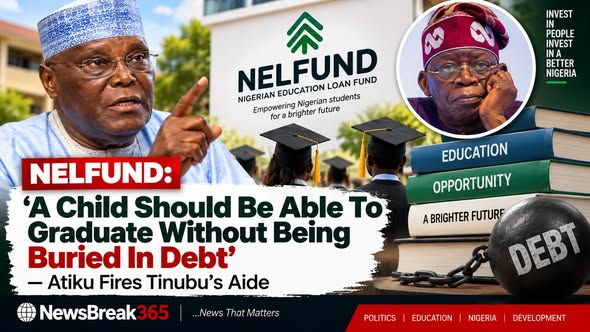
NELFUND: ‘A Child Should Be Able To Graduate Without Being Buried In Debt’ – Atiku Fires Tinubu’s Aide

Published

on

The African Democratic Congress (ADC) presidential candidate, Atiku Abubakar, has slammed the Special Assistant on Social Media to President Bola Tinubu, Olusegun Dada, over a remark that he hates NELFUND and wants it cancelled.

It was reports that Dada, in a post via 𝕏, said Atiku does not believe that the child of a nobody should have access to education.

He wrote: “Mr @atiku hates NELFUND and wants to cancel it because he does not believe the children of the poor should have access to education.”

Responding to Dada, Atiku, in a statement through his Senior Special Assistant on Public Communication, Phrank Shaibu, via 𝕏 assured that he is not opposed to the education of poor children.

Atiku said he only opposes turning education into a debt trap after the government first allowed fees to skyrocket.

The former Vice President said he wants poor children to graduate without being buried in debt.

The post read, “@DOlusegun, this is simply dishonest. Atiku does not oppose education for poor children. He opposes turning education into a debt trap after the government first allowed fees to skyrocket.

“Imagine a widow selling food by the roadside to send her daughter to university. The government raises the fees beyond what she can afford, then tells the daughter to borrow the money and begin adult life in debt.

“That is not compassion. Atiku’s position is clear: make education affordable again, restore scholarships and grants, and ensure that a child’s future does not begin with a loan burden.

“The child of nobody should not only enter school, that child should be able to graduate without being buried in debt.”

See also  FG to unveil ₦50m grant for STEMM students

FOLLOW US ON:

FACEBOOK

TWITTER

PINTEREST

TIKTOK

YOUTUBE

LINKEDIN

INSTAGRAM

Continue Reading

Education

ASUU threatens nationwide strike over unpaid salaries, agreement

Published

on

The Academic Staff Union of Universities has threatened to resume its suspended nationwide strike if the federal government and state governments fail to urgently address outstanding issues affecting university lecturers.

ASUU said it could reactivate the strike “without any further notice” over the incomplete implementation of the December 2025 agreement, payment of the remaining 3.5 months of withheld salaries and non-remittance of billions of naira deducted from lecturers’ salaries.

The union’s position was contained in a statement sent to our correspondent in the early hours of Friday by its President, Christopher Piwuna, after an emergency meeting of its National Executive Council held at the University of Abuja.

ASUU said the December 2025 agreement followed more than eight years of negotiations and struggles but had not been fully implemented by the Federal Government and several state governments.

“Unless immediate and concrete steps are taken to FULLY and COMPREHENSIVELY address issues bordering the welfare and well-being of Nigerian academics, ASUU-NEC will not accept any blame for calling out its members on a nationwide strike action within the shortest time possible,” the union warned.

It commended Abia State Governor, Alex Otti, and the governments of Bauchi, Ekiti, Ogun, Benue, Yobe, Adamawa, Kebbi, Katsina and Borno for commencing implementation of the agreement.

The union said Kano, Edo, Plateau, Taraba, Gombe and Bayelsa had also pledged to commence implementation in September or October, while warning other states to act before their universities were plunged into an “industrial crisis of monumental proportions.”

See also  VC seeks support as new medical varsity holds maiden matriculation

On withheld salaries, ASUU acknowledged that the Tinubu administration had paid four of the 7.5 months withheld during the Buhari administration but demanded the immediate release of the outstanding 3.5 months.

“We have consistently acknowledged President Bola Ahmed Tinubu for paying four (4) out of the withheld salaries. However, leaving out the unpaid balance does not give his government the full credit of a labour-friendly administration,” it said.

ASUU also alleged that pension contributions, cooperative deductions and union check-off dues running into billions of naira had remained unremitted for several months.

The union warned that the combination of unpaid salaries, unremitted deductions and poor implementation of the agreement was threatening industrial peace in the universities.

“In no mistaken terms, ASUU posits that the non- or haphazard implementation of the 2025 FGN-ASUU Agreement by federal and state governments is a recipe for industrial crisis in Nigeria’s public universities,” it stated.

It urged the Federal Government and state governments to act quickly, insisting that it would not accept responsibility if the suspended strike was reactivated.

“ASUU-NEC resolved to notify all concerned that the Union may activate its suspended strike action without any further notice if the critical issues raised in this release are not speedily addressed,” the union said.

Source: punchng.com

FOLLOW US ON:

FACEBOOK

TWITTER

PINTEREST

TIKTOK

YOUTUBE

LINKEDIN

INSTAGRAM

Continue Reading

Trending