Connect with us

Lifestyle

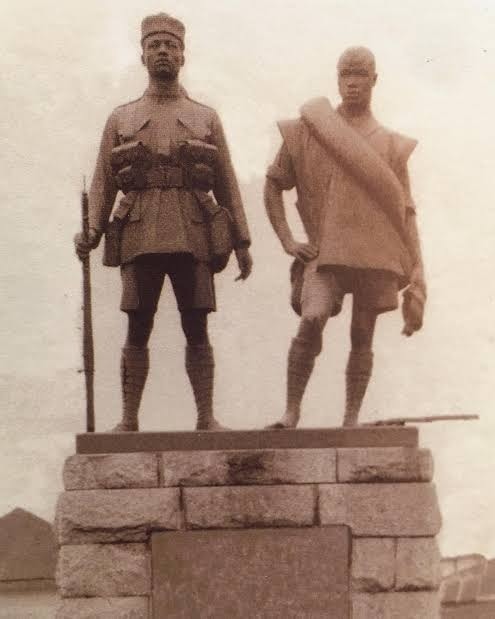
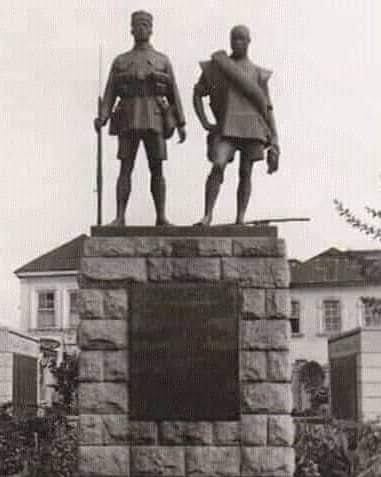
PHOTOS: The Soldier Idumota Cenotaph — Nigeria’s Monument to the Unknown and the Forgotten

Published

on

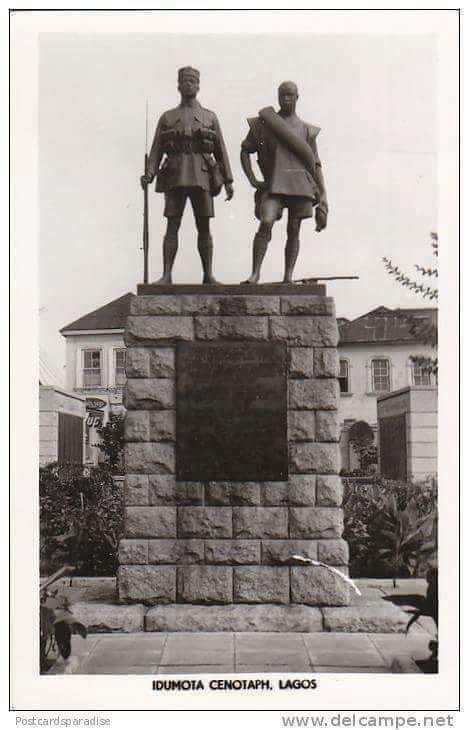
Perched in many Nigerians’ memory as a solemn reminder of service and sacrifice, the Soldier Idumota Cenotaph (often referred to in public conversation as the “Tomb of the Unknown Soldier”) commemorates the thousands of West Africans who served — and died — in the two world wars. Erected in the colonial era to mark Nigerian contributions to Britain’s war efforts, the cenotaph has also come to symbolise a wider national duty to remember those whose names and graves were lost to distant battlefields.

A colonial-era memorial with local meaning

The memorial was commissioned after the Second World War as part of a broader imperial practice of erecting cenotaphs to honour soldiers who fell in the Great War and World War II. For Nigerians it had the added importance of publicly acknowledging African manpower and sacrifice at a time when such contributions were too often marginalised in metropolitan histories.

Form and symbolism

The monument pairs two figures in bronze: a soldier and a carrier. These figures are usually described in contemporary accounts as representing the combatant troops of the Nigeria Regiment and the men of the Nigeria Carrier Corps — the latter being the porters and logistical personnel whose work was essential to Allied campaigns in Africa and elsewhere. The juxtaposition of the armed combatant and the carrier emphasizes that victory in large-scale wars depended not only on front-line infantry but also on the largely uncelebrated labour of carriers, orderlies and support staff.

Because many surviving descriptions in public sources are descriptive rather than archival, it is safest to describe the figures by role (soldier; carrier) rather than assign specific ethnic labels to them unless a primary source confirms such identification.

See also  "I crossed Seme border on foot", Dele Momodu recalls exile ordeal

Sites and movement: from Idumota to national remembrance

Originally installed in Idumota, a busy commercial district on Lagos Island, the memorial served for years as a focal point for Remembrance Day ceremonies and local acts of commemoration. As Nigeria’s political geography and national institutions evolved after independence, the cenotaph’s place of honour also shifted. Public accounts indicate that the monument was moved to Tafawa Balewa Square in Lagos for some decades, and that a national cenotaph and war-memorial complex in Abuja later incorporated or replaced the Lagos memorial as the principal federal site for national remembrance.

The exact dates and administrative details of those relocations vary in different accounts: contemporary newspapers, government gazettes and archival records offer the strongest route to precise confirmation. What is clear, however, is the monument’s continuing role: wreath-laying and remembrance ceremonies (notably around Armed Forces Remembrance Day) keep the memorial alive as a site of national memory.

National and historical significance

Beyond its original imperial context, the Soldier Idumota Cenotaph today stands as: a public recognition of West Africans’ wartime service;

a reminder of the logistical and human costs of global conflict; and a meeting point where veterans’ families, service organizations and the state perform rituals of remembrance.

In that sense it functions similarly to “unknown soldier” monuments elsewhere in the world: it is less about a single individual than about collective loss and national responsibility to remember.

Preservation, interpretation and contested histories

Like many colonial-era monuments in postcolonial settings, the cenotaph raises questions about interpretation and stewardship. Whose stories are told at the site? Which archives have been used (or neglected) when the memorial’s history is narrated? How have relocations and restorations changed the public’s access to — and understanding of — the monument?

See also  Bukunmi Oluwashina: A Rising Star in Nigerian Film and Music

Answering these questions requires archival work and cross-referencing: colonial government orders, Lagos city planning records, National Commission for Museums and Monuments files, and contemporary press coverage all shed light on the cenotaph’s provenance and movements.

Sources:
Nigerian National War Memorial archives
FOLLOW US ON:

FACEBOOK

TWITTER

PINTEREST

TIKTOK

YOUTUBE

LINKEDIN

TUMBLR

INSTAGRAM

Continue Reading
Click to comment

Leave a Reply

Your email address will not be published. Required fields are marked *

Lifestyle

Lagos tops Nigeria’s HIV burden as new infections hit 102,025

Published

on

A total of 102,025 new HIV infections were recorded across Nigeria’s 36 states and the Federal Capital Territory in 2025, with Lagos State accounting for the highest number of new cases at 10,430, according to data obtained from the Federal Ministry of Health and Social Welfare’s State of the Health of the Nation Report 2025.

The report, obtained by our correspondent, provides a state-by-state breakdown of newly recorded HIV infections and highlights the geographical distribution of the epidemic despite years of intensified prevention efforts by the Federal Government and its partners.

The data showed that Lagos recorded the highest number of new HIV infections in 2025 with 10,430 cases.

Rivers State followed with 6,287 new infections, while Kano recorded 6,106 cases.

Akwa Ibom reported 5,413 new infections, Taraba had 4,854, Benue recorded 4,804, and Anambra accounted for 4,468 cases. Kaduna registered 3,659 new infections, while Adamawa and the Federal Capital Territory recorded 2,989 and 2,764 cases, respectively, completing the list of the 10 states with the highest number of new HIV infections during the year.

Other states recording more than 2,000 new infections included Sokoto (2,592), Cross River (2,595), Abia (2,546), Imo (2,537), Delta (2,469), Borno (2,311), Ogun (2,107), Plateau (2,084), Niger (2,020) and Ebonyi (2,015).

At the lower end of the scale were Ekiti with 462 new infections, Bayelsa with 982, Gombe with 1,083, Osun with 1,093, Kwara with 1,371, Enugu with 1,429, Yobe with 1,483, Katsina with 1,541 and Kebbi with 1,572.

The figures underscore that HIV remains a significant public health challenge in Nigeria despite years of progress in expanding access to treatment and reducing AIDS-related deaths.

See also  Actress Mercy Aigbe Loses Mother

Nigeria is home to one of the largest HIV treatment programmes in the world, with millions of people living with the virus receiving life-saving antiretroviral therapy through government-supported facilities and donor-funded interventions.

However, public health experts have consistently warned that reducing new infections remains one of the country’s greatest challenges, particularly among young people, adolescent girls and young women, infants exposed to HIV, and key populations.

In recent years, the Federal Government, working through the National Agency for the Control of AIDS, has intensified efforts to curb the spread of HIV by expanding free HIV testing services, increasing access to antiretroviral medicines, scaling up Prevention of Mother-to-Child Transmission programmes, promoting pre-exposure prophylaxis for high-risk groups, strengthening community awareness campaigns and improving surveillance through digital health information systems.

The government has also adopted the global 95-95-95 targets, aimed at ensuring that 95 per cent of people living with HIV know their status, 95 per cent of those diagnosed receive sustained treatment, and 95 per cent of those on treatment achieve viral suppression.

Health authorities say achieving these targets is essential to ending AIDS as a public health threat by 2030.

Speaking during the launch of the 2025 Global AIDS Update on July 10, 2025, UNAIDS Executive Director Winnie Byanyima warned that while the world has made remarkable gains in reducing HIV infections and AIDS-related deaths, progress remains fragile.

She noted that approximately 1.3 million people acquired HIV globally in 2024, stressing that sustained investments in prevention, testing and treatment are critical to keeping the epidemic under control.

See also  Video - Sunday Igboho Arrival | Massive Welcome for Yoruba Nation Activist

Earlier, at a Multistakeholder Consultation on the Global AIDS Strategy on April 28, 2025, Byanyima cautioned that HIV “is not over,” urging governments to strengthen domestic financing and maintain prevention programmes to avoid a resurgence of infections.

Similarly, NACA Director-General, Dr Temitope Ilori, has repeatedly stressed the need for stronger domestic financing and community-led interventions to sustain Nigeria’s HIV response.

Speaking at various engagements in 2025, she said Nigeria was committed to reducing new HIV infections through improved access to testing, treatment and prevention services while strengthening the country’s health systems.

Public health experts have also warned that declining international donor funding could undermine decades of progress if governments fail to increase domestic investment in HIV programmes.

According to UNAIDS, interruptions in prevention services could lead to a rise in new infections, particularly in countries with high HIV burdens such as Nigeria.

Although Nigeria has made significant progress compared to previous decades, the 102,025 new infections recorded in 2025 illustrate that the epidemic remains far from over.

The latest data suggest that the country’s HIV burden continues to be concentrated in a handful of states, with Lagos, Rivers and Kano accounting for a substantial proportion of newly reported cases.

punch.ng

FOLLOW US ON:

FACEBOOK

TWITTER

PINTEREST

TIKTOK

YOUTUBE

LINKEDIN

Continue Reading

Lifestyle

Learn Bible before preaching, Pastor blasts Dolapo Lawal over salvation doctrine

Published

on

The lead pastor at Goodness Nation, Apostle Harrison Ayintete, has criticised Pastor of Zoe Household Global, Dolapo Lawal over his teaching against the “once saved, always saved” doctrine, urging the cleric to “learn the Bible before teaching.”

Ayintete, in a post on X, faulted Lawal’s interpretation of salvation, arguing that believers who have received eternal life through faith in Jesus Christ cannot lose their salvation.

The exchange followed Lawal’s recent sermon in which he rejected the “once saved, always saved” doctrine, arguing that salvation requires continued faith, repentance and holy living.

Lawal maintained that while believers can have assurance of salvation through faith in Christ, Scripture repeatedly warns Christians against falling away, abandoning the faith and living contrary to the gospel.

He cited the New Testament epistles and Jesus’ warnings to the seven churches in Revelation as evidence that believers must continue in obedience rather than assume salvation is irreversible regardless of their conduct.

He also argued that teaching unconditional eternal security encourages moral laxity within the church and downplays biblical calls to holiness, insisting that believers must read the whole of Scripture rather than rely solely on verses such as John 3:16.

Lead pastor at Goodness Nation, Apostle Harrison Ayintete…Photo Credit: X / Harrison Ayintete

Responding to Lawal’s sermon, Ayintete wrote, “Pastor Adedolapo Lawal, sir, I thought you knew better than this, though.

“According to your own John 3:16, the one who has believed has eternal life and will perish right?

“Eternal life is quality of life, it is God’s life, you said, so does God’s life see condemnation? Does God’s righteousness perish?”

See also  LOCAL SPOTLIGHT: Meet The Nigerian Studio Making Games In Yoruba, Hausa

He argued that New Testament epistles were written to guide believers towards spiritual growth and maturity rather than to determine whether they remained saved.

“The epistles are for revelation, development in ministry, maturity in that which we have received, warning against lifestyles that do not reflect our righteousness.

“Spiritual development and growth is never the same as spiritual birth,” he said.

Ayintete also rejected Lawal’s claim that the teaching of “hyper-grace” had contributed to increasing sin within the church.

“You even said Hypergrace is the reason sins are everywhere. Bro, how many churches preach Hypergrace? So all the sins in RCCG is sponsored by Hypergrace? All the lies in Deeper Life? They don’t tell lies in your own churches?

“You people talk like you produce some better saints than we do,” he wrote.

He further challenged Lawal to a public debate on the subject, insisting that the issue should be discussed openly.

“If he sure for you say Hypergrace nor dey Bible, set up a proper debate on the subject, I will meet you there because at this point, we need that conversation,” he added.

In a follow-up video, Ayintete accused some ministers of deliberately portraying hyper-grace preachers negatively.

He maintained that Jesus’ promise of eternal life in John 3:16 and John 10 guaranteed permanent salvation for believers.

“The Lord Jesus said in John 3:16 that whosoever has believed in Him has eternal life and will not perish.

“Jesus said over and over, ‘I give them eternal life and they shall never perish.’ Ephesians 1 says we are sealed with the Spirit unto the day of our redemption,” he said.

See also  Actress Mercy Aigbe Loses Mother

Ayintete argued that believers overcome sin through the Holy Spirit rather than fear of hell or losing salvation.

“We believe in hyper-grace, we preach it and we raise godly believers to the glory of God. We are not going to be silent anymore,” he said.

punch.ng

FOLLOW US ON:

FACEBOOK

TWITTER

PINTEREST

TIKTOK

YOUTUBE

LINKEDIN

Continue Reading

Lifestyle

‘I didn’t secretly sell my husband’s properties’ — Mr Ibu’s widow

Published

on

The widow of late Nollywood actor John Okafor, Stella Maris Okafor, has dismissed allegations that she secretly sold her late husband’s properties and kept the proceeds to herself.
Recall that the family of the late actor, popularly known as Mr Ibu, recently opened up about their struggles and financial situation.

In a recent video now making the rounds online, while speaking to content creator King Mitchy, Stella Maris explained that the sale of the properties was carried out in line with a court order and with the consent of Mr Ibu’s two sons, Valentine Okafor and Daniel Okafor.

She further backed her claim, stating that she has the relevant documents.

“I have to show you this document. This is a court order. We—I didn’t, not me alone. My husband’s two sons, Valentine Okafor and Daniel Okafor, and I did it according to the court order. Every evidence is here. We sold the house. I am not the one that sold the house,” she stated.

She also disclosed that she currently runs an online jewellery business, explaining that her late husband had initially discouraged her from venturing into it while she was still acting.

“I have a page online where I sell jewellery, and I am still selling my jewellery. When I wanted to start this business, my late husband stopped me because I was acting. My late husband was my colleague in the industry,” she said.

She further revealed that she is planning to move out of her current residence, describing it as too expensive and saying she only relocated there due to security concerns and public pressure following her husband’s death.

See also  UK returnee attending wedding dies in Lagos-Ibadan Expressway crash

“I did not intend to come to this place. It’s because of pressure and security, but I am packing out.”

Addressing claims by a young man who alleged online that he is one of Mr Ibu’s children and was denied financial support, Stella Maris said disagreements over money began shortly after the actor’s burial.

She alleged that some family members demanded that she share the money given to her during the burial for the upkeep of her children.

“Before they sold the land, we were still in the village, and they were dragging with me over the money that was given to me during the burial. They insisted that I should share the money with them. I told them that this was money given to me for my children. Why should I come and share it with you people?”

FOLLOW US ON:

FACEBOOK

TWITTER

PINTEREST

TIKTOK

YOUTUBE

LINKEDIN

INSTAGRAM

Continue Reading

Trending