
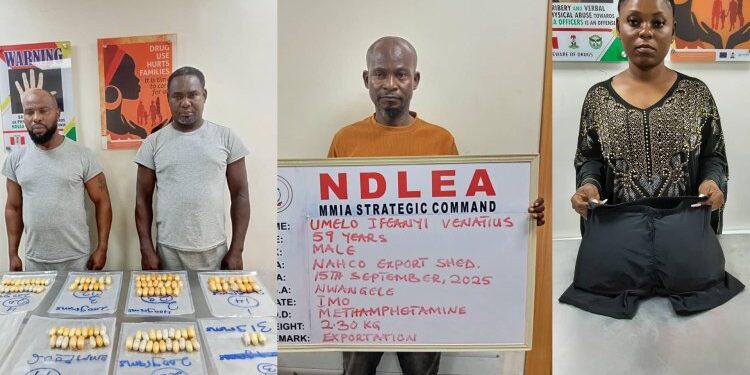






The National Drug Law Enforcement Agency (NDLEA) has recorded major breakthroughs in the fight against drug trafficking, arresting two men who returned from Brazil with heroin and cocaine in their bodies, alongside other seizures that stretched from Lagos to Zamfara, Adamawa and Edo.
In a statement released on Sunday, September 21, 2025, and signed by Femi Babafemi, Director, Media and Advocacy, NDLEA Headquarters, Abuja, the agency disclosed that the arrests were made at the Murtala Muhammed International Airport (MMIA), Lagos, and across several states.
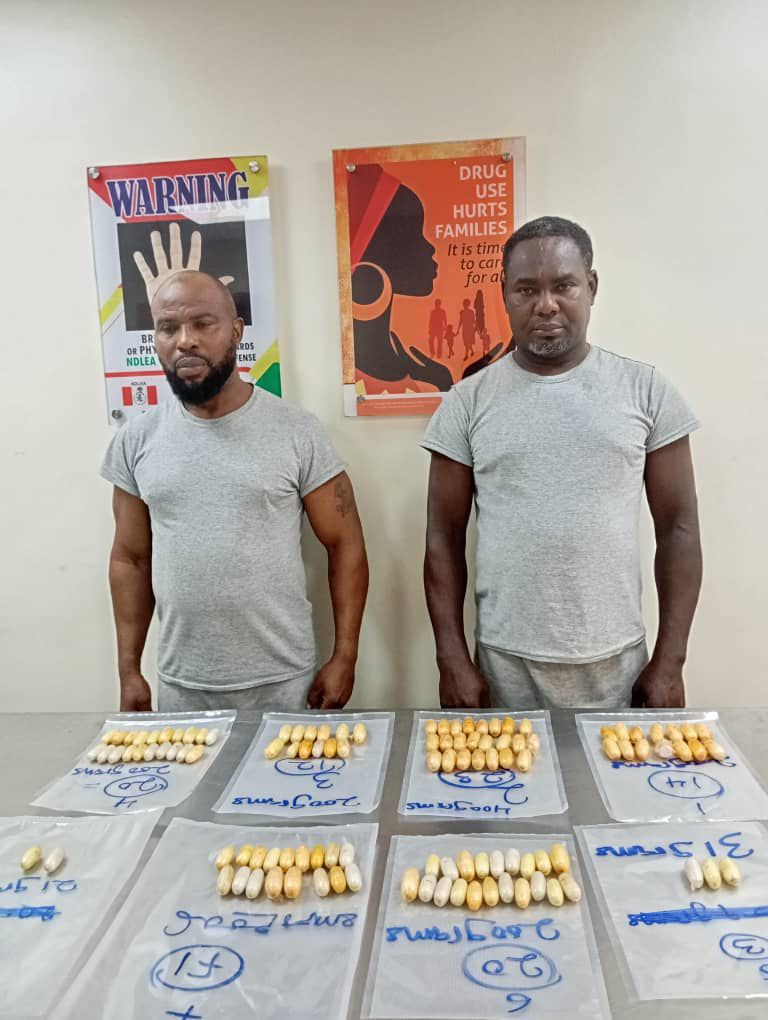
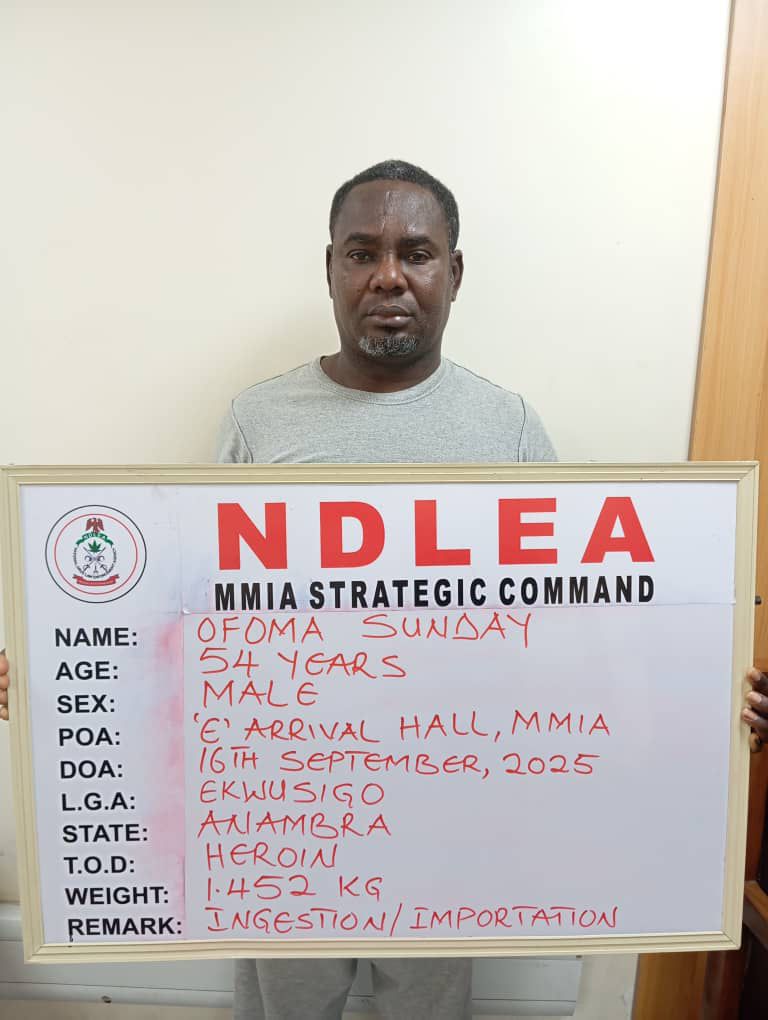
One of the suspects, 46-year-old Ofoma Sunday, was stopped on September 16 after arriving from Brazil via Ethiopia. A body scan confirmed that he had ingested drugs.
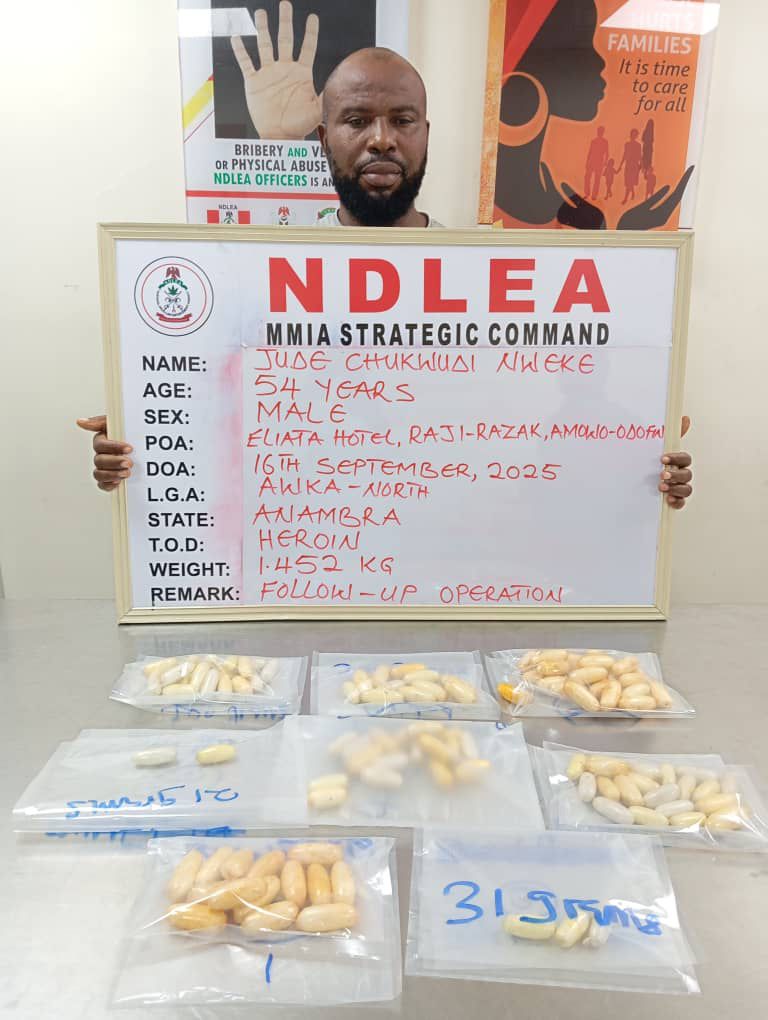
While under observation, he excreted 111 wraps of heroin weighing 1.45 kilograms. NDLEA operatives later stormed a hotel in Amuwo Odofin, where he was instructed to deliver the drugs, and arrested 55-year-old Nweke Jude Chuckwudi, the alleged receiver.
Just days later, another returnee, Ukachukwu Frank Ikechukwu, was picked up on September 19. He was carrying cocaine internally and, under watch, expelled five large wraps weighing 145 grams.
He admitted he had inserted nine wraps in Brazil but could only reinsert seven after suffering anal pain while transiting through Ethiopia. He flushed the remaining two wraps in a toilet before boarding his flight to Nigeria.
In another case at Lagos airport, Okolonkwo Ebere Theresa, a businesswoman from Enugu, was caught on September 14 while attempting to board a Qatar Airways flight to Doha.
She had concealed 1.40 kilograms of methamphetamine in her butt pad underwear. According to her statement, she runs a second-hand clothing trade and POS business but was lured into trafficking.
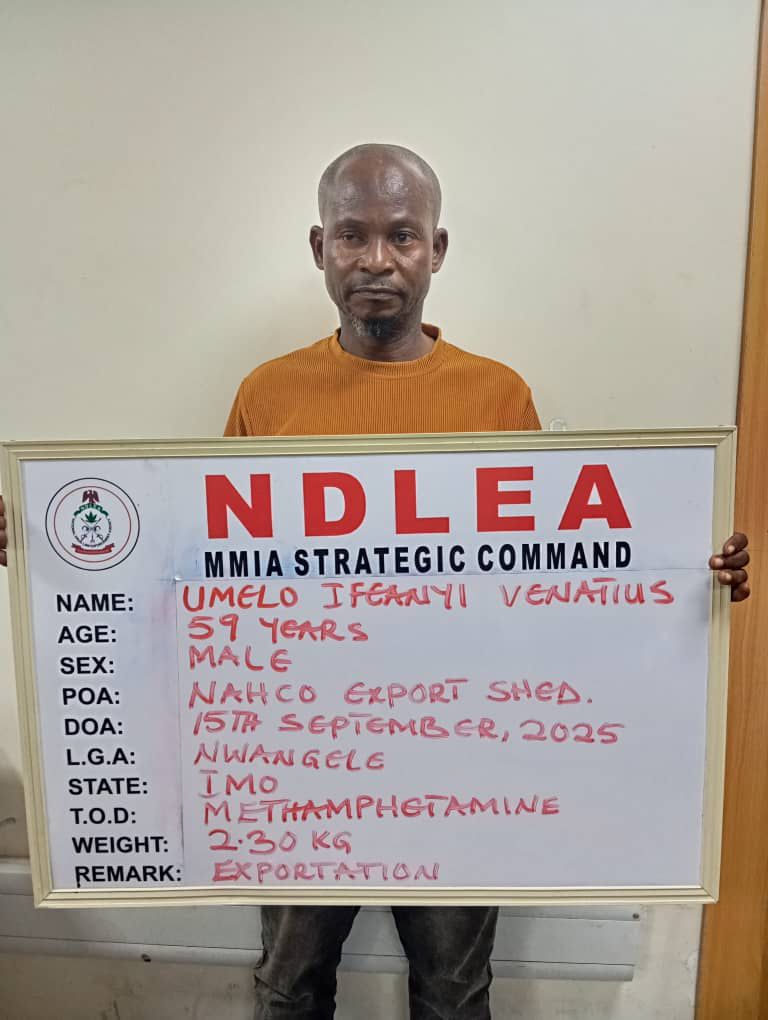
NDLEA operatives also uncovered shipments concealed in everyday goods. At the NAHCO export shed, 2.3 kilograms of meth hidden in food items destined for Hong Kong were intercepted, while a separate consignment of 257 grams of cocaine concealed inside seven phone chargers was stopped from leaving for New Zealand.
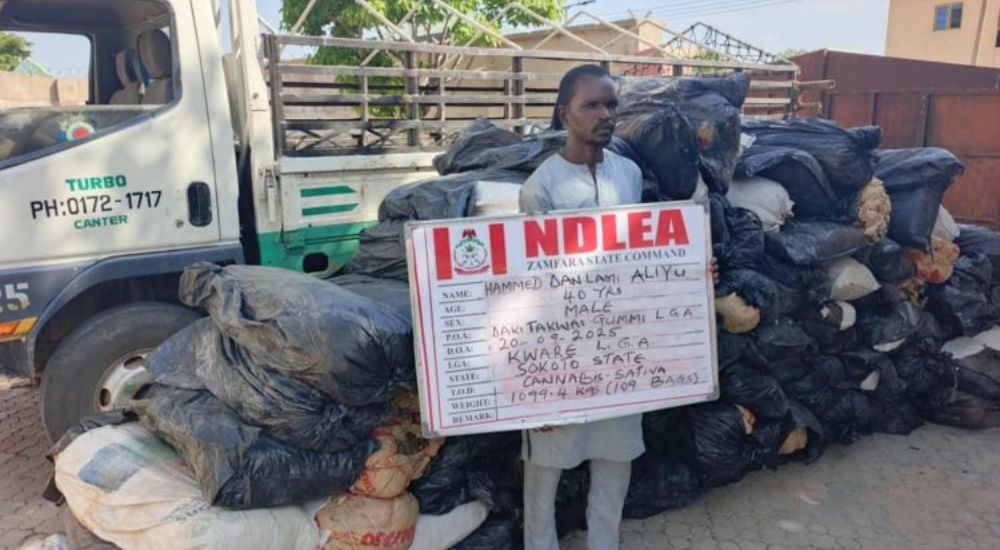
The crackdown extended beyond Lagos. In Adamawa, officers recovered 233,800 pills of tramadol across different raids, including one abandoned vehicle loaded with the drugs. In Zamfara, a truck conveying over one ton of skunk cannabis was seized.
In Edo, two cannabis farms covering more than four hectares were destroyed, yielding over 11,000 kilograms of illegal plants.
While praising the operatives, NDLEA Chairman and Chief Executive, Brig. Gen. Mohamed Buba Marwa (Rtd), said: “These arrests and seizures represent a significant milestone in our determined effort to dismantle drug trafficking organizations operating in Nigeria and around the world, prioritizing those bent on targeting our productive youth population with illicit substances until they’re no longer able to inflict harm on our communities or misrepresent our country’s image in the global space.”
The statement added that NDLEA formations across the country continued their War Against Drug Abuse (WADA) sensitisation drive in schools, religious centres, workplaces and communities during the week.
Two Nigerian nationals have been sentenced to seven years in prison for armed robbery in Kuwait.
The Kuwait General Department of Criminal Investigation in Ahmadi Governorate arrested the two individuals over alleged involvement in an armed robbery and theft of a currency exchange shop in Mahboula, in January 2025.
The Court of Appeal on Monday, July 20, 2026 upheld the imprisonment of the defendants for seven years and six months in connection with the robbery and theft.
The Second Circuit of the Court of Appeal, headed by Counselor Nasr Salem Al-Haid and comprising Counselors Mutaib Al-Aradhi and Saud Al-Sane, upheld the ruling against members of a Nigerian gang involved in the robbery and theft of the money exchange shop.
The Public Prosecution had charged the first four defendants with stealing money from the exchange shop, with the second defendant using a fake gun and enabling the third and fourth defendants to steal the money with the assistance of the first defendant.
The fifth defendant was charged with participating with the defendants, agreeing to commit the crime, helping them conceal the stolen goods, and supplying them with the money obtained from the robbery and theft.
The Criminal Court had sentenced the first and fifth defendants in person, while the remaining defendants were sentenced in absentia.
The court had initially sentenced the first four defendants to seven years’ imprisonment and the fifth defendant to six months’ imprisonment after amending the description and charges.
The Court of Appeal later upheld the ruling, according to a report published by Al Rai newspaper.
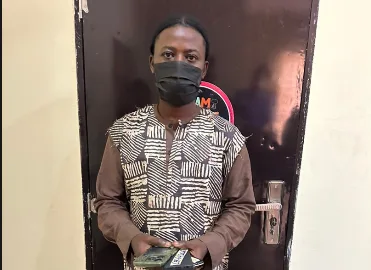
The Cross River State Police Command has arrested one Udeme Emmanuel Ekpeme, “m”aged 39, over allegations of impersonation, obtaining money by false pretence, and the unlawful use of medical equipment.
The suspect was arrested by Police officers attached to Uwanse Division ,Calabar South following a complaint lodged by Mrs. Edemawan Samuel, 45, who alleged that the suspect falsely presented himself as a medical doctor and fraudulently obtained the sum of Five Hundred Thousand Naira (N500,000) from her under the false promise of securing employment for her children at the University of Calabar Teaching Hospital (UCTH).
Preliminary investigations indicate that the suspect allegedly used the false representation to deceive the complainant into parting with the money. Relevant exhibits believed to be connected to the case were recovered during the investigation, and the suspect is currently in police custody.
Confirming his arrest to newsmen, the spokesperson of the command, ASP Eitokpah Akata, said state Commissioner of Police, has directed that a thorough investigation be carried out to establish the full circumstances surrounding the case and determine whether there are other victims. Akata added that upon the conclusion of investigations, the suspect will be charged to court if sufficient evidence is established.
He mentioned that the command is actively conducting a discreet investigation into the matter to uncover the full extent of the suspect’s activities and identify any other possible victims or accomplices. Members of the public are assured that further updates will be provided as investigations progress.
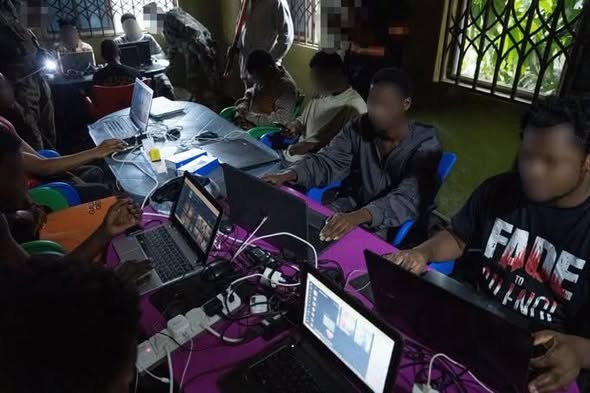
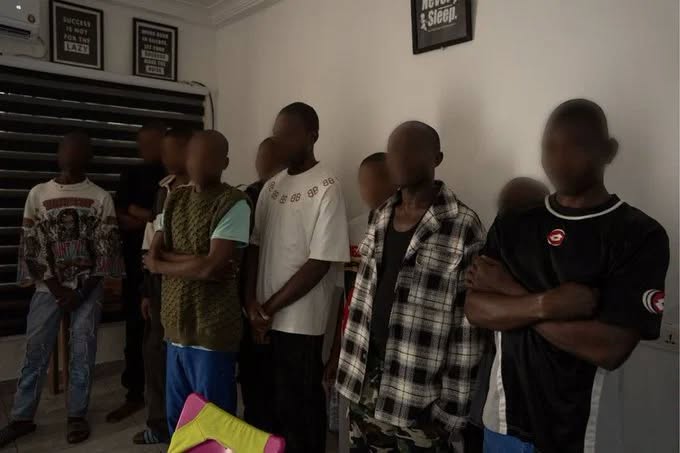
The Nigeria Security and Civil Defence Corps, NSCDC, Badagry Area Command, has uncovered an alleged fake university operating from a three-bedroom apartment in Ilado, Olorunda Local Council Development Area, of Lagos State, and rescued 106 youths allegedly lured into the scheme. AkwaIbom News
The Corps also arrested the alleged proprietor of the institution, which reportedly recruited young people from different parts of Nigeria and neighbouring West African countries with promises of admission into a foreign university.
The operation, carried out in the early hours of Monday after days of intelligence gathering and covert surveillance, exposed what security officials described as an alleged fraudulent academic and recruitment scheme.
The youths, mostly aged between 19 and 24, were taken into protective custody by the NSCDC for profiling and further investigation.
Confirming their arrest to newsmen, the Badagry Area Commander of the NSCDC, Chief Superintendent Gbenga Ekunola, said the operation followed credible intelligence received by the command on activities at the apartment.
“We got reliable intelligence about the activities going on there. Our officers monitored the place for days before moving in. We have arrested the proprietor, who is assisting with our investigation, while the students have been taken into our protective custody.”
Preliminary investigations indicated that unsuspecting young people were allegedly persuaded to pay admission and processing fees after being promised admission into a foreign tertiary institution.
The victims reportedly paid between N200,000 and N1.5 million, while some foreign nationals and other participants allegedly paid between $400 and $500.
However, the alleged admission scheme reportedly came with a recruitment condition, with participants encouraged to bring in more people in return for commissions.
The arrangement allegedly operated like a chain marketing or Ponzi scheme, with participants promised increasing financial rewards based on the number of new students they recruited.








