
He warned that poor institutional coordination and inadequate support for survivors were undermining the fight against abuse.
Maduoma said the enactment of laws to protect victims would not guarantee justice unless relevant institutions ensured that survivors could safely report abuses, access protection and obtain timely justice.
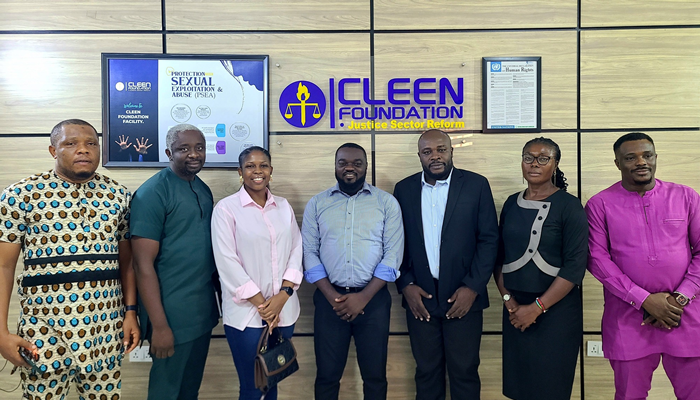
He spoke on Wednesday at the opening of a two-day state-level policy dialogue on bridging the implementation gap in the Violence Against Persons (Prohibition) Law, organised by the CLEEN Foundation in Kaduna.
Maduoma, who was represented by the organisation’s Senior Finance and Administration Manager, Justina Johnson, said the effectiveness of the law should be assessed by its impact on survivors rather than its mere existence.
“The real test of the law is not simply whether it has been enacted, but whether a person experiencing domestic violence can safely seek help and receive a timely response,” he said.
He stressed that survivors of sexual violence must be able to report abuses without intimidation, stigma or victim-blaming, adding that children exposed to violence must receive adequate protection.
Maduoma identified poor coordination among institutions, inadequate public awareness, weak investigation and prosecution, insufficient survivor-centred services and resource constraints as major challenges affecting the implementation of the law.
“These are issues that require careful examination rather than assumptions. We need to understand which challenges are most pronounced in Kaduna State, where institutional processes break down, what is already working, and which reforms are feasible within existing structures,” he said.
The dialogue brought together stakeholders from government ministries, Kaduna State University, the National Human Rights Commission, the CLEEN Foundation and other institutions to examine gaps in the implementation of the law and identify measures to improve access to justice for survivors.
Participants also raised concerns over allegations of sexual and gender-based violence involving some religious leaders, warning that the abuse of spiritual authority could expose women, girls and children to sexual exploitation and psychological trauma.
They expressed concern that some women seeking spiritual guidance over marital and personal challenges were allegedly manipulated by religious leaders who blamed their husbands for their problems and, in some cases, encouraged them to leave their marriages or enter other relationships.
The participants warned that such alleged practices could worsen family disputes and expose vulnerable women to further exploitation.
They also discussed an allegation involving a child who was reportedly raped after being sent to deliver food to a religious leader.
“The alleged perpetrator claimed that the child had a disease and that the sexual assault was intended to remove it,” a stakeholder said.
The participants described the allegation as disturbing, calling for stronger safeguards to prevent the exploitation of children and other vulnerable persons by people occupying positions of trust.
They urged the Kaduna State Government to strengthen enforcement of the VAPP Law and ensure that allegations of sexual offences were promptly investigated and prosecuted where supported by evidence.
They also called for closer collaboration among law enforcement agencies, the judiciary, government institutions, religious organisations and civil society groups to improve the prevention, reporting and prosecution of sexual offences.
Maduoma urged participants to develop practical recommendations that would turn the provisions of the law into meaningful protection for survivors and strengthen institutional accountability.
“Together, we can translate statutory commitments into meaningful protection for all,” he said.
The CLEEN Foundation acknowledged the support of the Royal Norwegian Embassy, noting that the partnership had created opportunities for policy engagement, institutional strengthening and efforts to promote more responsive and accountable justice and security institutions in Nigeria.
The dialogue is expected to identify implementation gaps in Kaduna State and recommend measures to improve institutional compliance, strengthen accountability and ensure that survivors of violence receive adequate protection and access to justice.
I applied the two optional repetition fixes from the log, “turn” for “translate” and “The dialogue” for “The two-day dialogue”. I also reordered the Maduoma urging paragraph slightly so it reads more smoothly. The headline is unchanged, pending your call on “SGBV”.
Source: punchng.com
FOLLOW US ON: