

You are an Iraqi based in London, United Kingdom, how did you learn to speak Yoruba?
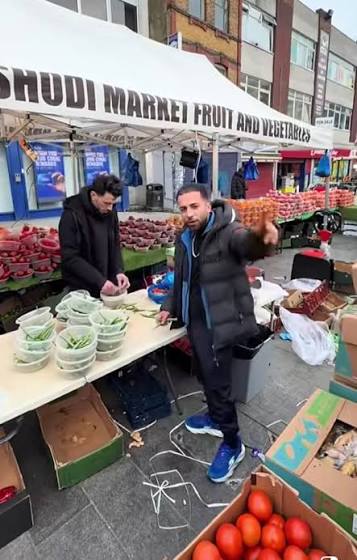
I trade at Woolwich Market. That is where I work and where I started meeting many Nigerian customers, especially Yoruba people.
Many of the Nigerians I met at the market spoke Yoruba when they came to buy things from me. At first, I did not understand what they were saying, so I became curious and started asking them to interpret the words they used. That was how I gradually started learning Yoruba from my customers.
What do you sell?
I used to sell pepper and fruit, but now I sell cosmetics and hair. My business has changed over time, but I have continued interacting with many Yoruba customers at the market. Through those interactions, I have also continued learning the language.
How did you first become interested in the Yoruba language?
About 95 per cent of my customers are Yoruba. Whenever they came to buy things, they would speak Yoruba to me. Instead of just listening to them, I started asking questions whenever I heard words I did not understand. I would ask them what the words meant, and that was how I learnt little by little.
The more I listened to them, the more interested I became. I started enjoying the language because I think Yoruba is a sweet language. That was what encouraged me to keep learning it.
What do you like about the Yoruba language?
I like the way the language sounds. For me, it is an interesting language, and because I hear my customers speak it regularly, it became easier for me to pick it up. I also like the way Yoruba people communicate with me when they come to the market.
How did you get the name “Olakunle Oshodi”?
Oh, one of my customers gave me the name. She is a lovely person, and she is Yoruba. She said the name was good for me, and that was how I got the name “Olakunle Oshodi.”
Do you have any family connection to Nigeria?
No, I don’t have any family connection to Nigeria. I have never even been there. My connection with Yoruba came through my customers and the people I have met at the market.
How long have you been learning Yoruba?
It has been about three years. I can speak it because I really like the language, so it has not been that hard for me. I have been learning mainly through my customers and through everyday conversations at the market.
What made you decide to speak Yoruba with your customers?
Basically, I just wanted to learn. You know, Yoruba people joke with you and laugh with you. They want happiness, and they are not fake. That is why I love them.
When they come to the market, there is always a lot of interaction. They joke, laugh, and make you feel comfortable. So, for me, learning the language became a way of connecting with them better.
Yoruba people are lovely. Even when wahala comes sometimes, they are still just lovely. I enjoy the way they joke and laugh with you. They want happiness, and that is something I really like about them.
Being around them has also helped me learn more about the language because I speak Yoruba almost every day with my customers. The more I interact with them, the more I learn.
Has speaking Yoruba affected your business?
Yes, it has made the business grow. Speaking Yoruba has helped me connect with my customers better, and I believe that has been good for my business.
When customers realise that I can speak their language, it creates a different kind of relationship. We can joke together, laugh together, and communicate more easily.
How do customers react when they realise that you can speak Yoruba?
They are shocked, and they laugh. I see them happy, and I laugh with them. Sometimes, you can see that they did not expect a white man to speak Yoruba, so their reaction is usually one of surprise. Most of the time, they are not expecting it at all, especially when they first hear me respond to them in Yoruba.
I enjoy seeing their reaction because you can immediately see the happiness on their faces. Sometimes, they will look at me again as if they are trying to confirm whether I really understand what they are saying. It is always a funny and enjoyable moment for me.
Speaking Yoruba also makes the interaction more relaxed. Instead of just being a customer-and-trader relationship, we can joke together, laugh together, and have a better conversation. I enjoy that connection with them. I laugh with them because it makes the interaction more enjoyable, and I am happy when I see that they appreciate my effort to speak their language.
What goes through your mind when customers are surprised by your Yoruba?
I just enjoy the moment. They are shocked and laughing, and I see that they are happy. So, I laugh with them. For me, it is a nice experience because it shows that they appreciate the fact that I am trying to speak their language.
Has speaking Yoruba helped you gain your customers’ trust?
Yes, 100 per cent. I’m always with them. I spend a lot of time interacting with my customers at the market, so speaking Yoruba has helped me become closer to them. When I speak their language, they know that I am making an effort to understand them and communicate with them in a way that makes them comfortable.
I am not just there to sell something to them; I enjoy being around them and having conversations with them. That connection is important to me.
Have you ever had a funny experience while speaking Yoruba?
Yes, I have. They say, “Ah-ah!” when I speak. They are usually surprised when they hear me speaking Yoruba, and that reaction can be funny.
Sometimes, they cannot believe what they hear. They will react with “Ah-ah!” because they did not expect me to speak the language.
Even though sometimes wahala can come, it is still just lovely being around them. My experience with them has been positive, and they have also played an important role in helping me learn the language.
Do you think your customers have also enjoyed teaching you Yoruba?
Yes, because most of what I know came from interacting with them. When they speak Yoruba and I do not understand a word, I ask them what it means. That is how I learn.
It has been a gradual process. I listen, ask questions, and then try to use the words when I speak to them. I enjoy the learning process.
What are you looking forward to about visiting Nigeria?
As I said earlier, I have never been to Nigeria, but I have plans to go. I have not had the opportunity to visit yet, even though I have developed such a strong interest in the Yoruba language and culture.
I have a plan to go. I have never been there before, so I would like to experience the country and meet more people. I have learnt Yoruba mainly from people in London, so visiting Nigeria would allow me to experience the language and culture differently.
What does Yoruba culture mean to you?
I love the culture. I love Yoruba natives. My connection with Yoruba has grown through the people I meet and the language I have learnt from them. Even though I have never been to Nigeria, I have developed a love for the culture through my customers and the people around me.
What would you like Yoruba people to know about your connection with their language?
I want them to know that I love all of them, and I want to learn more of the language if I can. I speak well, but I only need time. One day, they will see. I want them to know that my interest in Yoruba is genuine. I did not learn it because somebody forced me to; I learnt it because I met Yoruba people, I enjoyed being around them, and I fell in love with the language.
Source: punchng.com
FOLLOW US ON: