Connect with us

Lifestyle

Sanitary Inspectors in Nigeria: The Era of the Wole-wole (PHOTOS)

Published

on

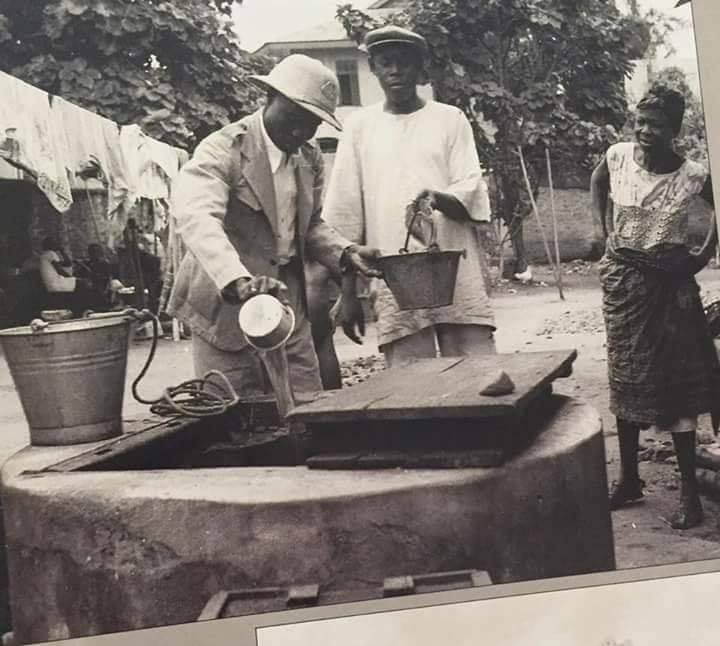
Sanitary inspectors—known in Yoruba as Wole-wole, literally “those who enter homes”—were among the most visible and powerful public health officials in colonial and early post-colonial Nigeria. Active from the early 1900s through the 1970s and beyond, they became symbols of both the state’s commitment to hygiene and the tensions that surrounded public health enforcement.

Early Origins and Role

The office of the sanitary inspector was established under British colonial rule in the early 20th century to curb the spread of infectious diseases in rapidly growing towns. Working alongside colonial medical officers, sanitary attendants (as they were first called) inspected homes, markets, schools, and public spaces to ensure that residents complied with sanitation laws. They monitored water storage, enforced proper waste disposal, and ensured that households maintained clean surroundings.

Authority and Public Perception

These inspectors wielded broad legal powers that allowed them to enter private homes without notice. They could confiscate items considered unhygienic and, when necessary, fine or prosecute offenders in colonial courts. Their surprise visits and strict enforcement quickly gave them a fearsome reputation. In popular memory, later generations even compared their authority to that of the much-feared Special Anti-Robbery Squad (SARS), underscoring how intimidating their unannounced inspections could be.

Corruption and Controversies

With such extensive authority came opportunities for abuse. Records from the 1930s and 1940s in Western Nigeria describe cases of inspectors demanding bribes to overlook sanitation breaches. While these practices tarnished their image, sanitary inspectors nevertheless remained central to the control of epidemics and the promotion of urban hygiene.

See also  Money can’t buy happiness, Elon Musk sparks global debate

Legacy and Impact

Despite the controversies, the Wole-wole were instrumental in reducing outbreaks of cholera, smallpox, malaria, and other infectious diseases. Their activities helped shape the foundation of Nigeria’s modern public health system and directly influenced the creation of today’s Environmental Health Officers, who continue to enforce sanitation standards.

The story of the Wole-wole captures the complexities of colonial public health: an ambitious campaign for cleaner, healthier cities that depended on a cadre of inspectors who inspired both respect and fear.

Sources

Akintoye, S. A. A History of the Yoruba People. Dakar: Amalion Publishing, 2010.

Akinyele, R. T. “Colonial Sanitary Reforms and Public Health in Nigeria.” Journal of African History 36, no. 2 (1995).

Environmental Health Officers Registration Council of Nigeria (EHORECON). “History of Environmental Health Practice in Nigeria.” Official website.
FOLLOW US ON:


FACEBOOK

TWITTER

PINTEREST

TIKTOK

YOUTUBE

LINKEDIN

TUMBLR

INSTAGRAM

Continue Reading
Click to comment

Leave a Reply

Your email address will not be published. Required fields are marked *

Lifestyle

🔥 A HARD QUESTION FOR CHRISTIAN WIVES: WHY DO YOU RESPECT YOUR PASTOR MORE THAN YOUR HUSBAND?

Published

on

Some wives can stand before their pastor with a gentle voice, a respectful attitude, and complete attention. They will never speak to their pastor the way they speak to their husband at home.

But when they get home, the respect disappears.

Is that really the kind of Christian character God wants?

Before you get angry with this question, examine yourself.

📖 Ephesians 5:33 (KJV) says:

“…and the wife see that she reverence her husband.”

The Bible does not tell a wife to reverence her pastor while treating her husband with contempt.

But let us also be fair: God did not command husbands to demand respect while refusing to love their wives.

📖 Ephesians 5:25 (KJV):

“Husbands, love your wives, even as Christ also loved the church, and gave himself for it.”

Marriage is not a competition between husband and pastor.

Your pastor may preach to you, counsel you, and pray for you—but your husband is the person you chose to build a life with.

If you can speak politely to your pastor, why can’t you speak politely to your husband?

If you can listen patiently to your pastor, why can’t you listen patiently to your husband?

If you can honor your pastor publicly, why must your husband receive disrespect privately?

And husbands, this message is for you too:

You cannot demand the respect you refuse to give.

📖 1 Peter 3:7 (KJV):

“Likewise, ye husbands, dwell with them according to knowledge, giving honour unto the wife…”

A Christian home should not be a place where one person demands submission while the other refuses to show love.

See also  PHOTOS: Nollywood stars attend Allwell Ademola’s service of songs

Respect should go both ways. Love should go both ways. Honor should go both ways.

📖 1 Corinthians 16:14 (KJV):

“Let all your things be done with charity.”

🔥 THE REAL QUESTION IS THIS:

If your pastor saw the way you speak to your husband at home, would he recognize the same Christian character you display in church?

👇 BE HONEST:

Do you think some Christians give their pastor more respect than they give their spouse?

YES or NO? Tell us why in the comments.

And if this message challenged you, share it with someone who needs to hear it.

FOLLOW US ON:

FACEBOOK

TWITTER

PINTEREST

TIKTOK

YOUTUBE

LINKEDIN

INSTAGRAM

Continue Reading

Lifestyle

WHEN MAJOR DECISIONS ARE KEPT HIDDEN, THE FOUNDATION OF A MARRIAGE BEGINS TO CRUMBLE

Published

on

Marriage is built on trust, honesty, communication, and unity. When one spouse begins making major decisions in secret—especially decisions involving money, family, relationships, property, or the future of the home—the damage can go deeper than the decision itself. Secrecy creates suspicion, suspicion weakens trust, and when trust disappears, the foundation of the marriage begins to crumble.

The Bible says:

“Wherefore putting away lying, speak every man truth with his neighbour: for we are members one of another.”
— Ephesians 4:25 (KJV)

Husband and wife are no longer two separate people living independent lives; they have become one. Therefore, major decisions that affect the family should not be hidden from one another. Transparency is not weakness—it is a sign of respect and commitment.

The Bible declares:

“And they twain shall be one flesh: so then they are no more twain, but one flesh.”
— Mark 10:8 (KJV)

If a decision will affect your spouse, your children, your finances, your home, or your future, your spouse deserves to know. A marriage cannot remain strong when one person knows the truth while the other is deliberately kept in the dark.

Scripture also teaches:

“The simple believeth every word: but the prudent man looketh well to his going.”
— Proverbs 14:15 (KJV)

Wisdom requires communication before action. Before making major decisions, husband and wife should sit down, talk honestly, listen to each other, pray together, and seek understanding. A decision made secretly may appear successful for a moment, but the consequences of broken trust can remain for years.

See also  Japa - Stay, help build Nigeria rather than emigrating, Tacha urges

The Bible says:

“Can two walk together, except they be agreed?”
— Amos 3:3 (KJV)

Agreement does not mean that husband and wife will always have the same opinion. It means they are willing to communicate, consider each other’s concerns, and work toward a common direction.

A marriage should not be a place where secrets are protected at the expense of trust. Privacy has its place, but deliberate secrecy about major matters can become destructive. If something is important enough to change the direction of the family, it is important enough to be discussed.

Remember:

A marriage does not usually collapse because of one big decision. Sometimes it begins to crumble through repeated secrecy, hidden actions, broken promises, and the gradual destruction of trust.

Therefore, husbands and wives should choose truth over deception, communication over silence, unity over selfishness, and wisdom over impulsive decisions.

“Two are better than one; because they have a good reward for their labour.”
— Ecclesiastes 4:9 (KJV)

If you want your marriage to remain strong, do not make your spouse a stranger to decisions that shape the life you are supposed to build together. Talk. Listen. Pray. Be honest. Build trust before the cracks become too deep to repair.

FOLLOW US ON:

FACEBOOK

TWITTER

PINTEREST

TIKTOK

YOUTUBE

LINKEDIN

INSTAGRAM

Continue Reading

Lifestyle

WHAT YOU DO IN SECRET CAN SHOUT IN PUBLIC

Published

on

Many people are careful about what they do when others are watching, but character is revealed by what a person does when nobody is watching. You may hide your actions from people, but nothing is hidden from God.

The Bible says:

“For there is nothing covered, that shall not be revealed; neither hid, that shall not be known.”
— Luke 12:2 (KJV)

What you think is safely hidden today may become tomorrow’s testimony. Secret lies, secret corruption, secret betrayal, secret immorality, and secret wickedness may remain unknown to people for a while, but they do not remain hidden forever.

Numbers 32:23 warns:

“Be sure your sin will find you out.”
— Numbers 32:23 (KJV)

Therefore, do not live two different lives—one before people and another behind closed doors. Do not build a public reputation while secretly destroying your character.

Jesus also said:

“For there is nothing covered, that shall not be revealed; neither hid, that shall not be known.”
— Matthew 10:26 (KJV)

The best protection against public shame is private integrity. Do what is right even when nobody can see you. Speak the truth when lying would benefit you. Be faithful when nobody is checking. Refuse what is wrong even when you know you could get away with it.

God sees what people cannot see:

“For his eyes are upon the ways of man, and he seeth all his goings.”
— Job 34:21 (KJV)

Remember, reputation is what people know about you, but character is who you really are when the doors are closed.

See also  Five things to watch out for on Grammys night Sunday

If you have something in your secret life that you would be ashamed for the whole world to discover, do not wait until it is exposed. Correct it now. Turn away from wrongdoing and choose righteousness.

“He that covereth his sins shall not prosper: but whoso confesseth and forsaketh them shall have mercy.”
— Proverbs 28:13 (KJV)

What you do in secret can eventually shout in public. Therefore, live in such a way that your private life will not contradict your public image. Let your character be clean when nobody is watching, so you will have nothing to fear when everything is brought to light.

Live right. Be honest. Keep your heart clean. What is hidden from people is never hidden from God.

FOLLOW US ON:

FACEBOOK

TWITTER

PINTEREST

TIKTOK

YOUTUBE

LINKEDIN

INSTAGRAM

Continue Reading

Trending