


Connect with us

News

Nigerians languish in prisons as Ethiopia stalls repatriation MoU

Published

on

Dozens of Nigerians remain behind bars in Ethiopia as efforts to repatriate them stall, following delays in finalising a crucial Memorandum of Understanding between both countries.

The agreement, which would allow convicted Nigerians to serve the remainder of their sentences at home, has yet to be ratified by the Ethiopian government despite repeated diplomatic engagements and mounting pressure from civil society groups.

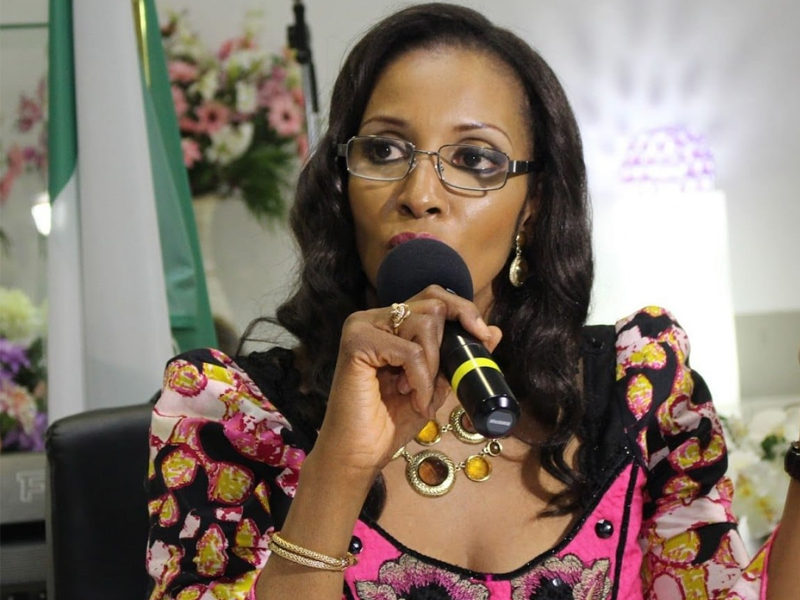
Speaking on the matter on Wednesday, the Minister of State for Foreign Affairs, Ambassador Bianca Odumegwu-Ojukwu, said the delay was not from the Nigerian side.

“The ministry has fulfilled its own side of the formalities for the Transfer of Sentenced Persons MoU.

It is the Ethiopian side that is stalling,” she said through her media aide, Magnus Eze.

The ministry disclosed in 2023 that more than 270 Nigerians were serving various prison terms in Ethiopia, mostly for drug-related offences.

Families and advocacy groups have continued to raise alarm over the poor conditions in detention centres.

President-General of the My Dreamalive Development Foundation, Ambassador Onwuka Collins,  condemned the situation last week, describing conditions in the prisons as “deplorable.”

“It is sad that some Nigerians in Ethiopian prisons have already died due to these harsh conditions, while others are suffering from illnesses, including kidney stones and stroke. We cannot continue to watch helplessly as our brothers languish in prison without a fair trial. We, therefore, need urgent help,” Collins said.

He further alleged reports of abuse, citing “inadequate food which is often self-made, inadequate medical care and negligence, brutal treatment, as well as extortion by prison officials.”

See also  Sokoto to replace 100-year-old hospital with world-class facility

Despite a Federal High Court ruling in November 2024 ordering the Ministry of Foreign Affairs and the Nigerians in Diaspora Commission to facilitate the return of Nigerians imprisoned in Ethiopia, progress remains stalled.

The court had also noted Ethiopia’s admission that it lacked the budget to care for foreign inmates.

Renewed pressure was mounted on April 17, 2025, when Odumegwu-Ojukwu led a delegation to meet the Ethiopian Ambassador to Nigeria, Legesse Geremew Haile, urging Ethiopia to expedite the MoU.

“Our people don’t want to hear that another Nigerian inmate died in Ethiopian prison,” the minister said, expressing frustration over what she called a lack of political will from Ethiopia despite earlier assurances.

Ambassador Haile, while reaffirming Ethiopia’s ties with Nigeria, admitted the MoU was still awaiting ratification by the country’s House of Representatives.

The prolonged delay has already claimed lives. On March 12, 2023, Favour Eze, held at Kaliti Prison in Addis Ababa, reportedly died after being brutalised by prison officials.

Another inmate, Uchenna Nwanneneme, died on September 21, 2023, from tuberculosis after allegedly receiving little to no medical attention.

punch.ng

FOLLOW US ON:

FACEBOOK

TWITTER

PINTEREST

TIKTOK

YOUTUBE

LINKEDIN

TUMBLR

INSTAGRAM

Continue Reading
Click to comment

Leave a Reply

Your email address will not be published. Required fields are marked *

News

Coup plotters reached out for spiritual cover — Cleric

Published

on

The Federal High Court in Abuja on Monday watched a video recording in which an Islamic cleric, standing trial over the coup plot, told investigators that he warned the suspected conspirators that their plan would fail and that they would eventually be betrayed.

Justice Joyce Abdulmalik also ordered a joint trial-within-trial to determine the voluntariness of statements and video recordings the prosecution sought to tender against the six defendants.

The ruling followed objections by defence lawyers, who argued that the statements were obtained in violation of the Administration of Criminal Justice Act and the Anti-Torture Act.

The Federal Government had on April 22 arraigned six defendants, including a retired major-general, over allegations of treason, terrorism, money laundering and conspiracy to overthrow President Bola Tinubu’s government.

The defendants are Maj-Gen Mohammed Ibrahim Gana (retd.); Navy Capt Erasmus Ochegobia Victor (retd.); police inspector Ahmed Ibrahim; Presidential Villa electrician Zekeri Umoru; Bukar Kashim Goni; and a Zaria-based Islamic cleric, Sheikh Abdulkadir Sani.

They all pleaded not guilty to the 13 charges.

At Monday’s proceedings, prosecution counsel, Rotimi Oyedepo (SAN), informed the court that the fourth prosecution witness remained in the witness box and applied for the playback of a video recording containing the alleged statement of the sixth defendant, Sani.

In the video played in open court, Sani said he knew the alleged ringleader, Col Maaji, for less than one year and was introduced to him through a man identified as Sanda.

The cleric said Sanda approached him for prayers concerning a planned coup and informed him that his “oga” needed spiritual guidance and divination over the success of the operation.

According to Sani, after conducting prayers, he informed them that the operation would fail.

“I warned them the coup would fail,” he said in the recording.

He added that he also told them that two persons involved in the alleged conspiracy would eventually betray the group.

Sani further stated that Sanda later returned with another request for prayers “so that the two individuals would not betray the group.”

The cleric said money was subsequently transferred to him for prayers and charity, while the names of persons allegedly involved in the plot were also sent to him for inclusion in the prayers.

According to him, shortly after the prayers commenced, Sanda informed him that Col Maaji had not been seen for four days.

He added that he later learnt through media reports that arrests had been made over an alleged coup plot.

See also  States demand forensic audit of $8.8bn crude-for-loan deals

Sani, however, maintained in the video that the money transferred to him was not payment for supporting a coup.

“The money was meant for prayers,” he told investigators.

He also admitted that he understood a coup to mean a military overthrow of government, but claimed he did not report the alleged plot because he did not know who to report to.

The cleric narrated that he was later arrested after visiting the Economic and Financial Crimes Commission over restrictions placed on his bank account.

According to him, he discovered that the account had been flagged when he attempted to make withdrawals from the money sent to him.

He said that after contacting an EFCC deputy director, he was invited to the commission’s office, where he explained that the funds were meant for prayers.

Sani also stated in the recording that he did not make any statement relating to a coup while in EFCC custody.

Before the end of the video, the cleric confirmed that nobody assaulted or tortured him and that his “statements were made voluntarily.”

Following the playback, Oyedepo applied to tender extra-judicial statements allegedly made by the first to fifth defendants before a Special Investigation Panel and military police authorities, alongside Sani’s statement before military investigators.

The move was strongly opposed by lawyers representing all six defendants.

Muhammed Ndayako (SAN) appeared for the first defendant, while Paul Erokoro (SAN), A.H. Shehu, C.D. Okafor, M.A. Ibrahim, Olalekan Ojo (SAN), and Sanusi Musa (SAN) represented the other defendants.

The defence lawyers argued that the statements and accompanying video recordings were not voluntarily made and failed to comply with safeguards provided under the ACJA.

Some of the lawyers also relied on provisions of the Anti-Torture Act, 2017, alleging oppression, inducement and coercion during interrogation.

Counsel for the second defendant argued that his client was neither informed of his right to legal representation nor granted access to counsel before his statement was recorded.

The fourth defendant’s lawyer further argued that the video failed to establish whether his client’s legs were free during interrogation, insisting that coercion could not be ruled out.

Ojo, counsel for the fifth defendant, urged the court to order separate trial-within-trial proceedings for each defendant since all the accused persons were disputing the voluntariness of their statements.

Responding, Oyedepo said the prosecution was “not afraid of a trial within a trial.”

See also  Lawmakers protest as NASS okays e-transmission, manual backup ahead of 2027 elections

He, however, urged the court to conduct a single joint proceeding instead of separate hearings for each defendant.

After listening to the arguments, Justice Abdulmalik ruled that the court would conduct “a joint trial within a trial to determine the voluntariness of the statements.”

The judge subsequently adjourned the matter till May 12 for continuation of proceedings.

The prosecution had alleged that the defendants planned to attack the Presidential Villa, detain Tinubu and other top government officials, and take control of strategic institutions.

Investigators also alleged that no fewer than 32 vehicles were procured for covert operations linked to the alleged plot.

Relatives protest

Meanwhile, relatives and sympathisers of military officers standing trial over the coup plot staged a peaceful protest at the Federal Ministry of Justice in Abuja on Monday, demanding an open trial and the release of the detained suspects.

The demonstrators, who converged on the ministry’s entrance, chanted solidarity songs and displayed placards bearing inscriptions such as “Tinubu Release Our Heroes,” “Lt Col C Chima 419 Witness,” and “AGF, Stop the Kangaroo Court Martial Now.”

Security personnel, including operatives of the Nigeria Police Force, however, prevented the protesters from gaining access to the ministry premises, restricting them to the entrance gate.

The protest comes amid growing criticism over the handling of the coup trial, particularly after journalists were barred last week from covering proceedings involving some of the accused officers.

Addressing journalists during the protest, the leader of the demonstrators, Justice Isimili, said many of those present were relatives of the detained officers who travelled from different parts of the country.

“Many of the people who turned out today are relatives of our heroes. Some of them came from Jos, Kano and Sokoto to protest the continued detention of the alleged coup suspects who are our fathers, uncles and brothers.

“All we are asking is for the President, who is our father, to temper justice with mercy. We want him to come to our aid. Many of us have not been able to rest or do anything because of our loved ones who are still being held.”

He condemned what he described as the secretive nature of the ongoing court-martial proceedings.

“We want an open trial instead of what they are doing in the name of court martial, where family members, journalists and the public are denied access to the court proceedings. All we are interested in is their freedom,” he added.

See also  Fubara - Why I refused to challenge emergency rule

Another protester, Abdullahi Kale, who claimed he travelled from Sokoto for the demonstration, alleged that the continued detention of the suspects was creating the impression that northern military officers were being targeted.

“No freedom, no second term. If the President and the AGF fail to release them, we will mobilise the North against Tinubu’s re-election,” he threatened.

A female protester, Habibat Muhammad, who carried her one-year-old child, Abba, on her back, also appealed for leniency.

Speaking in Hausa, she lamented that life had become difficult for many of the affected families since the suspects were arrested about eight months ago from their homes and military formations.

Responding to the protesters, a director in the ministry, who declined to disclose her name, urged the demonstrators to remain calm and orderly.

According to her, the ministry had yet to receive any formal letter detailing their grievances and demands.

“This is what we told them. They should go back and put their house in order before coming back.

“When you return, let only two persons come with your letter. But if you insist on coming as a group like you did today, it will be misrepresented to mean another thing.”

When pressed to reveal her identity, the official declined.

“On this issue, I can’t give a name. I am just a director in the ministry. What I have only come to offer them is an explanation, which has been done. That is all,” she stated.

The latest protest adds to earlier demonstrations by families of the detained officers, who have repeatedly demanded either their release or immediate arraignment in a transparent and public court process.

The controversy surrounding the trial deepened two weeks ago when journalists were barred from covering bail proceedings involving six of the suspects at the Federal High Court in Abuja.

Court officials, backed by operatives of the Department of State Services, reportedly ordered reporters out of the courtroom shortly before proceedings began.

The suspects are facing charges bordering on treason, terrorism, money laundering and failure to disclose information.

While some serving military officers are being tried before a court-martial in Abuja, others are facing trial in civilian courts.

punch.ng

FOLLOW US ON:

FACEBOOK

TWITTER

PINTEREST

TIKTOK

YOUTUBE

LINKEDIN

INSTAGRAM

Continue Reading

News

ISIS moves operations to West Africa, US warns

Published

on

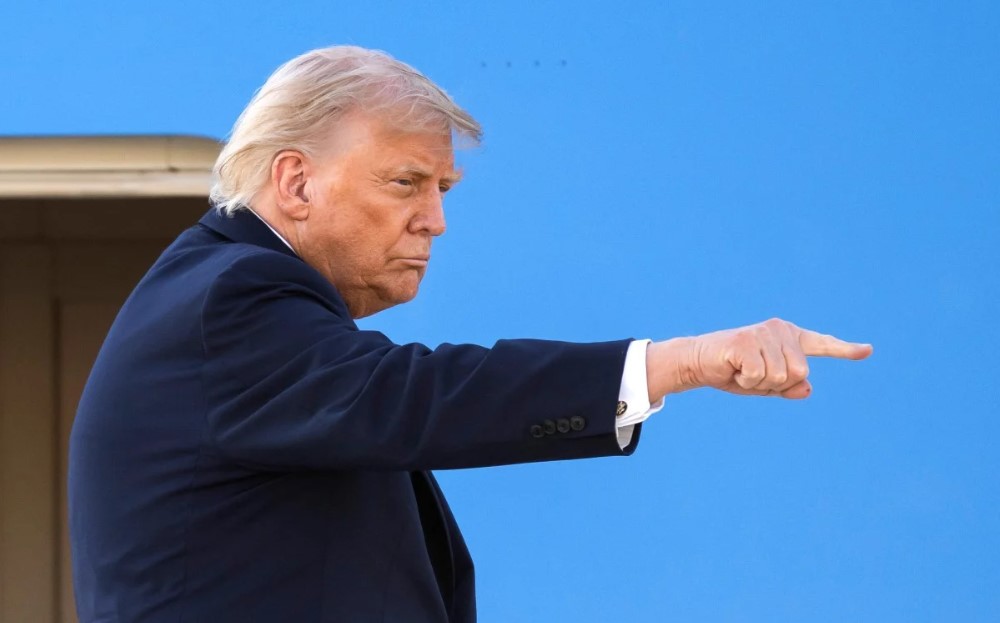
The United States has identified Nigeria and the Lake Chad Basin as critical fronts in its 2026 counterterrorism strategy, warning that extremist groups operating across Africa remain a growing threat to global security.

In the strategy document, the US government said parts of Africa, including West Africa, the Sahel region, the Lake Chad Basin, Mozambique, Sudan and Somalia, have witnessed a resurgence of terrorist activities following the collapse of ISIS strongholds in Iraq and Syria.

The document noted that remnants of the Islamic State and affiliated jihadist groups had relocated to Africa and Central Asia, exploiting ungoverned spaces and weak security structures.

“President Trump unleashed the greatest fighting force the world has ever seen, and within a matter of weeks, a Jihadi insurgency which controlled vast territories across Iraq and Syria was gone.

“Subsequently, the surviving remnants of the world’s most dangerous terrorist group of the modern age were forced to relocate to Africa and Central Asia, in turn exploiting the ungoverned spaces there.

“As a result, today, there are parts of Africa where a resurgent terror threat is the reality. These include in West Africa, the Sahel region, the Lake Chad Basin, Mozambique, Sudan, and of course Somalia, where parts of ISIS have re-established themselves and Al Shabaab maintains its tribal-based Islamist insurgency,” it read.

The US said its major objective in Africa would be to prevent extremist groups from establishing operational bases capable of launching attacks against American interests.

“We will continue to work together with governments threatened by groups like ISIS and al Qaeda affiliates who threaten us as well, and assist them with actionable intelligence and CT partner-force development until our shared foes no longer pose a serious threat to either them or us,” it added.

See also  Reps to probe ₦20tn abandoned FG lands, buildings

The document also declared that the protection of Christians targeted by terrorist groups would remain a key priority of the administration.

According to the strategy, Washington would continue rebuilding bilateral counterterrorism relations with African governments while reducing direct military deployments on the continent.

“We will continue to work together with governments threatened by groups like ISIS and al Qaeda affiliates who threaten us as well, and assist them with actionable intelligence and CT partner-force development,” the document stated.

The strategy criticised previous US foreign policies under former President Joe Biden, claiming they weakened counterterrorism efforts and allowed extremist organisations to regroup across Africa.

Referencing Nigeria specifically, the document praised recent actions taken by President Donald Trump over attacks on Christians in the country.

“With the decisive action President Trump recently took in Nigeria, he made it clear that the slaughter of Christians will not go unchecked,” the document stated.

It quoted Trump as saying on Christmas Day in 2025, “I have previously warned these terrorists that if they did not stop the slaughtering of Christians, there would be hell to pay, and tonight, there was.”

The US also said it would maintain a “light military footprint” in Africa while expecting regional partners to shoulder more of the counterterrorism burden through intelligence sharing and coordinated operations.

According to the strategy, African nations possess “almost limitless potential” if governments are able to exercise effective territorial control and deny safe havens to terrorist organisations and violent extremist groups.

punch.ng

FOLLOW US ON:

FACEBOOK

TWITTER

PINTEREST

TIKTOK

YOUTUBE

LINKEDIN

INSTAGRAM

Continue Reading

News

Ramaphosa slams xenophobic violence, vows illegal immigrants arrest

Published

on

South African President Cyril Ramaphosa has condemned recent violent protests and attacks targeting foreign nationals in parts of the country, describing those behind the unrest as “opportunists” exploiting legitimate socio-economic grievances.

In a public address issued on Monday, Ramaphosa said the violent acts being recorded in some communities do not represent the South African government or the majority of citizens.

He stressed that individuals involved in stopping people, conducting searches, or checking identities without legal authority were engaging in unlawful conduct.

“These are the acts of opportunists who are exploiting the legitimate grievances, particularly those of the poor, under the false guise of ‘community activism.

“Some of these people are assuming functions that only state officials are permitted to perform. Such lawlessness will not be tolerated, regardless of who the perpetrators or victims are,” he said.

The president, however, maintained that South Africa must continue to address illegal immigration in a lawful and structured manner, warning that undocumented migration places pressure on public services and worsens unemployment.

“In a country with high unemployment, some employers are exploiting undocumented, cheaper foreign labour over hiring citizens and paying them legal wages.

“This is fuelling social tension and undermining labour protection laws,” he said.

Ramaphosa noted that the government was strengthening border security through the Border Management Authority and deploying the military to curb illegal crossings.

According to him, about 450,000 attempted illegal entries were intercepted in the past financial year.

He also confirmed ongoing immigration enforcement actions, including arrests and deportations of undocumented migrants, alongside reforms to the country’s migration system.

See also  Sokoto to replace 100-year-old hospital with world-class facility

“We are stepping up workplace enforcement against employers who hire undocumented foreign nationals in violation of labour and immigration laws,” he said.

The president added that South Africa would also deploy up to 10,000 labour inspectors to improve compliance with employment and immigration regulations.

He urged both citizens and foreign nationals to comply with South African laws, warning that illegal activities involving fake documentation, bribery, or exploitation of public services would be prosecuted.

“Everyone in South Africa is bound by the same laws,” he said.

“We must make it clear that there is no place for xenophobia, ethnic mobilisation, intolerance or violence.”

Ramaphosa also defended South Africa’s refugee and migration framework, noting that the country continues to uphold human rights while managing immigration pressures.

He highlighted South Africa’s role in African integration, saying millions of visitors from across the continent enter the country annually for tourism, education, and trade.

“South Africa continues to play its part in deepening African integration and solidarity,” he said.

He called for cooperation between countries to address migration challenges and urged restraint amid rising tensions.

The remarks come amid renewed anti-foreigner protests and reported incidents of looting and violence in parts of Durban, Cape Town, East London, and KwaZulu-Natal.

Recall that the Nigerians in Diaspora Commission has advised Nigerians in South Africa to avoid confrontations, stay alert, and monitor official updates as authorities continue to manage the situation.

The commission further urged Nigerian business owners to take precautionary measures.

NiDCOM noted that the Nigerian Consulate in Johannesburg remains operational and is working with South African authorities to ensure the safety of citizens.

See also  LASU professor reveals how to stabilize governance in Nigeria

The commission also disclosed that the Minister of State for Foreign Affairs, Bianca Odumegwu-Ojukwu, is engaging with her South African counterpart over the situation.

punch.ng

FOLLOW US ON:

FACEBOOK

TWITTER

PINTEREST

TIKTOK

YOUTUBE

LINKEDIN

INSTAGRAM

Continue Reading

Trending