




Connect with us

Business

Nigeria’s eight-month debt service bill hits $2.86bn – CBN

Published

on

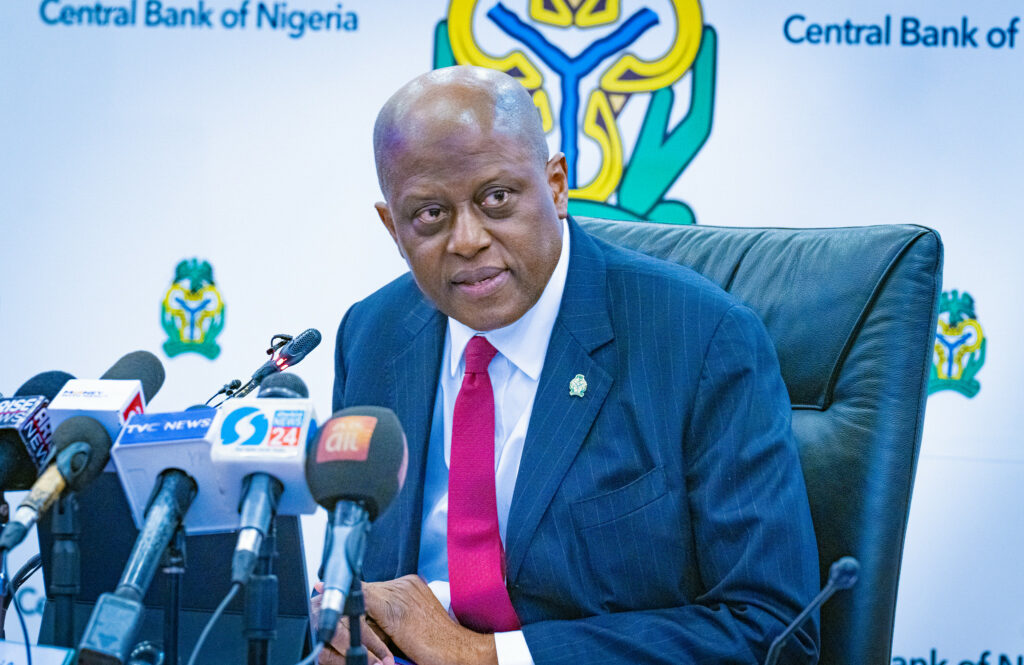
Nigeria spent a total of $2.86bn servicing external debt in the first eight months of 2025, according to the international payment data from the Central Bank of Nigeria on Wednesday. This accounted for 69.1 per cent of the country’s total foreign payments of $4.14bn in the period.

In the same eight-month stretch of 2024, debt service stood at $3.06bn, representing 70.7 per cent of total foreign payments of $4.33bn. The figures show that while the absolute value of debt service fell by $198m between 2024 and 2025, the share of debt in overall foreign payments has remained persistently high, with about seven out of every ten dollars leaving the country used to meet debt obligations.

The monthly breakdown highlights the volatility of Nigeria’s repayment schedule. In January 2025, $540.67m was spent compared with $560.52m in January 2024, a fall of $19.85m or 3.5 per cent. February 2025 recorded $276.73m, slightly below the $283.22m in February 2024, down by $6.49m or 2.3 per cent.

March 2025 surged to $632.36m against $276.17m in March 2024, an increase of $356.19m or 129 per cent. In April 2025, payments reached $557.79m, which was $342.59m or 159 per cent higher than the $215.20m of April 2024.

May 2025 stood at $230.92m, sharply lower than the $854.37m in May 2024, a drop of $623.45m or 73 per cent. June 2025 rose to $143.39m compared with $50.82m in June 2024, a rise of $92.57m or 182 per cent.

July 2025 fell to $179.95m, down by $362.55m or 66.8 per cent from $542.5m in July 2024. By August 2025, debt service climbed to $302.3m, which was $22.35m or 8 per cent higher than the $279.95m of August 2024.

See also  Tinubu orders FIRS, Customs to review revenue deductions

Month-on-month trends in 2025 further underline the erratic nature of the payments. The country began January with $540.67m, which dropped by $263.94m or 48.8 per cent to $276.73m in February.

March then spiked to $632.36m, up by $355.63m or 128.5 per cent. April fell to $557.79m, down by $74.57m or 11.8 per cent from March. May dropped to $230.92m, down by $326.87m or 58.6 per cent. June slipped further to $143.39m, a decline of $87.52m or 37.9 per cent.

July rebounded slightly to $179.95m, an increase of $36.56m or 25.5 per cent, before August rose again to $302.3m, which was $122.35m or 67.9 per cent higher than July.

The dominance of debt service in Nigeria’s foreign obligations is clear. In the eight months of 2025, $2.86bn of the $4.14bn total foreign payments went to debt, giving it a share of 69.1 per cent. A year earlier, $3.06bn of the $4.33bn total foreign payments went to debt, accounting for 70.7 per cent.

These figures show that, despite spending nearly $200 million less on debt this year compared to 2024, debt still accounted for the overwhelming majority of foreign exchange outflows.

This high ratio of debt service to total foreign payments highlights Nigeria’s vulnerability, as nearly three-quarters of its international outflows are being channelled into debt repayment rather than critical imports or investments.

Fitch Ratings recently noted that Nigeria’s external debt service will increase from $4.7bn in 2024 to $5.2bn in 2025. This includes $4.5bn in amortisation payments and a $1.1bn Eurobond repayment due in November. Fitch noted, “Government external debt service is moderate but expected to rise to $5.2bn in 2025 (with $4.5bn of amortisations, including a $1.1bn Eurobond repayment due in November 2025), from $4.7bn in 2024, and fall to $3.5bn in 2026.”

See also  Kidnapping spree escalates as FG negotiates hostages’ freedom

The agency also cited a minor delay in the payment of a Eurobond coupon due on March 28, 2025, as a reflection of persistent challenges in public finance management. Although Nigeria’s external debt service remains within manageable levels, Fitch warned that high-interest costs, weak revenue performance, and limited fiscal space remain significant concerns.

Fitch said general government debt was expected to remain at about 51 per cent of GDP in 2025 and 2026. However, it expressed concern over the government’s revenue position, noting that interest payments will consume a substantial portion of income.

It stated, “We expect general government revenue-to-GDP to rise but to remain structurally low (averaging 13.3 per cent in 2025–2026), largely accounting for a high general government interest/revenue ratio, above 30 per cent, with the Federal Government interest/revenue ratio of nearly 50 per cent.”

punch.ng

FOLLOW US ON:

FACEBOOK

TWITTER

PINTEREST

TIKTOK

YOUTUBE

LINKEDIN

TUMBLR

INSTAGRAM

Continue Reading
Click to comment

Leave a Reply

Your email address will not be published. Required fields are marked *

Business

NNPC serviced $3bn loan with N991bn crude – Report

Published

on

The Nigerian National Petroleum Company Limited has serviced part of its $3bn forward-sale loan from the African Export-Import Bank with crude oil worth N991bn in 2024, according to its 2024 financial statement report. The repayment was tied to Project Gazelle, a forward crude oil supply agreement signed in 2023.

On August 17, 2023, The PUNCH reported that the NNPC announced it had secured a $3.3bn emergency loan to repay crude oil obligations from Afreximbank. It explained that the loan would be used by the oil company to support the Federal Government in stabilising Nigeria’s exchange rate.

“The NNPC Ltd. and AFREXIM bank have jointly signed a commitment letter and Termsheet for an emergency $3bn crude oil repayment loan,” NNPC said in a statement.

“The signing, which took place today at the bank’s headquarters in Cairo, Egypt, will provide some immediate disbursement that will enable the NNPC Ltd. to support the Federal Government in its ongoing fiscal and monetary policy reforms aimed at stabilising the exchange rate market,” it added.

Under the deal, NNPC committed to deliver 90,000 barrels of crude oil per day from Production Sharing Contract assets to back a funding facility. According to the 2023 financial statement, a drawdown of $2.25bn had already been achieved by 31st December 2023, with principal repayment scheduled to begin in June 2024.

The funding carried an interest rate of 3-month LIBOR plus 6.5 per cent, with a 6 per cent margin and 0.5 per cent liquidity premium.

According to the 2024 financial statement, the drawdown on the facility had reached N4.9tn out of a total available N5.1tn, while N991bn worth of crude oil had been lifted in repayment, leaving an outstanding balance of N3.8tn at the end of 2024.

See also  Senate confirms Amupitan as INEC chairman

The report read, “In December 2023, NNPC Limited entered into a forward sale agreement with Project Gazelle Funding Limited to supply 90,000 bbl. of crude oil per day from Production Sharing Contract Assets for the settlement of a 5-year N2.7tn funding.

“The funding was utilised by the company to finance an advance payment of future taxes and royalty obligations due to the federation on PSC assets managed by the Company on behalf of the Federation.

“As at 31st December 2024, a drawdown of N4.9tn has been achieved from the initial facility of N5.1tn. The interest rate for the facility is 3-month SOFA plus 6.5 per cent while the margin and Liquidity Premium of 0.5 per cent respectively. A total value of Crude Oil worth N991bn has been lifted with a balance of N3.8tn as at 31st December 2024.”

The repayment was made between June and December 2024. However, NNPC did not disclose the identity of the offtakers or exact delivery volumes fulfilled in 2024.

The Project Gazelle arrangement has become one of NNPC’s most significant forward-sale financing vehicles, following a trend of oil-backed loans designed to shore up government revenues, refinance legacy debts, and meet budgetary obligations amid limited fiscal buffers.

The PUNCH earlier reported that the NNPC Ltd is burdened with crude-backed loan obligations estimated at N8.07tn.

The liabilities stretch across multiple forward-sale and project-financing arrangements that are expected to be serviced through substantial crude oil and gas deliveries. The commitments have become a major pillar of NNPCL’s funding structure following years of fiscal pressure, volatile crude production, and declining upstream investment.

See also  Malabu Oil & Gas Sues CAC Over Deregistration Of Firm

Several of the facilities were used to refinance older debts, fund refinery rehabilitation, support cash flow, and meet government revenue obligations.

When assessed together, the company’s major crude-for-loan facilities—Eagle Export Funding (21,000 bpd), Project Yield (67,000 bpd), Project Leopard (35,000 bpd), and Project Gazelle (90,000 bpd)—represent a combined commitment of 213,000 barrels per day, in addition to separate gas-delivery obligations under the NLNG arrangement.

The volume equates to a sizeable share of Nigeria’s daily crude output, underscoring the long-term implications of these arrangements for government revenue, export allocation, and operational flexibility.

The PUNCH also reported that Nigeria’s gross profit from crude oil and gas sales plunged by N824.66bn in 2024 despite a rebound in oil production, according to figures from the Budget Implementation Report for the fourth quarter of 2024 released by the Budget Office of the Federation.

Data from the report revealed that gross profit from crude and gas sales fell to N1.08tn during the year, from N1.90tn in 2023, representing a 43.32 per cent decline.

The Chief Executive Officer of AHA Strategies and oil and gas expert, Mr Ademola Adigun, earlier linked Nigeria’s declining oil earnings to opaque crude-for-cash agreements and undisclosed loan repayments that have tied up part of the country’s crude output.

He said some of the government’s oil barrels were already committed to debt settlements and forward-sale contracts, reducing the actual volume that brought fresh revenue into the Federation Account.

Adigun said, “Some of our crude is already tied up in loan agreements. The problem is that Nigeria doesn’t know the full details of these transactions because there’s little transparency around them.”

See also  Capital projects crumble as states cut spending

He explained that several crude-backed projects, such as Project Gazelle, were carried out without proper public disclosure or parliamentary scrutiny.

He added that the Nigeria Extractive Industries Transparency Initiative should strengthen its audits to determine how much of the country’s crude is being used for debt repayment or swap transactions.

punch.ng

FOLLOW US ON:

FACEBOOK

TWITTER

PINTEREST

TIKTOK

YOUTUBE

LINKEDIN

TUMBLR

INSTAGRAM

Continue Reading

Business

Yuletide: Dangote assures Nigerians of stable fuel supply

Published

on

Chairman of Dangote Group, Aliko Dangote, on Friday said Nigerians will no longer experience fuel queues during the Christmas and New Year seasons.

Briefing State House correspondents after meeting with President Bola Tinubu at the Aso Rock Villa, Abuja, Dangote said his refinery has formally notified the Nigerian Midstream and Downstream Petroleum Regulatory Authority of its readiness to deliver 50 million litres of Premium Motor Spirit daily, far above national consumption.

He said, “Historically, Nigeria has battled fuel queues since 1972. For the first time, we are eliminating those queues, not through imports but by producing locally.

“Even when we were servicing the refinery, there were no queues. I can assure you that queues are now history.”

Dangote stated that the refinery will soon produce surplus volumes, adding that by February, it will supply 15–20 million litres more than Nigeria needs.

This, he argued, will allow exports to neighbouring countries, reducing the incidence of fuel scarcity across West Africa.

The industrialist also disclosed that domestic manufacturers, especially in the plastics industry, will now enjoy reliable access to locally produced feedstock, ending years of reliance on imports estimated at $400m annually.

Dangote also announced an expansion programme that will raise refinery capacity to 1.4 million barrels per day by 2028, surpassing India’s Reliance refinery, the world’s largest, at 1.25 million barrels per day.

“We have already signed the necessary agreements.

“Construction piling begins before the end of January, and we will deliver on schedule,” he announced.

See also  65 golden moments of Nigerian sports since 1960

He revealed plans to scale up the company’s urea production to 12 million tonnes annually, positioning Nigeria to overtake Russia and Qatar as the world’s leading producer.

“Our goal is to use our fertilizer company to supply the entire African continent,” Dangote said.

Dangote attributed the recent drop in petrol and diesel prices to increased competition and reduced smuggling.

“Prices are going down because we must compete with imports.

“Luckily, smuggling has dropped significantly, though not completely,” he explained.

He noted that the refinery business is a long-term national investment, saying, “We’re not here to recover $20 billion overnight.

“The legacy I want to leave is that whatever Nigerians need, fuel, fertiliser, power, we will be part of delivering it.”

Dangote further highlighted logistics constraints affecting Nigeria’s solid minerals sector, particularly the congestion of major ports.

“Apapa is full. Tin Can is full. Lekki is mainly for containers.

“You cannot export coal or copper if you have nowhere to ship from,” he noted.

To curb this, he explained that the Group is developing what would become West Africa’s largest deep-sea port at Olokola, expected to be completed in two to two-and-a-half years.

The Kano-born businessman expressed support for the Tinubu administration’s naira-for-crude initiative, describing it as a patriotic move to strengthen the economy, although he acknowledged pushback from international oil companies.

According to him, “It’s a teething problem, but it will be resolved, either through legislation or administrative action.”

On concerns about global competition, Dangote maintained that the refinery will thrive.

He said, “What we want is to make Nigeria the refining hub of Africa. All African countries import fuel. We want what we consume to be produced here.”

See also  N20bn Sukuk: TAJBank records 185.5% oversubscription

He also endorsed the government’s Nigeria-first industrial policy and urged wealthy Nigerians to channel resources into productive investment rather than luxury spending.

“If you have money for a private jet, invest in industries and create jobs,” he stated, adding that domestic investors must drive industrialisation to attract foreign capital.

Dangote acknowledged past hurdles, policy instability, smuggling, and factory closures, but expressed optimism that the country is now on a stable path toward sustainable industrial growth.

“Domestic investors must lead the way. Once they do, foreign investors will follow.

“Nobody advertises a good restaurant; when the food is good, word spreads,” he explained.

He described his meeting with President Tinubu as a routine consultation on the economy and business environment, noting that it was “a very fruitful meeting.”

punch.ng

FOLLOW US ON:

FACEBOOK

TWITTER

PINTEREST

TIKTOK

YOUTUBE

LINKEDIN

TUMBLR

INSTAGRAM

Continue Reading

Business

OPay secures double honours at Tech Innovation Awards

Published

on

Nigeria’s premier financial technology company, OPay, has been named Fintech Company of the Year and Best Fintech in Cybersecurity at the ninth Tech Innovation Awards.

In a statement on Thursday, OPay said the award was in recognition of its innovation and security leadership.

The awards ceremony, held on 29 November 2025, in Lagos, convened top organisations and industry leaders who shape the country’s digital landscape.

Speaking after receiving the honours, Chief Compliance Officer at OPay, Chukwudinma Okafor, said, “These awards are a testament to our relentless pursuit of excellence in fintech and our unwavering commitment to user security. Every innovation we introduce, from secure payments to advanced compliance measures, is designed to give millions of Nigerians the confidence to transact safely. This recognition belongs as much to our dedicated team as it does to the users who inspire us to continually raise the bar for excellence in fintech and cybersecurity.”

Highlighting OPay’s proactive approach to security, Chief Commercial Officer Elizabeth Wang said, “We are incredibly proud to receive both Fintech Company of the Year and Best Fintech in Cybersecurity at the 9th Tech Innovation Awards, two recognitions that highlight our dedication to security and user protection. At OPay, we believe that equipping users with the knowledge and advanced tools is essential to building trust and promoting financial inclusion. This was demonstrated through our OPay Security Vote Campaign some months ago, a dynamic social media initiative that educated users on our in-app security features. The campaign has helped millions of Nigerians understand how to protect their accounts and transact safely, reinforcing that security is central to everything we do. Hence, these awards recognise not only our leadership in fintech but also our commitment to keeping every transaction secure and our customers confident in their financial journey.”

See also  Reps to regulate crypto, POS operations

OPay was established in 2018 as a leading financial institution in Nigeria with the mission to make financial services more inclusive through technology. The company offers a wide range of payment services, including money transfer, bill payment, card service, airtime and data purchase, and merchant payments, among others. Renowned for its fast and reliable network and strong security features that protect customers’ funds, OPay is licensed by the Central Bank of Nigeria and insured by the Nigerian Deposit Insurance Corporation with the same insurance coverage as commercial banks.

Continue Reading

Trending