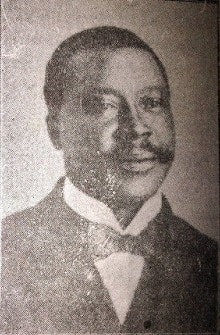



When Al-Amin Mohammed returned home from the Agodi Custodial Centre in Ibadan, Oyo State, on September 14, his family thought the worst was over.
The 30-year-old aluminium fixer and student of a polytechnic in Kwara State had spent days in police detention and prison custody following a dispute that began with an alleged N8,000 debt.
His parents had stood as sureties to perfect his bail.
He was finally home and free.
But his mother, Simiat Mohammed, said the son who returned to the family was not the same man who had left days earlier.
He barely ate. He withdrew from people. Again and again, she said, Al-Amin complained about the humiliation of being detained, taken to court and remanded in prison over an allegation he insisted was untrue.
“He kept saying that they wanted to tarnish his image because he came from a poor family and that he was sent to prison for a crime he did not commit,” the grieving mother told Saturday PUNCH amid tears.
Three days after his release, tragedy struck.
On September 17, Al-Amin ingested rat poison at his residence in Ibadan.
Before then, according to his family, he recorded a voice note expressing frustration and saying what would become his final words to his mother.
“He said the frustration was too much and asked his siblings to take care of me. He mentioned my name and apologised, telling me not to be angry with him,” Simiat recalled.
The family rushed him from one hospital to another in a desperate attempt to save his life.
His father, Habeeb Mohammed, said three hospitals rejected him before the family eventually got to the University College Hospital, Ibadan.
“We were asked to make some payments before he could be attended to. After we paid, the doctor came and told us that he was dead,” he said.
For the Mohammed family, the death brought a devastating end to a chain of events that they say should never have gone beyond a minor disagreement.
How N8,000 debt became police case
According to Simiat, her son had borrowed N23,000 from a Point-of-Sale operator identified simply as Kazeem.
Al-Amin had repaid N15,000, leaving a balance of N8,000.
But a disagreement subsequently broke out, during which Kazeem allegedly seized Al-Amin’s mobile phone over the unpaid balance.
The 30-year-old later returned to retrieve his phone, leading to a struggle.
His mother said the confrontation was minor, but it set off events that eventually took her son through vigilante detention, a police cell, a courtroom and prison custody.
After the altercation, Al-Amin was allegedly detained overnight by a vigilante said to be the father of one of Kazeem’s employees.
The following day, September 9, he was allegedly handed over to officers at the Sanyo Divisional Police Station in Ibadan.
Simiat said she received a call the next day asking her to come to the station.
Like many mothers visiting a detained child, she went there carrying food.
“When I got to the station, I went with food for my son, but they did not allow me to give it to him. After some time, they brought him out of the cell and I spoke with him,” she said.
During that brief encounter, Al-Amin maintained his innocence over another allegation that had entered the dispute that he damaged a mobile phone belonging to Kazeem.
“He told me that he did not touch the phone, let alone spoil it. He said the only money he owed Kazeem was N8,000 and that he went to retrieve his phone after it had been seized, which led to the struggle,” she added.
‘They said they would jail him’
What Simiat expected would be resolved as a dispute between two young men allegedly took a more serious turn.
She claimed that the Investigating Police Officer, identified as Adekeye, insisted that Al-Amin would be prosecuted despite the family’s appeals for a settlement.
According to her, the family was asked to provide N100,000 for bail and another N70,000 for the damaged phone.
“When Kazeem came to the station, I pleaded with him that we should settle the matter. I also pleaded with the DCO, but he later sent me out of his office.
“The IPO, Adekeye, also said she would ensure that my son was jailed. There was even a police officer pleading on our behalf,” she alleged.
The deceased’s father, Habeeb, gave a similar account.
He alleged that the matter was escalated because the complainant’s father was known to the Divisional Crime Officer.
“When I got there, I begged the DCO that the matter could be settled amicably. But because the father of the complainant was his friend, he said he would deal with my son and send him to prison,” he stated.
The family further alleged that Al-Amin complained of harsh treatment while in detention and said he was pressured to admit that he damaged the phone.
Saturday PUNCH could not independently verify those allegations.
From police cell to prison
On September 10, the family said Al-Amin was taken to court in the Mapo area of Ibadan.
His mother claimed nobody informed the family beforehand.
They only learnt that he had been taken to court after receiving a telephone call.
At the court, the family encountered a lawyer identified as Boluwatife, who, according to Simiat, offered to represent Al-Amin free of charge after hearing about the case.
The court granted him bail in the sum of N100,000 with two sureties in like sum.
But freedom did not come immediately.
Pending the perfection of his bail conditions, Al-Amin was taken to the Agodi Custodial Centre.
For four days, his parents worked to secure his release.
Eventually, Simiat and Habeeb stood as sureties, and their son walked out of custody on September 14.
The family had won his freedom, but his mother said something appeared to have changed.
‘He stopped eating’
At home, Al-Amin became withdrawn.
The young man who combined aluminium work with his studies and helped support his family stopped eating and talking to people.
His thoughts, the mother said, repeatedly returned to the police station and prison.
He felt humiliated by the experience and worried that his reputation had been destroyed.
Three days after his release, Al-Amin allegedly took the substance that claimed his life.
‘He was our shining light’
Al-Amin’s elder sister, Adenike, said the tragedy deprived the family of one of its major sources of support.
She described him as hardworking and ambitious a young man who earned a living fixing aluminium while pursuing his education.
“He was a hardworking boy. He was working as an aluminium fixer and also going to school. He was the pillar of this family and was taking care of our mother,” she said.
Al-Amin was unmarried and had no child.
“We have lost the shining light of our family,” Adenike added.
A family friend and retired Deputy Superintendent of Police, Isiaka Ayole, said the circumstances surrounding Al-Amin’s arrest, detention and prosecution deserved an independent investigation.
He questioned why the vigilante who allegedly detained the deceased overnight before handing him over to the police was not also investigated.
“This was a simple matter that the police should have helped settle amicably instead of escalating it,” Ayole said.
“I don’t understand the type of policing where somebody is first detained overnight by a vigilante and then handed over to a police officer who is said to be a friend of the complainant’s father.
“The irony is that nothing was said about the person who took the law into his hands. Instead, the person owing N8,000 was taken to court.”
The retired police officer called on the Inspector-General of Police, Tunji Disu, to investigate the officers involved and establish whether there was any abuse of power.
Mother demands answers
For Simiat, however, the questions are more personal.
In just over a week, she watched her son go from an aluminium worker and student to a detainee, a defendant, a prison inmate and, finally, a young man she said became consumed by the stigma of what had happened to him.
The Mohammed family is now appealing to President Bola Tinubu, the IG and the Oyo State Government to investigate the circumstances surrounding Al-Amin’s death.
They want to know whether the dispute was properly handled and whether any police officer abused his authority.
Speaking through tears, Simiat said her family lacked influence or powerful connections but would continue to seek answers.
“Let them investigate what happened to my son. We don’t have anybody except God,” she said.
“We do not want him to die in vain.”
I only wanted my money, not drag any case – Kazeem
Reacting, Kazeem, who operates a phone-charging point and Point-of-Sale business around the Oni-Gaari area of Ayegun, Ibadan, told Saturday PUNCH that he was shocked to learn of Al-Amin’s death.
He insisted that he never intended to pursue the matter beyond recovering his money.
Kazeem explained that sometime last year, Al-Amin withdrew N7,000 from his apprentice, one Maryam, but allegedly failed to transfer the money to her as promised.
“Al-Amin started avoiding the area until Maryam returned to school without informing me about the incident,” he said.
Kazeem said Maryam later told him what happened when she returned from school few months later and asked whether Al-Amin had deposited the money with him.
“She and her sister traced him to his house and he told them he had given the money to me, so they left. Al-Amin later called me and pleaded that he only told Maryam and her sister that he had given me the money so that they would not embarrass him in his house. Later, his grandmother paid the money.”
On the recent incident, Kazeem said he employed another apprentice, one Iya Ajike.
He said he visited the shop on Tuesday, September 8, 2026, for monitoring and account balancing.
He claimed to have met some people pleading with the apprentice to release Al-Amin’s phone.
According to him, Ajike later explained that Al-Amin had carried out a transaction of about N23,000, collected the money and left his phone at the shop, promising to transfer the money after charging the device.
Kazeem said the deceased later returned, collected the phone and transferred N15,000, claiming he had exceeded his transfer limit for the day and would pay the balance the following day.
He said when the balance was not paid, Al-Amin allegedly began avoiding the apprentice.
Kazeem explained that Ajike eventually traced him to a location where she found him sleeping with the phone beside him, picked up the device and returned to the shop.
He said Al-Amin later arrived with some friends to plead for the release of the phone, an encounter he witnessed.
According to Kazeem, he insisted that Al-Amin pay the outstanding money before the phone would be released.
He said the matter was later taken up by the landlord association after the deceased indicated that he would pay.
Kazeem said on Wednesday night, he was informed of an altercation involving his apprentice and Al-Amin.
“Iya Ajike called me around 10pm that Al-Amin had come to her house around 9pm that he wanted to collect his phone, that someone had sent money to him and he wanted to transfer the debt to her.
“Iya Ajike told me that she told Al Amin that the phone is in the shop and it is late already that he should come back the following day, but Al Amin said he wanted his phone that night. He tried to snatch an Airtel-branded phone we use for our business, which she was using as a torchlight.
“The phone fell down during the struggle and its screen was damaged,” he said.
Kazeem said the landlord association that night asked the parties to return the following morning to resolve the matter.
“In the morning, I was there; we couldn’t resolve the matter because other people also came forward with similar complaints against Al-Amin that he underpayed them whenever he came to withdraw money.”
He said the matter was subsequently referred to a vigilante group, which directed the parties to the Sanyo Police Station after it could not resolve the dispute.
“When we got to the station, the only thing I told the police was that I wanted Al-Amin to take responsibility for the damaged phone and how he was going to repair it. But Al-Amin denied responsibility for the damage, saying he was not responsible for the damaged phone.”
“So, the police detained him that day and asked us to come the following day. They took him to where the charge was read to him and he pleaded not guilty.”
He said the magistrate subsequently ordered that Al-Amin be remanded and adjourned the case until October 10.
Kazeem said he only learnt on Thursday that Al-Amin had been released on bail.
He maintained that he never intended to drag the matter into a legal dispute, adding that his primary concern was to recover the money owed to him.
“In fact, I was discussing with my lawyer that the money used for his bail, had they agreed at the station, this matter would not have got to court. The money I have spent on the case is more than the amount owed,” Kazeem said.
When contacted, the Public Relations Officer of the Oyo State Police Command, Ayanlade Olayinka, said he was not aware of the incident.
A subsequent message sent to him via WhatsApp had not been responded to as of the time of filing this report.
Source: punchng.com
FOLLOW US ON: