Connect with us

Lifestyle

Christy Essien-Igbokwe: Nigeria’s Lady of Songs and Humanitarian Icon

Published

on

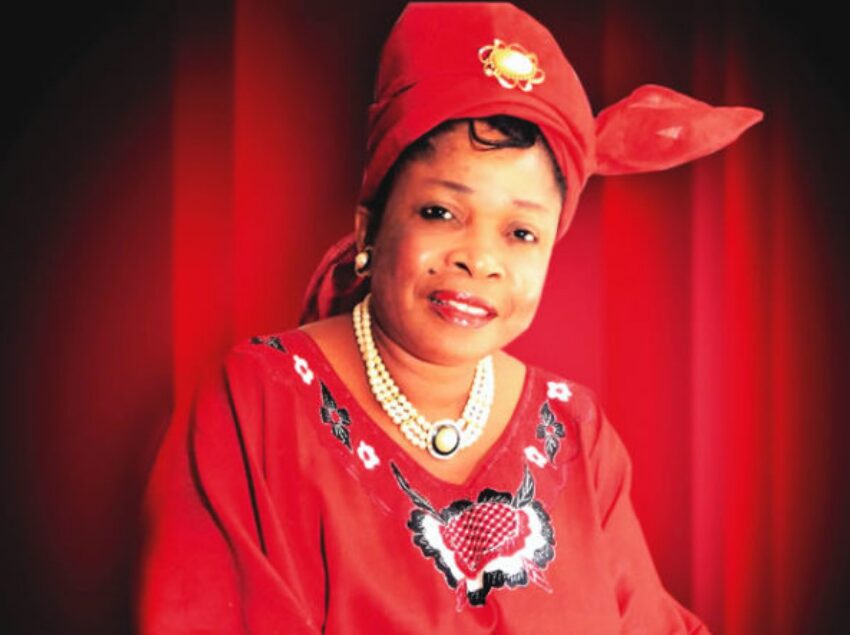
The image shows Christy Essien-Igbokwe, a legendary Nigerian singer, songwriter, actress, and humanitarian widely celebrated as the “Lady of Songs.” She was one of the most influential voices in Nigeria’s entertainment industry, known for her timeless hit “Seun Rere” and her ability to sing fluently in Igbo, Hausa, Yoruba, English, and Ibibio, her native language.

Early Life and Background

Christy Uduak Essien was born on November 11, 1960, in Akwa Ibom State, Nigeria. She lost her mother at the age of twelve, a tragedy that inspired many of her songs about love, compassion, and the struggles of life. Her musical talent became evident at an early age, and by her teenage years, she had already begun performing on television shows.

Music Career and Achievements

Christy released her debut album, Freedom, in 1977, marking the beginning of a remarkable musical journey that spanned over three decades. She went on to release several successful albums, including Patience, Ever Liked My Person?, and Taking My Time. Her music addressed social issues such as unity, love, peace, and child welfare, earning her admiration across Nigeria and beyond.

Her most famous song, “Seun Rere,” remains an enduring anthem of moral instruction and family values. Known for her soothing voice and passionate delivery, Christy was among the first Nigerian artists to blend indigenous rhythms with modern pop, giving birth to a unique Afro-pop sound that transcended generations.

Acting and Cultural Influence

Beyond her musical career, Christy Essien-Igbokwe was a talented actress. She starred in the classic Nigerian sitcom “The New Masquerade,” where she gained national fame for her role as “Akpenor.” She also appeared in early Nollywood films that tackled social issues, including child abuse and women’s rights, using her platform to advocate for positive change.

See also  Lateef Adedimeji: Versatile Star of Contemporary Nollywood

Leadership and Humanitarian Work

Christy Essien-Igbokwe made history as the first female president of the Performing Musicians Association of Nigeria (PMAN), where she championed the rights and welfare of artists. She was a founding member of PMAN, playing a vital role in shaping Nigeria’s music industry into a structured and respected profession.

Her humanitarian spirit was equally remarkable. She founded the Essential Child Care Foundation, an organization dedicated to supporting underprivileged and vulnerable children in Nigeria. Her commitment to social causes reflected her belief that artists have a duty to use their influence for the betterment of society.

Personal Life and Death

Christy was married to Edwin Igbokwe, a respected engineer and businessman, and they had four children. She was a devoted wife and mother who balanced her family life with her artistic and humanitarian commitments.

She passed away on June 30, 2011, at the age of 50, after a brief illness. Her death marked the end of an era, and tributes poured in from across Africa, celebrating her as a national treasure who used her voice and talent to uplift humanity.

Legacy

Christy Essien-Igbokwe’s legacy continues to live on through her music, advocacy, and the countless artists she inspired. Her contributions to Nigerian culture earned her numerous awards and national recognition, including honors from the Performing Musicians Association of Nigeria and several humanitarian organizations.

Her music remains a beacon of cultural pride and social consciousness, while her life story continues to inspire young artists to combine artistry with purpose.

Sources:

The Guardian Nigeria: “Christy Essien-Igbokwe: Remembering the Lady of Songs” (2016)

See also  Tension in Osun council as Ataoja, Oluwo battle for seniority

Vanguard Nigeria: “Ten Years After: The Legacy of Christy Essien-Igbokwe Lives On” (2021)

PMAN Official Records: “Past Presidents and Founding Members”

BBC Pidgin: “Who Be Christy Essien-Igbokwe – Nigeria Lady of Songs” (2019)

FOLLOW US ON:

FACEBOOK

TWITTER

PINTEREST

TIKTOK

YOUTUBE

LINKEDIN

TUMBLR

INSTAGRAM

Continue Reading
Click to comment

Leave a Reply

Your email address will not be published. Required fields are marked *

Lifestyle

Women Who Love and Listen to Their Pastors More Than Their Husbands Should Be the Pastor’s Second Wife

Published

on

This statement may sound funny, provocative, or even offensive, but it raises an important question about priorities in marriage and religion.

A pastor is a spiritual leader, but he is not supposed to replace a woman’s husband. If a married woman consistently values her pastor’s opinions above her husband’s, obeys her pastor while dismissing her husband, or shows greater loyalty and admiration toward her pastor than toward her spouse, then something may be seriously wrong with the balance in that marriage.

Marriage requires communication, mutual respect, trust, and understanding. A pastor can provide spiritual guidance, but that guidance should not become a reason for a husband and wife to lose respect for each other.

At the same time, husbands should not expect their wives to obey them blindly. Both husband and wife should seek God’s wisdom, communicate openly, and make decisions with love and respect.

So perhaps the real question is not whether such a woman should become the pastor’s “second wife,” but why has the pastor become more important in her marriage than her own husband?

Put God first. Respect your spouse. And never allow a spiritual leader to become a substitute for your marriage partner.

FOLLOW US ON:

FACEBOOK

TWITTER

PINTEREST

TIKTOK

YOUTUBE

LINKEDIN

INSTAGRAM

See also  Directors Guild of Nigeria appoints Akwa Ibom gov patron
Continue Reading

Lifestyle

Why is it only in Africa that we hear so much about “generational curses”?

Published

on

This is a question worth asking—not to insult African traditions or dismiss anyone’s beliefs, but to encourage honest reflection.

Across Africa, it is common to hear people explain repeated family problems as a “generational curse.” When poverty, broken relationships, addiction, failure, sickness, family conflict or misfortune appears to repeat from one generation to another, some people immediately conclude that an ancestor, spiritual force or past wrongdoing is responsible.

But is every repeated family problem truly a curse?

If a child grows up in poverty, has limited access to quality education, receives little financial support and then struggles as an adult, is that necessarily a spiritual curse—or could it be the result of circumstances that have been passed from one generation to another?

If children grow up watching violence, substance abuse, unhealthy relationships or constant conflict, they may unknowingly repeat those patterns. That does not necessarily mean they are cursed. Sometimes behaviour is inherited through environment, not through supernatural forces.

And Africa is certainly not the only place where people believe in supernatural explanations for suffering or misfortune. Different societies around the world have their own concepts of inherited wrongdoing, family misfortune, ancestral consequences, fate and spiritual punishment.

So perhaps the more important question is not:

“Who cursed my family?”

But:

“What pattern has been passed down to me, and what can I do to stop passing it to the next generation?”

We should be careful not to use the idea of a curse to discourage people from taking action. A family facing poverty may need education, opportunity and financial planning. A family experiencing repeated conflict may need healthier communication. A person struggling with addiction may need professional support and a strong recovery environment. Communities facing injustice may need better institutions, accountability and opportunity.

See also  Lateef Adedimeji: Versatile Star of Contemporary Nollywood

Faith and spirituality are deeply meaningful to many people, and everyone has the right to hold their beliefs. But faith should not prevent us from examining the practical causes of our problems.

We cannot change the past, but we can change what we pass forward.

Instead of teaching our children that they are victims of an unavoidable family curse, let us also teach them knowledge, discipline, emotional strength, financial responsibility, education, healthy relationships and the courage to break destructive patterns.

Maybe the greatest “curse” is not something mysterious placed upon a family.

Maybe sometimes it is simply a problem that nobody stopped long enough to understand and change.

And the greatest inheritance we can give the next generation is not fear of a curse—but the knowledge and courage to build a better future.

FOLLOW US ON:

FACEBOOK

TWITTER

PINTEREST

TIKTOK

YOUTUBE

LINKEDIN

INSTAGRAM

Continue Reading

Lifestyle

You are very proud to speak big English, but yet you cannot speak your own language?

Published

on

There is nothing wrong with speaking English fluently. In fact, being able to communicate confidently in different languages is a valuable skill. But we should ask ourselves a deeper question: while learning to speak the language of another culture, are we slowly losing the language that connects us to our own roots?

Your mother tongue is more than just words. It carries the stories of your ancestors, the wisdom of your grandparents, the jokes that only your people understand, the traditional greetings, the names, the songs, the history and the identity of your community.

Imagine being able to speak perfect English, but struggling to have a simple conversation with your own grandmother because you do not understand the language she grew up speaking. Imagine your children knowing foreign languages but being unable to understand the language of their own heritage.

That should make us pause.

Speaking English does not make you more intelligent, and speaking your indigenous language does not make you less educated. One is a communication skill; the other can be a connection to your heritage. We should not have to choose between being educated and preserving our identity.

Learn English. Speak it confidently. Learn French, Dutch, Spanish or any other language that opens doors for you.

But don’t let the pursuit of foreign languages close the door to your own.

Teach your children your language. Speak it at home. Ask your parents and grandparents to teach you the words you never learned. If you have forgotten it, it is never too late to start again.

See also  Directors Guild of Nigeria appoints Akwa Ibom gov patron

Because when a language disappears from a family, something precious disappears with it.

Be proud of your education. Be proud of your ability to speak English. But also be proud of where you come from.

Your language is not something to be ashamed of. It is a part of your story. Preserve it before the next generation only knows it as something their ancestors once spoke.

FOLLOW US ON:

FACEBOOK

TWITTER

PINTEREST

TIKTOK

YOUTUBE

LINKEDIN

INSTAGRAM
Continue Reading

Trending