Connect with us

Lifestyle

The History of Cocoa: From Ancient Rituals to Global Delight

Published

on

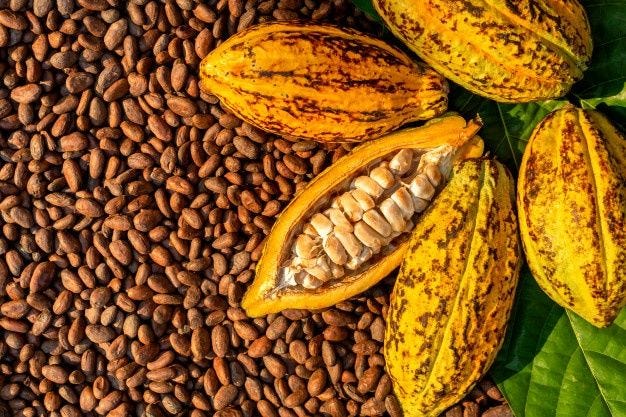
The story of cocoa—the seed from which chocolate is made—begins over five thousand years ago in the tropical rainforests of Central and South America. Once considered a sacred gift by ancient civilizations, cocoa has evolved from a ceremonial drink to one of the world’s most beloved commodities.

Ancient Origins and Use

Early Domestication:

Archaeological evidence traces the earliest use of cacao to around 5,300 years ago by the Mayo-Chinchipe culture of present-day Ecuador. According to findings published in Nature Ecology & Evolution, residues found on ancient pottery confirmed the fermentation and consumption of cacao long before it appeared in Mesoamerica.

Mesoamerican Civilizations:

The Olmecs, one of the earliest known Mesoamerican societies (1500–400 BCE), are believed to have domesticated the cacao tree. Later, the Maya, Toltec, and Aztec civilizations developed the culture of consuming cocoa as a bitter drink made from roasted and ground cacao beans mixed with spices, chili, and water—known as xocolatl.

Cultural and Economic Significance:

Cocoa beans held deep symbolic and economic value. Among the Aztecs, they were used as a form of currency and offered during religious rituals. The Maya viewed cocoa as a divine substance, often depicting cacao pods in their art and burial offerings.

Introduction to Europe

Spanish Introduction:

In 1502, Christopher Columbus first brought cocoa beans to Spain after encountering them during his fourth voyage to the Americas. However, it was the Spanish conquistador Hernán Cortés, who in 1519, after his conquest of the Aztec Empire, introduced the chocolate drink to Europe in its true form.

See also  FOUNDATION AND HISTORY OF AKURE

Spread Through Europe:

By the 17th century, cocoa had become a fashionable beverage among Europe’s elite, especially in Spain, France, and England. “Chocolate houses” became social hubs in cities like London and Amsterdam, where wealthy patrons gathered to enjoy hot chocolate sweetened with sugar and flavored with vanilla and cinnamon.

Modern Production and Consumption

Making Chocolate Accessible:

The transformation of cocoa into solid chocolate began in the 18th and 19th centuries. Innovations such as adding milk (by the Swiss in the 1700s) and the invention of the cocoa press (by Coenraad van Houten in 1828) revolutionized chocolate production. Lower import duties in Britain further made chocolate affordable to the middle class.

Global Expansion:

As European empires expanded, cocoa cultivation spread to their tropical colonies. By the late 19th century, West Africa, particularly Nigeria, Ghana, Ivory Coast, and Cameroon, became central to global cocoa farming. Nigeria began establishing cocoa plantations during the colonial period, especially in regions like Ondo, Ekiti, and Ogun States.

Today’s Production:

Currently, the Forastero variety dominates global production due to its high yield and disease resistance. West Africa accounts for about 70% of the world’s cocoa supply, with Ivory Coast and Ghana leading as the largest producers.

Cocoa’s Cultural Legacy

Cocoa’s journey from a sacred Mesoamerican ritual drink to a global comfort food highlights humanity’s shared appreciation for taste, culture, and innovation. Beyond its economic value, cocoa remains a symbol of celebration, luxury, and connection across cultures.

Key Facts

Scientific name: Theobroma cacao

First domesticated: ~3300 BCE (Mayo-Chinchipe culture, Ecuador)

Cultural significance: Used as currency and for rituals by Aztecs and Maya

See also  PHOTOS: Why I Cooked 200 Bags Instead Of 250 – Hilda Baci

Introduced to Europe: Early 1500s by Spanish explorers

Main producers today: Ivory Coast, Ghana, Nigeria, Indonesia

Sources

Henderson, J. S., et al. “Chemical and Archaeological Evidence for the Earliest Cacao Beverages.” Proceedings of the National Academy of Sciences (PNAS), 2007.

FOLLOW US ON:

FACEBOOK

TWITTER

PINTEREST

TIKTOK

YOUTUBE

LINKEDIN

TUMBLR

INSTAGRAM

Continue Reading
Click to comment

Leave a Reply

Your email address will not be published. Required fields are marked *

Lifestyle

Fake love that appears like true love

Published

on

“Fake love that appears like true love” describes a relationship where someone outwardly shows affection, care, and commitment, but their feelings or intentions are not genuine. It can be difficult to recognize because it often imitates the behaviors of sincere love.

Common signs may include:

Affection that depends on what they can gain.
Inconsistent words and actions.
Manipulation, dishonesty, or hidden motives.
Lack of support during difficult times.
Little respect for your feelings or boundaries.

By contrast, genuine love is characterized by honesty, consistency, respect, trust, and a willingness to care for the other person’s well-being even when it requires sacrifice.

A simple way to express the idea is:

“Fake love wears the mask of true love, but time eventually reveals the difference.”

FOLLOW US ON:

FACEBOOK

TWITTER

PINTEREST

TIKTOK

YOUTUBE

LINKEDIN

INSTAGRAM

See also  Early detection crucial to fighting cancer – Anambra first lady
Continue Reading

Lifestyle

Rebellion among couples

Published

on

Rebellion among couples refers to a situation where one or both partners consistently resist, reject, or challenge each other’s authority, agreements, responsibilities, or efforts to maintain the relationship. It often appears as persistent defiance rather than healthy disagreement.

Common signs include:

Constant arguments and refusal to compromise.
Disrespectful communication or contempt.
Ignoring agreed responsibilities.
Deliberately doing the opposite of what was mutually agreed.
Power struggles instead of teamwork.
Emotional withdrawal or silent treatment.

Possible causes include:

Poor communication.
Unresolved resentment.
Lack of trust.
Pride or unwillingness to apologize.
Financial stress or outside influences.
Different expectations about marriage or partnership.

The effects can include:

Loss of intimacy and affection.
Frequent conflict and emotional exhaustion.
Negative impact on children if they are involved.
Separation or divorce if the issues remain unresolved.

Rebellion in a relationship is different from expressing opinions or setting healthy boundaries. Couples can disagree respectfully while still working together toward mutual understanding and respect.

FOLLOW US ON:

FACEBOOK

TWITTER

PINTEREST

TIKTOK

YOUTUBE

LINKEDIN

INSTAGRAM

See also  Chief J. Adebiyi Majekodunmi (1905–1975) in London
Continue Reading

Lifestyle

Favoritism Among Children

Published

on

Favoritism among children is when a parent or caregiver consistently gives one child more attention, affection, praise, privileges, or support than their siblings. Whether intentional or not, favoritism can have lasting effects on every child in the family.

Some common effects include:

Sibling rivalry and increased conflict.
Low self-esteem in children who feel less loved or valued.
Jealousy and resentment toward parents and siblings.
Pressure on the favored child, who may feel they must always meet expectations.
Long-term family division, with strained relationships that can continue into adulthood.

To avoid favoritism, parents can:

Show love and affection to each child in ways that fit their individual needs.
Spend one-on-one time with each child.
Be fair and consistent with rules, discipline, and rewards.
Celebrate each child’s unique strengths instead of making comparisons.
Listen to each child and make them feel heard and valued.

Favoritism does not mean treating every child exactly the same, because children have different personalities and needs. It means ensuring that each child feels equally loved, respected, and important within the family.

FOLLOW US ON:

FACEBOOK

TWITTER

PINTEREST

TIKTOK

YOUTUBE

LINKEDIN

INSTAGRAM

See also  My father fought well to stay alive – Onigbinde’s son
Continue Reading

Trending