Connect with us

Education

Mathematics no longer compulsory for Arts students, says FG

Published

on

Nigerian senior secondary school students in arts and humanities will no longer be required to present a credit in mathematics in their Senior School Certificate Examination, organised by the West African Examination Council and National Examination Council, as a condition for admission to universities and polytechnics, the Federal Ministry of Education said on Tuesday.

For years, admission seekers in arts and humanities, like their contemporaries in sciences and social sciences, have been mandated to have five credits, including mathematics and English language, to secure admission into higher institutions.

“The revised National Guidelines for Entry Requirements into Nigerian Tertiary Institutions are designed to remove barriers while maintaining academic standards.

“The new framework applies to universities, polytechnics, colleges of education, and Innovation Enterprise Academies across the country as follows:

“Universities: Minimum of five (5) credit passes in relevant subjects, including English Language, obtained in not more than two sittings. Mathematics is mandatory for Science, Technology, and Social Science courses.

“Polytechnics (ND Level): Minimum of four (4) credit passes in relevant subjects, including English Language for non-science courses and Mathematics for science-related programs.

“Polytechnics (HND Level): Minimum of five (5) credit passes in relevant subjects, including English Language and Mathematics.

“Colleges of Education (NCE Level): Minimum of four (4) credit passes in relevant subjects, with English Language mandatory for Arts and Social Science courses, and Mathematics required for Science, Vocational, and Technical programs,” a statement by the FME’s spokesperson, Folasade Boriowo, said.

An education analyst, Ayodamola Oluwatoyin, who spoke to our correspondent in Abuja, hailed the reform.

“This is a brilliant reform, which we hope will open the doors and improve the ease of admissions into tertiary institutions for more seekers.”

See also  Slain husband’s family slams Tinubu’s pardon for Maryam Sanda

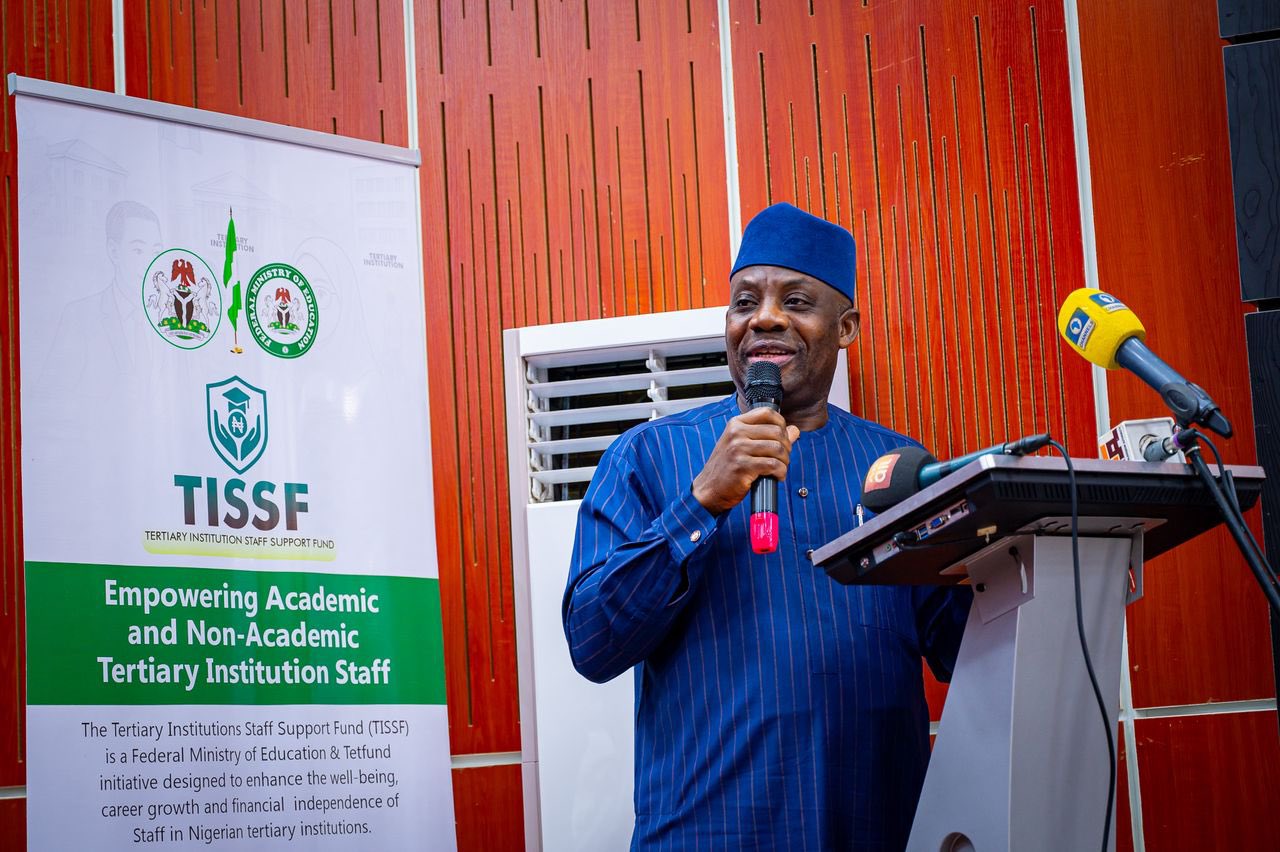
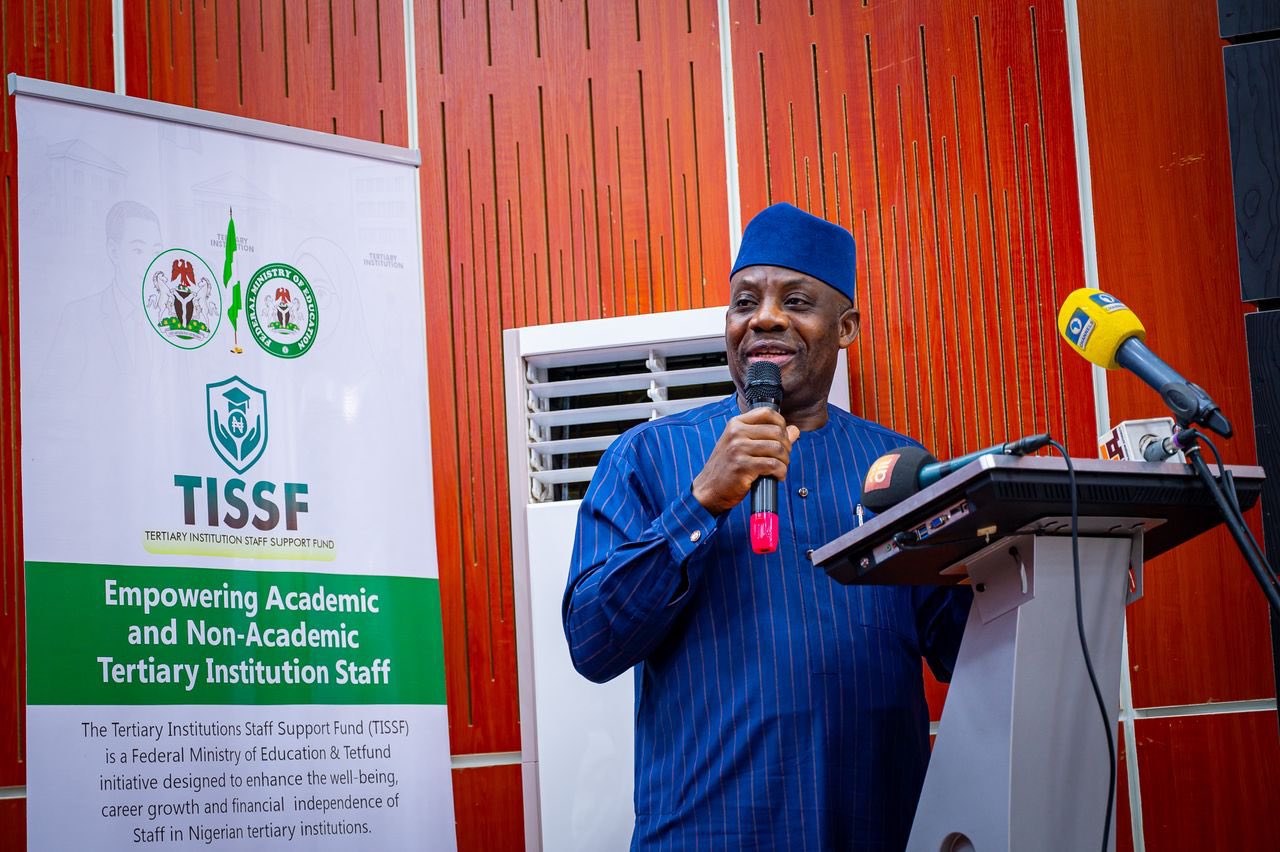
The Minister of Education, Dr Tunji Alausa, described the reform as a deliberate effort to expand access to tertiary education.

The ministry also approved a comprehensive reform of admission entry requirements into all tertiary institutions across the country, increasing the average annual intake from about 700,000 to one million students.

According to the government, the new policy aims to expand access to higher education and create opportunities for an additional 250,000 to 300,000 admissions each year.

The minister explained that the reform became necessary after years of limited access, which left many qualified candidates unable to secure admission despite meeting the required standards.

“Every year, over two million candidates sit for the Unified Tertiary Matriculation Examination (UTME), yet only about 700,000 gain admission. This imbalance is not due to lack of ability but outdated and overly stringent entry requirements that must give way to fairness and opportunity.

“The reform is a deliberate effort to expand access to tertiary education, creating opportunities for an additional 250,000 to 300,000 students each year. It reflects our commitment to ensuring that every Nigerian youth has a fair chance to learn, grow, and succeed—putting the Renewed Hope Agenda into action,’’ he said.

The revised National Guidelines for Entry Requirements into Nigerian Tertiary Institutions are designed to remove barriers while maintaining academic standards.

punch.ng

FOLLOW US ON:

FACEBOOK

TWITTER

PINTEREST

TIKTOK

YOUTUBE

LINKEDIN

TUMBLR

INSTAGRAM

Continue Reading
Click to comment

Leave a Reply

Your email address will not be published. Required fields are marked *

Education

Law student Ayomiposi Ojajuni kills self over failure to write final exam

Published

on

A student in the Yola Campus of the Nigeria Law School, identified as Ayomiposi Ojajuni, has allegedly taken his own life over failure to sit for his final examination.

The news broke Sunday that he killed himself on Saturday, December 6, because he was barred from doing the bar final examination at the Yola Campus.

People close to the deceased allege that he became distressed in the morning of Saturday on finding that he was indeed not going to be allowed to take the professional examination that commenced that morning.

He reportedly swallowed a deadly substance on receiving the news and died Sunday morning even after he was rushed to nearby Modibbo Adama University Teaching Hospital, Yola.

Sources have explained that the authorities came to the decision to stop him from taking his examination because he did not respond to multiple queries previously issued to him by the school authorities.

The Police Public Relations Officer in Adamawa State, SP Sulaiman Nguroje could not be reached for comment Sunday afternoon when this report was being concluded, but a different police source confirmed Ayomiposi Ojajuni’s suicide story.

FOLLOW US ON:

FACEBOOK

TWITTER

PINTEREST

TIKTOK

YOUTUBE

LINKEDIN

TUMBLR

INSTAGRAM

See also  LASU professor reveals how to stabilize governance in Nigeria
Continue Reading

Education

How A Classmate’s Question At Harvard Forced Me To Dump Banking For Politics – Abia Governor, Alex Otti

Published

on

He stated that this question, which Raina asked him at Harvard Business School in 2009, redirected his life from banking to politics.

Alex Otti, the Governor of Abia State, has recounted a story about a question a Harvard classmate asked him that ended up haunting him for a long time.

The governor stated that his classmate, Samvit Raina, an American of Indian descent, had asked him why many Nigerians he had met were successful, brilliant, and hardworking, yet the country from which they came was economically and development-wise backwards.

He stated that this question, which Raina asked him at Harvard Business School in 2009, redirected his life from banking to politics.

Speaking at the 2025 dinner and award presentation ceremony of the Harvard Business School Association of Nigeria in Onikan, Lagos, on Saturday, he said that his classmate’s question led him to abandon a lucrative banking career to pursue public service.

Otti, at the time, was participating in the Advanced Management Programme at Harvard.

He said, “I did not respond promptly in order not to be seen as endorsing an uncomplimentary remark against my country by a foreigner, but within me, I knew that he may not be the only one asking the question.”

The question, Otti explained, prompted him to engage in deep reflection during his time in Boston, where the school is situated.

“I spent the rest of my time at Boston reflecting on the poser raised by my course mate: how do you explain the paradox of very successful people operating from a country that is everything but successful?” he said.

See also  Slain husband’s family slams Tinubu’s pardon for Maryam Sanda

The introspection, Otti said, led him to confront uncomfortable truths about Nigeria’s development challenges.

Otti said he thought about his home state of Abia and its development challenges at the time.

“The more deeply I thought, the more worried I became. Nigeria is a nation of multiple constituencies and wherever you go, there are no shortage of intelligent, hardworking and passionate individuals. The question then is: why are we failing at even the most basic matters of civilisation? Why are elementary concerns like waste disposal, access to potable water, electricity, roads, primary healthcare and basic education still a challenge here?” he asked.

After examining the foundational structures that propelled other nations to greatness, Otti said he arrived at a disturbing conclusion.

“I realised that our problem was never about the size of the treasury box nor the appetite for progress but in the fact that those who ought to have taken the lead were often absent in the decision-making room. Like myself, they were busy chasing after career success, looking to hit the next million dollar or to publish their paper in a reputable journal. To these incredibly-smart people, government is treated as a minor irritation.

“Ultimately, while we were at Harvard, Cambridge, MIT, Oxford and in other elite universities topping the result charts and winning all the laurels, barely-educated individuals were taking decisions that influence how the world sees Nigeria in our various local government headquarters, state capitals and in Abuja,” he noted.

Otti challenged the gathering to find out where the majority of result-driven leaders are most likely to be found to understand where the country’s challenges were coming from.

See also  Any party with Obi already has 40% of votes – PDP chieftain

“Where are you most likely to find a superior number of ethical and result-driven leaders: at the board meeting of an NSE-listed company or at a gathering of political stakeholders in our states? You can probe further to ask: where would a First-Class graduate from an elite university be keener to start his professional life: at a regular government agency in Umuahia or in a blue-chip company?” he asked.

According to the governor, the disinterest in public affairs by the country’s best minds has had negative consequences on its economy and development.

“The summary of it is that our disinterest in public affairs offered an extended invitation to persons of questionable development orientation to step in and produce outcomes that are generally unsatisfactory,” he said.

FOLLOW US ON:

FACEBOOK

TWITTER

PINTEREST

TIKTOK

YOUTUBE

LINKEDIN

TUMBLR

INSTAGRAM

Continue Reading

Education

Firm offers two-year scholarship to rescued schoolchildren

Published

on

EduReach, an online educational platform, has announced a two-year full scholarship for all rescued students from Kebbi and Niger States, in what it described as a deliberate effort to help abducted children overcome trauma and continue their education even outside the classroom.

Mamu Muhammad, CEO of STEM Child Care Academy and founder of STEM-EduReach, told journalists in Abuja that the initiative is designed not only to restore learning opportunities but also to support the psychological recovery of children who survived abductions.

“Rescued children face another challenge: post-traumatic stress disorder, which can hinder their return to learning,” Muhammad said.

“We have formally written to the respective state governments to extend this offer as part of our commitment to supporting the recovery and reintegration of these students into learning.”

He added that the programme provides access to Nigerian and Cambridge curricula, STEM subjects such as robotics, coding, and artificial intelligence, as well as pre-recorded lessons delivered by experienced educators.

Students will also benefit from lesson notes, quizzes, assignments, live discussion forums, and personalised learning paths tailored to their progress.

Muhammad warned that the recent abductions in Kebbi and Niger, which forced the closure of schools, risk swelling the ranks of out-of-school children.

“The abduction of schoolchildren risks swelling the ranks of out-of-school children, as these acts of terror are intended to instil fear and discourage parents from sending their children to school,” he said.

He added that flexible enrolment and self-paced learning would allow rescued students to continue schooling at home, reducing the pressure of returning immediately to physical classrooms while coping with trauma.

See also  JAMB releases criteria for underage admission, screens 599 exceptional candidates

“No child should be denied the right to safe, equitable, and quality education,” Muhammad emphasised, urging stakeholders to collaborate in ensuring rescued children not only return to school but thrive in supportive environments.

Twenty-four schoolgirls kidnapped from the Government Girls Comprehensive Senior Secondary School in Kebbi were freed after a coordinated, non-kinetic rescue led by the Federal Government and involving the Office of the National Security Adviser and the Department of State Services. In a separate incident, 38 students and worshippers abducted from a church in Kwara State, as well as pupils taken from St Mary’s Catholic School in Niger State, were also released, with authorities attributing the outcomes to dialogue and negotiation rather than force.

Both sets of rescued students are now receiving medical checks and reintegration support as investigations continue into the kidnappings.

punch.ng

FOLLOW US ON:
FACEBOOK

TWITTER

PINTEREST

TIKTOK

YOUTUBE

LINKEDIN

TUMBLR

INSTAGRAM

Continue Reading

Trending