Connect with us

Education

EU-Funded Shs1.64Bn Project to Equip Over 3,000 Accounting Students in Uganda,Nigeria with Real-World Skills

Published

on

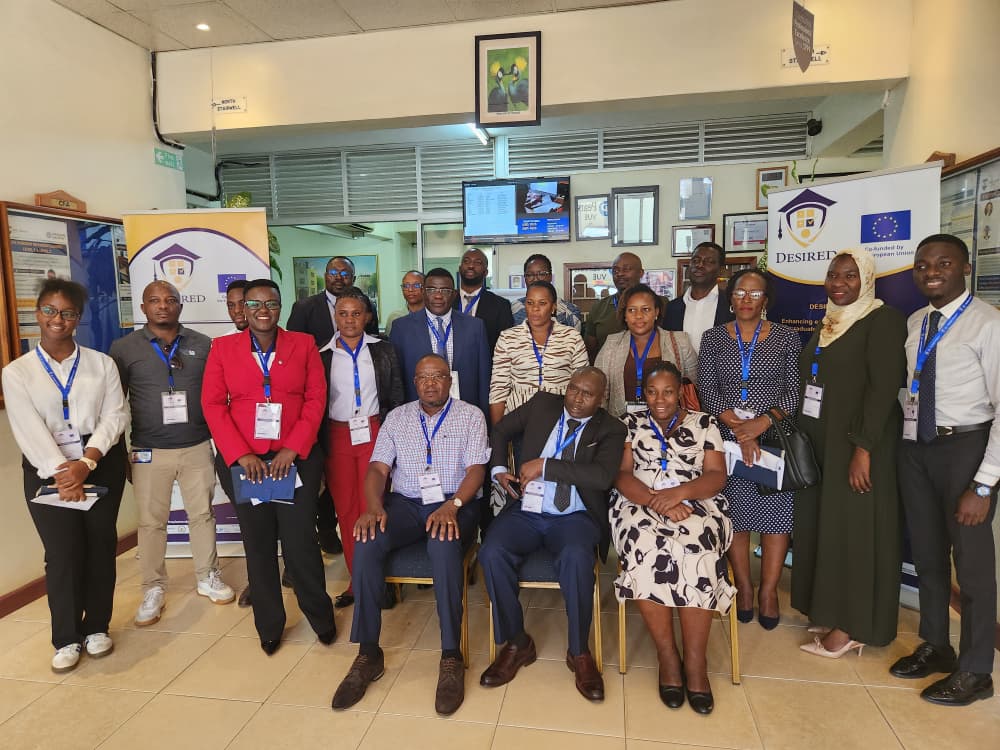
At least 3,000 students and academic staff across Uganda and Nigeria are set to benefit from the Developing Employability Skills in Accounting Education (DESIRED) project, a European Union-funded initiative aimed at ensuring accounting graduates are “work-ready” as they enter the labor market.

The project funded up to a tune of shs1.64billion( €400,000) was launched on Tuesday at MAT-Abacus Business School as part of the Erasmus+ Capacity Building in Higher Education (CBHE) Programme.

It brings together universities from Uganda, Nigeria, Portugal, and the Netherlands to integrate Work-Integrated Learning (WIL) into accounting education.

Speaking at the launch, Samuel Ssejjaaka, the project chair, highlighted the critical gap between university training and practical workplace demands.

“The idea is to ensure that when accountants finish their training, they have also acquired enough practical experience to take up jobs. We want them to be work-ready” he said.

He explained that the project will develop a framework for teaching students the real experience of the workplace.

“When we train students here, we train them on standards preparing books of accounts and so forth. But in the workplace, there are many other skills they are required to have, which are not necessarily part of the syllabus.”

Ssejjaaka also emphasized the impact of the project on employability rates among accounting graduates.

“With the funding we have received from the European Union, we can increase the employability of accountants. Right now, about 35% of graduates are not getting employed, and that all has to do with the issue of employability.”

See also  St. Gregory’s College, Lagos: A Legacy of Catholic Education in Nigeria

The DESIRED Project will employ internships, case studies, and experiential learning to give students exposure to real workplace scenarios, decision-making, and practical skills.

Twaha Kawaase, a certified accountant and project partner, highlighted the international collaboration underpinning DESIRED.

“We are here to launch a project which brings together countries in Europe – Portugal, Netherlands – and countries in Africa – Uganda and Nigeria – to ensure that accountants coming out of universities are work-ready.”

Kawaase explained the importance of preparing graduates for a changing workplace shaped by technology.

“This is a century where we are talking about artificial intelligence, where machines are trying to replace human beings, but human beings are irreplaceable. Therefore, we need to ensure that accountants are relevant in terms of accounting skills, communication skills, and other soft skills required by employers.”

He also spoke about the role of competency-based training in Uganda and the project’s role in standardizing practical skills.

“Universities must be ready, the training must be ready, and institutions like MAT-Abacus and various universities must ensure that students coming out are competent to work as expected by employers.”

Ayeza Mutegeki, a student at MAT-ABACUS, welcomed the project, highlighting its potential impact on students’ careers.

“I think that it would be very beneficial to every single accounting student. Why? Because of the kind of benefits that it provides in that it integrates work and study.”

She pointed out a major challenge facing students today. “The most common problem we have among students is that we do not have jobs. And why do we not have these jobs? It is because we do not have the expertise.”

See also  Tinubu Makes Fresh Appointment In Education Sector (Full List)

Ayeza emphasized how the program could bridge the gap between education and practical work experience.

“Yes, we have studied them. But the reality is that in the workplace, it is not exactly the same scenario. So I believe that this desired program will actually change the course of accounting students and furthermore enhance their education and work standards.”

The project consortium is led by MAT-Abacus Business School (Uganda) and includes Makerere University Business School (Uganda), Nnamdi Azikiwe University (Nigeria), Chukwuemeka Odumegwu Ojukwu University (Nigeria), Vrije Universiteit Amsterdam (Netherlands), and the University of Lisbon (Portugal). Key industry partners include the Uganda Chapter for Corporate Social Responsibility Initiatives (UCCSRI) and Sejjaaka, Kaawaase & Co., Certified Public Accountants.

The DESIRED Project seeks to bridge the gap between academic knowledge and practical skills, strengthen university-industry linkages, and ultimately ensure that graduates are employable and ready to thrive in a competitive labor market.

Source: Nilepost

FOLLOW US ON:

FACEBOOK

TWITTER

PINTEREST

TIKTOK

YOUTUBE

LINKEDIN

TUMBLR

INSTAGRAM

Continue Reading
Click to comment

Leave a Reply

Your email address will not be published. Required fields are marked *

Education

EFCC operatives assaulted hospital workers, dragged me into van — UUTH doctor

Published

on

A Professor of Cardiothoracic Surgery at the University of Uyo Teaching Hospital, Prof. Eyo Ekpe, has accused operatives of the Economic and Financial Crimes Commission of harassing and assaulting him and other hospital workers during an attempt to arrest him over an alleged fake medical report.

Ekpe, who is also the Deputy Chairman of the Medical Advisory Committee of the hospital, made the allegation during a press conference on Wednesday while narrating the events that led to the confrontation between the EFCC operatives and hospital staff.

Videos seen by PUNCH Metro on Thursday on X showed the professor insisting that the medical report the EFCC came to verify was fake and did not originate from the hospital.

According to Ekpe, he had just resumed work on Monday after receiving official approval to travel outside Akwa Ibom State when he was assigned to handle the EFCC’s request alongside his routine responsibilities.

“I added the responsibility of handling the medical report to my clinical duties, supervision of resident doctors and teaching medical students,” he said.

Ekpe explained that because the diagnosis contained in the report fell under the Internal Medicine Department, he invited the Head of Department to examine the document.

“The head of the department discovered that the doctor whose name appeared on the report was not a staff member of the department,” he said.

He added that after further checks, he prepared a draft response to the EFCC on May 11, 2026, confirming that the report was not genuine.

According to him, EFCC operatives visited his office the following day to collect the response, but he informed them that the document still required approval from the Chief Medical Director before it could be officially signed and stamped.

“I showed him the draft and explained that it still had to be presented to the Chief Medical Director before it could be released officially,” he said.

See also  UNIZIK bans final-year students’ exam ‘signing off’ celebrations

Ekpe alleged that shortly after the operatives left his office, they returned with another armed officer and informed him that he was under arrest.

“I told them I did not issue the report, my name was not on it, and it did not come from my unit. But they asked me to explain that at their office,” he said.

The professor further alleged that the operatives refused to allow him to wait for a staff member he had sent on an errand before they began dragging him out of his office.

“They dragged me to the walkway, and I started crying. Staff members who heard me rushed out,” he alleged.

He also claimed that the operatives prevented him from speaking with colleagues or answering phone calls while armed officers surrounded him.

“They said I must not talk to anyone. They held guns behind and in front of me while dragging me,” he alleged.

Ekpe said hospital workers resisted the arrest, prompting the operatives to call for reinforcement.

“Not long after, masked and armed men arrived. They threatened people around, and everyone started running,” he said.

He alleged that some hospital workers were beaten before he and others were dragged into an EFCC van.

“We were emotionally traumatised. Tear gas was fired, and live bullets were shot,” he added.

Also speaking, the Chief Medical Director of the hospital, Prof. Ememabasi Bassey, confirmed that Ekpe and four other workers were arrested without prior notice to the hospital management.

Bassey maintained that the medical report in question was fake and suggested that some insiders within the hospital might have collaborated with outsiders to produce it.

“One of the things we must get to the bottom of is how the lawyer handling the case got the fake medical report. It is possible there are bad eggs within the hospital working with outsiders,” he said.

The CMD explained that the hospital attends to between 600 and 800 patients daily and could not afford a prolonged shutdown resulting from the incident.

See also  Glitched grades: WAEC in crisis over result errors

He also noted that the letterhead used for the report was outdated and did not originate from the hospital.

“We have seen many fake medical reports supposedly issued by this hospital. The letterhead used was an old one and did not come from any official source within the hospital,” he said.

Bassey denied claims that the hospital ignored earlier EFCC correspondence, stating that the only letter received by his office was dated April 21, 2026.

He explained that the verification process was delayed by weekends, a public holiday and Ekpe’s officially approved trip to participate in national postgraduate medical examinations.

According to him, Ekpe returned on May 11 and completed a draft authentication report the same day, confirming that the document was fake.

Bassey criticised the conduct of the operatives, saying they went directly to Ekpe’s office without notifying management or presenting an arrest warrant.

“At no point did they come to look for the CMD, the CMAC or the Director of Administration. They simply went to his office,” he said.

The CMD said the situation escalated after the operatives allegedly returned with armed and hooded reinforcements, causing panic among hospital workers.

“His staff ran out because they saw hooded men invade the office,” he said.

Bassey said he immediately contacted the Akwa Ibom State Commissioner of Police, Baba Azare, after receiving distress calls and was advised to secure the hospital gates until police officers arrived.

He added that although the police later confirmed the men were EFCC operatives and advised that the gates be opened, tear gas had already been fired and the confrontation had escalated.

See also  St. Gregory’s College, Lagos: A Legacy of Catholic Education in Nigeria

The CMD also disclosed that several hospital workers sustained injuries during the incident, including one staff member who reportedly suffered a head injury.

Eyewitnesses, however, claimed the operatives later called for reinforcement and fired shots into the air to disperse workers gathered at the scene.

Reacting to the incident in a statement on Tuesday, the EFCC said its operatives visited the hospital to verify a medical report submitted by a suspect standing trial and claimed the commission had earlier written two letters to the hospital.

“As a last resort, operatives of the commission visited the chief medical director of the hospital on Tuesday to make further inquiries, only to be locked in and attacked by misguided staff of the facility,” the agency stated.

The commission also accused the hospital management of refusing to open the gates despite police intervention.

“Police authorities advised the CMD to open the gates to enable the operatives to exit peacefully, but the request was ignored,” the statement added.

The EFCC maintained that its operatives acted professionally and did not disrupt hospital activities.

Meanwhile, the Medical and Dental Consultants Association of Nigeria and the Association of Resident Doctors, UUTH chapters, condemned the incident in a joint communiqué signed by their officials.

The associations demanded disciplinary action against the operatives involved, compensation and treatment for injured workers, public apologies in two national newspapers and repairs of damaged property.

They added that the industrial action embarked upon by doctors would continue until their demands were met.

punch.ng

FOLLOW US ON:

FACEBOOK

TWITTER

PINTEREST

TIKTOK

YOUTUBE

LINKEDIN

INSTAGRAM

Continue Reading

Education

Japan tightens student visa rules with high documentation demands

Published

on

International students seeking to study in Japan must now navigate a structured and documentation-heavy visa process, reflecting strict immigration requirements outlined in official government guidance.

As reported by the Economic Times on Wednesday, the “Study in Japan” portal operated by the Japan Student Services Organization states that applicants are required to complete multiple stages before entering the country. These include securing admission from a recognised institution, obtaining a Certificate of Eligibility (COE), applying for a student visa, and completing residence registration after arrival.

Certificate of Eligibility is a key requirement.

A central part of the process is the Certificate of Eligibility (COE).

According to official guidance, the COE must be applied for through a regional immigration services bureau in Japan. In most cases, the accepting educational institution acts as the applicant’s representative.

The COE serves as official proof that the student meets Japan’s immigration requirements for long-term study. Without it, applicants may face significant difficulties in obtaining a student visa.

Students are also advised to coordinate directly with their university or language school regarding documentation requirements and processing timelines.

Financial proof is required

Japan also requires international students to demonstrate that they can financially support themselves during their stay.

This typically includes submitting bank balance certificates, income records, or documents showing the source of funds. These may belong either to the student or to a financial sponsor.

The requirement is intended to ensure students can cover tuition fees, accommodation, and living expenses throughout their studies.

Student visa application process

Once the COE is issued, students can apply for a visa at a Japanese embassy or consulate in their home country or region of residence.

Standard requirements include:

See also  FRIN, NOAN partner on youth empowerment through agriculture

Passport
Completed visa application form
Passport-sized photographs
Certificate of Eligibility (copy accepted)
Additional documents, if requested

Applicants are also expected to carry these documents when entering Japan for immigration checks.

Arrival and residence procedures

Students staying in Japan for more than three months are issued a residence card, known as a zairyu card, upon arrival at major airports such as Narita, Haneda, Kansai, and Fukuoka.

After arrival, students must register their residential address at a local municipal office within 14 days. The residence card must be carried at all times while living in the country.

“My Number” system for residents

Foreign residents are also assigned a 12-digit identification number known as “My Number.” It is issued after residence registration and is used for taxation, banking, employment, and other administrative services.

Students may also apply for a My Number card, which serves as an official identification document in Japan.

Short-term entry rules for exams

Students travelling to Japan solely for entrance examinations must apply for a Temporary Visitor visa using an official exam voucher issued by the institution where they plan to sit the test.

Depending on nationality, short stays may last 15, 30, or 90 days. In some cases, students must return to their home country after passing exams to apply for a formal student visa before beginning studies.

Overall, the system reflects Japan’s structured approach to managing international student entry, with a strong emphasis on documentation, financial verification, and post-arrival compliance.

punch.ng

FOLLOW US ON:

FACEBOOK

TWITTER

PINTEREST

TIKTOK

YOUTUBE

LINKEDIN

INSTAGRAM
Continue Reading

Education

ASUU warns of fresh strike over 2025 agreement delay, others

Published

on

The Academic Staff Union of Universities (ASUU) has warned that the public university system could face another wave of industrial unrest if the Federal Government and state governments fail to fully implement the December 2025 agreement reached with the union.

Speaking at the end of its National Executive Council meeting held at Modibbo Adama University, Yola, on May 9 and 10, 2026, ASUU expressed dissatisfaction with what it described as the “distorted and uncoordinated” implementation of the agreement signed with the Federal Government.

According to a statement issued by ASUU President, Chris Piwuna, on Monday, the union said it had maintained “a studied silence” since the signing and public presentation of the agreement in January 2026.

“This interactive session was called to present the outcome of our review of the implementation of the signed agreement and other outstanding issues following the NEC meeting held at Modibbo Adama University, 9th–10th May, 2026,” the statement read.

The union said it decided to speak after reviewing the implementation process and other unresolved issues affecting university lecturers.

“The momentum generated with the unveiling of the 2025 FGN-ASUU Agreement on 14th January, 2026 is fast waning and may soon be lost if government’s promise to fully implement the agreement is not kept,” it stated.

Recall that in March 2026, the Minister of Education, Tunji Alausa at a Lagos event declared the era of strikes in Nigerian tertiary institutions permanently over, assuring parents, students, and the general public that universities and polytechnics will remain open for all academic sessions.

See also  PHOTOS: Seven pupils injured in Benue school explosion

Meanwhile, ASUU blamed the situation on the failure to inaugurate the Implementation Monitoring Committee, which it said was meant to ensure proper execution of the agreement.

According to the union, federal and state authorities have implemented the agreement in a “distorted and uncoordinated manner”, while only a few state governments have complied.

The union also accused administrators of federal universities of selectively implementing components such as Consolidated Academic Allowances, Earned Academic Allowances, and Professorial Allowances, which it said should have been integrated into the Consolidated Academic Salary Structure.

ASUU further criticised some state governments for allegedly ignoring the agreement despite participating in the negotiation process.

It reaffirmed its commitment to ensuring members benefit from what it described as the gains of the eight-year negotiation (2017–2025).

ASUU also faulted the Federal Government’s proposed National Research Council and the Minister of Education’s announcement of a National Research and Innovation Development Fund.

It said the proposal did not align with the provisions of the 2025 agreement, which recommends “at least 1 per cent of GDP” as funding for research, innovation and development.

The union questioned the proposed $500 million funding structure and its source, expressing concern over possible external borrowing.

On welfare matters, ASUU said several issues remained unresolved, including salary arrears, promotion arrears, unremitted deductions, salary shortfalls under the Integrated Personnel and Payroll Information System, and withheld salaries from the 2022 strike.

It also criticised delays in pension payments for retired lecturers, particularly in state universities, and accused the National Pension Commission of delaying benefit harmonisation.

See also  UNIZIK bans final-year students’ exam ‘signing off’ celebrations

The union called on President Bola Ahmed Tinubu, as Visitor to federal universities, to intervene and address the outstanding welfare concerns.

ASUU also opposed the reversal of the mother-tongue policy in early childhood education, describing it as retrogressive.

It rejected the proposed establishment of a Coventry University campus in Nigeria under a transnational education arrangement, describing it as a move that could undermine local tertiary institutions.

The union also faulted compulsory enrolment of academics into the Nigeria Education Repository Databank, describing it as a violation of academic autonomy and data protection laws.

ASUU further criticised plans to scrap some university courses considered “irrelevant”, arguing that humanities and social sciences remain essential for developing critical thinking and innovation.

The union also raised concerns over governance in universities, alleging cases of maladministration and questionable academic appointments.

It warned against what it described as increasing political tension, insecurity, and economic hardship in the country ahead of the 2027 general elections.

ASUU cautioned that continued neglect of lecturers’ welfare could trigger a fresh industrial action, noting that frustration among members was rising.

It urged Nigerians to prevail on governments at all levels to fully implement the agreement and resolve outstanding issues, adding that NEC would reconvene in the coming weeks to review developments and take further action if necessary.

punch.ng

FOLLOW US ON:

FACEBOOK

TWITTER

PINTEREST

TIKTOK

YOUTUBE

LINKEDIN

INSTAGRAM

Continue Reading

Trending