Connect with us

Lifestyle

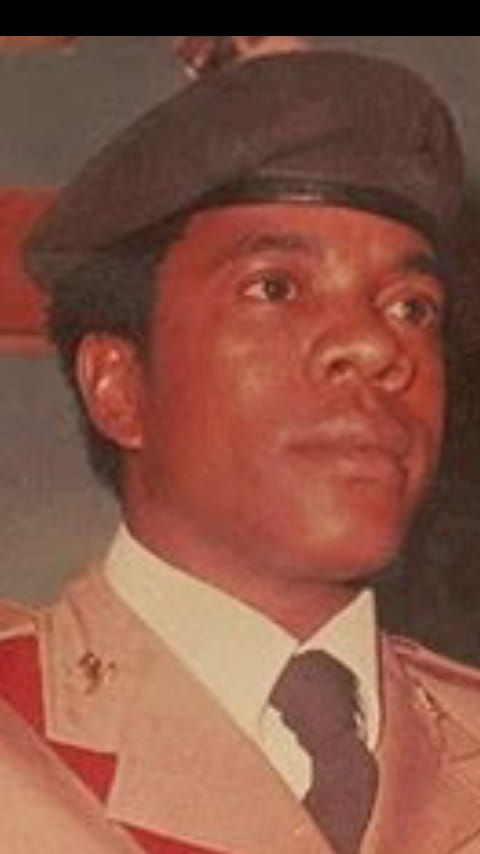
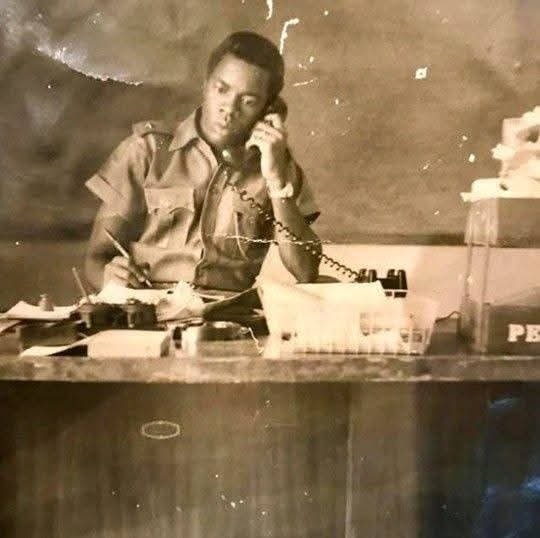
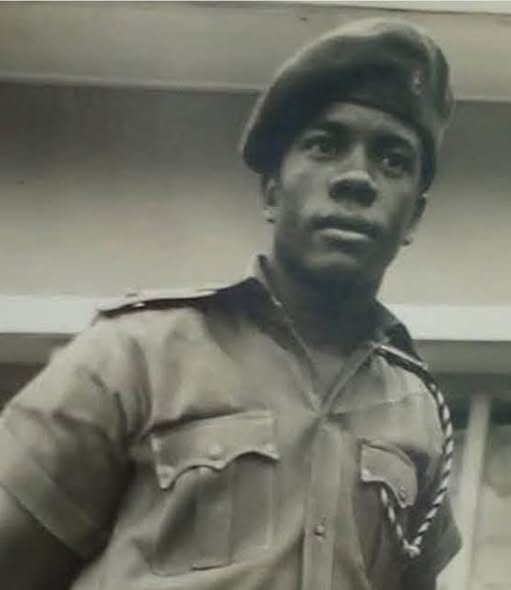
Major Daniel Idowu Bamidele: The Loyal Soldier Betrayed by the System He Served (PHOTOS)

Published

on

UNKNOWN TO BAMIDELE AT THE TIME, BUHARI WAS DEEPLY INVOLVED IN THE PLANNING OF THE COUP HE WAS ATTEMPTING TO ALERT THE ARMY AGAINST.

On March 5, 1986, Major Daniel Idowu Bamidele, a brilliant and decorated officer of the Nigerian Army, was executed by firing squad alongside nine other military personnel. His alleged crime was conspiracy to commit treason linked to the popular “Vatsa Coup” against the military regime of General Ibrahim Babangida.

Yet, Bamidele’s story was not that of rebellion, but of a loyal officer punished for remaining silent. His silence was a consequence of an earlier betrayal that had shaken his faith in the very system he served.

Born in 1949, Bamidele joined the Nigerian Army in 1968 during the height of the Nigerian Civil War. He was initially recruited as a non-commissioned officer and was posted to the 12th Commando Brigade, where he fought under Colonel Benjamin Adekunle and later Colonel Olusegun Obasanjo. His competence and leadership on the battlefield earned him a recommendation for officer training, and he was commissioned into the Nigerian Army on July 29, 1970 after completing training at the Nigerian Defence Academy.

In October 1983, during an official trip to Kaduna to print documents for the Chief of Army Staff Conference, Bamidele overheard rumours of a coup being planned to oust President Shehu Shagari. On returning to Jos, he acted promptly and responsibly by reporting the intelligence to his General Officer Commanding, Major General Muhammadu Buhari. Unknown to Bamidele at the time, Buhari was deeply involved in the planning of the coup he was attempting to alert the army against.

See also  How rescued orphaned elephant highlights Nigeria’s conservation fight

Within days of his report, Bamidele was quietly summoned to Lagos and detained at Tego Barracks by officers of the Directorate of Military Intelligence. He was accused of plotting a coup, the very one he had tried to prevent. Fake witnesses were presented, a mock interrogation was conducted, and false reports were submitted to the National Security Organisation, then under the leadership of Umaru Shinkafi, in an effort to mislead the Shagari government. While the real coup plotters carried on with their plans, Bamidele languished in detention. Eventually, on November 25, 1983, he was released without charge due to the complete absence of evidence against him.

He returned to Jos bewildered by the series of events that had just unfolded. The shocking truth came to light on January 1, 1984 when his former GOC, Major General Muhammadu Buhari whom he had reported the coup plot to announced himself as Nigeria’s new Head of State, having seized power in a military coup, validating everything Bamidele had feared and proving the betrayal he had suffered.

After his experience, Bamidele wisely chose to remain silent about any subsequent coup plots.

In early 1984, Bamidele’s name appeared on a list of officers to be compulsorily retired. When the list was presented to Head of State Buhari for approval, he struck Bamidele’s name off the list, reason unclear, possibly acknowledging the injustice of his prior ordeal. Instead, Bamidele was posted to the Command and Staff College in Jaji as a Directing Staff, where he resumed his duties.

The events that led to his execution began in 1985, following General Babangida’s overthrow of Buhari. Not long after assuming office, Babangida’s intelligence network claimed it had uncovered a plot to remove him from power. At the center of this alleged conspiracy was Major General Mamman Vatsa, Babangida’s childhood friend and then Minister of the Federal Capital Territory. Bamidele was implicated in the conspiracy based on his attendance at a meeting in a guest house in Makurdi. That meeting included other senior officers such as Lieutenant Colonel Michael Iyorshe, Lieutenant Colonel Musa Bitiyong, Lieutenant Colonel Christian Oche, Wing Commander Ben Ekele, and Wing Commander Adamu Sakaba.

See also  Not One Actor Stood By Me – Jaiye Kuti Laments Lack Of Support In Nollywood

Although political discussions and criticisms of the Babangida regime took place during the gathering, there was no evidence of operational coup planning. However, Bamidele, still haunted by his 1983 ordeal, chose to remain silent. It was that silence that became the basis for the charge of conspiracy to commit treason.

He was arrested and tried by a Special Military Tribunal. The trial was conducted in secret, with no right of appeal, and little opportunity for fair defense. Despite the absence of clear evidence linking him to any actual plot, Bamidele was found guilty.

Before he was executed, he delivered a powerful, solemn statement, a statement that has since become one of the most quoted last words in Nigerian military history.

He said:

“I heard of the 1983 coup planning, told my GOC General Buhari who detained me for two weeks in Lagos. Instead of a pat on the back, I received a stab. How then do you expect me to report this one? This trial marks the eclipse of my brilliant and unblemished career of 19 years. I fought in the civil war with the ability it pleased God to give me. It is unfortunate that I’m being convicted for something which I have had to stop on two occasions. This is not self-adulation but a sincere summary of the qualities inherent in me. It is an irony of fate that the president of the tribunal who in 1964 felt that I was good enough to take training in the UK is now saddled with the duty of showing me the exit from the force and the world.”

See also  Tinubu, Abiodun mourn ex-Ogun gov’s wife Onabanjo

On March 5, 1986, Major Daniel Idowu Bamidele was executed by firing squad at Kirikiri Maximum Security Prison. Among those executed with him were Major General Mamman Vatsa, Lieutenant Colonel Musa Bitiyong, Lieutenant Colonel Christian Oche, Lieutenant Colonel Clement Akale, Lieutenant Colonel M. Parwang, Wing Commander A.A. Togun, Major A.K. Obasa, Wing Commander Ben Ekele, and Wing Commander Adamu Sakaba.

Major Bamidele’s life and death remain a haunting reminder of the dangers faced by soldiers of conscience. His ordeal reflects the cost of honour in a system where truth was expendable and power was absolute. He was a soldier punished for doing the right thing once, and then punished again for refusing to be used.

Today, his name stands as a symbol of tragic integrity, a man who paid the ultimate price for trusting his superiors and remaining loyal to the oath he swore.

Rest in power, Major Daniel Idowu Bamidele. Nigerians will never forget you.
FOLLOW US ON:

FACEBOOK

TWITTER

PINTEREST

TIKTOK

YOUTUBE

LINKEDIN

TUMBLR

INSTAGRAM

Continue Reading
Click to comment

Leave a Reply

Your email address will not be published. Required fields are marked *

Lifestyle

Plateau gov apologises to Igbo over civil war role

Published

on

Plateau State Governor, Caleb Mutfwang, has apologised to the Igbo community for the role the state played during the Nigerian Civil War, saying the people of Plateau were “deceived” into participating in the conflict.

Speaking during an interactive session with Igbo leaders from the 17 local government areas of the state at the Government House, Little Rayfield, Jos, Mutfwang urged both sides to put the painful chapter behind them and strengthen the bonds of unity.

According to a report by The Guardian on Monday, the governor commended the Igbo community for its contributions to Plateau State’s socio-economic development, describing them as an integral part of the state’s growth and prosperity.

He noted that Plateau had remained one of the most accommodating states for the Igbo people since the end of the civil war and recalled that compensation had been paid for some of the losses suffered during the conflict.

“I apologise to the Igbos so that we can put the past behind us and continue to foster unity. We have become one family because our people were deceived into going to war, and we regret it. We must close that chapter and move forward.

“We must unite. We want the Igbos to regard us as their brothers and sisters, and together we must create an enabling environment where everyone can prosper,” Mutfwang said.

The governor also appealed to Igbo entrepreneurs in Plateau State to support indigenous businesses by creating opportunities for young people through mentorship and investment.

See also  Jimoh Ibrahim: Nigerian Businessman Lawyer Politician and Senator for Ondo South

“Nigeria is a great country, and no ethnic group has demonstrated the entrepreneurial spirit more than the Igbo. I encourage you to replicate that same spirit in Plateau. I also appeal to Igbo business owners to employ and train young Plateau indigenes,” he said.

During the meeting, leaders of the Igbo community endorsed Mutfwang for a second term ahead of the 2027 governorship election, citing what they described as his inclusive leadership, prudent management of resources and commitment to peaceful coexistence.

The endorsement was announced by the President-General of the Igbo Community in Plateau State, Chief Chidi Onah, who described the governor as a leader committed to equity and development.

“We hereby endorse Governor Caleb Mutfwang as the consensus candidate of the Igbo community for the 2027 governorship election. This endorsement is based on his competence, integrity, proven leadership and commitment to equity.

“He has promoted peaceful coexistence and created a business-friendly environment. He stood by us during the demise of our traditional ruler and has consistently engaged stakeholders to promote unity among the diverse ethnic groups in Plateau State,” Onah said.

Onah also praised the governor’s developmental efforts, saying the state had become more conducive for business and investment.

“Igbo people have lived in Plateau since before Nigeria’s independence. We appreciate the governor for compensating some of our members over disputed properties and urge Nigerians across ethnic and religious divides to support his administration,” he added.

Also speaking, former President-General of the Igbo Community Association, Mike Okunonke, described the Igbo as peace-loving people committed to the economic development of Plateau State.

See also  It’s not easy, surrogate mother shares emotional journey

He said the community’s support for Mutfwang was based on his performance rather than political affiliation.

“We will vote for personalities, not political parties. Governor Mutfwang has demonstrated capacity by creating opportunities and reducing unemployment. We will mobilise our members across the 17 local government areas to support him,” Okunonke said.

He added that the endorsement reflected the cordial relationship the governor had built with the Igbo community through genuine partnership and inclusiveness.

The governor’s Special Adviser on Igbo Affairs, Barr. Jonah Okechukwu Ezekweme, commended Mutfwang for creating an enabling environment for the Igbo community to thrive in the state.

He urged members of the community to support the governor’s second-term bid while continuing to partner with the state government in creating employment and business opportunities for young people.

Earlier, High Chief Felix O. Akpunku welcomed members of the Igbo community on behalf of the governor and praised Mutfwang’s developmental projects across the state, describing his administration as one committed to inclusive governance and sustainable development.

The meeting also featured the formal presentation of the new President-General of the Igbo Community Association, Chief Chidi Onah, by the immediate past President-General, Chief Mike Ifeanyi Okunonke.

Other speakers, including Chief Dr. Nelson Mkparu and Hon. Maureen Odilimuo, also lauded the governor for his inclusive leadership and support for the Igbo community, pledging continued cooperation with his administration.

The meeting ended with both the Plateau State Government and the Igbo community reaffirming their commitment to peaceful coexistence, deeper collaboration and sustainable development across the state.

See also  Beko Ransome-Kuti: Human Rights Activist and Physician

punch.ng

FOLLOW US ON:

FACEBOOK

TWITTER

PINTEREST

TIKTOK

YOUTUBE

LINKEDIN

Continue Reading

Lifestyle

Eight die, nine missing in Jigawa boat tragedy

Published

on

Twenty-three persons have been rescued, while eight bodies have been recovered from Sunday’s boat accident that claimed 40 passengers in Jigawa State.

The incident occurred at Malamawar-Yan Dutse in Ringim Local Government Area, where a wooden boat conveying about 40 passengers, mostly female farmers and labourers, capsized while crossing a waterway.

Boat accidents have remained a recurring tragedy in riverine communities across northern Nigeria, particularly during the rainy season, often attributed to overloading, failure to use life jackets and strong water currents.

The Police Public Relations Officer of the Jigawa State Police Command, SP Shi’isu Adam, confirmed the latest casualty figure to The PUNCH on Monday.

He said search and rescue operations continued for the remaining nine passengers.

“At the moment, we have successfully rescued 23 victims alive. Unfortunately, we have also recovered eight corpses from the river,” Adam said.

He explained that local divers, emergency responders and security personnel had been at the scene since the incident occurred to rescue survivors and recover bodies.

According to him, all the rescued victims received medical attention and were subsequently discharged.

“Those rescued are now safe at their homes as they were discharged to reunite with their families,” he said.

Adam added that the search for the remaining nine passengers would continue on Tuesday.

“We are not relenting. Our teams are combing the river and adjoining communities to ensure we find the remaining nine persons,” he said.

He appealed to residents of riverine communities to assist security agencies with useful information that could aid the rescue operation.

See also  Tinubu, Soyinka, Ladoja relive NADECO battle at Opadokun’s book launch; read details

The police spokesman also urged boat operators to avoid overloading and ensure that all passengers wear life jackets before embarking on any journey.

punch.ng

FOLLOW US ON:

FACEBOOK

TWITTER

PINTEREST

TIKTOK

YOUTUBE

LINKEDIN

Continue Reading

Lifestyle

Northern Christians query N1.9bn church share in N8bn religious budget

Published

on

The Northern Christian Association has asked the Federal Government to explain what it described as a wide disparity in the allocation of about N8.05bn for church and mosque projects in the 2026 Appropriation Bill, warning that the imbalance raises concerns over equity and equal treatment of citizens.

The association said it was not opposed to government support for religious projects but insisted that such interventions must be guided by the constitutional principles of fairness, transparency and justice.

In a statement issued on Monday by its Chairman, Rev Joseph Hayab, the NCA said reports indicated that about N1.91bn was earmarked for seven church-related projects, while approximately N6.14bn was allocated to 52 mosque-related projects in the 2026 budget.

According to the association, the disparity had reinforced concerns among many Christians over what it described as a persistent pattern of unequal treatment and selective implementation of government policies.

Hayab said, “How long will Nigerians continue to read stories that expose the hypocrisy of our leaders?

“The partiality, lack of equity and unequal treatment of citizens by government and political leaders are among the major factors responsible for division, distrust, segregation and the absence of genuine unity and love among Nigerians.”

He added that while Christians had continued to exercise restraint in the interest of national peace and unity, successive governments had often mistaken such patience for weakness.

The NCA argued that Nigerians had repeatedly witnessed actions exposing inconsistencies in governance, warning that perceived discrimination and double standards were eroding public trust and national cohesion.

“Our constitution recognises every Nigerian as equal before the law, while the teachings of all religions discourage unfair treatment of children, women, family members and fellow human beings.

See also  Fela wouldn’t have been great if he wasn’t from privileged background – Seun Kuti

“Government should, therefore, not be seen to promote policies that suggest preferential treatment for one religious group over another,” Hayab said.

The association stressed that its position should not be interpreted as opposition to Islam, Christianity or government collaboration with faith-based organisations, but rather as a call for fairness in the distribution of public resources.

It maintained that if public funds were to be allocated for religious projects, such allocations should be transparent, balanced and devoid of any perception that one faith enjoyed greater recognition than another.

“NCA is challenging the Federal Government to explain these abnormalities. Government should not establish a system that creates division among citizens or gives the impression that one religious community is more important than another.

“Instead, it should initiate programmes and policies that unite Nigerians and strengthen our collective national identity,” the statement added.

The association further urged the Federal Government to review the allocations in line with the constitutional principles of fairness, equity and equal treatment, insisting that budgetary decisions should promote national unity and strengthen public confidence in the impartiality of government.

punch.ng

FOLLOW US ON:

FACEBOOK

TWITTER

PINTEREST

TIKTOK

YOUTUBE

LINKEDIN

Continue Reading

Trending