Connect with us

Lifestyle

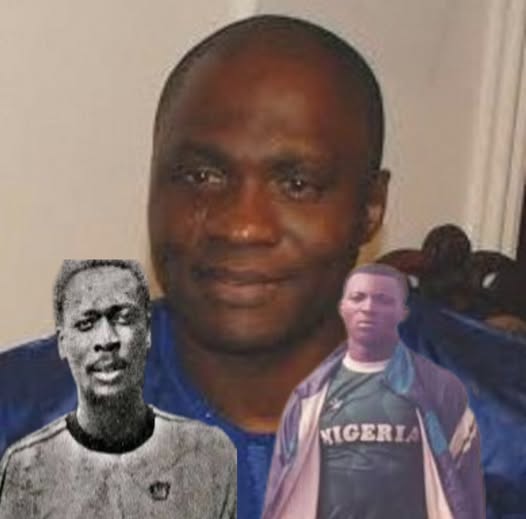
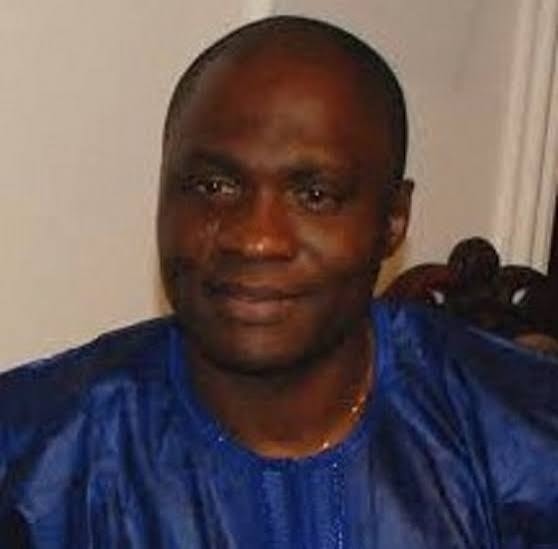
Folorunso “Foley” Okenla: The Honest Footballer Who Defied Fate

Published

on

From Ibadan to England, Belgium, and Canada — the story of a Nigerian winger who made his mark abroad.

An Act of Honesty That Cost Him — and Then Rewarded Him

Folorunso “Foley” Okenla, a former Super Eagles player, was once punished for being honest.

At one point in his early career, he was invited to join the Flying Eagles (Nigeria’s U-20 national team). However, Okenla declined the call-up, truthfully informing the coach that he had already exceeded the age limit for that category. His honesty did not sit well with the coach, who, angered by his refusal, vowed that Okenla would never play for the national team.

Yet, destiny had other plans. Some time later, that same coach travelled abroad for a training course, and in his absence, Okenla received another opportunity. He was invited to the Super Eagles, Nigeria’s senior national team, where he earned five caps — four officially recognised by FIFA and one non-FIFA match — though he did not score any goals.

This story of integrity and eventual triumph highlights the values that defined Okenla’s football journey — truthfulness, discipline, and perseverance.

Early Life, Background, and Education

Folorunso Okenla was born on 9 October 1967 in Ibadan, Oyo State, Nigeria.
As of 2025, he is 57 years old, turning 58 in October.

Public information about his early family background and formal education is limited. However, his family is partially documented through his children — notably his son, Henry Okenla, who is listed as the son of Folorunso and Rachael Okenla on the official Boston College Athletics roster.

See also  Professor Olabisi Oreofe Ugbebor: Nigeria’s First Female Professor of Mathematics

Family

Foley Okenla is a devoted father. His son, Henry Okenla, attended Boston College in the United States, where he played college football and was officially described as “the son of Folorunso and Rachael Okenla.”

Henry has four siblings — Christina, Aila, Lola, and Grace — also listed in the same biographical note. While Okenla’s private life remains largely out of the public eye, this information reflects a family legacy that continues to value sports and education across generations.

Club Career

Okenla’s professional football career took him across three continents, showcasing his versatility and ambition:

1991: Signed for Burnley F.C. (England) but did not make a league appearance.

1991 – 1992: Joined Birmingham City F.C. (England, Third Division), where he made 7 appearances and scored 1 goal.

1992 – 1993: Transferred to K.V. Turnhout in Belgium’s Second Division, appearing 4 times.

1993: Signed for Montreal Impact in Canada’s American Professional Soccer League, making 7 appearances.

His career abroad made him part of the early wave of Nigerian footballers who ventured overseas in search of professional growth long before it became commonplace.

International Career

Representing his country was one of Okenla’s proudest achievements.

He played for the Nigeria national football team, the Super Eagles, earning at least four official FIFA caps and one additional non-FIFA match between 1988 and 1994.

He was also a member of the squad at the 1988 Africa Cup of Nations, where Nigeria finished as runners-up, reinforcing his status among the nation’s top players of his era.

Style of Play and Position

Folorunso Okenla primarily operated as a winger, renowned for his speed, creativity, and direct attacking play. Though his overall number of club appearances was modest, his consistent inclusion in Nigeria’s national setup spoke to his quality and professionalism on the pitch.

See also  PHOTOS: Emir of Kano's daughter Aisha set to wed

Legacy and Post-Playing Life

Following his retirement, Okenla has occasionally appeared in media discussions and football commentary in Nigeria. His honesty, both on and off the field, continues to inspire younger athletes.

His son’s participation in North American college football reflects how his sporting spirit endures through a new generation — a cross-continental legacy that connects Nigeria and the diaspora.

Okenla’s journey from Ibadan to Europe and North America, coupled with his story of integrity and resilience, cements his reputation as one of Nigeria’s understated football ambassadors.
References

1. “Foley Okenla.” National-Football-Team

FOLLOW US ON:

FACEBOOK

TWITTER

PINTEREST

TIKTOK

YOUTUBE

LINKEDIN

TUMBLR

INSTAGRAM

Continue Reading
Click to comment

Leave a Reply

Your email address will not be published. Required fields are marked *

Lifestyle

PHOTOS: A Biafran Armoured Vehicle at the National War Museum, Umuahia: Ingenuity in a Time of Siege

Published

on

Displayed at the National War Museum in Umuahia, Abia State, this armoured vehicle stands as a striking material reminder of the technological improvisation that characterised the Biafran side during the Nigerian Civil War (1967–1970). The vehicle is commonly identified as an up-armoured T16 Universal Carrier, adapted and deployed by Biafran forces in the face of severe resource constraints.

The Nigerian Civil War in Context

The Nigerian Civil War, often called the Biafran War, erupted in July 1967 following the secession of the Eastern Region of Nigeria as the Republic of Biafra under the leadership of Lt. Col. Chukwuemeka Odumegwu Ojukwu. The conflict was rooted in a complex mix of political instability, ethnic tensions, economic disputes, and the fallout from the 1966 military coups.
The federal government imposed a land, sea, and air blockade on Biafra, drastically limiting access to weapons, fuel, spare parts, and food. This blockade forced Biafran engineers, mechanics, and technicians to rely heavily on local innovation and adaptation to sustain their war effort.

The Up-Armoured Universal Carrier

The vehicle shown in the museum is believed to be based on the T16 Universal Carrier, a light tracked armoured vehicle originally designed during the Second World War. Universal Carriers were widely used by Allied forces and were present in Nigeria during the colonial era.
During the war, Biafran forces modified available carriers by:

Reinforcing them with improvised armour plating

Adapting engines and mechanical components using locally available materials

Reconfiguring them for reconnaissance, troop movement, or limited combat roles

See also  Video - "I Just Want to Come Back Home" – A Nigerian Boy’s Cry From Abroad

Although such vehicles could not match the firepower or durability of modern armoured tanks, they represented a pragmatic response to isolation, allowing Biafra to maintain some level of mechanised capability.

Ingenuity Under Pressure

The armoured carrier exemplifies what many historians describe as Biafran wartime ingenuity. Alongside makeshift armoured vehicles, Biafra also produced:

Locally assembled rockets and mortars (such as the Ogbunigwe)

Modified civilian vehicles for military use

Small-scale refineries and workshops to support logistics

These efforts were driven by necessity rather than abundance, highlighting the role of technical skill and improvisation in asymmetric warfare.

Human Cost and Global Attention

The war resulted in devastating human losses. Scholarly estimates suggest around 100,000 military deaths, while civilian deaths range from approximately 500,000 to over 2 million, largely due to famine and disease exacerbated by the blockade. These figures vary widely among historians and humanitarian organisations, reflecting the difficulty of precise wartime accounting.
Notably, the Nigerian Civil War was among the first conflicts to receive extensive global television coverage. Images of starving Biafran children broadcast internationally shaped global humanitarian awareness and influenced the development of modern relief organisations.

Preservation and Historical Memory

Today, the presence of this armoured vehicle at the National War Museum, Umuahia serves an educational purpose rather than a celebratory one. It invites reflection on:

The realities of civil conflict

The limits and possibilities of local technological innovation

The enduring human and social consequences of war

As an artefact, it underscores how material culture can help future generations understand both the creativity and tragedy that emerge under extreme historical conditions.

See also  Justice Akinwunmi Rhodes-Vivour: A Legacy Carved in Law and Integrity

Sources

National War Museum, Umuahia (museum displays and archival descriptions)

Nigerianland, Nigeria History Makers – Pictures

Falola, T. & Heaton, M., A History of Nigeria (Cambridge University Press)

FOLLOW US ON:

FACEBOOK

TWITTER

PINTEREST

TIKTOK

YOUTUBE

LINKEDIN

TUMBLR

INSTAGRAM

Continue Reading

Lifestyle

A Woman of Elegance, Resilience, and Impact: Alhaja Simbiat Atinuke Abiola

Published

on

This seldom-seen image from 1991 gently captures the serene presence of Alhaja Simbiat Atinuke Abiola (née Shoaga), pictured alongside her daughter, Wuraola Abiola, at her husband’s birthday celebration in Lagos—just a year before her passing. A prominent member of the renowned Abiola lineage, her life was rooted in service and generosity.

Alhaja Simbiat was not only the cherished spouse of the late Chief Moshood Kashimawo Olawale Abiola, she was also a formidable figure in her own right. In the early 1980s, she shattered glass ceilings by launching and directing Wonder Bakery, an innovative enterprise that provided employment to over 140 Nigerians—at a time when female business leaders were a rarity in the country.

Yet, her brilliance extended well beyond commerce.

In 1992, while waging a brave battle against cancer in a hospital in the United Kingdom, Alhaja Simbiat watched the heart-wrenching news of the Cairo (Dahshur) earthquake. Touched by the plight of the children affected, she selflessly donated $100,000 to support the reconstruction of a school that had been reduced to rubble. Even as her health declined, her compassion remained boundless—reaching across nations and touching lives.

That same year, Nigeria mourned the loss of a quiet luminary. Alhaja Simbiat passed away at age 51 in a British hospital, leaving behind a legacy defined by kindness, tenacity, and quiet leadership.

She was far more than a devoted wife and loving mother—she stood as a beacon of humanity, vision, and unwavering dignity.

May her soul continue to rest in perfect peace.

Source: historylovers

Photo: theelitesng

FOLLOW US ON:

FACEBOOK

TWITTER

PINTEREST

TIKTOK

YOUTUBE

LINKEDIN

TUMBLR

INSTAGRAM

See also  The 1961 Ife Bronze Stamp: A Symbol of Nigeria’s Cultural Rebirth and Independence
Continue Reading

Lifestyle

VIDEO: Seyi Tinubu arrives Alaafin’s palace for installation as ‘Okanlomo of Yorubaland’

Published

on

The city of Oyo is currently witnessing an influx of political figures and traditional rulers for the installation of new high-ranking chiefs by the Alaafin of Oyo, Oba Abimbola Owoade.

Seyi Tinubu, accompanied by his wife, Layal, arrived at the palace of the Alaafin on Sunday.


Alaafin confers chieftancy titles on Seyi Tinubu. Credit: X|adejare_stephen


Alaafin confers chieftancy titles on Seyi Tinubu. Credit: X|adejare_stephen

PUNCH reports that Seyi, the son of President Bola Tinubu, will be installed as the “Okanlomo of Yorubaland,” a title which translates to “the beloved child” or “the one dear to the hearts of all Yoruba people.”

The title is said to symbolise a custodian of Yoruba values, unity, and cultural heritage.

The Senator representing Zamfara West and a former Governor of Zamfara State, Abdul’Aziz Yari, has also reportedly arrived in Oyo, accompanied by a delegation of northern senators and political figures.


Alaafin confers chieftancy titles on Seyi Tinubu, Senator Yari. Credit: X|adejare_stephen

Yari will also be installed as the “Obaloyin of Yorubaland” on the same occasion by the Alaafin.

The Director of Media and Publicity to the Alaafin, Bode Durojaiye, in a recent statement, reportedly stated that the ‘Obaloyin of Yorubaland’ title represents love, compassion, justice, and a bridge between physical and spiritual realms.

Both titles are said to come with responsibilities that include promoting Yoruba culture, advising the Alaafin, fostering unity, and advancing education and social welfare.


Alaafin confers chieftancy titles on Seyi Tinubu, Senator Yari. Credit: X|adejare_stephen

Videos circulating on social media reveal that the venue of the event is set, capturing the presence of several notable figures, including former Governor of Kano State, Abdullahi Ganduje, lawmakers, and a diverse assembly of traditional rulers and chiefs.

See also  10 things to know about Prof. Amupitan, new INEC Chairman

Watch videos below:

CLICK TO WATCH THE VIDEO

Credits: PUNCHNG

FOLLOW US ON:

FACEBOOK

TWITTER

PINTEREST

TIKTOK

YOUTUBE

LINKEDIN

TUMBLR

INSTAGRAM

Continue Reading

Trending